Billionaire Alice Walton Just Made $33 Billion Without Running a Company — And It Changes Everything For Founders Who Still Think Hustle Is the Answer
Billionaire Alice Walton Just Made $33 Billion Without Running a Company — And It Changes Everything For Founders Who Still Think Hustle Is the Answer
Part 1 — Hook
Alice Walton made $33 billion richer in a single year without running a company, attending a board meeting, or selling a single thing. While thousands of founders burned out trading hours for revenue, the richest woman in the world quietly compounded $33 billion — because she built the right structure decades ago, and the structure did the rest. The lesson is not about inheritance. It is about architecture.
Part 2 — Press
Read that again slowly. Thirty-three billion dollars. In one year. Without running anything.
Most founders reading this right now are doing the opposite. They are the product. They are the sales team. They are the brand. They are the bottleneck. Every dollar earned requires their presence, their energy, their pitch. When they stop, the revenue stops. They call it dedication. The market calls it a very expensive job.
This is not a story about being born rich. This is a story about what happens when you get the structure right and what happens when you do not. Most founders are obsessed with working harder inside a broken structure. Alice Walton is a live demonstration of what the right structure produces — even without an office, a title, or a single sales call. If that contrast does not make you uncomfortable, you are not paying attention.
Part 3 — Play
According to Fortune (September 25, 2026), Alice Walton's net worth grew by $33 billion between March 2025 and March 2026, per Forbes data. She is now worth nearly $120 billion, making her the richest woman in the world.
Here is what makes this extraordinary: she did it without running Walmart or sitting on its board, unlike her brothers who hold significant shares and board positions. She co-manages Walton Enterprises, one of two family holding companies that controls an estimated 39–44% of the retailer. She owns approximately 20 million shares of Walmart directly — worth around $2.2 billion at current prices — but holds the majority of her stake indirectly through family entities. Walmart's 2026 proxy statement shows Walton Enterprises holds roughly 3 billion shares directly and votes another 513 million held by the Walton Family Holdings Trust.
While this wealth compounded, she was busy building a tuition-free medical school, breaking ground on a $350 million health campus in Bentonville in partnership with the Mercy health system and Cleveland Clinic on September 17, 2026 — a campus that will include a 250-bed hospital and a cancer centre.
Billionaire Alice Walton's move is one Jason has seen across 1,000+ founders. Here's what most miss.
Part 4 — Lesson + Root Cause Reframe
Most founders think the problem is that they need more leads. But the real problem is that they built a business where everything — leads, trust, conversion, delivery — runs through them personally.
Alice Walton did not grow $33 billion by working harder. She grew $33 billion because equity in a compounding system does not need her to show up. The system runs. The shares appreciate. The structure captures the value.
Now contrast that with the typical founder. Every new client requires a new pitch. Every new pitch requires their personal credibility. Every deal needs them in the room. They are not running a business. They are performing a service — repeatedly, manually, and at the ceiling of their own available hours.
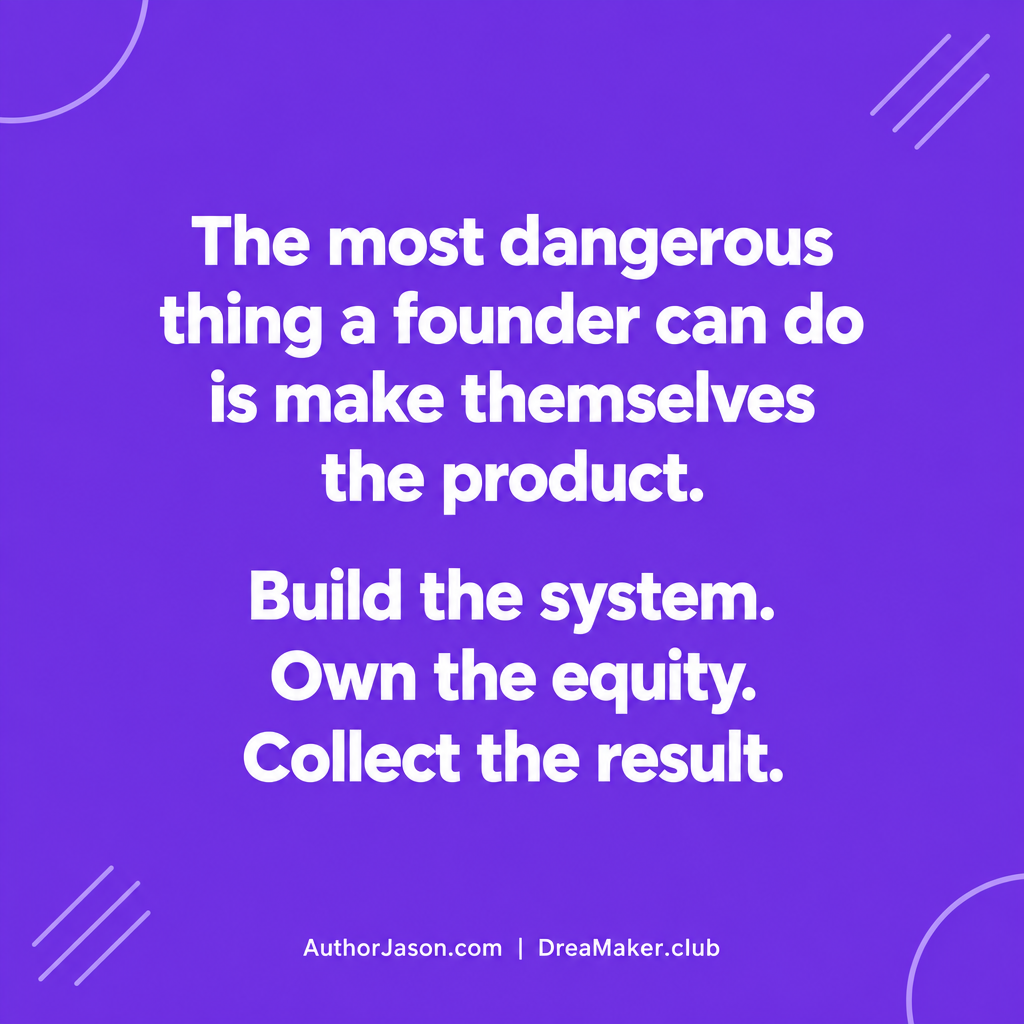
"The most dangerous thing a founder can do is make themselves the product. Build the system. Own the equity. Collect the result."
The real root cause is not a lead generation problem, a pricing problem, or a messaging problem. It is a structural problem. Founders build revenue that requires their presence instead of building systems that generate revenue whether they show up or not.
Alice Walton's $33 billion year is extreme — but the principle is not. Every founder who ever built a scalable offer, a trusted sales process, or a referral engine that worked without them has touched this principle at some level. The question is whether you have engineered your business around it intentionally, or whether you are still hoping hustle will eventually create breathing room. It will not. Hustle creates more hustle. Structure creates compounding.
Founder Story Card
The visible problem: The founder cannot close enough deals to hit their growth targets, no matter how many hours they put in.
The real root cause: The founder is the sales system. Every deal runs through their personal credibility, their personal pitch, and their personal follow-up. There is no structure that compounds without them.
The founder lesson: Revenue that requires your presence is a job. Revenue that runs on a system is a business. Alice Walton did not make $33 billion by pitching harder. She made it by being positioned inside a structure that compounds on its own.
The move to make now: Audit your sales process. Identify every step that only works because you personally show up. Those are the steps to systematise, not to optimise. The goal is not to sell better — it is to build a system that sells without you.
Part 5 — Opportunity + Conditions
Here is what founders miss when they look at a story like Alice Walton's: they see the outcome and call it luck, legacy, or scale they could never reach. But the underlying mechanics are available to any founder willing to architect their business correctly.
The opportunity right now is real. Buyers have never been more sophisticated — they research before they engage, they compare before they commit, and they distrust founders who sell too hard. This means the founders who win are not the ones who pitch the loudest. They are the ones who have built a system so clear, so credible, and so well-positioned that the buyer arrives already sold.
This is structurally identical to what Alice Walton has at scale. She does not need to pitch Walmart to anyone. The structure speaks for itself. Your business can do the same — at your scale — if you build it correctly.
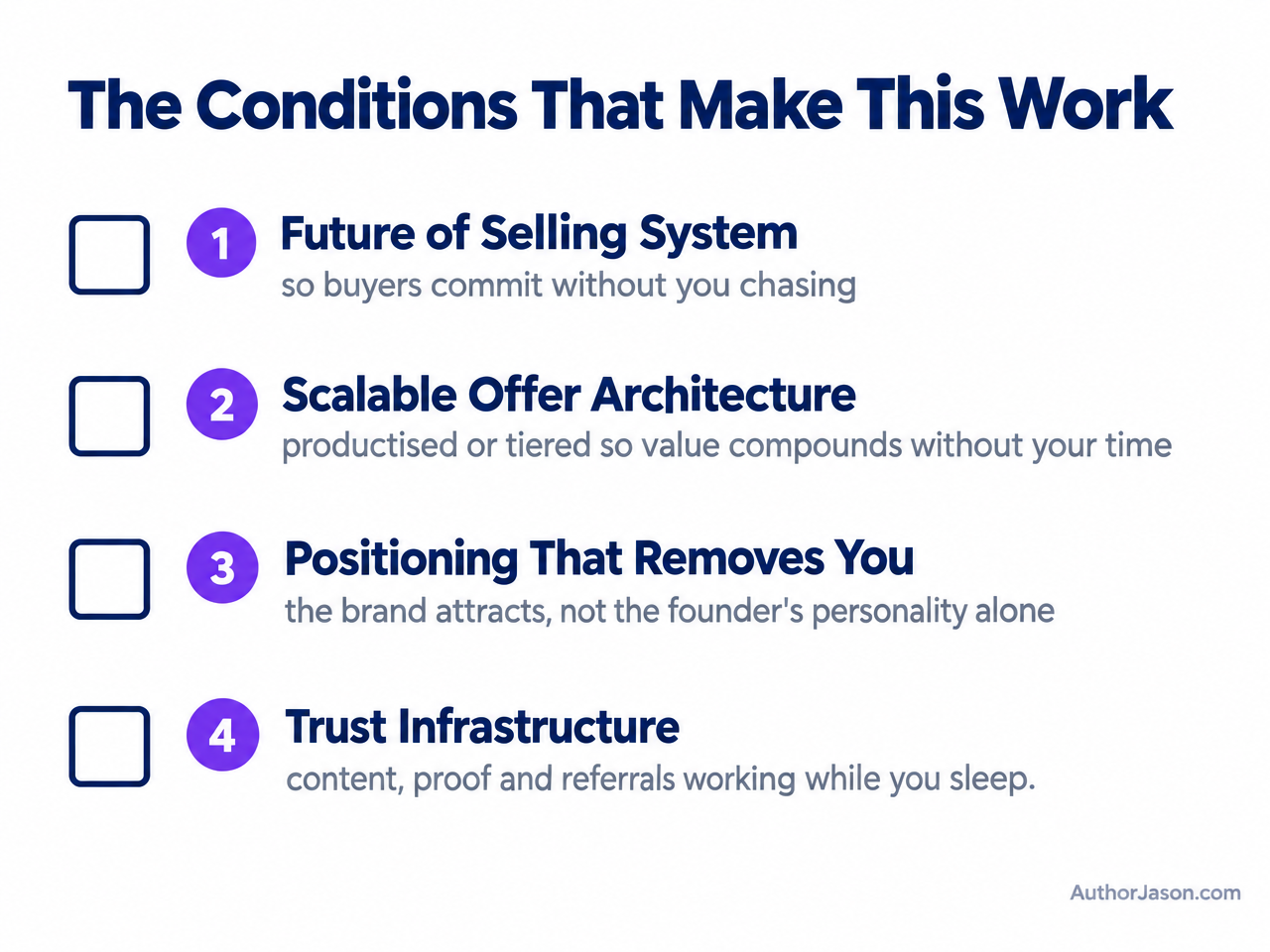
The Conditions That Make This Work
- Future of Selling System: Your sales process must be built so buyers can understand, believe, and act on your offer — without you needing to manually chase, convince, or close every single one. FOS gives founders the framework to build this.
- Scalable Offer Architecture: Your offer needs to be productised, tiered, or structured so that the value compounds without your time being the primary input. An offer that only works at your personal hourly rate will never compound.
- Positioning That Removes You: Your brand must attract and qualify buyers — not your personality, your network, or your hustle. When the positioning is sharp enough, the right buyers show up pre-sold.
- Trust Infrastructure: Content, proof, referrals, and testimonials must work while you sleep. If your sales pipeline goes cold every time you stop posting or stop networking, you have a trust gap, not a leads gap.
Part 6 — Native Ad
Part 7 — Sting
Alice Walton already built the structure — the only question is whether you will, or whether you'll still be trading hours for revenue while the compounding happens for someone else.


