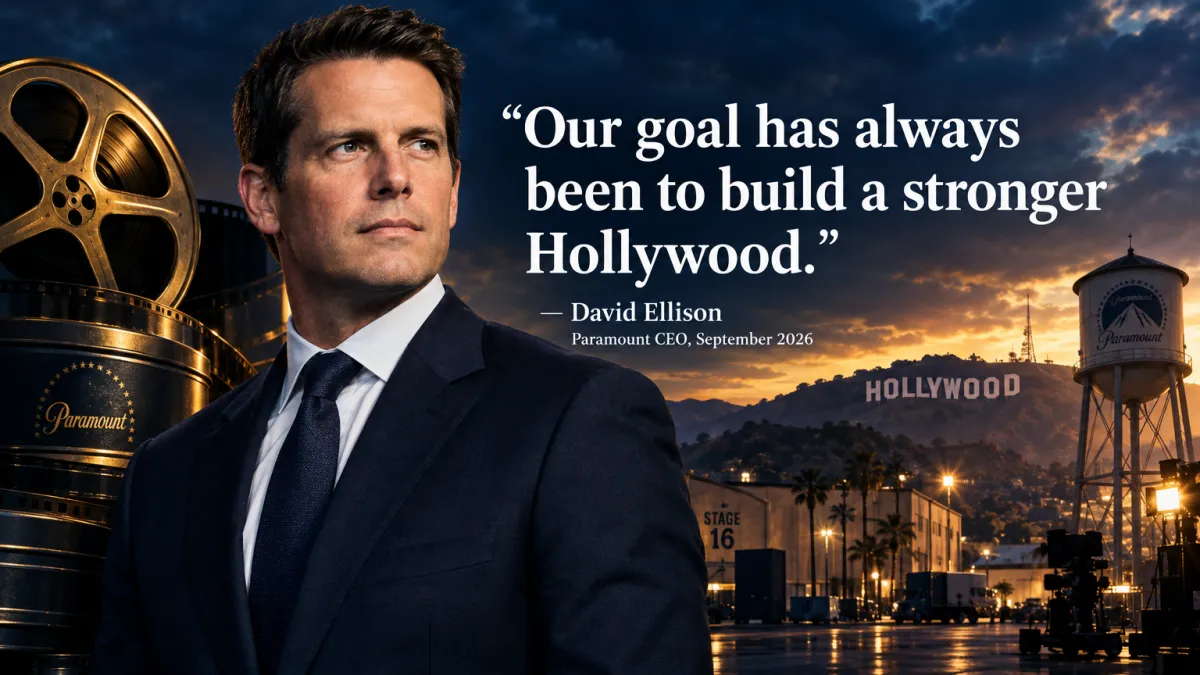
Billionaire David Ellison Just Closed the Deal Hollywood Said Was Dead — And It Changes Everything For Founders Who Keep Losing the Room
Part 1 — The Story
David Ellison just did what Hollywood said was impossible — and he did it without giving up a single asset.
Twelve state attorneys general. The Writers Guild of America. A $7 million-per-day ticking clock set to detonate on October 1. And an entire industry that publicly called him a rich kid playing mogul. David Ellison, 43, Chairman and CEO of Paramount Skydance, faced all of it — and on September 21, 2026, cleared every final legal hurdle on the $111 billion merger of Paramount and Warner Bros. Discovery. The deal is expected to close by early October 2026 (Deadline, September 2026).
Most people are reading this as a Hollywood headline. You should be reading it as a masterclass in deal-closing under pressure.
Part 2 — Why This Should Bother You
Think about the last deal you lost.
Not the deal where the prospect said your price is too high or now is not the right time. I mean the deal where everything felt right — the product fit was real, the pain was obvious, the budget was there — and it still died. It died in a committee. It died because someone you never spoke to voted no. It died because you did not handle the objectors you did not even know were in the room.
That deal did not fail because your offer was wrong. It failed because you had no system for the people who could block it.
David Ellison just built that system at a $111 billion scale — running it against the most powerful objectors in the country. If you are leading your own sales at a startup with a team of five or more, what you are about to read is the most valuable ten minutes you will spend this week.
Part 3 — What Actually Happened
In February 2026, Paramount Skydance announced a definitive agreement to acquire Warner Bros. Discovery — valuing WBD at $81 billion in equity value and $110 billion in enterprise value (Deadline, September 2026). The combined entity would house CBS, Nickelodeon, Paramount+, HBO, CNN, HBO Max, and over 200 million direct-to-consumer subscribers (CNN, September 2026).
Then the blocking force arrived. A 12-state coalition of attorneys general, led by California AG Rob Bonta, filed an antitrust lawsuit in July 2026 — a full month after the U.S. Department of Justice had already approved the merger. The Writers Guild of America added their own lawsuit. A court-imposed restraining order froze the deal. And a ticking fee of $7 million per day was set to activate on October 1, meaning every day of delay was burning cash (Deadline, September 2026).
Ellison's team settled both lawsuits on September 21, 2026. The consent decree: 30 or more theatrical films annually for years one and two, 32 per year for years three through five; a $1.5 billion commitment to US film production; a $47.5 million workforce development fund; and CNN editorial guardrails — all without selling a single asset (Deadline, September 2026; CNBC, September 2026).
Paramount shares rose 9%. WBD gained 10%. Approvals came from competition authorities in nearly 70 jurisdictions worldwide (Deadline, September 2026).
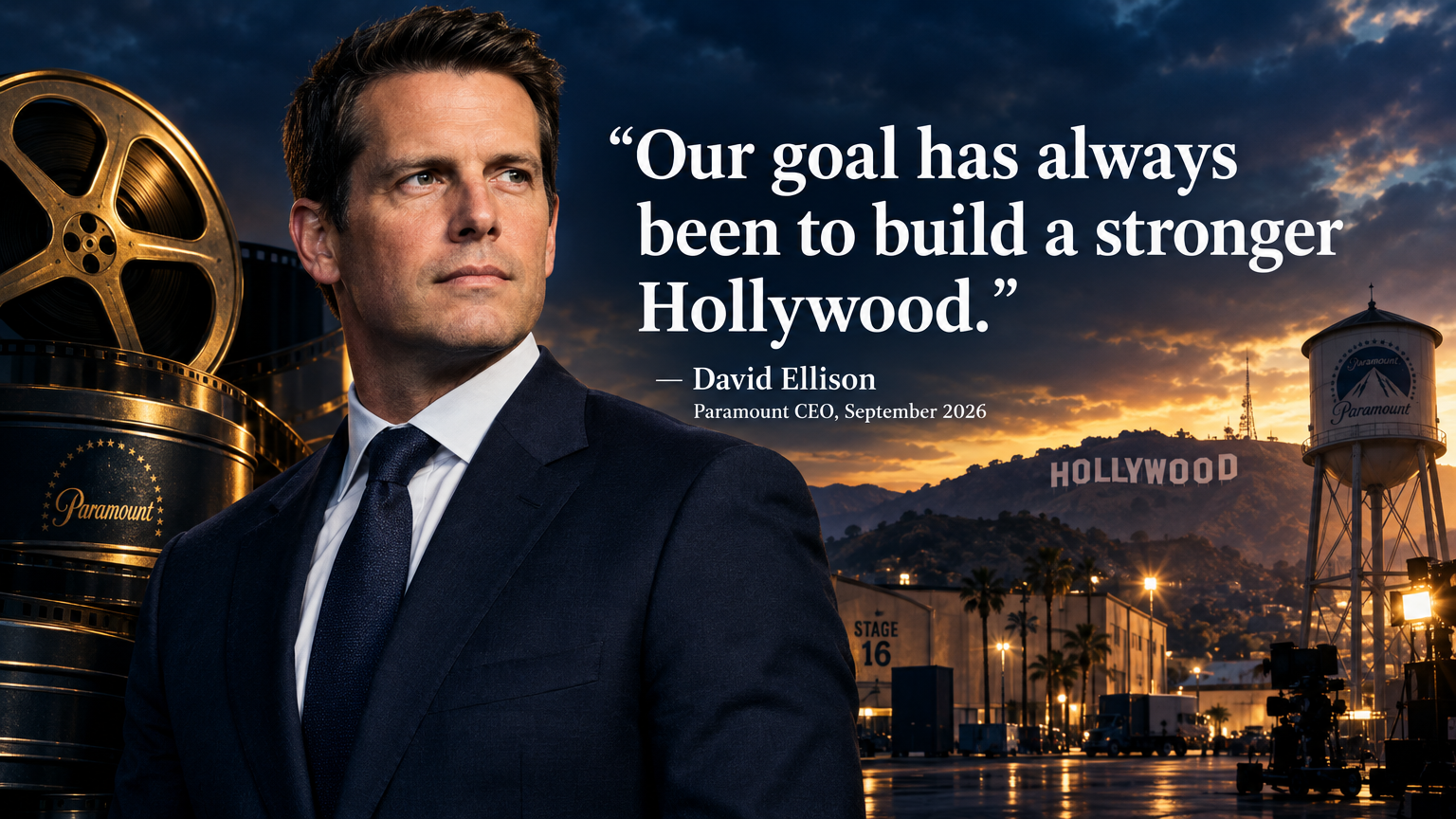
Our goal has always been to build a stronger Hollywood — one with more stories told, greater choice for consumers and stronger competition. — Billionaire David Ellison, Paramount CEO, Deadline, September 2026
Ellison's move is one Jason has seen across 1,000+ founders. Here is what most miss.
Part 4 — The Lesson Every Founder Is Missing
Most founders think the problem is their offer. They go back and lower the price. They build a better deck. They add more features to the proposal. They try to win the decision-maker harder.
But the real problem is the objectors they never addressed before walking into the room.
In this merger, the deal had already passed DOJ antitrust review. It had cleared approvals in nearly 70 international jurisdictions. By every technical measure, it was done. And then a coalition of state-level attorneys general — people who had never been part of the primary deal flow — filed a suit that froze a $111 billion transaction for months. Ellison did not win this deal in September 2026. He won it in every conversation, every negotiation, and every concession he made with the people who had the power to block him — long before they exercised that power.
When the settlement came, the agreement required no asset sales. Why? Because Ellison came to the table with ideas, and built a framework the other side could say yes to. He did not fight the objectors. He enrolled them.
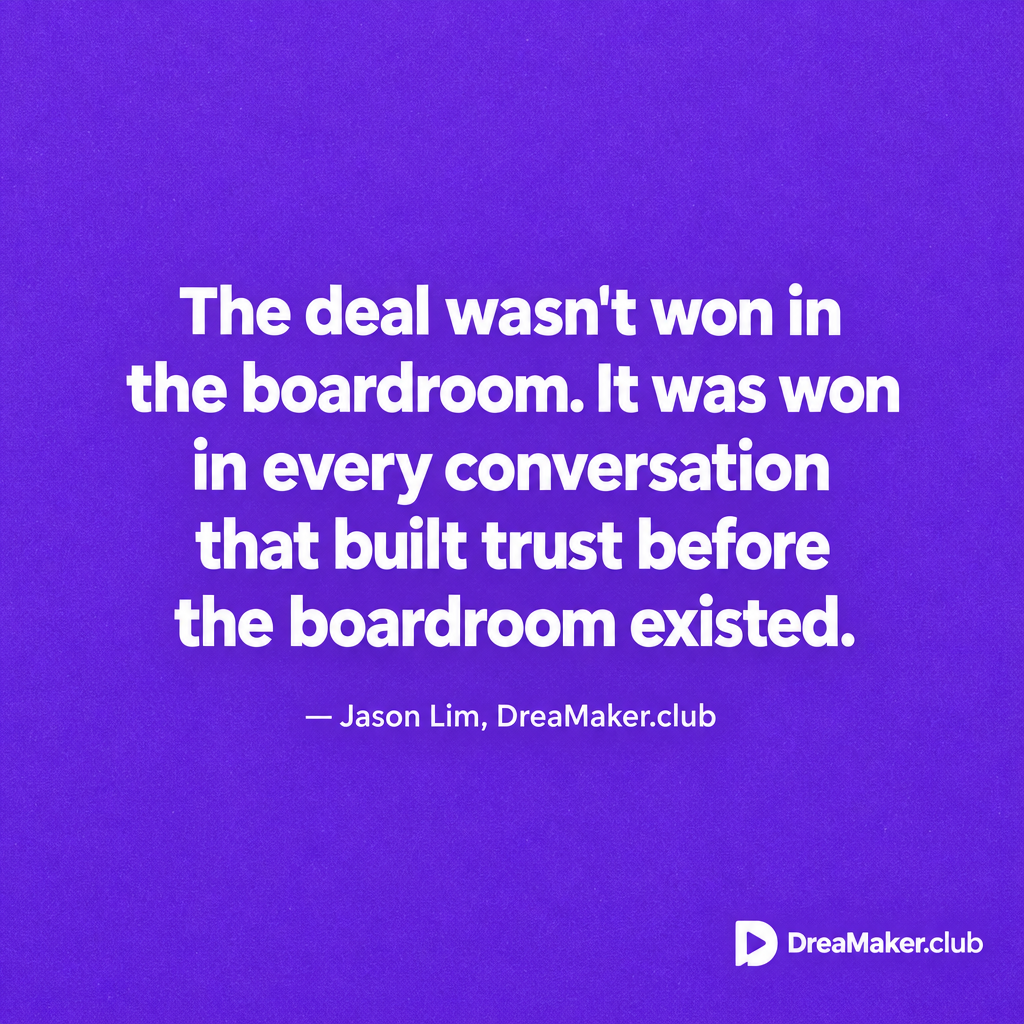
The quotable lesson:
Founder Story
Stanley Tan: 45 Buyers in 3 Hours
Stanley Tan is a Guinness World Record holder. His credentials were impeccable. But for years, none of that translated into closed deals — because he had no system for the people who needed to say yes before the pitch even started. Once he built a structured approach to pre-selling and handling objectors early, he closed 45 buyers in a single 3-hour event. The product did not change. The system did.
The founders Jason works with who struggle to close consistently share one pattern: they invest all their energy in perfecting the pitch and almost none in mapping out who has the power to block the deal — and building trust with those people first. By the time they are in the room, they have already lost the deal to someone they never spoke to.
David Ellison built a settlement framework that gave 12 attorneys general and a major union enough wins that they could say yes without losing face. That is not negotiation. That is the architecture of trust, built in advance. And it is a learnable system.
Part 5 — The Hidden Opportunity Right Now
Here is what most founders will do after reading this story: admire it, close the tab, and change nothing.
The founders who move on this lesson in the next 30 days will do something different. They will audit every deal in their pipeline right now and ask: Who has the power to block this — and have I spoken to them? Not who is the decision-maker. Who are the objectors. The internal champion's boss. The procurement officer. The legal reviewer. The silent partner. The board member who vetoes on principle.
The opportunity is not about size. Jeffrey Teo used this same principle to close 63 customers in 100 days. He did not have a bigger product or a lower price. He had a system that reached every stakeholder who mattered before they became a blocker. Leon used it to close a $2M partnership. The conversations that closed that deal started months before the contract was signed.
Here is what needs to be true for you to use this right now:
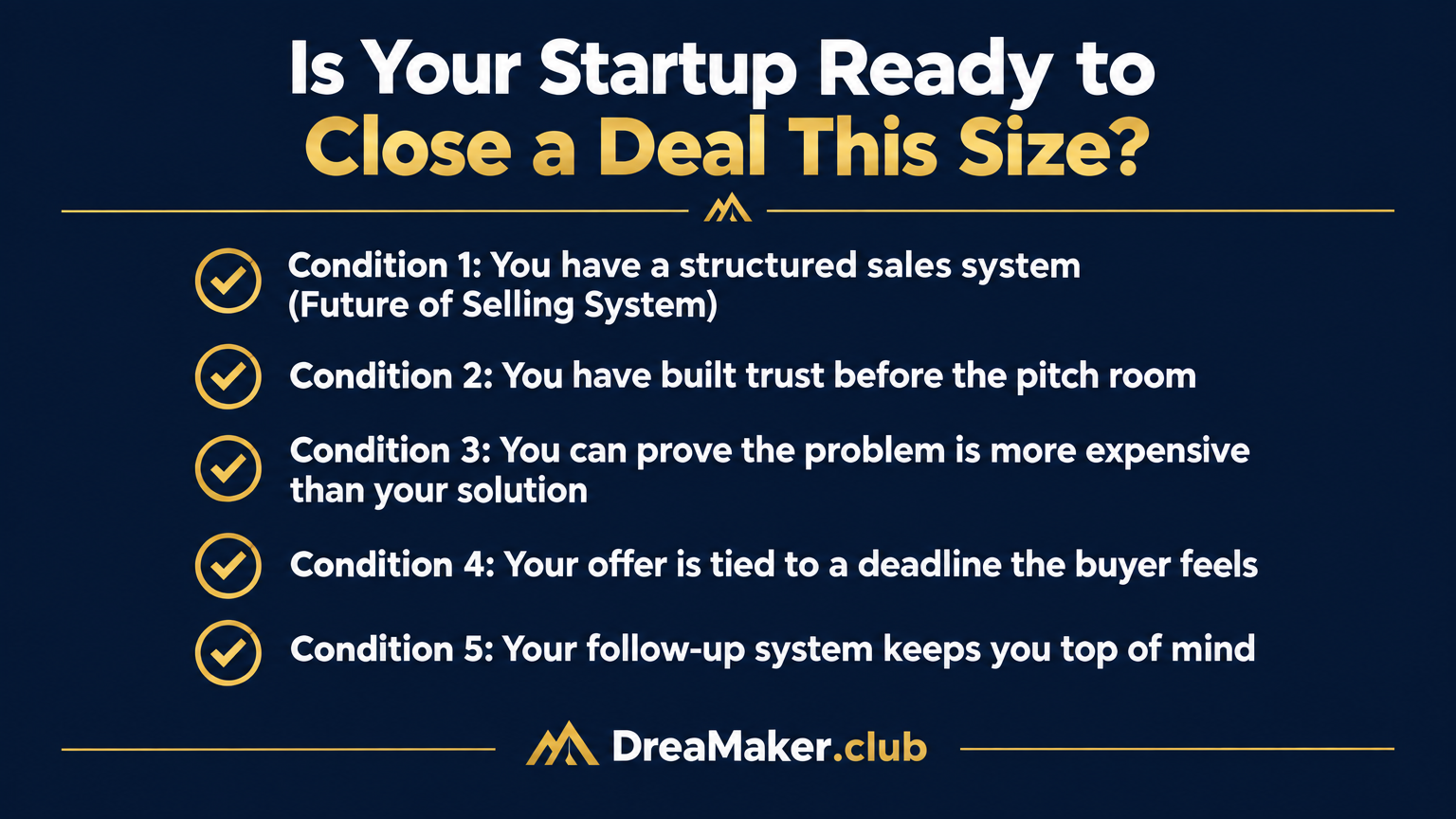
Is Your Startup Ready to Close Deals Like This? Check the 5 Conditions:
- ✅ Condition 1: You have a structured sales system — not instinct, not improvisation — a repeatable process for every conversation. The Future of Selling System is that system.
- ✅ Condition 2: You have already mapped every stakeholder who can say NO — not just the person who says yes.
- ✅ Condition 3: You have built trust with the blocking stakeholders before the pitch meeting — not during it.
- ✅ Condition 4: You can show the cost of inaction — the equivalent of a ticking fee — so the buyer feels urgency without pressure.
- ✅ Condition 5: You have a follow-up system that keeps you present and trusted between conversations — not just a reminder to check in.
If you said yes to all five, you are already operating at a level most startup founders never reach. If you said no to even one — particularly Condition 1 — every deal you close from here is harder than it has to be.
NEW!
September 2026
Dear Founders,
You are losing deals not because your offer is wrong — but because you have no system to identify, build trust with, and close every stakeholder who can block you before they become a wall.
I know how that feels. Most of the 1,000+ founders I have worked with since 2015 came to me after losing a deal they should have won — to a committee vote they never saw coming, a procurement cycle that stalled with no follow-up system, or a decision-maker who went cold because trust was never built in the first place.
What I found — and what David Ellison just demonstrated on a $111 billion stage — is this: the founders who close consistently do not have better offers. They have a better system.
Salesforce research shows that 76% of buyers expect companies to understand their needs before making contact (Salesforce State of Sales). Most founders walk in having understood only the obvious buyer. The Future of Selling System teaches you to map, build trust with, and close every person in the deal ecosystem.
$22M+ in combined sales by FOS graduates. Jeffrey Teo: 63 customers in 100 days. Stanley Tan: 45 buyers in one 3-hour event. Leon: a $2M partnership. These are not exceptions. They are what happens when founders stop pitching and start running a system.
No contracts. Cancel any time. Used by 1,000+ startup founders since 2015.
Not ready for $19? Start free.
The Objection Playbook: 25 Word-for-Word Scripts to Close More Sales
The exact words Jason's founders use when a buyer says too expensive, send me info or I need to think about it. Free PDF, sent to your inbox.
Send Me the 25 ScriptsDavid Ellison already moved. The only question is whether you will — or whether you will read about someone else who did.


