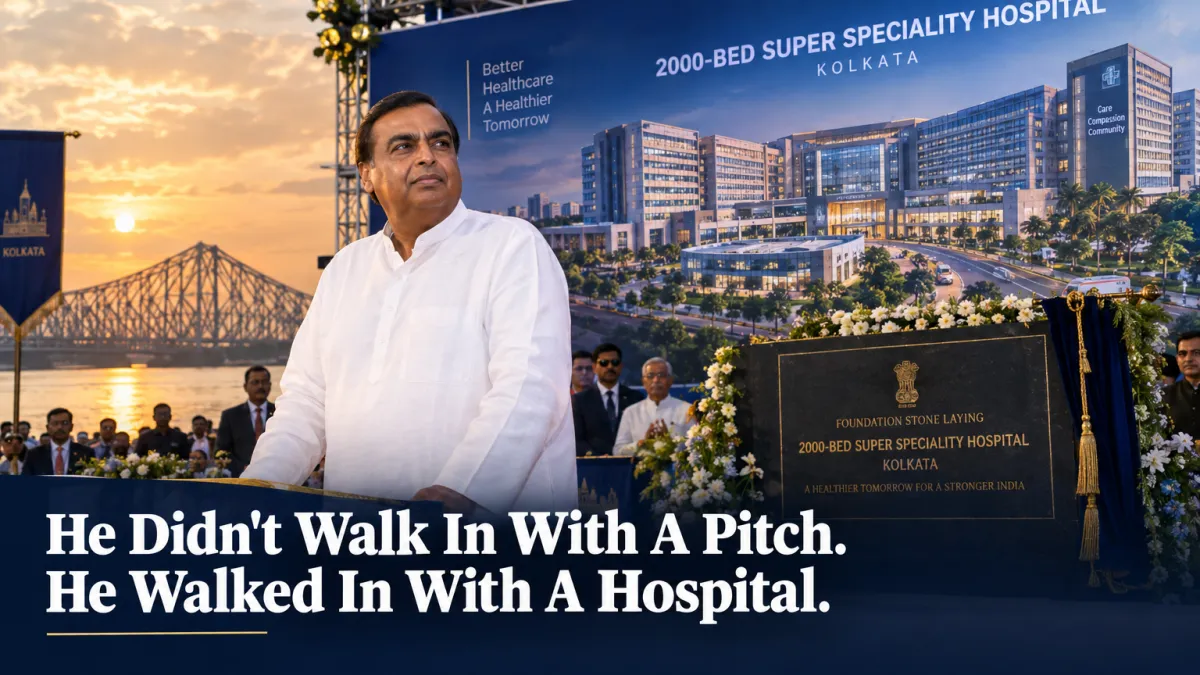
Billionaire Gautam Adani Just Laid a Hospital Foundation in Kolkata — And It Changes Everything For Founders Who Can't Get in the Room
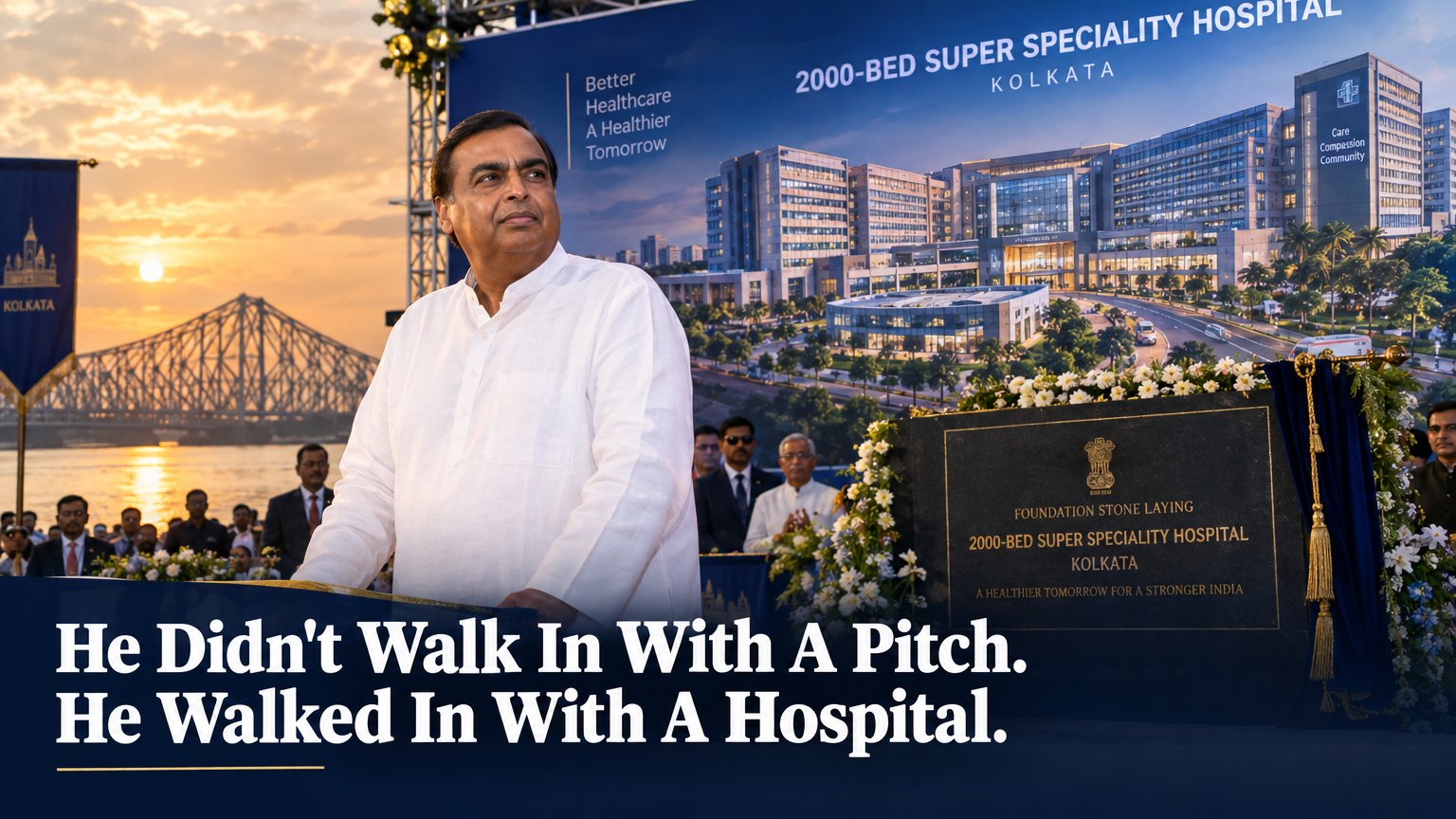
Gautam Adani didn't pitch his way into West Bengal. He showed up with a 2,500-crore hospital.
On the morning of September 24, 2026, before a single business meeting began, Adani visited Kalighat Temple, offered prayers, and then walked into the foundation-laying ceremony for Adani Arogya Mandir — a proposed 2,000-bed integrated healthcare facility in New Town, Kolkata. West Bengal Chief Minister was among the senior officials present. Industry representatives filled the room. Nobody needed to be convinced he was serious.
He had already built the room. Now he just had to show up in it.
Why This Should Hit Every Founder Like a Punch to the Chest
Think about the last time you tried to get into a room that mattered. You crafted the email. You polished the pitch deck. You tried to get an introduction through a third-degree LinkedIn connection. Maybe you sent a cold message that started with the words every buyer dreads.
And it probably didn't work — or if it did, it was slow, fragile, and left you in a weak negotiating position from the start.
Now look at what Adani did. He didn't request a meeting with the Chief Minister of West Bengal. The Chief Minister requested him. He didn't pitch a healthcare vision. He committed Rs 2,500 crore and 51 acres to prove it was real. He didn't ask for a seat at the table. He built the table, put 2,000 chairs around it, and reserved half of them for people who couldn't afford to pay.
This is not a story about a billionaire doing billionaire things. This is a mirror. And most founders will look at it and see only scale — not the principle underneath that works at every level.
What Actually Happened in Kolkata Today
Adani arrived in Kolkata on the night of September 23, 2026 — his first visit to West Bengal in this political cycle — ahead of the foundation-laying ceremony, as reported by PTI via The Print on September 24, 2026.
The centrepiece of the visit was the foundation-laying of Adani Arogya Mandir, a 2,000-bed hospital planned for Action Area 2 of New Town — the same tech and business corridor the West Bengal government has been promoting as its flagship investment zone, as reported by The Statesman (September 2026).
The numbers are significant. The investment is valued at more than Rs 2,500 crore, according to The Statesman (September 2026). The campus spans 51 acres, per Medical Buyer (September 2026). Of the 2,000 beds, 1,000 are proposed to be reserved for free treatment of economically weaker patients, per details shared by the West Bengal state government. The Adani Group gave a written commitment to fast-track the project, per The Statesman (September 2026).
This is also not Adani's first healthcare move at this scale. In April 2026, the Adani Group announced Adani Health City in partnership with the Mayo Clinic — a plan to invest over Rs 6,000 crore in integrated health campuses in Ahmedabad and Mumbai, per the Adani Group's official newsroom (April 25, 2026).
The pattern is deliberate, repeated, and accelerating. Billionaire Gautam Adani's move is one Jason has seen across 1,000+ founders. Here's what most miss.
The Lesson: Commitment Is the Only Pitch That Cannot Be Ignored
Root Cause Reframe
Most founders think the problem is that they can't get access to the right buyers, decision-makers, or markets. But the real problem is that they are trying to earn access through words while everyone else is offering words too.
Access is not won by pitching. Access is won by making it irrational to ignore you.
Adani did not request a meeting with the Chief Minister. Senior West Bengal officials confirmed a meeting was expected — because Adani was already there, already committed, already building. The government needed to show up. Not the other way around, as reported by PTI (The Print, September 24, 2026).
The Engineered Lesson
The biggest deals in history were never closed with a pitch deck. They were closed with proof of commitment.
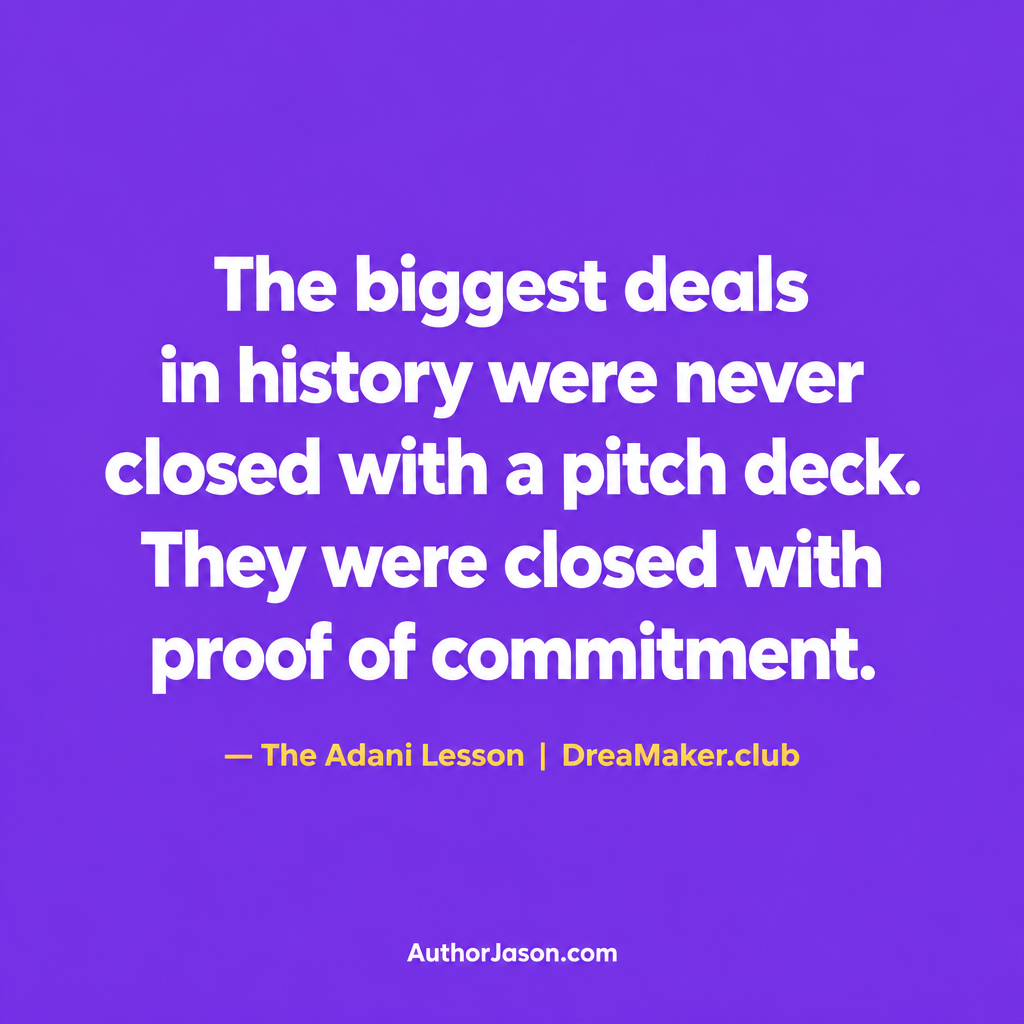
Here is what the Adani play teaches: commitment changes the power dynamic in a negotiation before a single word is spoken. When you commit visibly — when you spend, build, show up, reserve the resources, sign in public — the buyer or partner is no longer evaluating whether to trust you. They are evaluating whether they can afford to miss you.
Adani didn't just commit money. He committed culturally. He visited the Kalighat Temple before the ceremony. He arrived the night before. He came with a programme for the Durga Puja festival, donating Rs 25 lakh to each of the eight best community celebrations, as reported by IANS (September 24, 2026). Every one of those moves signals: I am not visiting your market. I am investing in your world.
Most founders pitch features. Adani demonstrated belonging. That is a completely different game — and the founder who learns to play it at their level will win rooms they were never formally invited into.
Founder Story Card
The visible problem: A B2B founder in Singapore can't get enterprise buyers to take her meetings seriously. Her deck is polished. Her product has early traction. But she's stuck in the gatekeeping loop — every meeting goes to we'll circle back.
The real root cause: She is competing on words in a market that decides on proof. Every buyer she talks to has also heard ten other founders this week say the same things. She sounds identical — not because her product is average, but because her commitment is invisible.
The founder lesson: Before you ask for the meeting, make the meeting feel small by comparison. Publish the case study publicly. Speak at their industry event unpaid. Host the roundtable they have been meaning to attend. Build something in their world before you ask for time in their calendar.
The move to make now: Identify the one visible commitment signal you can make in the next 30 days that makes it irrational for your target buyer to keep ignoring you. Not a pitch. A proof point they can see without you having to say a word.
The Hidden Opportunity: Most of Your Market Is Still Playing the Pitch Game
Here is the opportunity the Adani story reveals for startup founders right now: your competitors are still pitching. They are still sending cold emails, optimising subject lines, and building decks with why-us slides. And so, in most markets, the bar for visible commitment is still shockingly low.
You do not need to commit Rs 2,500 crore to make this principle work. You need to commit at a level that makes your seriousness undeniable relative to everyone else in your category. That could be a free pilot with a fully resourced team. A published report that solves your buyer's actual problem. A community event where you bring the decision-makers together and pick up the tab.
The founders who move first into commitment-based positioning in their market will own the access advantage that no pitch deck can create. That window is open right now — because most founders are still arguing about fonts on slide four.
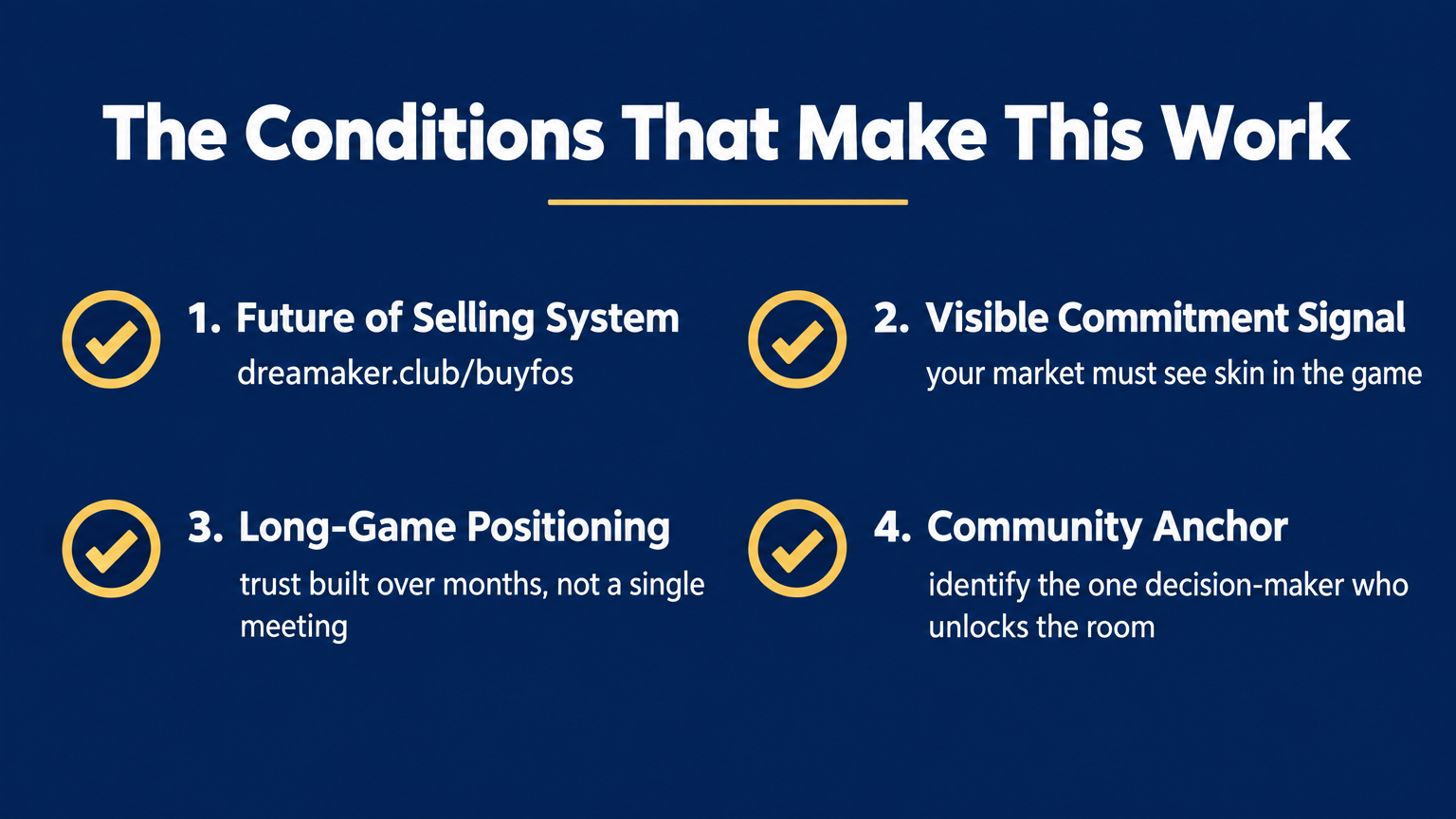
The Conditions That Make This Work
- Future of Selling System: Commitment-based positioning only works when your underlying sales system is built to convert trust into revenue. Without a clear structure for how buyers move from awareness to action, visible commitment creates attention but not sales. FOS gives you the conversion architecture. See how it works at dreamaker.club/buyfos
- Visible Commitment Signal: Your market must be able to see your skin in the game without you having to explain it. If your commitment requires a pitch to be understood, it is not visible enough. Build, publish, show up, sponsor, resource — make the signal self-evident.
- Long-Game Positioning: Adani's written commitment to fast-track the project (The Statesman, September 2026) was not a spontaneous gesture. It was the result of months of government engagement. Commitment-based positioning compounds over time. A single event is not the strategy — the pattern is.
- Community Anchor: Adani did not just commit to infrastructure. He committed to the culture — the Durga Puja sponsorship, the temple visit, the industry roundtables. Identify the one decision-maker, event, or community node that unlocks the room you want, and commit to their world, not just their calendar.
If this story hit a nerve, it is probably because the same pressure is already showing up in your business.
You have a strong product. You have early proof. But you keep hitting the same wall — buyers who smile in the meeting and disappear afterward, deals that stall at the we-need-to-think-about-it stage, and a sales process that depends entirely on you pushing it forward. The access is there. The conversion is not.
The Future of Selling System helps founders turn expertise, trust, and timing into a sales system that buyers can understand, believe, and act on.
Adani already moved. The only question is whether you will — or whether you'll read about someone else who did.


