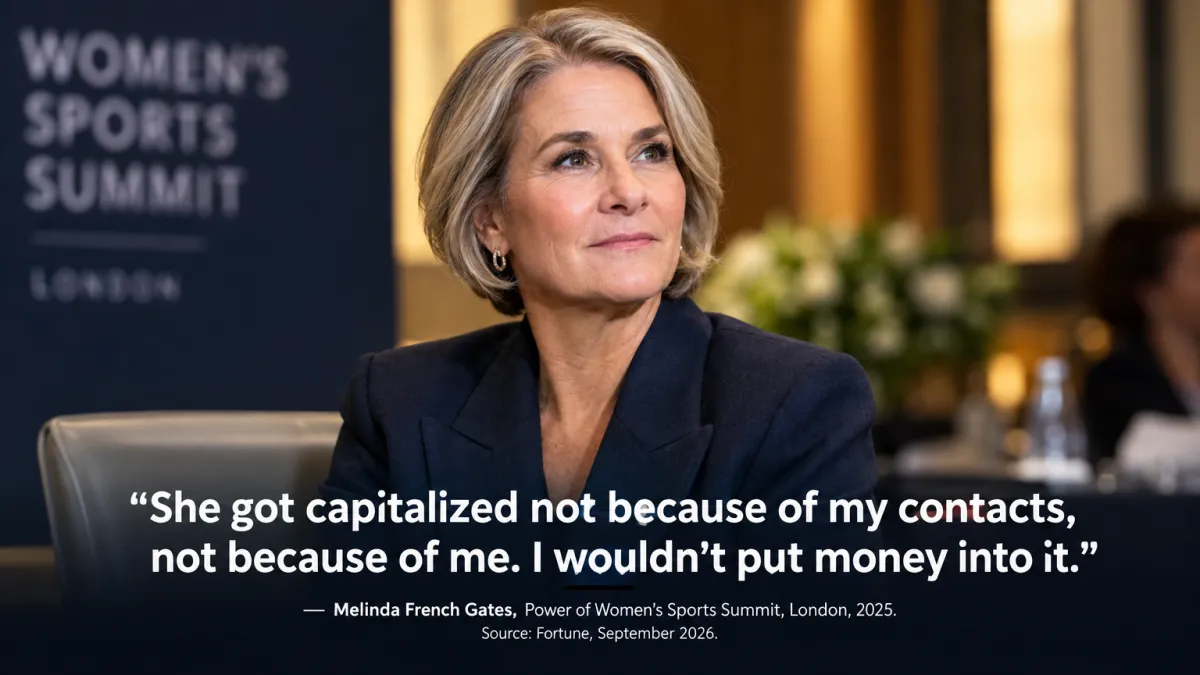
Melinda French Gates is worth $34.5B and knows every top investor on earth — and she still said no to her daughter's startup. That deliberate refusal just exposed the single rule of startup fundraising most founders violate before they ever send their first pitch deck. It is not about who you know. It is not about what you have. It is about whether the market believes you — without you leaning on anyone.
The Pressure You Are Probably Not Feeling — But Should Be
Here is the problem most founders never see until it is too late.
When you start building, you naturally use everything around you. Your network. Your reputation. Your warm introductions. You call in favors. You get respected contacts to vouch for you. You use a LinkedIn connection to get a meeting you could never have booked cold. It works. You close the intro round. You hit that first milestone. You feel momentum.
Then the real test arrives: a buyer who has never heard of you. An investor who does not know your name. A market that owes you nothing.
This is where most founders discover what was hiding behind their early wins. The shortcuts that built their initial credibility only work once. The market does not inherit the trust your network gave you. The buyer who took the meeting because of a mutual contact is not the same as a buyer who sought you out independently. Borrowed trust has an expiry date. The moment your warm network runs out, you are selling to strangers — and most founders have never built a system for that.
What Actually Happened — And Why It Matters
The facts are striking. French Gates is worth an estimated $34.5B, according to IBTimes UK, reporting in September 2026. Her daughter Phoebe Gates co-founded a fashion-tech startup called Phia with her Stanford roommate Sophia Kianni, according to Fortune, reporting in September 2026. The platform uses AI to compare clothing prices across more than 40,000 retail sites and recommends affordable alternatives, according to Fortune, reporting in September 2026.
In January 2026, Phia raised $35M from outside investors at a reported valuation of approximately $185M, according to IBTimes UK, reporting in September 2026. Not a dollar of that came from the family. Speaking at the Power of Women's Sports Summit in London, French Gates told host Amanda Davies: "I wouldn't put money into it," according to Yahoo Finance. She also deliberately withheld her investor contacts so the company would have to prove its value to strangers — not allies, according to ascendants.in, reporting in September 2026.
The reason she gave was not about money. It was about proof. According to Fortune, insisting on an independent fundraising path was about helping her daughter develop grit and the ability to weather rejection — and about ensuring the company was tested by the market, not protected from it.
Billionaire Melinda French Gates's move is one Jason has seen across 1,000+ founders. Here's what most miss.
The Root Cause — And the Lesson Most Founders Miss
Most founders think the problem is access — not having enough warm introductions, not knowing the right investors, not being plugged into the network that opens doors. But the real problem is validation dependency — building a business that can only move when someone powerful is standing behind it.
French Gates understood something most startup founders do not: a sale that happens because of who you know is not proof your offer works. It is proof your relationship works. Those are two completely different things — and they produce two completely different businesses.
The lesson is this: "The shortcut to the sale is the fastest way to destroy the sale."
When you rely on warm introductions to close every deal, you train yourself to sell to people who already trust you. You build a sales motion that only functions inside a trust circle you already inhabit. The moment that circle is exhausted — the moment you need to sell to buyers who have never heard of you, investors who do not follow you, markets that have no context for your name — your entire sales system collapses.
Phoebe Gates had access to perhaps the most powerful founder shortcut in the world: a mother with $34.5B and a Rolodex that includes the most influential investors on the planet. French Gates said no. Not because the money was not there. But because a company that raises money through family connections has not proven it can raise money. It has proven the family is well-connected.
The same logic applies to your startup. The warm deal you closed because a friend made an introduction is a data point about your friend's network. The cold deal you closed because your positioning was compelling, your offer was clear, and your buyer came to you convinced — that is a data point about your business.
Founders who build on the first type of evidence believe they have product-market fit when they have network-market fit. When the network runs out, growth stops. When the allies are exhausted, the pipeline goes cold. The business was never as strong as it looked.
Founder Story Card
The visible problem: Phoebe Gates had the most powerful fundraising shortcut on earth available to her — a billionaire mother with a world-class investor network — and could not use it.
The real root cause: Using the shortcut would have made the company unfundable in the eyes of serious investors. A cap table built on family money does not prove the market wants the product. It proves the family supports the founder.
The founder lesson: Every sale that happens because of your network, your relationship, or your reputation is a sale that proves your connections — not your offer. Real traction is what happens when strangers buy.
The move to make now: Audit your last ten closed deals. How many came from warm introductions inside your existing network? How many came from buyers who found you, believed your positioning, and bought without needing a mutual contact? The ratio tells you whether you have a business or a network.
The Hidden Opportunity — And the Conditions That Make It Real
Here is what most people reading this story miss: French Gates did not just say no. She said: go prove it.
And Phoebe Gates did. Phia raised $35M at a reported $185M valuation from outside investors who did not know the family and were not doing anyone a favor, according to IBTimes UK, reporting in September 2026. That funding round is worth more than any check a billionaire parent could have written — because it is independent evidence that the market believes in the business.
For startup founders, this is the actual opportunity inside this story. You do not need a better network. You do not need a warmer introduction. You need a positioning and sales system so clear, so credible, and so well-structured that strangers can understand it, believe it, and act on it — without anyone vouching for you.
That is the kind of business that scales. That is the kind of pipeline that does not dry up when your warm contacts run out. And that is the kind of sales motion that attracts capital, customers, and compounding growth — because it works in the cold.
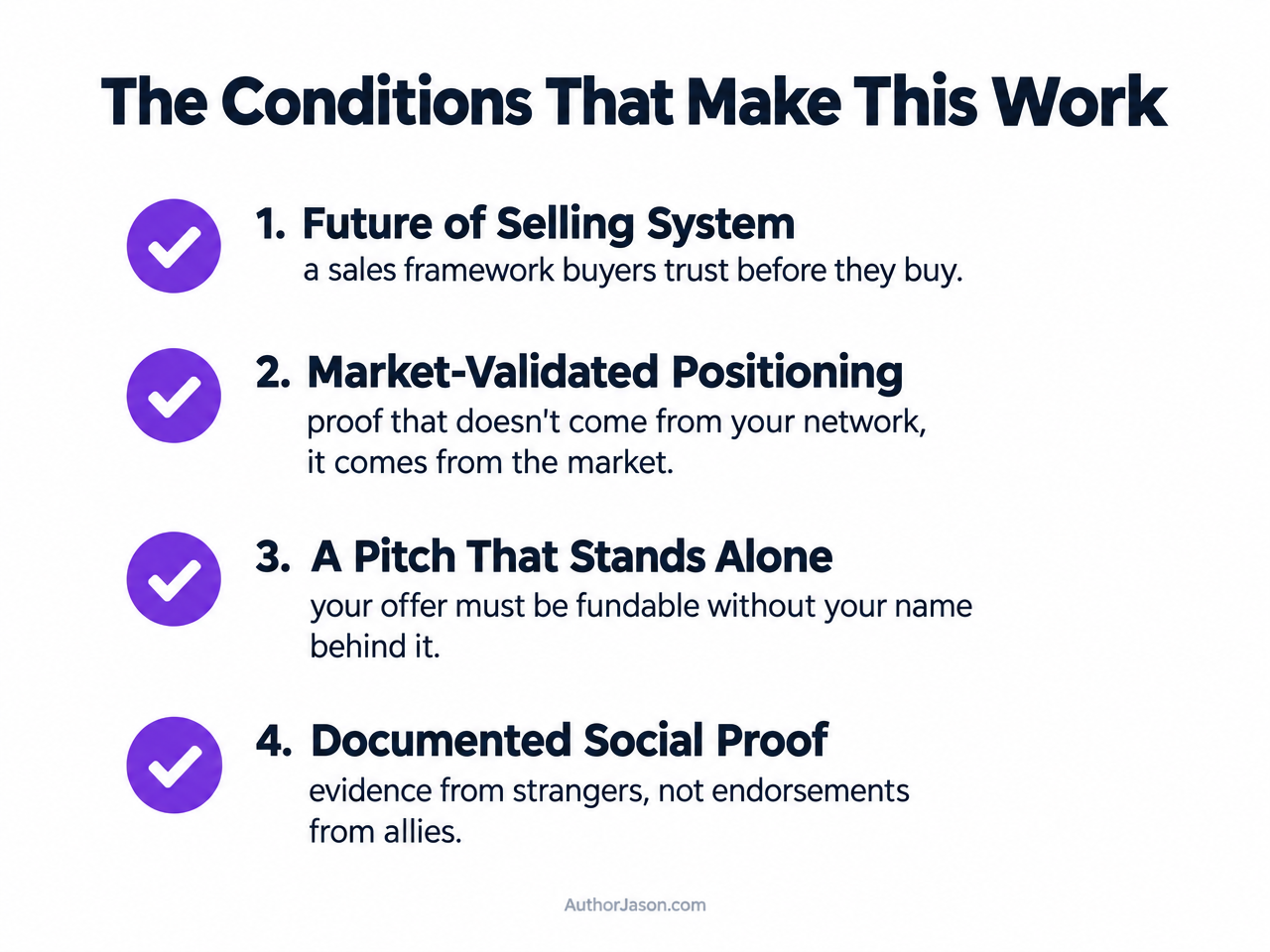
The Conditions That Make This Work
- Future of Selling System: A structured sales framework that helps strangers understand your offer, trust your positioning, and take action — without needing a warm introduction or a vouching contact.
- Market-Validated Positioning: Proof that does not come from your network. Evidence from buyers who found you independently, engaged without a referral, and paid without being nudged by a mutual contact.
- A Pitch That Stands Alone: Your offer must be compelling enough to close without your name, your story, or your relationships behind it. If it needs a warm introduction to work, it is not a sales system — it is a favor chain.
- Documented Social Proof From Strangers: Testimonials, case studies, and results from buyers who had no prior relationship with you. This is the evidence that converts cold prospects and satisfies serious investors.
Melinda French Gates already moved. The only question is whether you will — or whether you'll read about someone else who did.


