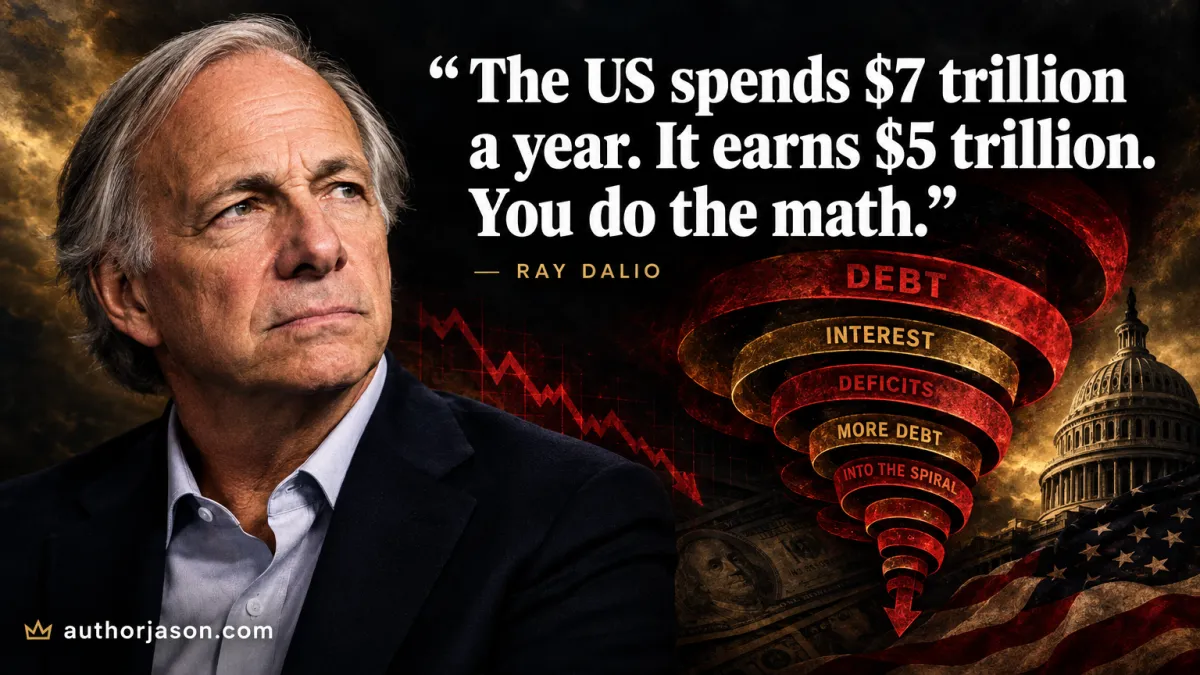
Why Billionaire Ray Dalio's Debt Crisis Warning Is The Wake-Up Call Every Founder Needs Right Now
Part 1 — The Hook
Ray Dalio just told the world a US debt crisis is coming within three years. Most people read the headline and kept scrolling.
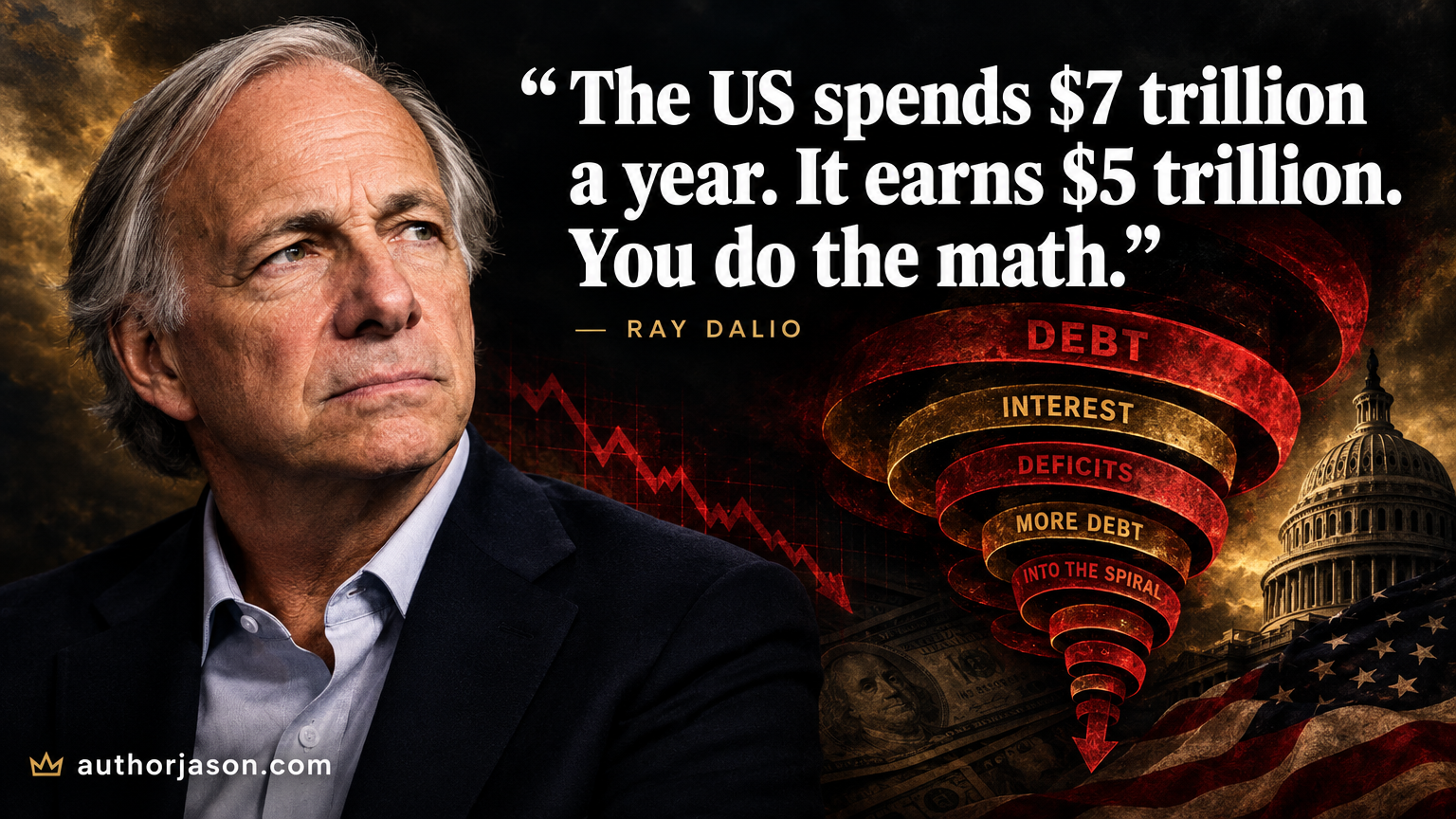
On October 6, 2026, in a Bloomberg interview with Haslinda Amin, Dalio stated — plainly, without hedging — that the US spends $7 trillion a year while earning only $5 trillion in revenue. That is 40% overspending. He put a three-year deadline on the fallout. By the time TheStreet amplified it on October 7, markets were already pulling back.
Here is what nobody is asking: what does a debt crisis mean for founders who are building right now, in the US, trying to close deals every week? The answer changes everything about how you sell.
Part 2 — Why This Hits You Personally
When capital gets tight, buyers don't stop buying. They stop wasting. Every purchase gets harder to justify. Every vendor gets harder to sell. Every "I'll think about it" becomes a six-month stall. Every "send me a proposal" becomes a black hole.
If your sales process works great in a bull market — when buyers are optimistic, budgets are loose, and confidence is high — you are about to find out exactly how fragile it is.
Dalio isn't warning about a blip. He's warning about a structural shift. The 10-year US Treasury yield already hit 5.31% in early October 2026 — its highest since April 2002. That is a real cost of capital signal. Businesses feel that in Q2 budgets, in board approvals, in procurement freeze cycles.
The founders who survive this window will be the ones who built a repeatable, pressure-tested sales system before the squeeze arrived. The rest will be improvising into headwinds. Which one are you?
Part 3 — What Actually Happened
On October 6, 2026, Bridgewater Associates Founder Ray Dalio gave a wide-ranging interview on Bloomberg's Insight with Haslinda Amin. The core warning was direct: the US is approaching the limits of its debt cycle. Spending stands at $7 trillion per year. Revenue stands at $5 trillion. The gap — $2 trillion annually — is being funded by debt, and the interest on that debt is now projected to cross $1 trillion per year in 2026, according to the Congressional Budget Office. The total national debt sits near $39.2–40 trillion.
When asked for a timeline, Dalio said: "I think within the next three years." He specifically flagged the 2026–2028 window — between the midterm elections and the next presidential election — as a "particularly risky period." He added that China and Japan, two of America's largest Treasury holders, are pulling back from US government bonds. When your biggest lenders start selling, the cost of everything — mortgages, car loans, business credit — goes up. Dalio warned housing and auto loans would be squeezed first, and that "the people who have less get squeezed the most."
Markets reacted immediately. On October 7, 2026, the S&P 500 pulled back 1.41% after record closes the prior session, with fresh 52-week highs across the yield curve.
Billionaire Ray Dalio's move to sound this alarm publicly — with a named deadline, specific numbers, and a concrete mechanism — is one Jason has seen reflected across 1,000+ founders. Here's what most miss.
Part 4 — The Lesson Most Founders Miss
Beat 1: The Root Cause Reframe
Most founders think the problem is the economy. They watch the debt numbers, shake their heads, and wait to see what happens. They think: "If conditions get harder, I'll adapt."
But the real problem is not the economy. The real problem is that most founders don't have a sales system that works when conditions get worse.
Dalio didn't publish his warning and then wait. He built a system — Bridgewater's famed "radical transparency" and algorithmic decision-making — precisely so that Bridgewater could perform in any macro environment. His personal net worth has grown through multiple financial crises, not despite uncertainty, but because he built a system that functions under pressure.
Most founders do the opposite. Their sales process is a collection of habits: whatever worked last quarter, whatever feels right in the room, whatever their best salesperson happens to do naturally. That is not a system. That is a guess dressed up in routine.
When a buyer gets squeezed — when budgets tighten, approvals slow down, and the CFO is suddenly in every purchase decision — a guess fails. A system holds.
Beat 2: The Lesson
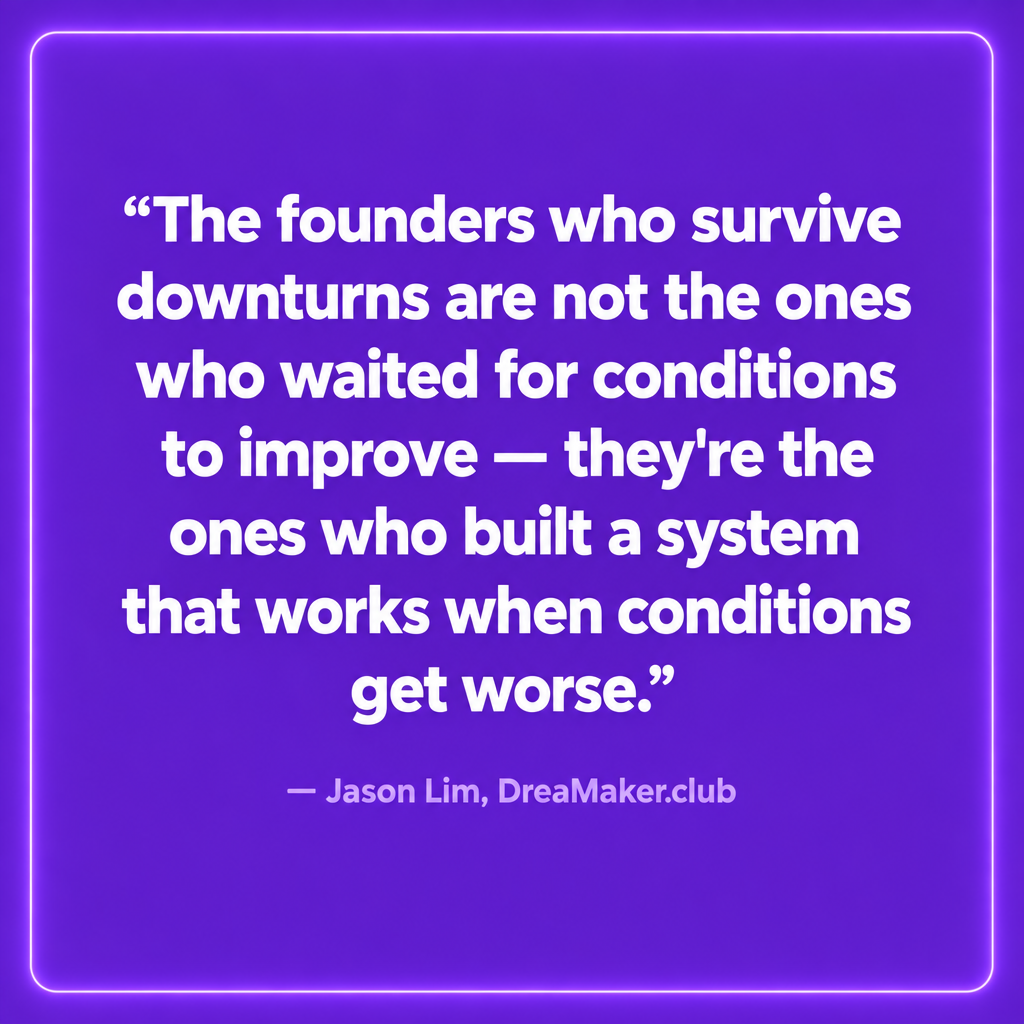
"Your sales process is either a system or a guess — and in a downturn, guesses cost you everything."
The founders who thrived through the 2008 financial crisis didn't do it by being smarter than the market. They did it because they had already built a sales process that did not depend on buyer confidence to function. They could still qualify leads, handle objections, close deals — even when the news was grim.
Dalio has been sounding this alarm since at least August 2026, when he published a long post recommending investors hold 10–15% of their portfolio in gold. He didn't wait for the crisis to arrive to prepare. He had already built his hedge.
🧩 Founder Story Card
Stanley Tan closed 45 buyers in 3 hours — not during a bull market surge, but by following a structured sales system that handled objections, created urgency, and made buying easy regardless of external conditions.
Jeffrey Teo brought in 63 customers in 100 days using the same system — a repeatable process that didn't rely on buyer confidence or market optimism. It worked because the system was built for pressure.
Both are graduates of Jason Lim's Future of Selling System (FOS).
A tighter economy doesn't mean founders can't close. It means buyers become more selective. And selective buyers don't stop buying — they simply give their money to the seller who makes the best case, most clearly, with the least friction. That seller needs a system, not a wing and a prayer.
Part 5 — The Hidden Opportunity
Beat 1: What Most Founders Are Missing
Here is the counterintuitive truth buried in Dalio's warning: market downturns eliminate weak competition faster than any strategy you could run.
When capital gets tight, companies that relied on cheap debt, loose VC funding, and perpetually optimistic buyers get flushed out. The vendors who survive are the ones buyers trust most, who communicate value most clearly, and who make the sales process easiest for procurement to approve. In a tighter market, a better sales system is a competitive advantage that compounds.
Dalio's three-year window is not just a warning — it is a clock. Founders who use the next 12 months to build a pressure-tested sales system will be positioned to take market share as weaker competitors fold. Founders who wait will be scrambling to figure out their pitch while the window is closing.
Jason has seen this exact pattern across more than 1,000 founders since 2015. The $22M+ in combined sales generated by his graduates didn't happen in perfect conditions. It happened because those founders had a process that could close in any condition. Including this one.
Beat 2: Are You Ready to Win Through the Downturn?
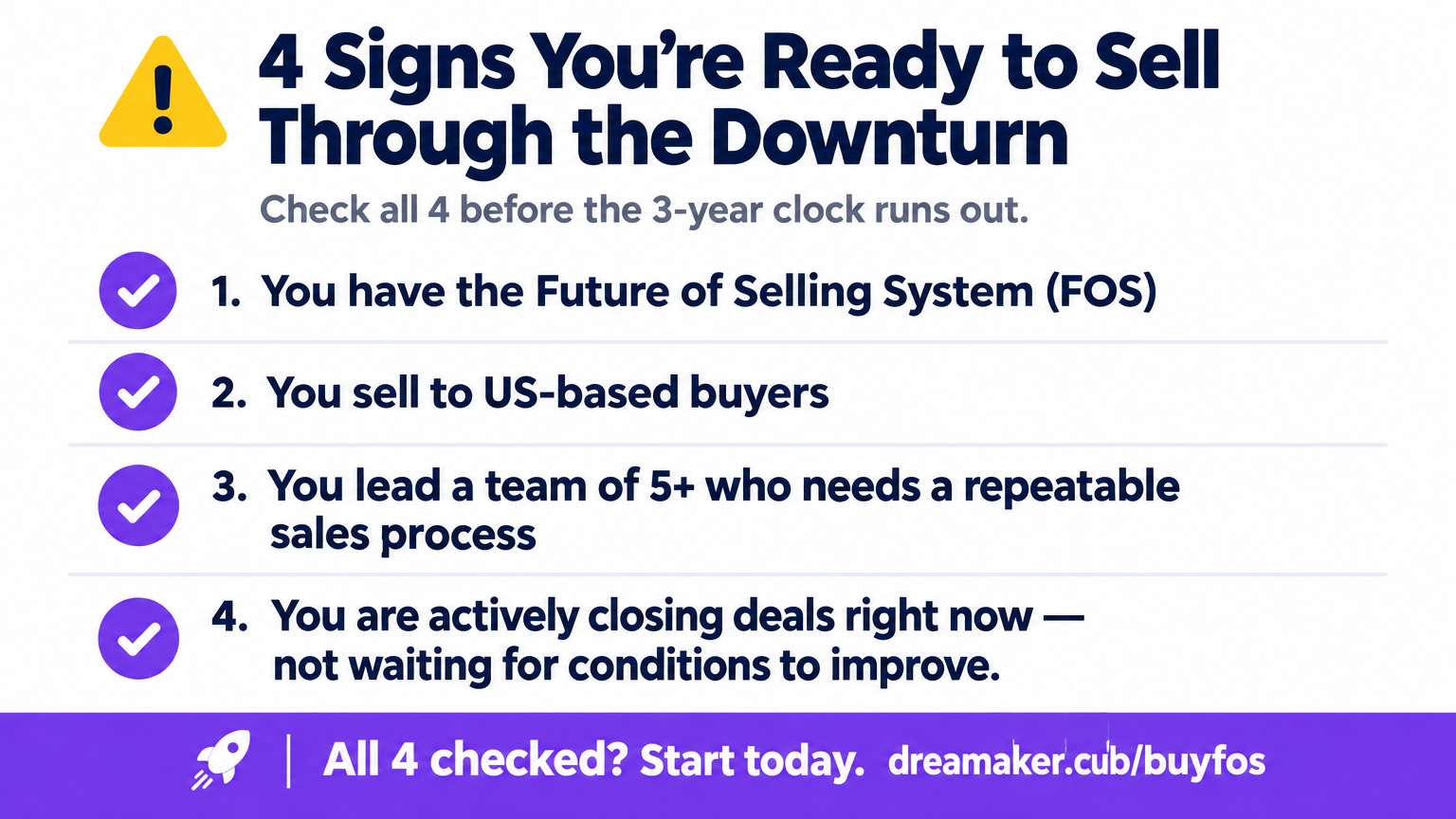
Check all four before the three-year clock runs out:
You have a structured, repeatable sales process that handles objections, creates urgency, and closes without relying on luck or buyer mood.
Dalio's warning is specifically about the US debt cycle and its impact on US consumer and business spending. Your buyers are in the direct blast zone.
Inconsistent selling is expensive in good times. In a downturn, it is fatal. If your team doesn't have one shared system, you are burning pipeline you can't afford to lose.
Waiting for conditions to improve is the most dangerous strategy in a Dalio-style macro shift. The founders winning right now are the ones closing now, with a system, regardless of the headline.
NEW! — October 2026
Dear Founders,
When capital gets tight, buyers get harder to close — unless you have a process that handles every objection, every time. That is exactly what the Future of Selling System was built for.
Get the Future of Selling System — $0.63/dayI know how it feels to watch the macro news and wonder if your pipeline will hold. I felt that too. But here is what I found: the founders who close in downturns aren't smarter — they have a system that takes the guesswork out of every conversation. According to Salesforce's State of Sales report, 76% of buyers expect sellers to understand their business needs before contact. FOS gives your team exactly that structured approach — so every conversation lands.
Since 2015, Jason's graduates have generated $22M+ in combined sales using the Future of Selling System. Leon closed a $2M partnership. Stanley Tan closed 45 buyers in 3 hours. Jeffrey Teo landed 63 customers in 100 days. Not in perfect markets. In real ones.
1,000+ founders trained since 2015. $19/month — $0.63/day. No excuses left.
Start the Future of Selling System Today →Not ready for $19? Start free.
The Objection Playbook: 25 Word-for-Word Scripts to Close More Sales
The exact words Jason's founders use when a buyer says "too expensive", "send me info" or "I need to think about it". Free PDF, sent to your inbox.
Send Me the 25 ScriptsBillionaire Ray Dalio already moved. The only question is whether you will — or whether you'll read about someone else who did.


