Billionaire Sergey Brin Spent $102 Million To Stop A Vote That Could Cost Him $13 Billion — And It Changes Everything For Founders Who Think Money Is The Objection
Part 1 — The Story
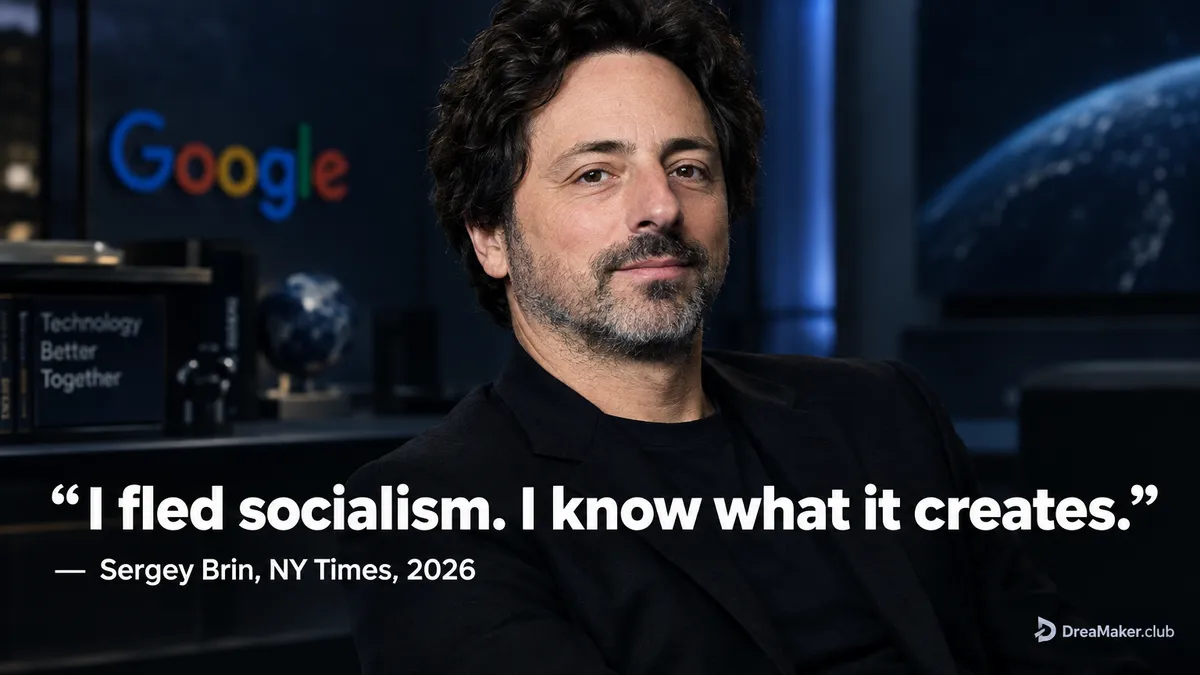
Sergey Brin just wrote a $102 million cheque to stop a law that could cost him $13 billion.
That is not a typo. The Google co-founder — currently estimated as the world's second-richest person with a net worth of approximately $270 billion (Fortune, 2026) — donated $102 million to a political action committee called Building a Better California, which he co-founded with former Google CEO Eric Schmidt (NPR, August 2026). The sole mission: defeat California's Proposition 40 before the November 3, 2026 vote.
Prop 40 is formally known as the Billionaire Tax Act. If it passes, Brin faces a one-time 5% wealth tax on his assets. Bloomberg estimates his personal liability at approximately $13 billion (NPR, August 2026).
He spent $102 million — and counting — to avoid a $13 billion hit. That is a potential 127x return on a single campaign spend. Most founders read this as a politics story. The ones who will close deals this quarter saw something else entirely.
Part 2 — Why This Matters To You Right Now
You have heard it. You will hear it again this week.
"It is too expensive."
And every time a buyer says it, most founders do one of three things: discount, justify, or fold. None of those work. Because the buyer is not objecting to your price. They are telling you they have not yet understood what not buying actually costs them.
Brin did not try to lower the cost of fighting the ballot measure. He did not negotiate with the opposition. He made the ROI of his spend so undeniably clear that spending $102 million felt like the rational, low-risk choice. He reframed the decision entirely.
Every time a founder loses a deal on price, they lose it for the same reason Brin's playbook works: the buyer never felt the cost of not acting. The vote is November 3. Your next sales conversation is probably sooner. This lesson has an expiry date.
Part 3 — What Actually Happened
California's Proposition 40 — the Billionaire Tax Act — would impose a one-time 5% tax on the net worth of approximately 200 California residents holding assets above $1 billion (CNN, September 2026). Proponents project it could raise $100 billion, with 90% directed to healthcare including Medi-Cal, and the remainder toward food assistance and public education (Fortune, 2026).
The eligibility cut-off was January 1, 2026 — meaning any California-resident billionaire who held state residency on that date is liable, regardless of where they live now (Wikipedia, 2026). Seven of the state's estimated 200+ billionaires reportedly left California ahead of that deadline, including Larry Page, Peter Thiel, and Travis Kalanick (Fortune, 2026).
By August 2026, Building a Better California had raised $118 million total, with $102 million from Brin alone — making him the single largest contributor (Wikipedia, August 2026). Total opposition spending has exceeded $187 million, against just $32 million raised by supporters (QZ, September 2026). The PAC booked more than $50 million in advertising airtime (QZ, September 2026).
Brin's group also placed two counter-measures on the November ballot — Proposition 41, which would block the tax from bypassing education spending protections, and Proposition 42, which would amend the state constitution to forbid retroactive taxation entirely (Wikipedia, 2026). If either countermeasure receives more votes than Prop 40, the wealth tax is nullified.
As of September 30, 2026, polling shows 48% of likely California voters support Prop 40 — short of a majority — with the race too close to call heading into the November 3 vote (QZ, September 30, 2026).
Billionaire Sergey Brin's move is one Jason has seen replicated across 1,000+ founders. Here is what most miss.
Part 4 — The Lesson + Root Cause Reframe
Beat 1 — Root Cause Reframe
Most founders think the problem is that their product is priced too high. But the real problem is that the buyer has never calculated what staying where they are actually costs.
When Brin decided to fight Prop 40, he did not agonise over whether $102 million was a large sum. He made one calculation: spend $102 million now, or risk writing a $13 billion cheque later. The math made the answer obvious. There was no price objection — only one rational response.
Your buyers are not different. They will spend without hesitation when the cost of not buying is made viscerally clear. The problem is that most founders never show their buyers that number. They pitch what the product does. They never quantify what inaction costs. So the buyer defaults to the only number they can see: your invoice.
Beat 2 — The Lesson
“The ROI of your sales system is never about what it costs — it is about what losing costs.”
— Jason Lim
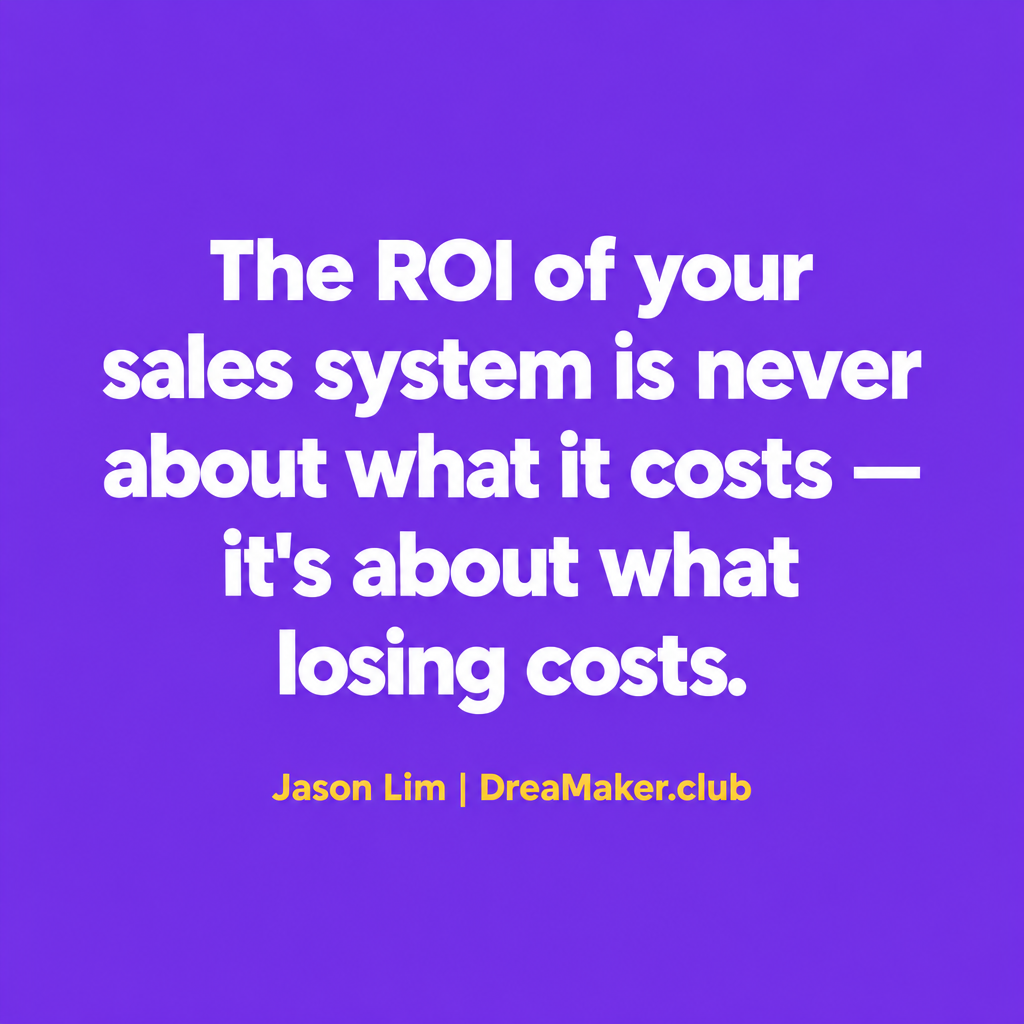
Brin's entire campaign is built on one sentence: a vote against Prop 40 is worth 127x its cost. He did not defend the spending. He reframed the decision. That is exactly what the most effective founders do in every sales conversation — before the buyer ever asks about price.
The founders who close consistently are not better at handling price objections. They are better at making the cost of inaction impossible to ignore before any objection is raised. They do it the same way every time, with a structured system — not improvised intuition. That repeatability is the difference between a founder who closes once in a great conversation and one who closes 45 buyers in a three-hour session.
Founder Story
Stanley Tan: 45 Buyers In 3 Hours
Stanley Tan, a DreaMaker.club graduate, closed 45 buyers in a single 3-hour session — not by lowering his price, but by restructuring how he framed the cost of inaction. His buyers stopped asking how much and started asking how soon they could start. That shift happened because of one thing: a structured selling system that made the consequence of not buying impossible to ignore.
Jeffrey Teo, another FOS graduate, brought in 63 customers in 100 days — not through discounting or hustle — through a repeatable system that reframed every conversation around buyer cost, not seller price. Leon used the same framework to close a $2M partnership. The pattern is consistent across 1,000+ founders and $22M+ in combined sales: the system that makes inaction expensive always outperforms the pitch that makes the product attractive.
Part 5 — The Hidden Opportunity
Beat 1 — The Opportunity Most Founders Are Missing Right Now
Here is what the Brin story reveals that almost no one is talking about: the opposition raised $187 million. Supporters raised $32 million. The side with the clearest ROI argument — and the most structured system to deliver it — is outspending the other by nearly 6 to 1.
In your market, the same dynamic is playing out. Right now, there are buyers in your pipeline who have already decided in principle that they need what you sell. They are not stuck on your product. They are stuck on the math. They cannot visualise — clearly, concretely, urgently — what the next quarter looks like if they do not move.
Every founder who learns to quantify buyer cost — not just product value — owns a decisive advantage over every competitor still leading with features and pricing. Brin understood the urgency: the vote is November 3. Your next deal closes or stalls in the next few weeks. The window is identical.
Beat 2 — Are You Ready To Take It?
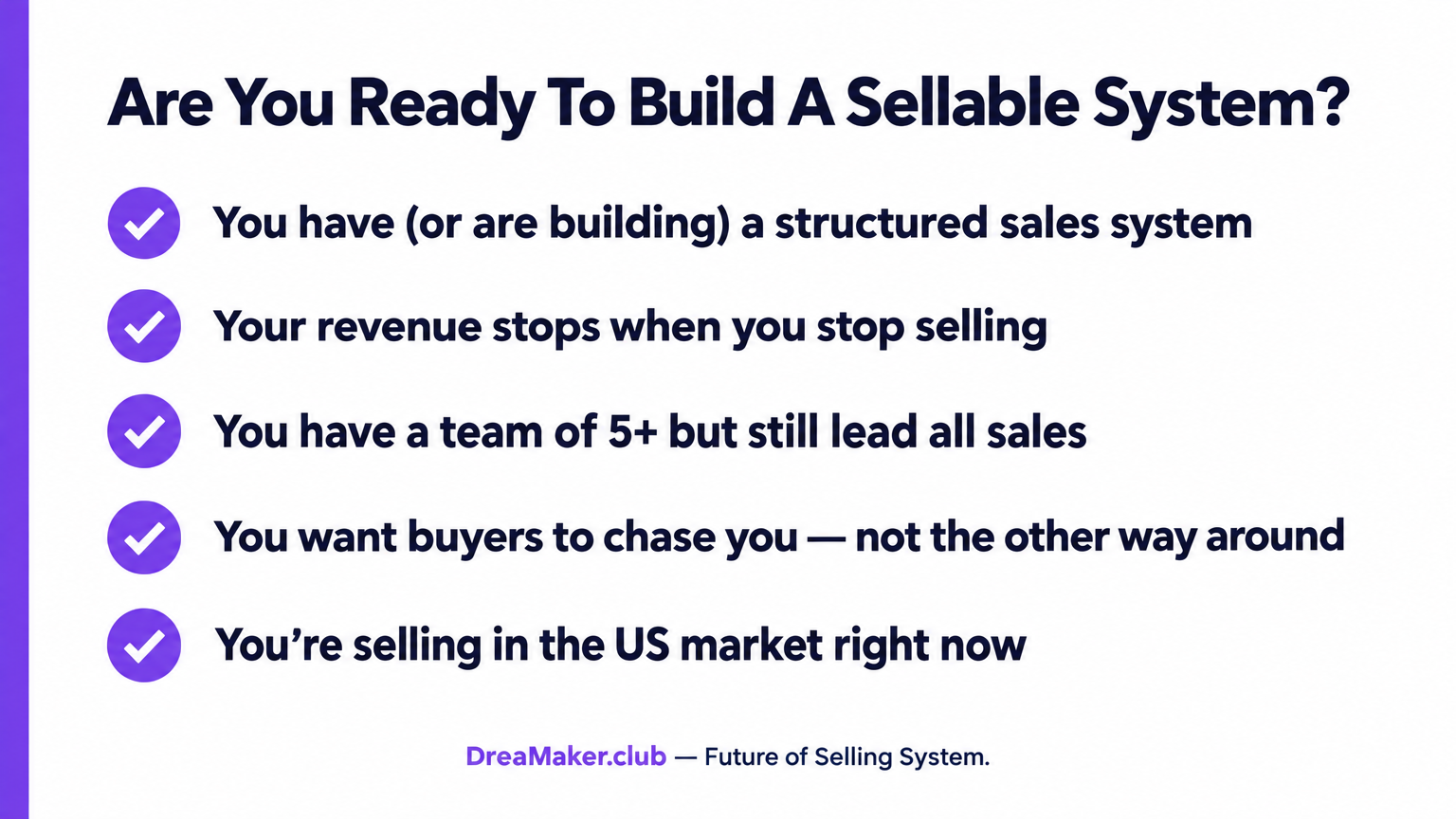
This opportunity is real — if all 5 conditions apply to you:
✅ Condition 1: You have (or are ready to install) a structured selling system — specifically the Future of Selling System — so you can reframe every buyer conversation around cost of inaction, not cost of your product.
✅ Condition 2: You lead a startup team of 5 or more and are personally running your own sales — meaning your conversion rate is directly tied to how well you frame the ROI.
✅ Condition 3: You are actively selling in the US market right now — where buyers are data-driven and ROI-fluent, meaning this reframe will land immediately.
✅ Condition 4: You have heard too expensive in the last 30 days and lost a deal on price — which tells you your cost-of-inaction frame is either absent or unconvincing.
✅ Condition 5: You are ready to move in the next 30 days — not next quarter, not when things settle down. The founders who act now will own the close. The rest will read about them.
NEW! — October 2026
Dear Founders: If you are losing deals because buyers say too expensive — you are not losing on price. You are losing on system.
Get The Future of Selling System — $19/month ($0.63/day)I understand how it feels when a buyer says it is too expensive and you do not know what to say next. I have felt that same sting — 1,000+ founders have walked into my room with the same problem. What we found is that it was never about the price. It was about the absence of a system that made the cost of not buying undeniable.
According to Salesforce State of Sales, 76% of sales professionals say closing is harder than it was 5 years ago — not because buyers have less money, but because they have less urgency. The Future of Selling System fixes exactly that.
- $22M+ in combined sales generated by FOS graduates
- 1,000+ startup founders trained since 2015
- Jeffrey Teo: 63 customers in 100 days using this system
- Stanley Tan: 45 buyers closed in a single 3-hour session
- Leon: $2M partnership closed using the FOS framework
Not ready for $19? Start free.
The Objection Playbook: 25 Word-for-Word Scripts to Close More Sales
The exact words Jason's founders use when a buyer says too expensive, send me info or I need to think about it. Free PDF, sent to your inbox.
Send Me the 25 ScriptsBillionaire Sergey Brin already moved — he calculated the cost of inaction, committed $102 million, and acted before the vote. The only question is whether you will do the same in your next sales conversation — or whether you will read about another founder who did.


