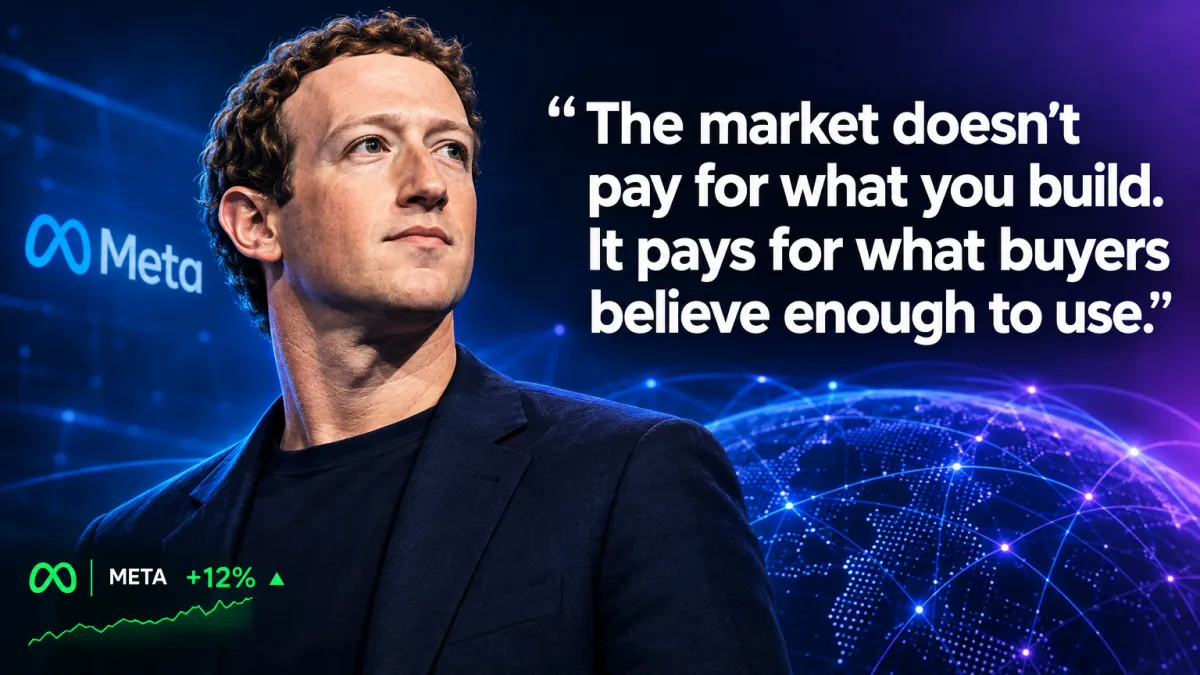
Billionaire Mark Zuckerberg Just Made $25 Billion In One Day — And It Has Nothing To Do With AI
Billionaire Mark Zuckerberg Just Made $25 Billion In One Day — And It Has Nothing To Do With AI
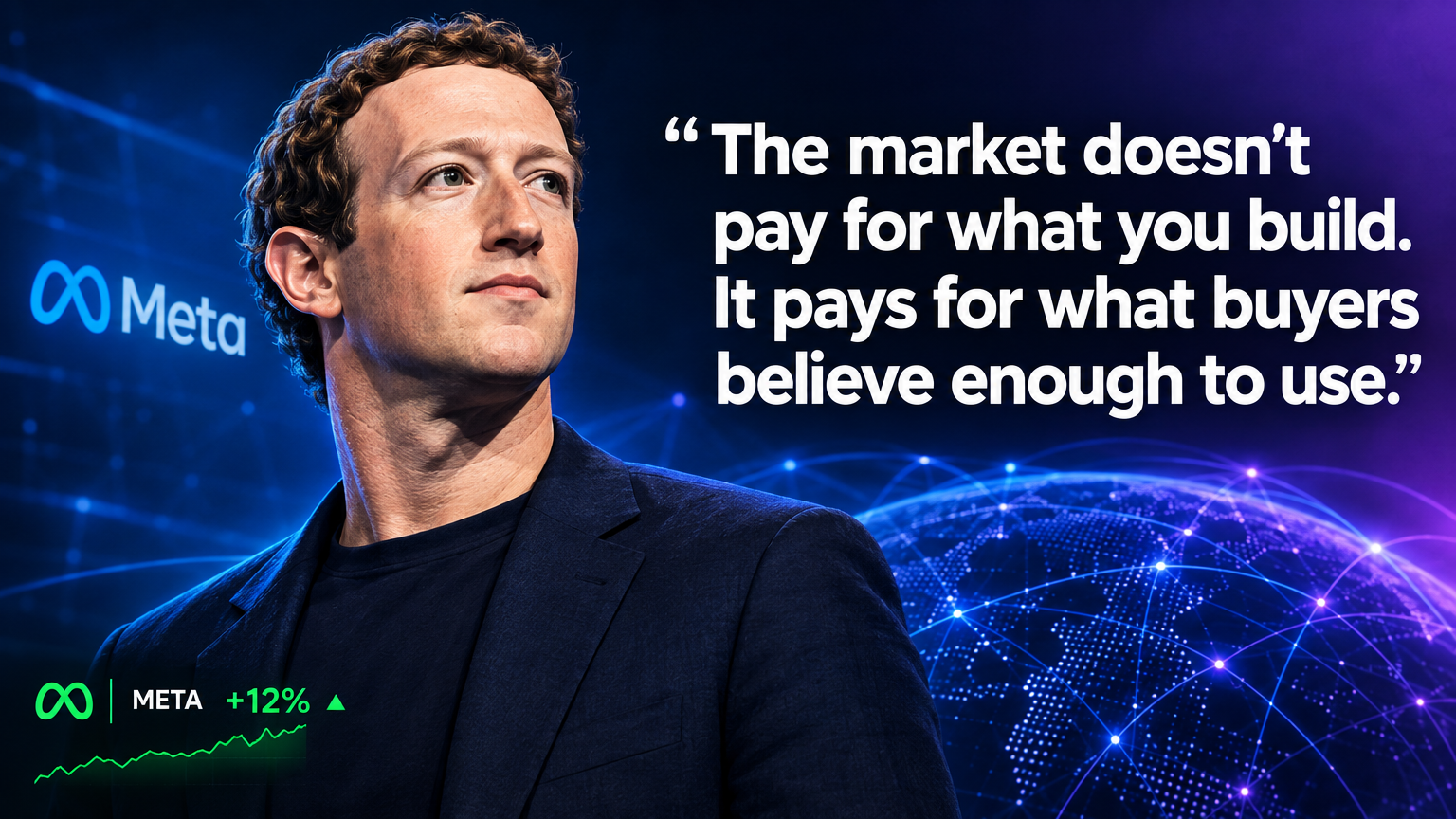
He Just Got $25 Billion Richer. The Reason Should Terrify Every Founder Who Thinks A Better Product Is Enough.
Mark Zuckerberg just added $25 billion to his net worth in a single trading day. Not from a new invention. Not from a breakthrough. From an app download chart — and what it made the market believe.
On September 21, 2026, Meta shares surged over 11% in a single session, according to Yahoo Finance. Zuckerberg's personal fortune climbed to $253.6 billion, per Forbes real-time estimates. It was the largest single-day gain among the ten richest people in the world — more than double what Elon Musk gained the same day, according to Billionaires.Africa citing Forbes data.
The technology didn't change overnight. The product didn't get a sudden upgrade. What changed was what buyers decided to believe. And that distinction is everything.
Most Founders Are Playing The Wrong Game Entirely
If you're building something real — something that actually works, that you've poured time and money into — and the market still isn't responding the way you know it should, this story is a mirror. Not a motivational poster. A mirror.
Here's what just happened: Meta spent years and tens of billions of dollars on AI infrastructure. The market punished them for it. Meta stock fell roughly 5% over the twelve months prior to this week, according to Yahoo Finance, while Amazon rose 38% and Google climbed 11% in the same period.
The technology was there. The investment was real. The team was rebuilt. Alexandr Wang — co-founder of Scale AI — was brought in as Chief AI Officer, per Yahoo Finance and Invezz. The models were shipping.
But none of that moved the market. Not until an app hit the top of the App Store.
That's not an AI story. That's a buyer psychology story. And if you're running a startup right now wondering why your pipeline isn't converting the way your product deserves, read that again.
What Actually Happened On September 21, 2026
Here are the facts, sourced and cited.
On September 21, 2026, Meta Platforms (NASDAQ: META) shares surged over 12%, adding more than $207 billion in market capitalisation in a single session, climbing from approximately $1.695 trillion to $1.902 trillion at close, according to Benzinga citing Benzinga Pro market data.
Two catalysts drove the move. First: Wells Fargo raised its price target on Meta from $640 to $796 and maintained an Overweight rating, citing Meta's "clearer commercial narrative" for its AI investments, per Yahoo Finance and BestStocks. Second: Meta's Muse AI agent app hit the number one spot on Apple's US App Store free apps chart within its first week of launch — outpacing ChatGPT — according to Cryptonomist and TipRanks.
Muse, launched in the United States on September 8, 2026, is a personal AI agent that can send email, book travel, fill out forms, and continue working after the app is closed, according to FinancialContent citing company statements. Meta CEO Mark Zuckerberg described Muse as part of the company's push toward what he publicly calls "personal superintelligence," per Cryptonomist and Invezz.
The Meta Connect annual conference is scheduled for September 23–24, where Zuckerberg is expected to deliver a keynote covering AI products and wearable devices, per TipRanks and Benzinga. Rosenblatt Securities maintained a Buy rating with a $886 price target, according to Benzinga. Citi placed Meta on an upside 90-day catalyst watch ahead of the event, per TipRanks.
Meta had previously stumbled. Last year, the company faced AI model delays and public scrutiny over its massive AI infrastructure spending, according to Yahoo Finance. Zuckerberg subsequently restructured the entire AI operation — hiring Scale AI's Alexandr Wang as Chief AI Officer and launching multiple models under the Muse family. Meta's annual AI infrastructure spend stands at a capital expenditure guidance of $130 billion to $145 billion, according to TradingKey.
Billionaire Mark Zuckerberg's move is one Jason has seen across 1,000+ founders. Here's what most miss.
The Lesson: Buyers Don't Reward The Best Product. They Reward The One They Believe.
The Root Cause Reframe
Most founders think the problem is building a better product. The real problem is that markets don't pay for what you build — they pay for what buyers believe enough to act on.
Zuckerberg didn't get $25 billion richer because Meta's technology improved overnight. He got richer because a visible social signal — an app ranking, a download number that anyone could see — gave the market permission to believe what was already true. The technology was real before Monday. The investment was real before Monday. The team was rebuilt before Monday. But none of it crystallised into market value until buyers saw other buyers moving first.
This is the trap every founder falls into: building longer and longer, investing more and more, waiting for the product to speak for itself. The product never speaks for itself. Buyers need a translator. That translator is trust — and trust is manufactured through visible, social, repeatable proof.
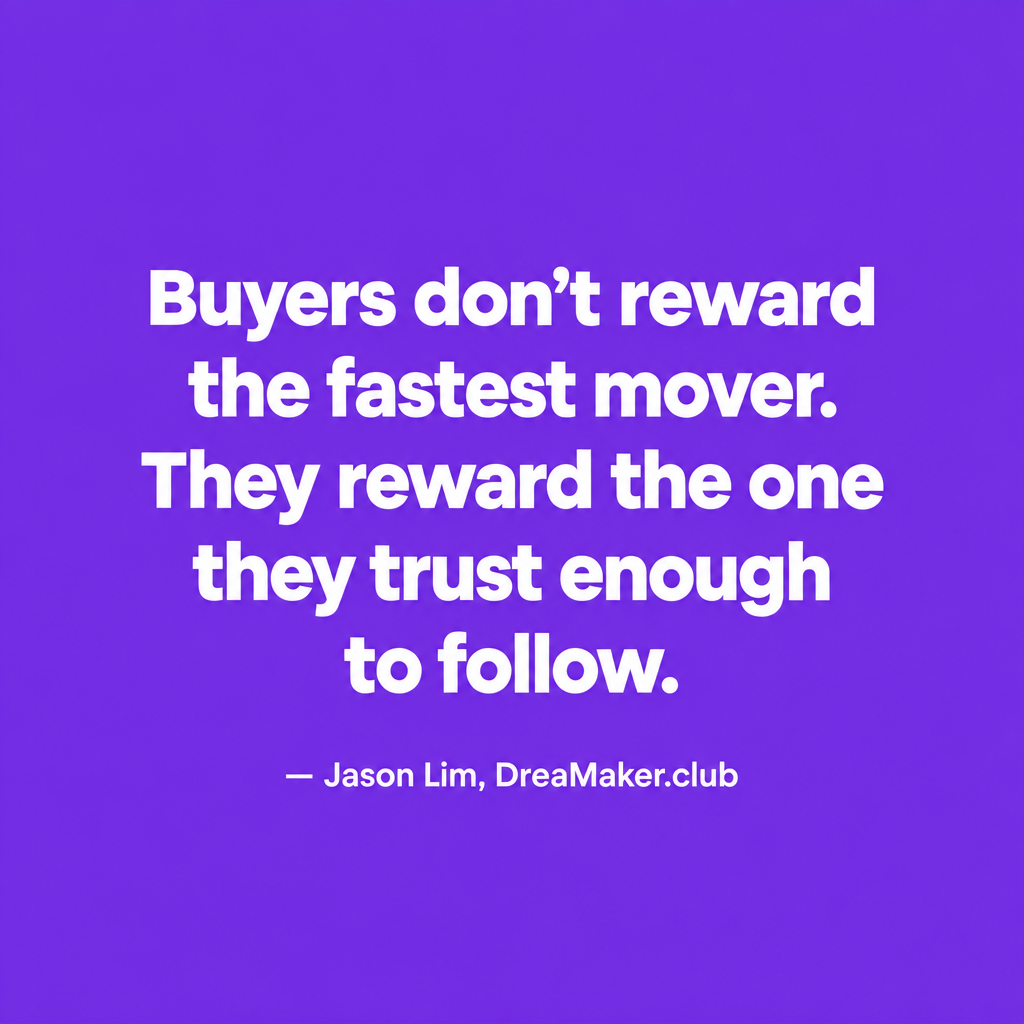
"Buyers don't reward the fastest mover. They reward the one they trust enough to follow."
This isn't about marketing spin. It's about the sequence. Zuckerberg's team built the infrastructure first. But $25 billion only materialised when the market received a credible, third-party trust signal — Wells Fargo's price target raise — combined with a consumer proof signal — the App Store chart. Two independent sources telling the same story at the same time. That's not a coincidence. That's how belief gets manufactured at scale.
For a startup founder, you don't have Wells Fargo. You don't have App Store rankings. But you have case studies. You have client results. You have live demos. You have referrals. You have a clear, positioned offer that makes the value transfer immediately believable — before the buyer has to take a leap of faith.
The founder who skips this step — who leads with features, who hides behind a pitch deck, who waits for the product to close the deal — is making the same mistake Meta made for twelve months of underperformance. Except Meta can absorb twelve months of doubt. Most founders can't.
Founder Story Card
The visible problem: A founder builds an impressive product that genuinely outperforms the competition, but the sales cycle stays slow and prospects keep saying "we need more time to evaluate."
The real root cause: The product may be excellent, but the buyer has no external, credible signal that others have already validated it. They are being asked to be a first believer — which is the hardest sale in the world.
The founder lesson: Value is real. But belief is what converts. Until buyers can see that other trusted parties have already made the same bet — and won — they will hesitate, regardless of how good the product is.
The move to make now: Engineer at least two independent trust signals into every conversation before you ask for a decision. One third-party validation (a case study, a recognised client name, an analyst nod). One social proof signal (a user result number, a download milestone, a visible win). The product closes second. Belief closes first.
The Hidden Opportunity Founders Are Sitting On Right Now
Here is what the Zuckerberg story reveals for startup founders operating in 2026: the trust gap is a temporary condition. It doesn't have to be permanent. And the founders who understand how to close the trust gap — deliberately, systematically, before they need the sale — are the ones who convert at rates that look impossible to everyone watching from the outside.
Meta spent twelve months invisible to the market, even while doing everything right operationally. What finally unlocked value wasn't more building — it was a sequence of public, credible, visible proof points arriving at the same time. The market was already primed. The trust gap closed in a day.
Most founders are primed too. They've built real things, served real clients, generated real results. But they haven't engineered the visible proof sequence that lets a buyer close the trust gap without taking a personal risk. That's the opportunity. Not a new product. Not a bigger team. A clearer, more credible, better-timed trust narrative.
But this opportunity only materialises under the right conditions.
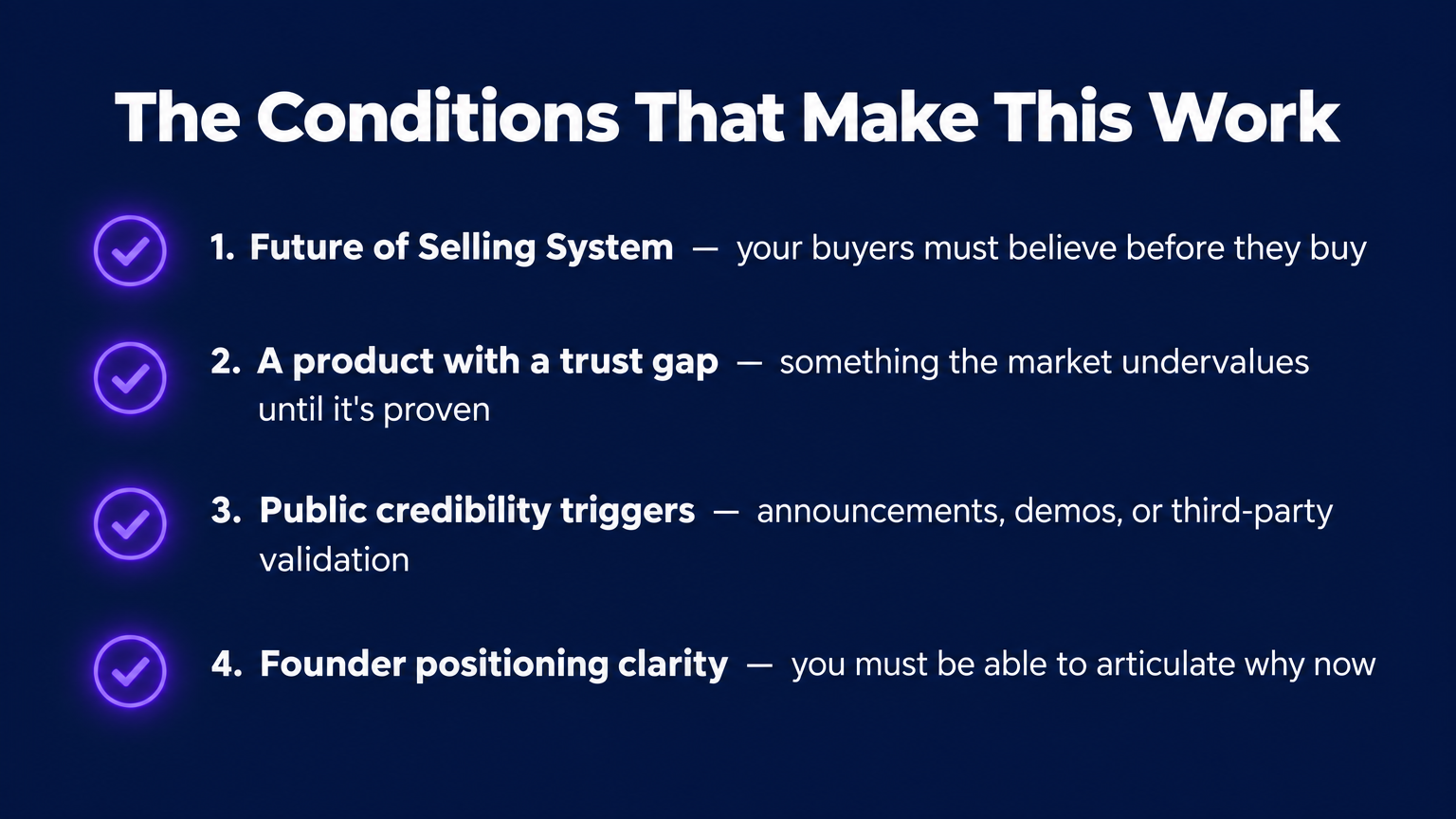
The Conditions That Make This Work
- Future of Selling System: Your buyers must believe before they buy — and FOS gives you the exact framework to engineer belief systematically, at every stage of the conversation, before you ever ask for a decision. Without a structured approach to trust-building, the trust gap stays open indefinitely, regardless of how good your product is.
- A product with a real trust gap: This opportunity is most powerful when your product is genuinely better than buyers currently believe — when the gap between product reality and market perception is large. If buyers already fully trust you, the opportunity still exists but is less urgent.
- Public credibility triggers you can engineer: You need at least one third-party validation source and one social proof signal you can point to in a sales conversation. Case studies, published results, named clients, visible user metrics — at least two. Not promises. Evidence that already happened.
- Founder positioning clarity: You must be able to articulate in one sentence why your offer is the right choice, for this buyer, right now. Vague positioning forces the buyer to do the belief-building work themselves. Most won't bother.
Zuckerberg already moved. The only question is whether you will — or whether you'll read about someone else who did.


