
Choosing the Right Mentor for Startup Success
Sales Mentorship, Startup Coaching, Founder Growth
How To Choose a Coach or Mentor: Strategy Guide and Survival Map for Founders and Startups (What Billionaire Warren Buffett Would Look For)
If you lead a small startup team and still carry the whole sales number on your shoulders, you already know the pressure. Pipeline, payroll, product, and people all sit on the same calendar. When you search for guidance, the internet throws a wall of coaches, masterminds, and “done-for-you” offers at you. Most sound impressive. Very few are built for founders like you.
Jason has watched hundreds of founders pick the wrong mentor. Not because they were lazy. They simply did not know what questions to ask. This post is designed as both a strategy guide and a survival map: how to choose a sales mentor for founders, what to look for, and what to walk away from fast. Jason has hit rock bottom three times and rebuilt three times. He has been scammed by fake programs and saved by real mentors who gave him structure, not slogans. That is why he built the Future of Selling System (FOS) and why this guide exists for you today.

What Buffett's Mentor Actually Did — And What That Tells You About Choosing Yours
Long before Berkshire became a case study, a young investor read a book that changed his life. He found The Intelligent Investor, written by Benjamin Graham. The ideas were sharp, practical, and grounded in real results. Instead of just underlining quotes, he did something bold. He wrote to the author and asked to learn directly from him. That young man was Buffett, and Graham eventually gave him a job and a front-row seat to decades of disciplined investing.
Graham was not a random guru with a big following. He was already doing, at scale, what Buffett wanted to do. He ran real money. He held real risk. He had survived crashes, not just talked about them on stage. The mentorship shaped more than $100B in eventual investment philosophy and returns. It was not about charisma. It was about alignment between student, mentor, and mission.
For you, the lesson is simple and sharp. When you think about how to choose a business mentor or how to choose a sales mentor for founders, start with this: have they already done the specific thing you are trying to do, in a world that looks like yours? Not ten levels above, not ten industries away, and not twenty years out of date. As a founder leading sales, you need someone who understands messy pipelines, half-built products, and buyers who are not yet sure your category should even exist.

The best mentors have already solved the concrete problems you are facing now.
The 5-Point Founder Vetting Framework
Jason has worked with more than 1,000 founders since 2015 and seen the same pattern. Founders evaluate mentors based on how “inspiring” they sound, not on whether they can help close the next 20 deals. To flip that, he teaches a simple 5-point vetting framework. Use it like a checklist before you sign any contract or wire any money. It applies whether you are doing mentor selection for startup founders or trying to evaluate a coaching program for your sales team.
- Have they sold at your price point to your buyer type? If you sell $1,500 monthly retainers into mid-market operations teams, a mentor who only knows $20 e‑books to consumers will not help much. Ask for specific examples: deal size, cycle length, buyer role, and how they handled objections. You want overlap with your reality, not abstract “sales psychology.”
- Do they teach a system or a collection of tactics? Tactics are like loose tools in a drawer. A system is a clear sequence you can teach to your team. Ask them to walk you through their sales process from first touch to renewal. If they jump from tip to tip, with no structure, you will struggle to scale what they teach beyond your own heroic effort.
- Can they show results from founders like you — not cherry-picked outliers? Every program can find one miracle story. You want patterns, not miracles. Look for multiple case studies of founders with small teams, complex products, and non-famous brands. Ask what the median result is, not just the record-breaker. This is how to evaluate a coaching program with clear eyes.
- Do they have skin in the game — do they still sell? Markets move. Tools change. Buyer expectations shift. A mentor who has not sold anything substantial in five years is guessing. Ask them what they are selling today, to whom, and how often they get told “no.” Their current scars matter as much as their past trophies.
- Intellectual honesty test: what happens when you ask something they do not know? This is the quiet filter that reveals character. A real mentor will say, “I do not know, but here is how we can find out.” A fake expert will give you a confident, shallow answer. You are not just buying a playbook. You are buying judgment under uncertainty.
The Survival Map — 5 Red Flags That Make You Walk Away
Jason wishes he could say he always saw the danger signs. He did not. Every red flag below is one he personally encountered, ignored, and paid for. Some cost him savings. Some cost him years. When you are tired and desperate for a breakthrough, it is easy to believe big promises. This is your survival map so you do not have to learn the hard way he did.
- Income guarantees with no real caveats. “Make $100K in 90 days or we work with you for free” sounds comforting. But read the fine print. If there are no clear conditions on your effort, your niche, or your starting point, the promise is marketing, not risk-sharing. Serious mentors know that even the best system cannot control every variable.
- Lifestyle marketing as the main proof point. If the sales page shows more beaches, cars, and private jets than pipelines, run. You are not buying their vacation photos. You are buying their thinking. Look for proof in the form of sales process, client results, and clear teaching, not drone shots and rented mansions.
- No money-back guarantee or refund policy. Not every founder will be a fit for every program. That is normal. A mentor who believes in their work will have a fair, written policy that respects both sides. If everything is “all sales final” from day one, you are the one holding all the risk while they hold all the cash.
- Resistance to speaking with past clients. References are standard in B2B deals. They should be standard here too. If they refuse to connect you with past clients, or only offer one heavily scripted success story, assume there is a reason. Ask to speak with founders whose results were “good, not crazy” to get a real picture.
- Tactics without a system — tips with no framework. Jason once joined a program that promised a “sales playbook” but delivered a folder of disconnected scripts. No sequence. No logic. No way to teach it to a team. He burned months trying to stitch it together. Do not repeat that. If they cannot show you the map, do not buy the tour.
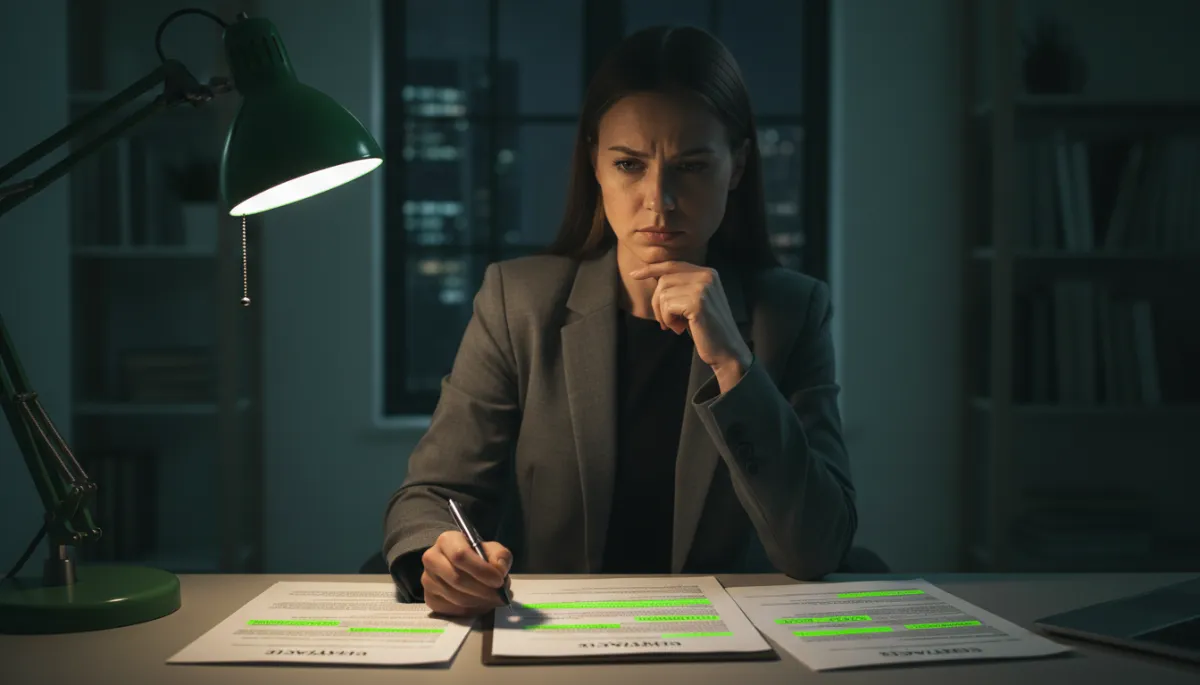
Red flags are easier to see in daylight; write them down before emotion takes over.
Oprah's Mentor Test — The Question That Reveals Everything
Oprah has often spoken about how Maya Angelou changed her life. Not by handing her a script for every decision, but by giving her language and courage to trust herself. Angelou once told her, “When people show you who they are, believe them the first time.” That sentence became a filter Oprah carried into business, media, and relationships for decades. It was mentorship that built conviction, not dependence.
As a founder, you can use a similar test. Ask yourself after every mentor conversation: Do I feel more capable of making my own decisions, or more afraid to act without this person? The right mentor makes your world bigger. They help you see patterns, name fears, and build repeatable habits. The wrong one makes you feel small and helpless without their next “secret.” You want conviction, not addiction.
Is sales mentorship different from having a business mentor?
Yes. A business mentor might help you think about hiring, fundraising, and strategy. A sales mentor sits much closer to the revenue line. They focus on pipeline, pricing, objections, and closing behavior. For a founder leading sales, both matter, but the sales mentor will touch your cash flow faster. When you consider how to choose a business mentor, include someone who respects sales as a discipline, not just a side effect of a “great product.”
How do you know if a mentor is right for you as a founder?
Look at three signals. First, alignment: they understand your market, stage, and constraints. Second, pace: their expectations stretch you but do not break your team. Third, integrity: their advice stays consistent, even when it means telling you “slow down” instead of “buy more.” If a mentor respects your context and still pushes you, that is a strong sign you are in the right room.
Can a sales mentor replace years of sales experience?
No mentor can replace time in the field, but a strong one can compress the learning curve. Studies from firms like McKinsey show that structured sales systems and coaching can lift performance dramatically, even in complex B2B environments. A good mentor helps you avoid common dead ends, install better habits, and turn each call into a learning loop. You will still need to do the reps. You will simply waste fewer of them.

The right mentor turns each sales call into data, not drama.
The P.I.T.C.H. Formula — Why Jason Built a System, Not a List of Tips
After hitting rock bottom three times, Jason realised that scattered tactics were not enough. He needed a repeatable way to prepare, hold intent, teach clearly, close cleanly, and turn all of that into habits. That became the P.I.T.C.H. Formula inside the Future of Selling System — a structured way founders can lead sales without becoming someone they are not. You can read more about the P.I.T.C.H. Formula and how it fits into the wider system here.
What Jason Lost Before He Learned This
Jason did not start with a clean playbook. He started with panic. Early on, he poured savings into programs that promised “high-ticket freedom” and “DM closing secrets.” The landing pages were slick. The testimonials were loud. Behind the paywall, he found recycled scripts and pressure tactics that clashed with his values. Deals did not grow. Shame did. He ended up couch-surfing, carrying not just financial loss but the quiet embarrassment of having been sold to by people he thought he could trust.
Rock bottom did not come from market forces alone. It came from misplaced trust. He had handed over control of his sales education to people who did not respect founders, only funnels. That is why he is so direct about red flags now. Every warning in this article has a story behind it — a late-night call, a missed rent payment, a founder whispering, “I think I got scammed,” after a webinar high wore off. Jason remembers being that founder. He refuses to let you stay there.
What rebuilt him was not another charismatic guru. It was a system. Piece by piece, he studied what actually worked in modern B2B sales — from Salesforce research on process adoption to Harvard Business Review studies on structured selling. He tested scripts on real calls, refined questions, and tracked habits. The Future of Selling System is the distillation of those years. Not perfect. But proven enough that founders can stand on it instead of guessing alone at 2am.

Rebuilds start quietly, with one honest look at what actually worked and what did not.
The Results That Come When Founders Choose Right
When founders choose mentors and systems carefully, the compounding effect is real. Not overnight. Not magic. But measurable. Jason has seen it across industries and price points. Below are three Tier 1 cases from founders who applied the same principles you are reading now, alongside the P.I.T.C.H. Formula inside FOS. Their numbers are specific so you can see what “choosing right” looks like in practice.
Tan — $29,693 in 16 days from a one-minute pitch. Tan came in with a strong product but a scattered message. Together, they stripped his pitch down to sixty seconds built on clear intent and teaching, then ran it consistently across warm leads. No fancy funnels. No paid ads. In just over two weeks, that one-minute pitch produced $29,693 in new revenue. The difference was not “saying it louder.” It was saying it the same way, every time, with a system behind it.
Teo — 63 customers in 100 days, beating the “too expensive” label. Teo’s team heard the same objection on almost every call: “We love it, but it is too expensive.” Instead of discounting, they rebuilt their discovery questions and teaching moments using the Future of Selling System. They learned to surface the cost of inaction and tie it to numbers the buyer cared about. Over 100 days, they brought in 63 new customers at full price. The offer did not change. The story and structure did.
Leon — from a $2,500 website project to a $2M+ partnership. Leon originally pitched a one-off $2,500 build. Through coaching, he reframed the conversation around long-term revenue impact and ongoing collaboration. Using the same core system, he navigated multiple stakeholders, aligned incentives, and turned a small project into a multi-year partnership worth more than $2M. The skills he used there now live inside his team, not just in his own head.
When founders choose aligned mentors, small wins stack into durable revenue breakthroughs.
Every day a founder keeps trying to figure this out alone is a day a better-prepared competitor is closing the deal that should be theirs.


