Elon Musk's $22B Move: Startup Sales Insights
breakingnews, how to build a startup sales motion
Billionaire Elon Musk Just Triggered $22 Billion in Forced Buying — And It Exposes The Real Reason Most Founders Can't Close
SpaceX’s Nasdaq-100 weight more than doubled today, mechanically forcing up to $22 billion of passive capital to buy the stock — and in the process, revealing a playbook for founders who want a sales motion that pulls in demand instead of chasing it one deal at a time.
Elon Musk just turned an index rebalance into a $22 billion buying event founders cannot ignore. Today, SpaceX’s Nasdaq‑100 weight jumps from 1.28% to 2.82%, forcing passive funds benchmarked to the index to mechanically add billions of dollars of SPCX — whether they like the story or not.
If you are a founder still refreshing your CRM and praying for inbound, this is the day to pay attention. Musk did not cold email index committees. He built a business and a capital structure that made today’s buying non‑optional.
More than $800 billion tracks the Nasdaq‑100. The QQQ ETF alone sits around $482 billion in assets. When SpaceX’s weight doubles to 2.82%, the rules say those funds must rebalance. Estimates from JPMorgan and Morgan Stanley put the resulting passive inflows between $15.5 billion and $22 billion, all hitting because the methodology demands it, not because a salesperson “closed” anyone.
That is insider knowledge most founders never get taught: the biggest “sales wins” in markets do not look like sales at all. They look like rules quietly compounding in your favor while everyone else is still chasing leads.
The Play Behind $22 Billion of Forced Buying
SpaceX went public in June 2026 at $135 per share, one of the largest IPOs in history, raising more than $75 billion and vaulting past a $1 trillion valuation at the open, according to company filings and coverage from TechCrunch and MSCI. Just 15 trading days later, the stock entered the Nasdaq‑100 via the index’s Fast Entry rule, immediately wiring the company into the passive investing machine.
Today’s move — a confirmed increase from roughly 1.28% to 2.82% index weight, per Bloomberg’s September 19 report — was unlocked when IPO lock‑ups expired and more than a billion additional shares hit the public float. That larger float allowed Nasdaq’s methodology to assign SpaceX a higher effective market cap, which in turn forces index trackers to buy. Analysts estimate $15.5–$22 billion of passive demand as funds like QQQ realign to the new weight.
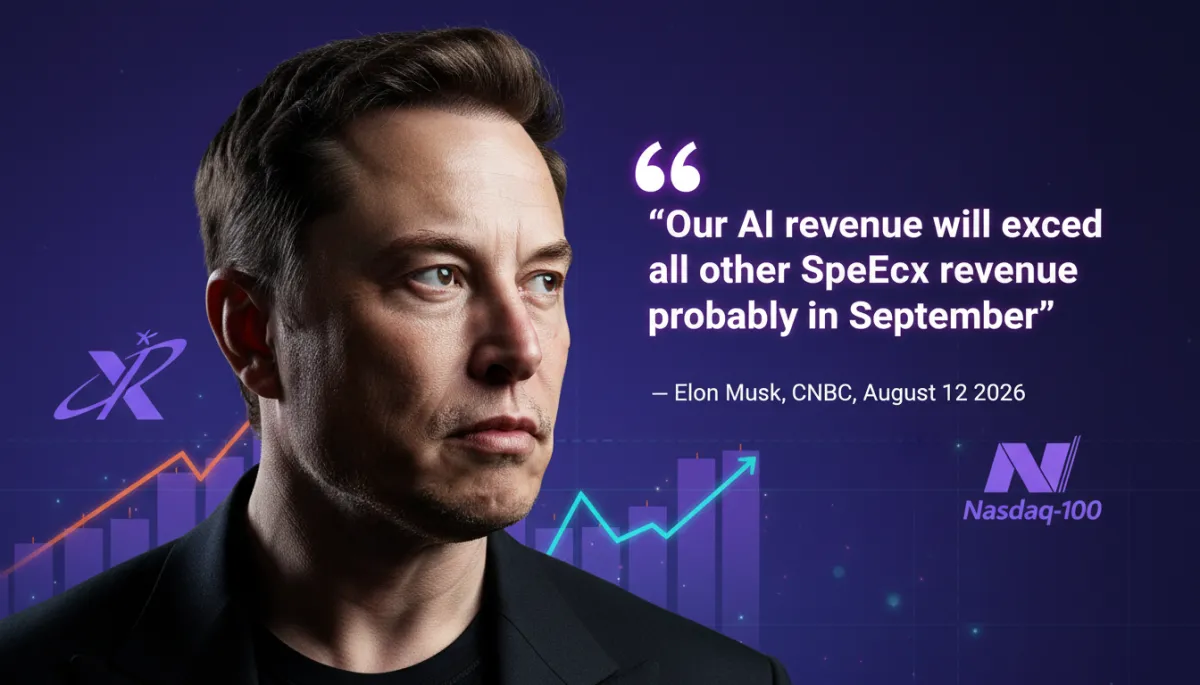
Underneath the index mechanics sits an operating engine: Q2 2026 revenue of $7.81 billion, up 91.9% year‑over‑year; a $1.11 billion‑per‑month SpaceXAI compute contract — the fourth deal above $11 billion annualized; and guidance for $100 billion in annual recurring revenue by the end of 2026. On CNBC in August, Musk said, “Our AI revenue will exceed all other SpaceX revenue probably in September,” framing AI as the new core.
Wall Street has taken note. Morgan Stanley rates the stock Overweight with a $300 target, while Arete Research has floated a $450 target as of August. On the surface this is a story about one company’s index weight. In reality, it is a masterclass in designing a system where the market must come to you. Musk's move is one Jason has seen across 1,000+ founders. Here's what most miss.
From Hustle to Motion: The Lesson Founders Keep Missing
Most founders think the problem is not enough leads or not closing well enough. But what Musk's move actually reveals is that the real problem is they have tactics, not a motion. That distinction changes everything.
A tactic is a LinkedIn campaign, a webinar, a cold‑outreach sprint. It requires effort every time you run it. A motion is the underlying system that makes the right buyers find you, trust you, and buy from you with less friction each cycle. The Nasdaq‑100 methodology is a motion. Once SpaceX met the criteria — IPO scale, free‑float, liquidity, sector fit — the rules did the selling.
Most founders see sales as persuasion; Musk sees sales as architecture. That is the gap.
Founder Story
A SaaS founder Jason worked with in 2023 had 40 demos a month and almost no predictable revenue. He blamed “bad leads” and “weak closers,” so he kept changing scripts, hiring new SDRs, and tweaking pricing. Every month felt like a fresh fight. When the ads paused, pipeline vanished. He had tactics, not a motion. Another founder in the same cohort slowed down and mapped the full journey from first touch to expansion. She codified one ICP, one core pain, one repeatable offer. Then she built content, onboarding, and pricing around that path. Within nine months, 60% of her new revenue came from buyers who had already decided to work with her before the first call. Outbound still existed, but it amplified a system that was already pulling buyers in. The difference was not charisma or effort; it was that one founder kept reacting, while the other designed how demand would flow.
What is a sales motion for a startup — and why does it matter before you hire a salesperson?
A sales motion is the documented, repeatable path by which a specific type of buyer discovers you, understands your value, evaluates risk, and decides to purchase — with clear steps, assets, and conversion points you can measure and improve. It is the choreography of demand, not just the conversation on a Zoom call.
Before you hire a salesperson, this matters more than any resume. If you cannot write down who you sell to, what triggers them to look, what proof they need, and how they move from interest to decision, you are asking a rep to invent the motion from scratch. That is not hiring; that is abdication. Learning how to build a startup sales motion early is what turns every future hire into a multiplier instead of an experiment.
How do you build a repeatable sales motion when you have fewer than 10 paying customers?
With fewer than 10 customers, your job is not to scale. Your job is to observe. Start by interviewing each customer in detail: what problem hurt enough to make them search, where they first heard of you, what almost made them say no, and what finally tipped them into yes. Capture exact phrases, not your interpretation.
Then, build a simple sequence: one narrow ICP, one flagship problem, one offer, one primary channel. Design a standard discovery call, a standard demo narrative, and a standard follow‑up. Run that exact sequence on the next ten prospects and adjust only what the data demands. Specific behaviour = specific result. No exceptions. This is how to build a startup sales motion before you drown in “growth hacks” that hide the signal.
Jeff Bezos understood this long before passive investing exploded. AWS did not win cloud because its salespeople hustled harder than everyone else. It won because the product and pricing architecture created institutional dependency. Once enterprises built on AWS primitives, the switching cost became higher than the annual bill. Bezos engineered lock‑in as a motion — usage, integration depth, and ecosystem gravity forced repeat buying without constant persuasion.
Michael Dell played the same game from a different angle. In 2013 he took Dell private, gutted and rebuilt the business away from quarterly spotlight, then returned to public markets with a restructured, systemized machine. Today, Dell Technologies sits as a top‑five Nasdaq‑100 constituent, worth hundreds of billions. He did not “market his way back.” He systemized operations, channel motions, and enterprise relationships so deeply that scale became an output, not an initiative.
Musk’s index play, Bezos’s AWS lock‑in, Dell’s go‑private rebuild — all three point to the same root cause: the winners design motions that create forced or highly biased demand. Founders who cling to tactics stay trapped in manual mode, forever starting from zero.
The founders who design sales as architecture build momentum no tactic can match.
If you want a deeper breakdown of how to codify this in your own company, Jason unpacks it step‑by‑step in the Future of Selling System overview at /post/what-is-the-future-of-selling-system. That is where the abstract idea of “a motion” becomes a concrete checklist you can run this quarter.
The Hidden Opportunity in Today’s Forced Buying
The founders who see this first will design selling systems that compound demand while they sleep. The ones who do not will spend the next decade chasing increasingly distracted buyers with increasingly desperate tactics — while capital quietly flows to the companies wired into the right motions.
Today’s rebalance is not a one‑day story. It is a live demonstration of how AI, public markets, and institutional capital now interact. SpaceX used AI‑driven revenue growth, index rules, and float expansion to create a moment where $15.5–$22 billion of buying had to show up. That same principle — designing for forced or near‑forced adoption — is available to you on a smaller scale: in your niche, with your ICP, through your own motion.
What is the difference between a startup's sales motion and a traditional corporate sales process?
A traditional corporate sales process assumes brand recognition, existing demand, and multiple product lines. It is optimized for risk management and incremental improvement: territories, quotas, layered approvals. A startup sales motion is different. It must manufacture trust from zero, collapse steps, and use content, proof, and product experience to do work that brand and history have not yet done.
In a startup, your motion must be narrow, aggressive, and learning‑driven. You pick one segment, one problem, one promise, and you build everything — from landing pages to onboarding to success stories — around that spine. That is how to build a startup sales motion that can later grow into something as robust as a corporate process, without copying bloat you cannot afford.
When do you know your startup's sales motion is working well enough to hand off to a hired rep?
You know your motion is ready when three conditions are true. First, you can describe your ICP, trigger, offer, and steps on one page — and a stranger can follow it. Second, your own close rate and sales cycle have stabilized over at least 20–30 opportunities. Third, you can point to specific assets — case studies, emails, demos, onboarding — that you know move deals forward because you have seen it repeatedly in the data.
At that point, a new rep is not guessing. They are stepping into a motion that already works, with room to personalize but not reinvent. Until then, hiring is premature optimization dressed up as progress.
To Capture This Opportunity — You Need:
- 1. Future of Selling System — without a repeatable selling motion, every other condition generates leads your closing cannot convert. $0.63/day. dreamaker.club/buyfos
- 2. A Sales Motion, Not Sales Tactics — one documented path from first touch to expansion you can run on demand.
- 3. Index-Level Visibility — SEO plus thought leadership that compounds
- 4. Product Lock-In — high switching cost equals forced repeat buying
- 5. Compounding Credibility — a track record and proof library that makes bigger buyers feel safe saying yes quickly.
The window this news created will not stay open. Condition 1 is the one you can activate right now.
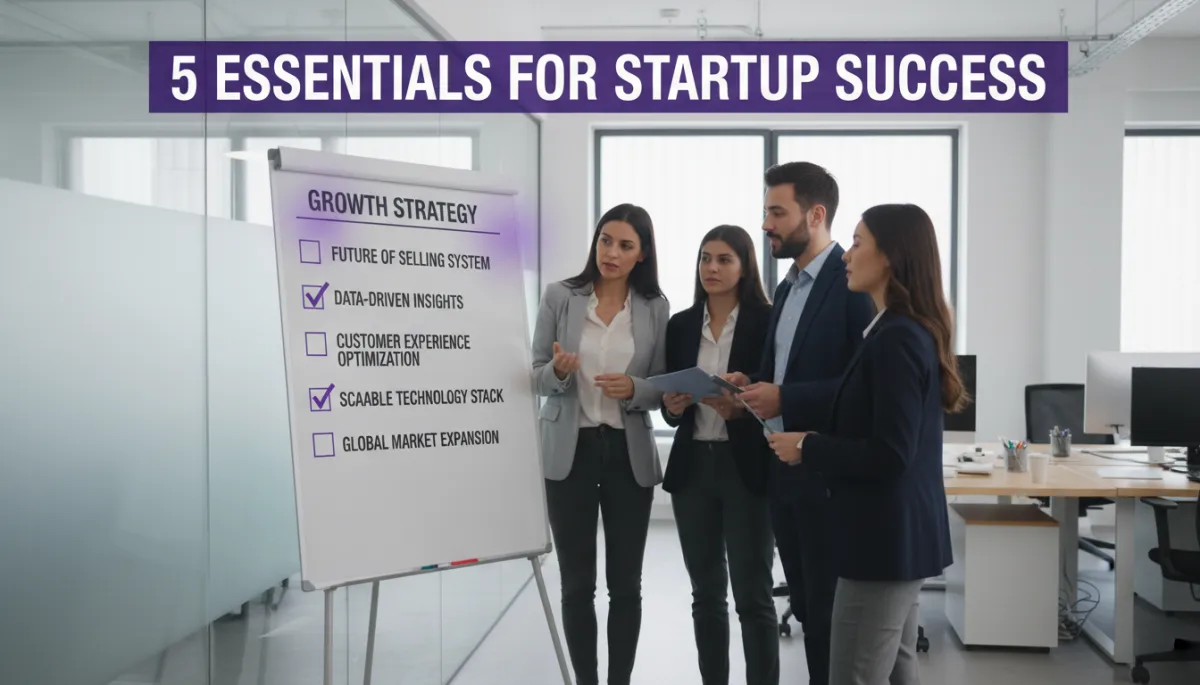
Most founders chase conditions 2–5 and only later realize condition 1 is the foundation.
The same mechanics driving today’s index flows apply in miniature to your market. When your motion is clear, visible, and reinforced by product lock‑in and credibility, buyers start feeling like they have fewer real options. Not because you out‑hustled everyone, but because you architected a path of least resistance that points straight at you.
From Manual Chasing to Designed Demand: FOS
Every founder chasing leads one at a time is doing what index funds used to do before passive investing — manually selecting, manually buying, manually closing. Exhausting. And fragile. When the person doing the chasing burns out, the pipeline disappears with them.
Jason Lim spent 15+ years across 1,000+ founders learning why the best salespeople do not chase — they design. The Future of Selling System (FOS) is the result. For $0.63/day — less than your morning coffee — it gives you the repeatable selling motion that turns scattered effort into compounding deal flow. It shows you exactly how to build a startup sales motion that feels more like SpaceX’s index upgrade and less like another cold‑outreach sprint.
Get it at https://dreamaker.club/buyfos. 100% risk‑free.
Elon Musk already moved — and $22 billion in capital had no choice but to follow. The only question is whether you will build the motion that forces your market to move toward you, or keep watching others do it first.


