
How Billionaire Elon Musk Built the World’s Most Powerful Elevator Pitch
Sales, Startup Pitch Deck, Startup Elevator Pitch
How Billionaire Elon Musk Built the Strongest Elevator Pitch in the World — A Founders’ Guide
Elon Musk built SpaceX on a three-word elevator pitch. Jason helps startup founders turn that same clarity into a startup elevator pitch that opens doors, wins meetings, and makes selling feel simple again — for just $0.63 a day.

Why Do Most Startup Founders Describe Their Business and Call It a Pitch?
Jason sees the same pattern in nearly every founder-led sales call. The founder starts strong. Then the explanation begins to stretch. And stretch. And stretch. By the time they finish, the listener is polite but lost. Soft eyes. Generic questions. Weak follow-up.
The reason isn’t that the founder is bad at selling. It’s that they are too close to the product. They see every feature, every use case, every edge condition. Their “pitch” turns into a guided tour of the product instead of a clear reason to care.
Think of it like trying to explain a favorite TV show to a friend. If you start with every character and every plot twist, they’ll tune out. If you start with one sharp line — “It’s about a teacher who becomes a drug kingpin to save his family” — they lean in. Your startup elevator pitch works the same way. One clear picture, not a recap of the whole season.
As Jason teaches at AuthorJason.com, the right elevator pitch structure pulls people toward you with one sharp, visual sentence instead of pushing them away with a crowded product tour.
How Did Elon Musk Build an Elevator Pitch That Changed the Space Industry?
Elon Musk’s elevator pitch for SpaceX is three words: “Make life multiplanetary.” That’s the mission, the vision, and the argument for why SpaceX should exist — in a single short line. Not “we build rockets.” Not “we reduce launch costs.” A reason the company matters to the future of humanity.
When Musk first pitched SpaceX in 2002, the odds were stacked against him. No aerospace background. No government contracts. No rockets. Just a wild idea and a clear story. He explained “Mars Oasis” to investors — a small greenhouse on Mars to reignite public interest in space. He could have talked for hours about physics, cost structures, and long-range trajectories to rooms full of skeptical engineers. But under every detail, one line anchored everything: make life multiplanetary.
That line answers the hardest question in any pitch before it’s asked: Why should anyone care? Every founder Jason works with who struggles to explain their startup in under 30 seconds is usually missing this same core. They summarize their product. Musk summarized why he exists.
In a 2013 lecture at the Royal Aeronautical Society, Musk described how reusability was non-negotiable if humanity was serious about Mars. Instead of drowning the room in equations, he kept returning to the image of a self-sustaining city on another planet. The technical roadmap sat underneath one unforgettable picture of the future — exactly what a strong elevator pitch for startup founders should do.
When SpaceX won early COTS agreements with NASA in 2006 and 2008, the contracts were justified by milestones and performance. But the story that made the risk feel worth it was still the same: lower launch costs so humanity can become multiplanetary. The pitch gave investors, engineers, and government partners a shared North Star, even when rockets were exploding on the pad.
By the time Musk unveiled the Interplanetary Transport System at the International Astronautical Congress in 2016, the three-word pitch had been doing its job for years. The audience already knew that any new vehicle or roadmap existed in service of that same line. For founders, this is the lesson: a short, consistent pitch compounds over time, so every new product or announcement feels like another chapter in the same story.
As Jason teaches at AuthorJason.com, a strong elevator pitch gives you one sentence investors, team members, and partners can repeat — turning your mission into a story that pulls people in before you open a single slide.
What Is the Three-Part Elevator Pitch Structure Jason Teaches Every Startup Founder?
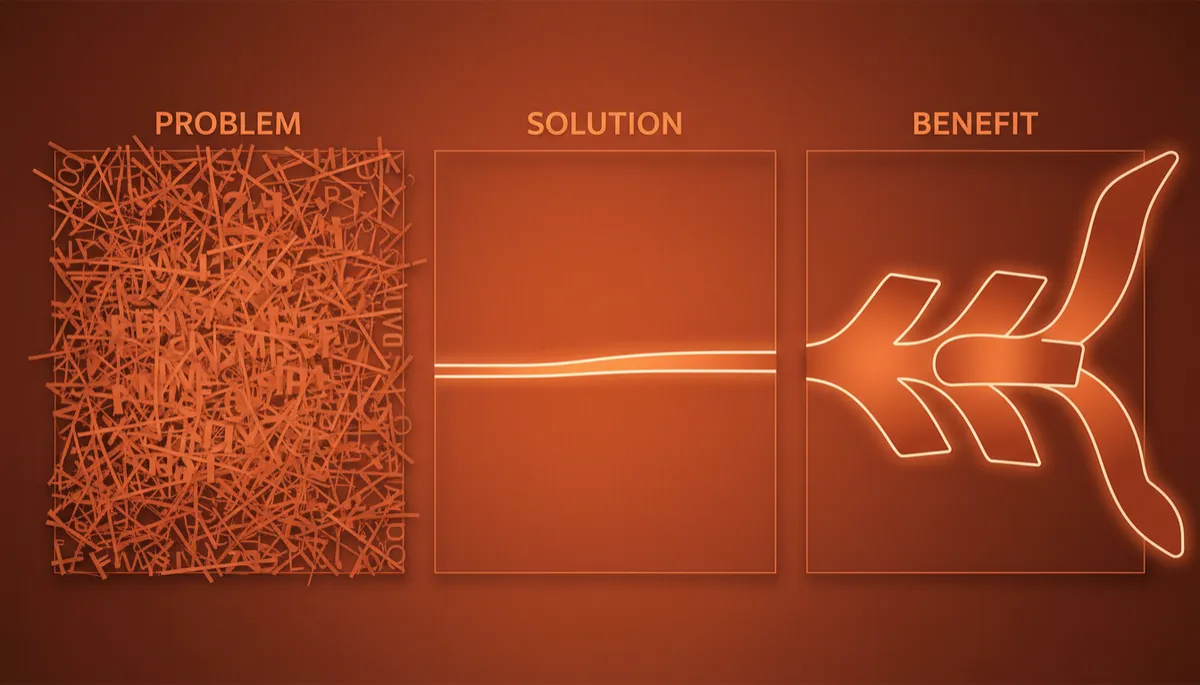
A three-panel diagram in burnt orange #9a3412 tones showing the Problem–Solution–Benefit structure for an elevator pitch...
Jason keeps the structure deliberately simple. Founders don’t need another 27-step script. They need a tiny mental checklist they can use in an elevator, on Zoom, or in a crowded conference hallway. It’s based on the classic Problem–Solution–Benefit structure, but in founder-friendly language and real-world examples.
What Should a Startup Elevator Pitch Include — and How Long Should It Be?
A strong startup elevator pitch includes three things in 30–60 seconds. First, a clear problem your listener recognizes. Second, a simple description of what you do to solve it. Third, a concrete benefit that matters to them right now. Research from TeleCRM shows people decide within 7–10 seconds whether they’ll keep listening, so your first sentence has to land fast.
What’s the Difference Between an Elevator Pitch and a Full Sales Pitch?
The elevator pitch is the door-opener. The full sales pitch is the meeting inside the room. A startup elevator pitch is not meant to answer every question. Its only job is to make the other person say, “Tell me more.” Once they ask for that, you move into discovery, detail, and proof. When founders try to cram the full sales pitch into 30 seconds, they lose both the door and the room.
What’s the Difference Between an Elevator Pitch and a Full Sales Pitch? (Founders’ Version)
For founders, the elevator pitch earns the right to have a real conversation; the full sales pitch only happens after the buyer is leaning in to listen. Treat the elevator pitch as a filter, not a full demo.
How Do You Make an Elevator Pitch Interesting Without Giving Too Much Away?
Use specific, visual language and stop before the “how.” Studies show concrete words that create mental images convert at roughly three times the rate of vague category labels. Instead of “an AI analytics platform,” try “a co-pilot that spots revenue leaks before your team wakes up.” Share the world you create, not the wiring behind the wall. Leave room for curiosity to do its job.
As Jason teaches at AuthorJason.com, the most effective elevator pitch for startup founders is a compressed Problem–Solution–Benefit story that creates pull — a line so clear your listener invites you to keep going instead of you pushing more detail at them.
How Do Jobs and Branson Pitch With Clarity and Emotion?

A scene in burnt orange #9a3412 tones showing a sleek three-panel storyboard: Steve Jobs holding an iPod with the phrase “1,000 songs in your pocket,” Richard Branson pitching in a meeting room, and a simple emotional phrase highlighted.
Steve Jobs was ruthless about simplicity. When he launched the iPod, tech journalists cared about gigabytes and file formats. Jobs knew normal people didn’t. So he said: “1,000 songs in your pocket.” Same device. Different story. He gave the world an instant picture instead of a spec sheet. That’s the elevator pitch doing its real job: helping someone see their own life changed in one sentence.
In the original 2001 iPod keynote, Jobs walked onstage holding the device and compared it to CD players and hard-drive music players of the time. Instead of arguing about storage, he framed the entire category shift around that one line. The pitch let people imagine commuting, traveling, and working with their entire music library in their pocket — a lifestyle upgrade, not a hardware spec.
Richard Branson leans on emotion. When he pitched Virgin Atlantic to Boeing to get his first 747 on lease, he didn’t open with load factors or routes. He opened with a feeling: an airline that treats passengers like guests, not cargo. Boeing gave him a one-year trial. The numbers came later. The emotional pitch opened the door first. Your startup elevator pitch should do the same — make the listener feel something before you show them anything.
Branson later described how he painted a picture of better food, friendlier crews, and a more enjoyable experience at a time when air travel felt purely transactional. The pitch wasn’t “another airline” — it was “an airline people actually look forward to flying.” That emotional contrast was enough for Boeing to bet on a new brand with no track record, proving how one clear, feeling-driven line can move even conservative decision-makers.
What Are the Biggest Elevator-Pitch Mistakes Founders Make?
Jason sees four common traps. First, opening with category labels (“we’re a SaaS platform for…”) instead of a live problem. Second, talking about features instead of outcomes. Third, stuffing in jargon to sound impressive. Fourth, going past 60 seconds because they feel guilty leaving things out. The remedy is gentle but firm: cut half the words, double the images, and let the conversation do the rest.
How Do You Tailor an Elevator Pitch for Different Audiences — Investors vs. Customers vs. Partners?
Keep the core the same and swap the benefit. Investors care about scale, defensibility, and market timing. Customers care about time, money, and pain relief. Partners care about shared upside and reduced risk. So the problem and solution stay constant, but the last line changes. For investors: “so CFOs cut churn by 20%.” For customers: “so your team closes the same revenue in fewer hours.” For partners: “so together we open a slice of the market neither of us can reach alone.”
As Jason teaches at AuthorJason.com, a startup elevator pitch works best when it blends Jobs-level clarity with Branson-level emotion — one line that shows a better future and invites the right people to step into it with you.
What Do Jason’s Founders Experience After Nailing the 30-Second Pitch?
A startup founder and an investor step out of an elevator in burnt orange #9a3412 tones, mid-handshake, smiling as if after a clear, successful pitch.
Jason notices a subtle shift once the pitch settles. Founders stop dreading the “So what do you do?” question and start enjoying it. Team members borrow the line. Investors repeat it. Prospects share it with their boss. The pitch becomes a small asset that travels without you, like a talking business card.
One founder Jason worked with — let’s call her Maya — ran a B2B fintech startup. Before, her answer took two minutes and left people confused. After, it became: “We’re the safety net that stops mid-market CFOs from losing money to silent billing errors.” Within a quarter, her team noticed first meetings felt warmer. Prospects were showing up already understanding the “why,” so sales conversations could focus on “how” and “when.”
Founders like Maya also mention something quieter: less shame. Less feeling like they’re “bad at sales.” When the pitch is simple and honest, selling feels more like telling the truth about something useful. That emotional shift matters when you’re the one leading every big deal while managing a team of five or more behind you.
As Jason teaches at AuthorJason.com, the right startup elevator pitch becomes a small asset that expands your confidence — a sentence your team, investors, and customers can all repeat to open new doors for you.
How Does the P.I.T.C.H. Formula Make the Elevator Pitch the First Step?
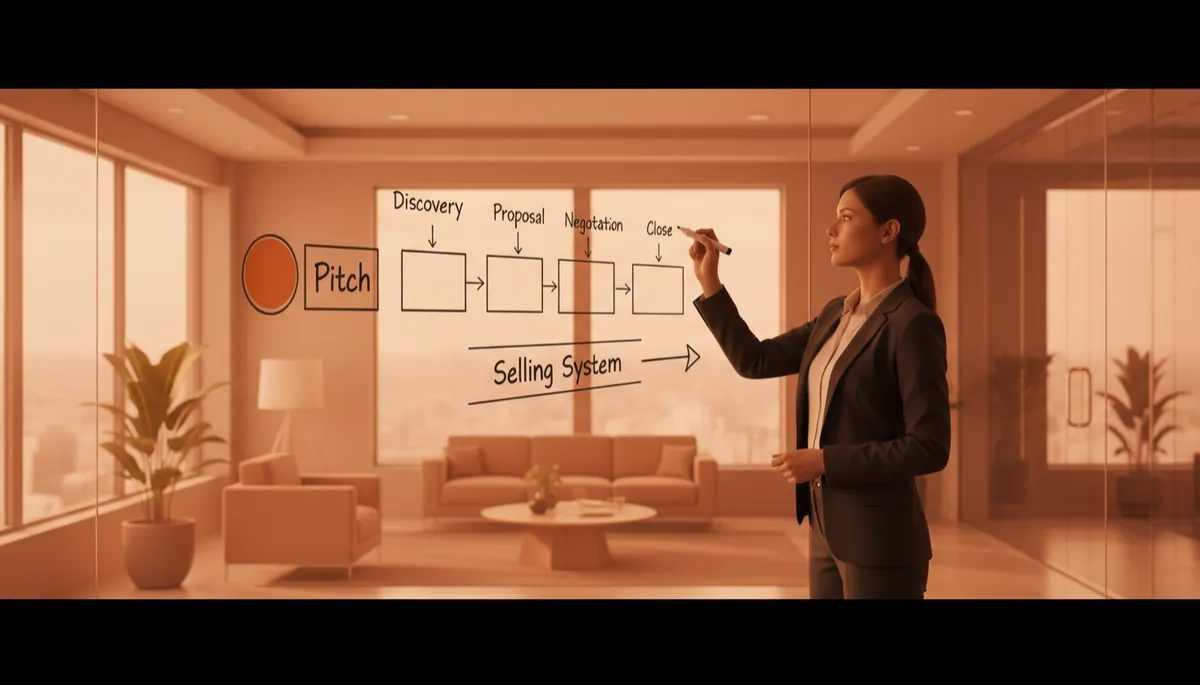
A burnt orange #9a3412 scene of a founder in a modern office sketching a simple five-step flow on a whiteboard, with “Pitch” circled and highlighted as the first step in a larger selling system.
Inside the Future of Selling system, Jason treats the elevator pitch as the first step, not the whole game. The P.I.T.C.H. formula is his way of turning those first thirty seconds into a full sales path your entire team can follow. It connects your opener to your discovery questions, your proposal, your follow-up, and your metrics, so you’re not relying on charisma or memory alone. You can dig into the P.I.T.C.H. formula in more depth, but remember this for now: a strong elevator pitch is the first domino. When it falls cleanly, everything after gets easier.
In the “Prepare” step of that system, Jason has founders map the buyer’s world in detail before they write a single line of the pitch. That means understanding who’s in the room, the pressures on their day, the language they actually use, and how decisions really get made. The startup elevator pitch is then built backward from that reality, not forward from the product roadmap.
When you’ve done that preparation, thirty seconds is enough to show you understand what the buyer is dealing with better than most people who talk to them. You can name the problem in their words, hint at the cost of leaving it unsolved, and point to a simple, reliable way you help people like them fix it. The pitch stops feeling like a performance and starts feeling like recognition — “Finally, someone gets it.”
That’s why Jason insists the elevator pitch lives inside a larger system, not on a sticky note by itself. When your opening line is wired into your questions, your proposal, and your follow-up, every conversation feels coherent. You’re not improvising a new story for every meeting; you’re leading people through a path that starts with clarity and ends with a clear next step.
Self-Check
- Does your elevator pitch start with the buyer’s problem — or your company name?
- After your pitch, do people say “Tell me more” — or nod politely and change the subject?
- Can you deliver your pitch consistently in 30 seconds no matter who you’re talking to?
As Jason teaches at AuthorJason.com, the P.I.T.C.H. formula turns your elevator pitch into the first step in an attraction-based sales journey — one where buyers feel understood in seconds and invite you to continue.
What Are the Most Common Questions About Startup Elevator Pitches?
How Do You Practice an Elevator Pitch So It Sounds Natural, Not Memorized?
Jason suggests treating your pitch like a favorite story, not a school presentation. First, write it down. Then say it out loud while you walk, drive, or make coffee. Change any words that feel stiff in your mouth. Record a 30-second voice memo and listen back. Finally, test it with real humans — your team, friendly customers, or other founders. Ask: “What picture did that put in your mind?” If their answer matches your intent, you’re close. If not, tweak and repeat. Short, repeated practice beats one big rehearsal.
As Jason teaches at AuthorJason.com, the most practical elevator pitch for startup founders is one you can say while walking to a meeting — a short, honest story that sounds like you, not a memorized script.
3 Elevator-Pitch Mistakes That Kill the Conversation — and the Bonus Mistake That Hurts Most
Drew, a climate-tech founder Jason coached, had a product investors genuinely liked — but his elevator pitch was ending conversations instead of starting them. In one week of meetings, Jason watched the same three mistakes repeat room after room.
Mistake 1: Starting with himself, not the buyer. Drew’s pitch opened like this: “I’m Drew, founder of GreenGrid, we started in 2019…” No one in the room had asked for that. The pitch was about Drew, not the grid operators and facility managers he served. Reactions were polite, but the conversation died there.
Mistake 2: Explaining the entire product in 30 seconds. He tried to cover dashboards, sensors, analytics, and reporting. The pitch became a feature list. The listener had no idea what problem it solved or why they should care this quarter.
Mistake 3: Ending with a statement, not a question. Drew used to finish with: “So… that’s what we do.” The conversation ended. No one knew where to go next. Jason had him switch to: “Does that touch anything you’re dealing with?” That one change turned the pitch into a two-way conversation.
Bonus mistake: Being vague about who the pitch is for. Jason noticed the founders who got the best responses weren’t the most polished — they were the most specific. A pitch about “any company that needs better data” landed with no one. A pitch about “operations leaders at 50–500 person manufacturers losing money to untracked energy waste” landed every time with that exact person. Specificity feels like it narrows the audience. In reality, it deepens the connection with the right person.
The move Jason teaches: add one line of specificity about who you serve. “Founders like you dealing with X” will always beat “any company that needs Y,” especially when you’re crafting a startup elevator pitch that has to sell in crowded markets.
As Jason teaches at AuthorJason.com, avoiding these mistakes turns your elevator pitch from a one-way info dump into a specific, question-led invitation that pulls the right buyers into a real conversation.
The Elevator Pitch That Opens Doors — The Exact Founder Script
Jason gives founders a simple script they can adapt into their own words. It works in elevators, hallways, Zoom intros, and coffee meetings with investors — anywhere you need a startup elevator pitch that sounds natural and opens doors.
- Problem: “A lot of mid-market CFOs lose money to silent billing errors every month…”
- Cost: “…they look tiny on each invoice, but quietly add up to six figures a year.”
- What we do: “We’re the safety net that spots those leaks before month-end close.”
- Proof: “Last quarter, we found $280K in lost revenue for one CFO in 90 days.”
- Question: “Does that touch anything you’re seeing in your world?”
From there, the conversation continues based on their answer. If they say “Yes,” you move into discovery: “Where does that show up most for you?” If they say “Not really,” you can pivot gracefully: “Got it — what does keep you up right now?” Either way, the script has done its job: it created context, showed you understand the cost, offered a clear role you play, backed it up with proof, and ended with a question that keeps the door open.
As Jason teaches at AuthorJason.com, the best startup elevator pitch isn’t a monologue you rush through — it’s a short script that earns you the right to ask better questions.
What Real Results Do Founders See When They Commit to This?
Jason is careful with numbers, but proud of what founders have created using the same principles you’ve just read. Tan generated $29,693 in 16 days after tightening his pitch and follow-up rhythm. Teo signed 63 customers in 100 days using a simple, repeatable opener in every conversation. Leon grew from $2.5K to over $2M by turning a previously confusing story into a clear, emotional reason big customers moved fast. Different markets. Same pattern: clarity first, then systems, then scale.
Beyond those numbers, Jason keeps reminding founders of the inner win. Being able to introduce your company in one calm sentence. Seeing a prospect’s eyes light up instead of glaze over. Hearing your team explain the business with pride. For a founder leading all sales with a growing team behind them, that confidence is priceless — and it starts with thirty honest seconds.
For Tan, one turning point came at a networking event where he had previously felt invisible. With his new pitch, he opened with a sharp problem and one proof line. A consultant in the circle said, “That’s exactly what my client is dealing with,” and introduced him the next day. That single elevator-pitch moment led to the first deal in the $29,693 streak.
Teo’s 63 customers started the same way. He stopped trying to custom-explain in every call and used one steady opener that named his buyer’s pain in their own words. Within weeks, prospects were coming to demos saying, “I heard your line from a friend — that’s exactly us.” The pitch became a referral line moving through his market without him in the room.
Leon’s jump from $2.5K to over $2M included one enterprise deal that began in an elevator on the way to a conference stage. When asked what he did, he gave a 25-second version of his new pitch focused on a single painful problem the executive knew well. By the time they reached the door, the executive said, “Let’s book an hour this afternoon.” That conversation turned into a years-long relationship — all triggered by one clear, specific elevator pitch.
As Jason teaches at AuthorJason.com, the real power of the startup elevator pitch isn’t just in revenue — it’s in the compounding effect of dozens of short moments where the right people finally “get” you quickly.


