
How Billionaire Elon Musk Structures Every High-Ticket Sales Pitch to Make Price Irrelevant
High-ticket sales, startup founders, sales scripts
How billionaire Elon Musk builds every high-ticket pitch so price stops mattering — a guide for founders
Jason wrote this for the founder who walks into every big sales meeting carrying the whole company on their shoulders. A five-person team. No sales team. High-ticket deals that decide how long the company survives… and a brain that won’t shut off at 3 a.m.
Why most high-ticket pitches fail before you even mention price
Executive summary: Most high-ticket pitches fail because founders start with features instead of the buyer’s expensive problem, so price gets compared to “doing nothing” instead of the cost of staying stuck where they are now.
Jason sees the same pattern with almost every founder he coaches. The pitch opens with a product tour. Features. Roadmap. Screens. Maybe a quick story. It feels safe… until the number shows up and the room suddenly goes cold.
The buyer isn’t angry. They’re just confused. In their head they’re comparing your price to zero. Zero cost. Zero change. Zero risk. And when the comparison is between your big number and “we’ll just keep things as they are”, you lose more often than you should.
The research backs this up. RAIN Group found that salespeople who start with the buyer’s problem close 57% more high-ticket deals than those who lead with features (RAIN Group). Sellers who lead with the problem win because they change what “zero” looks like in the buyer’s mind.
Gong’s analysis shows that the best high-ticket conversations spend 37% on discovery and 25% on framing the problem before diving into the solution (Gong). When founders flip that ratio, they end up defending price instead of leading the conversation.
Jason’s view is simple. A high-ticket sales script for founders fails early when:
- You start with “what we’ve built” instead of “what this is costing you right now”
- You jump into demos before the buyer agrees the problem is expensive and urgent
- You drop the price as a surprise, not as the logical end of a journey you’ve taken together
The good news… none of this is about being “more charismatic”. It’s all about structure. And on this, Musk, Cuban, Jobs, and Jason all agree.
As Jason teaches at AuthorJason.com, the high-ticket sales script for founders works best when the buyer feels like they’re leading the conversation while the script’s structure quietly guides every step in service of them, not the founder’s comfort.
How Elon Musk builds high-ticket pitches so price becomes the obvious outcome
Executive summary: Musk starts with the massive cost of the status quo, then proves he’s solved the core constraint, and only then makes the price a smaller, safer number compared to what the buyer is already paying.
Imagine Elon Musk in the room with NASA, pitching SpaceX for the Commercial Crew contract. The biggest deal of his life. Billions on the line. He could have started with rockets or engines or reusability. He didn’t start there at all.
Musk started with the problem. The United States was paying Russia about $80 million per astronaut seat to reach the International Space Station. That number was rising every year. The status quo wasn’t just annoying. It was expensive and a strategic risk. He made “doing nothing” look reckless in the first few minutes.
Only then did Musk walk NASA through the core. He explained how SpaceX had solved a fundamental engineering problem that made a better alternative possible. By the time price entered the conversation, it was framed against the $80 million per seat they were already paying. SpaceX’s offer looked like the obvious responsible choice, not a wild bet.
In 2014, when NASA signed the Commercial Crew contracts with SpaceX and Boeing, the combined value was estimated at about $6.8 billion. Musk used the same sequence in closed-door pitches as in press conferences: first, highlight America’s costly dependence on Russian vehicles, then show how reusable design cuts long-term costs, and finally position the number in the contract as part of a broader strategy to save billions over the life of the program (NASA Commercial Crew). The result: a historic deal where price looked like a costly course correction, not a new risk.
You can see the same pattern in how Musk talks about Falcon 9 reusability. In early pitches, he didn’t just brag about landing rockets. He walked investors and partners through the brutal economics of expendable vehicles — hardware worth tens of millions burned up after minutes of use. Then he compared that to an aircraft-like model, where the vehicle is flown many times. Suddenly, the old model looked primitive and wasteful before he ever mentioned SpaceX pricing.
When SpaceX bid on contracts like the CRS cargo resupply missions, Musk again focused on cost and reliability. NASA already knew what it was spending with traditional providers. Musk highlighted how a reusable, vertically integrated approach could cut cost per kilogram to orbit while increasing launch cadence. Those “high-ticket” contract numbers looked very different when compared to long-term launch costs and the risk of relying on a single supplier, not to a blank sheet of paper.
Even with Starlink, Musk framed the project publicly around a trillion-dollar connectivity gap in underserved regions. By quantifying the opportunity cost of slow or nonexistent internet — in education, commerce, and national competitiveness — he made billions in capex look like a logical response to a huge, measurable problem, not an overblown gamble. Same script: cost of the problem first, engineering breakthrough second, price as a logical lever at the end.
Musk’s script is one every founder can steal. Start with the cost of the problem, not the features of the solution. Prove your approach cracked the core engineering or business challenge. Then present price as a comparison to the alternative, not to zero. The buyer is never choosing between your price and “nothing”. They’re choosing between your price and what they’re already losing in money, time, risk, and missed upside.
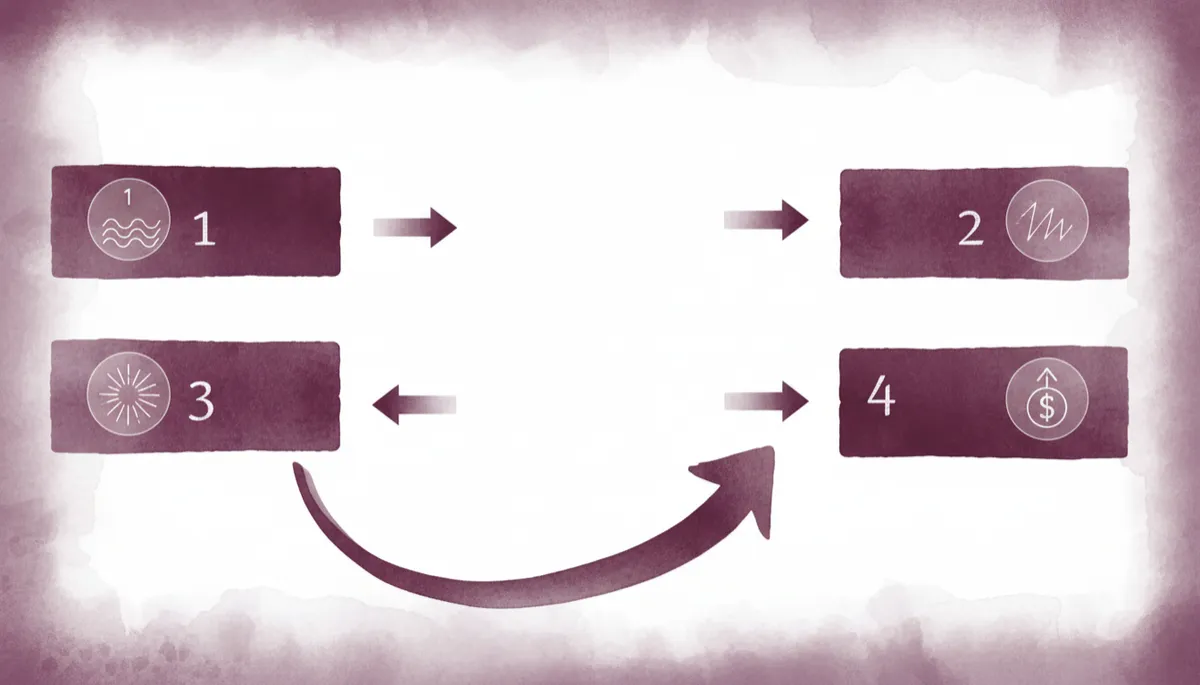
Clean four-stage diagram of the pitch structure in deep plum #7c1d4a and white, with labeled steps (1) Cost of the problem, (2) Alternatives that have already failed, (3) Our solution, (4) Price as conclusion, with arrows showing the buyer’s journey from problem awareness to price acceptance…
As Jason teaches at AuthorJason.com, the high-ticket sales script for founders works best when the buyer feels they discovered the conclusion themselves, even though the structure quietly led them there to serve the clarity of their decision, not the founder’s comfort.
The four-part script Jason teaches every founder for high-ticket sales
Executive summary: Jason’s problem-first four-part script turns high-ticket pitches into calm, structured conversations where the buyer calculates the pain with you, sees failed alternatives, and then receives your price as the smallest, safest number on the table.
Jason’s version of this script almost looks boring on paper. In the room, it feels like a calm, grown-up conversation. The founder stops performing. The buyer stops resisting. Both sides look at the same numbers together and price becomes… reasonable.
The four parts:
- Cost of the problem. “Here’s what not solving this is costing you.” You walk the buyer through lost revenue, wasted time, risk, and missed opportunities. You size the pain together, using their numbers, not yours.
- Alternatives that have already failed. You respectfully show what they’ve already tried. Tools. Hires. DIY projects. You prove you understand why those paths stalled, without mocking them.
- Our solution (briefly). Only now do you tie your offer to the specific parts of the problem you just sized together. Short. Clear. No feature dump. Just enough to show you’ve solved the core challenge.
- Price as conclusion. You anchor price against what they’re already losing. “You told me this is costing you about $900K a year. Our implementation is $120K. If we solve even a third of the problem, it pays for itself.”
Gong’s research shows deals move forward 68% more often when the script ends with a specific next step, not “we’ll think about it” (Gong). So Jason always adds one last small step: a calendar date, a pilot, or an agreed internal review date set in the room.
As Jason teaches at AuthorJason.com, the high-ticket sales script for founders feels like guided discovery where the buyer talks more than you do, and you simply keep asking the next right question in service of their clarity.
What should the opening line of a high-ticket sales script say to keep the buyer engaged?
Start in their world, not yours: one sentence that names the expensive problem they’re already living with, in their language, and invites them to confirm it.
How do you build a high-ticket pitch when you only have 20 minutes with the decision-maker?
Spend the first 10 minutes sizing the problem, five minutes on why past attempts failed, three minutes on your solution, and two minutes anchoring price against the cost you just agreed on together.
What’s the best way to present price in a high-ticket script without losing the room?
Tie price directly to their numbers: repeat the cost of the problem they just confirmed, then place your price quietly as the smaller, safer number in that context — and stop talking to let it land.
How Cuban and Jobs use problem-first framing to pre-sell the price
Executive summary: Cuban and Jobs start from an expensive reality the buyer already feels, then reveal product and price as an obvious answer to that shared reality — not a random offer.
Mark Cuban keeps it brutally simple. In interviews and on Shark Tank, he talks about pitch structure as pain first, solution second. He wants to hear the problem, then the size of that problem in business terms… lost revenue, wasted time, risk sitting in the budget. If the problem doesn’t sound expensive, he checks out mentally before the product slide even appears.

A startup founder in a modern meeting room with deep plum #7c1d4a accents stands beside a whiteboard, walking an executive through the cost of a problem, with charts and numbers visible and no product demo screens in sight…
Steve Jobs did the same on stage, with more theater. He opened launches with a market truth everyone could feel. “Every once in a while, a revolutionary product comes along…” He created a moment of shared recognition. Only then did he reveal the new product as the inevitable answer to that truth. Price came last, almost like a footnote to a story the audience had already bought emotionally.
Look at the original iPhone launch in 2007. Jobs didn’t start with megapixels or storage. He spent minutes walking the audience through the frustrations of existing smartphones and “not-so-smart” phones: clunky keyboards, bad browsers, painful syncing. He stacked costs in terms of friction and wasted potential, then revealed the iPhone as three products in one. When he finally announced the Cingular contract pricing, the audience had already decided it was the future.
In the 2010 iPad launch, Jobs repeated the pattern. He framed the gap between laptops and smartphones — a space with no great device — and described what a “third category” should do better than both. Once the audience nodded along, he showed the iPad and then, famously, revealed a starting price of $499 — below analyst expectations. The gasp in the room wasn’t because the number was small in isolation, but because it felt small compared to the value story he’d just built.
Jason loves this approach for founders because it takes the pressure off. You don’t have to “sell” the price. You just have to sequence correctly: truth, recognition, solution, price. The same structure Musk used with NASA. The same flow Cuban rewards on the show. The same backbone Jason bakes into every high-ticket sales script for founders he writes with clients inside the Future of Selling System.
As Jason teaches at AuthorJason.com, the high-ticket sales script for founders works best when the buyer feels like they’re discovering the story with you — not being dragged through a slide deck — so the script serves their clarity instead of the founder’s comfort.
Should you memorize a high-ticket sales script or use it as a flexible framework?
Treat it like train tracks, not a movie script: know the sequence and key lines by heart, but stay human and adjust your words so it feels like a conversation, not a performance.
How do you handle the silence after presenting a high price — and what do you say next?
Let the silence breathe; don’t rush to discount. Then ask a calm, open question like: “How does this compare to what you’re already spending to live with this problem?” to pull them back to the earlier numbers.
What Jason’s founders close when they stop starting with features
Executive summary: When founders move from feature-first scripts to problem-first scripts, close rates rise, deal cycles shrink, and high prices start to feel like the safe option instead of the risky one.
Jason’s founders don’t start out as natural sales stars. They start as product people. Engineers. Operators. They care deeply and talk fast. Once they shift to starting with the problem, everything changes. Deals don’t just “feel better”. The numbers actually move.

A startup founder in an office with deep plum #7c1d4a accents shakes hands with an enterprise buyer over a signed contract, both calm and confident, with a laptop and printed contract on the table…
One founder Jason coached — let’s call her Maya — sold a $60K data platform to mid-market retailers. Before, 80% of her calls were demo. Buyers smiled and nodded… then disappeared. After she rewired her script, she opened with: “Right now, every empty shelf is an invisible tax on your brand. Do you know what that tax cost you last quarter?”
Together, they calculated that one chain was losing about $1.8M a year in missed sales. Suddenly, $60K didn’t look big. It looked small. Within two quarters, Maya closed three high-ticket deals with the same structure. Same product. Same founder. New sequence.
Inside the Future of Selling System, Jason sees this pattern over and over. Founders who start with “here’s what not solving this is costing you” see close rates climb by up to 41% (Sales Insights Lab). High-ticket pitches that include a specific ROI calculation close about 3x faster than those that never even try (Gong). The structure doesn’t just feel better. It compounds.
As Jason teaches at AuthorJason.com, the best high-ticket sales script for founders makes the buyer talk more than you do, while your questions quietly line up with a clear decision that serves them first.
How the P.I.T.C.H. model builds a high-ticket pitch from first word to signed contract
Executive summary: The P.I.T.C.H. model is the high-ticket sales script for founders — a repeatable conversation path that keeps you problem-focused, buyer-led, and always moving toward a clear next step.
The Future of Selling (FOS) System is Jason’s answer to the “I’ll just wing it” habit that quietly kills founder-led sales. At the heart of FOS is the P.I.T.C.H. Formula — a simple, repeatable way to run every high-ticket conversation from the first word to the next step without sounding robotic or pushy.
Jason doesn’t ask founders to memorize a wall of lines. He gives them a structure that keeps them out of feature-dump mode and in the Musk/Cuban/Jobs zone. Problem first. Impact quantified. Trust built. Only then does price show up, half accepted already. If you want the full breakdown of how it works, he unpacks it in detail here: P.I.T.C.H. Formula.
Self-check
- Does your high-ticket script start with the buyer’s problem — or with your pitch?
- Do you ask the buyer what leaving the problem unsolved has cost them — or assume they know?
- After revealing a high price, do you stay quiet and wait — or immediately start justifying?
In practice, the P.I.T.C.H. Formula is the same thing as the high-ticket sales script for founders. It gives you a beginning, middle, and end to every conversation: how to open in the buyer’s world, how to explore the cost of staying stuck, how to share one sharp vision, and how to land on the number without flinching. Instead of memorizing paragraphs, you remember which part of the buyer’s thinking you’re leading next.
Jason treats the model as the skeleton of every high-ticket conversation. Each stage maps to a specific moment in the dialogue: the moment you name the problem, the moment you size the cost, the moment you offer a new lens, the moment you show the outcome, then the moment you ask for a decision. When the founder follows this sequence, the buyer moves logically from acknowledging the problem to committing to the solution without a logical gap they can escape through with “let us think about it.”
That’s why founders using P.I.T.C.H. don’t sound “salesy”. They sound organized. The framework stops you skipping critical moments — like confirming the problem is expensive or agreeing a concrete next step — while leaving room for your personality, stories, and product details. It’s a structure you hang your own language on, so every high-ticket call follows the same path even though no two calls sound identical.
Structured conversations like this consistently outperform unstructured ones. Salesforce and Harvard Business Review have both highlighted how question-led sales calls correlate with higher win rates and bigger deals (Harvard Business Review). P.I.T.C.H. is Jason’s version of that discipline, tuned specifically for founder-led high-ticket deals.
Self-check
- Does your high-ticket script start with the buyer’s problem — or with your pitch?
- Do you ask the buyer what leaving the problem unsolved has cost them — or assume they know?
- After revealing a high price, do you stay quiet and wait — or immediately start justifying?
As Jason teaches at AuthorJason.com, the high-ticket sales script for founders doesn’t trap the founder; it gives them clear tracks so the buyer feels the conversation serves their clarity, and moves confidently toward a decision.
The FOS System lives at dreamaker.club/buyfos. It’s $19 a month — about $0.63 a day — and is built for founders who are personally carrying every big deal. No fluff. Just the same structures Jason has used with 1,000+ founders to help generate over $22M in combined sales, after hitting bottom and rebuilding three separate times.
3 mistakes in high-ticket scripts — and the bonus mistake that hurts most
Executive summary: Scripts fail when they’re monologues, memorized word-for-word, or missing a clear close — and when founders cling to them so tightly they stop listening.
Mistake one (Maya, an enterprise software founder): her script was a monologue. She delivered it confidently. The buyer listened. Then asked two questions she hadn’t prepared for. She had no script for the detour, so she improvised badly. The call ended nowhere. Move: the high-ticket script is not a speech. It’s a sequence of questions with flexible transitions. The script lives in the questions, not the answers.
Mistake two (Maya): she memorized the script word-for-word. When the buyer interrupted halfway through a sentence, she lost her place and visibly froze. The buyer noticed. Trust dropped. Move: learn the structure, not the wording. Each section of the script has a job. Know the job. Then find your own words to do it.
Mistake three (Maya): her script never included a close. The conversation reached the end of the “pitch” section. Maya stopped. The buyer said, “This sounds interesting, let me think about it.” Maya said, “Of course, take your time.” The deal slid backwards. Move: the script is incomplete without a close. The close is a question, not silence. “Based on what we’ve covered, does it make sense to move forward?” is the last line in the script.
The bonus mistake (Jason, in third person): He spent years working on high-ticket scripts with founders and saw a consistent pattern: the founders most attached to their scripts were the least effective. The script became a crutch. When the buyer veered off, the founder tried to drag them back to the script instead of following them toward a better close. Jason started teaching a different approach: the script sets direction, but the buyer’s responses set the pace. The founder who listens and adapts inside the structure outperforms the one who performs it perfectly. Move: after your next high-ticket call, ask yourself, “Did I listen more than I talked?” If the answer is no, the script needs fewer lines and more questions.
As Jason teaches at AuthorJason.com, the high-ticket sales script for founders should feel like a flexible map — you know the route, but the buyer chooses the speed and scenery, and the script serves their clarity instead of the founder’s comfort.
The high-ticket sales script that closes — the founder’s exact version
Executive summary: The closing script sounds like guided dialogue: problem, cost, one clear vision, anchored price, then a simple close question — with the buyer talking at every step.
Here’s what a high-ticket sales script for founders looks like when it’s working. Founder: “From what I’ve seen, fast-growing teams like your SaaS org leak revenue at the handoff between marketing and sales. How much of your pipeline do you think quietly dies there?” Buyer: “Honestly, maybe 25–30%.”
Founder: “If we take your current $4M pipeline and assume 25% stalls there, that’s about $1M a quarter not converting. Does that feel close?” Buyer: “Unfortunately, yes.” Founder: “Most teams try to fix that with more leads or more reps. What our customers find is that one invisible bottleneck in the handoff usually drives most of the loss.”
Founder: “Our implementation focuses only on that bottleneck. You told me it’s costing you around $4M a year. Our program is $160K for year one, including rollout and support. If we recover even a quarter of that, it more than pays for itself.” Buyer: “Okay, that helps.” Founder: “Based on what we’ve covered, does it make sense to move forward with a 90-day pilot and review the results together?”
As Jason teaches at AuthorJason.com, the best high-ticket sales script for founders looks like this: the buyer’s language, the buyer’s numbers, your structure — and a close that feels like the next logical step, not a hard turn, in service of the buyer’s decision clarity, not the founder’s comfort.
FAQs about high-ticket sales scripts for founders
What’s the biggest mistake founders make in the first 60 seconds of a high-ticket pitch?
Most founders start by introducing themselves and their product instead of the buyer’s expensive problem, so the opening feels generic and the buyer’s mind drifts back to email before the real conversation begins.
Should startup founders use a script on high-ticket sales calls?
Yes — but as a framework, not a read-aloud script. A high-ticket sales script for founders gives you structure, core questions, and a clear close while leaving room for a natural conversation and buyer-led detours.
What does a high-ticket sales script actually sound like in practice?
It sounds like guided curiosity: you open with the buyer’s problem, ask about the impact in their numbers, share one sharp vision, then quietly anchor price to the cost they just confirmed before asking a simple, direct close question.
How do you make a sales script sound natural instead of stiff?
Learn the sequence, not the sentences. Practice the questions out loud, then adjust the wording to match how you actually speak. Listen more than you talk and let the buyer’s answers shape which parts of the script you lean on.
How long should a high-ticket sales script be for startup founders?
Long enough to guide the conversation, short enough to remember under pressure. Jason’s founders often work from a one-page outline with structure, questions, and stages instead of a multi-page script they’ll never use live.
How many times should a founder rehearse a high-ticket script before using it with buyers?
Until the structure is automatic. Jason often recommends three solo run-throughs, two with a colleague role-playing the buyer, and one recorded session to review pacing, questions, and how confident you sound when you say the price.
How do you adapt a high-ticket script when multiple stakeholders are in the room?
Keep the same structure, but aim questions at each stakeholder’s world: finance, operations, product. Make sure each person states their version of the problem’s cost, then anchor price to the shared impact they’ve uncovered together.
How often should founders update their high-ticket sales scripts?
Treat it as a living asset. Jason’s founders review their scripts every 5–10 calls, tightening questions that don’t land, adding phrases that resonate with buyers, and sharpening ROI examples to match their latest wins and data.


