Find a Business Mentor: Insights from Warren Buffett
Founders, Mentorship, Startup Sales
How to Find a Business Mentor for Founders and Startups — What Billionaire Warren Buffett's Letter to Benjamin Graham Teaches You
Discover how intentional founders find life-changing mentors, what Buffett’s cold letter to Benjamin Graham really reveals, and how to build your own support system that actually moves revenue, not just motivation.
Founders Who Find Great Mentors Are Intentional, Not Lucky
If you’re leading a team of five or more, you already know this: pressure compounds faster than progress. Payroll, product, investors, customers, family — everyone needs something from you. In those moments, the idea of a seasoned mentor who has “seen this movie before” feels priceless. But it can also feel impossible to find, especially if your network isn’t full of unicorn founders and ex-operators.
Many founders quietly hope that the “right person” will appear: a famous operator at a conference, a chance LinkedIn intro, a serendipitous investor coffee. The hard truth? The best mentors are almost never found by accident. They are found by founders who are willing to be specific, humble, and persistent — exactly the way Buffett approached Benjamin Graham decades ago.
The Buffett Method — What His Cold Letter to Graham Actually Shows
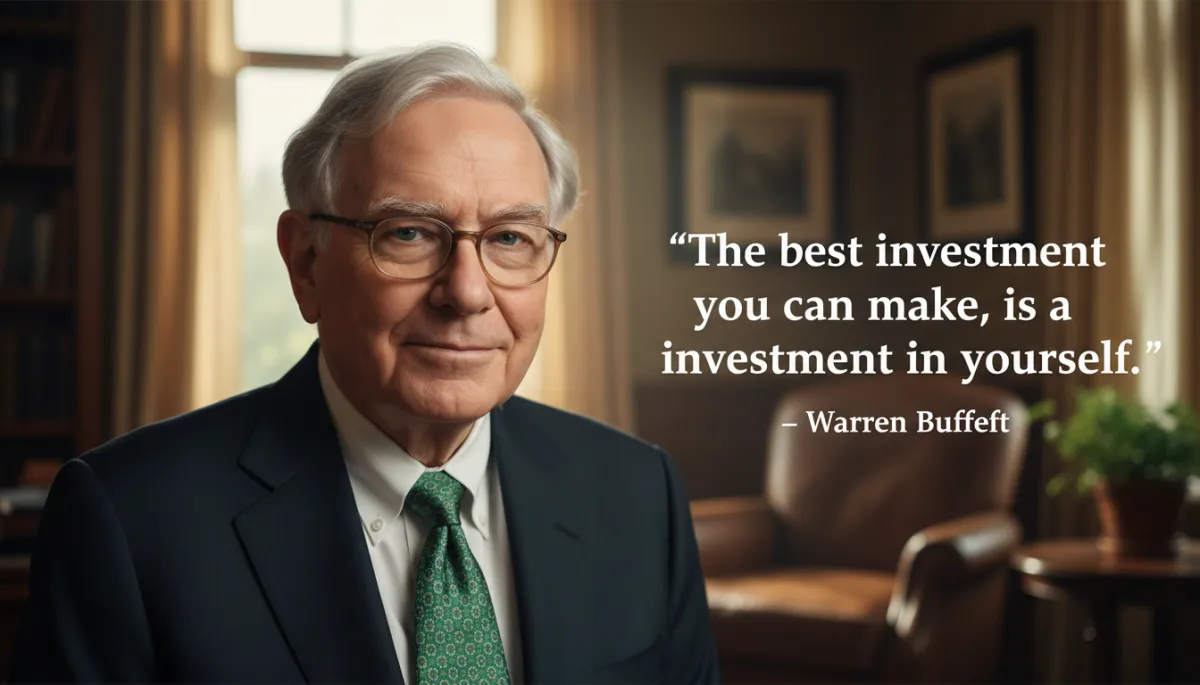
Buffett’s letter to Benjamin Graham was a calculated bet on himself, not a lucky break.
Before the world knew his name, Buffett was just a young guy in Omaha who had devoured The Intelligent Investor. He recognised something powerful: Graham had the missing mental models he needed. Instead of waiting for an introduction, he did what most founders are too shy to do — he initiated.
He wrote Graham a clear, respectful letter. No fluff. No “pick your brain”. He showed that he had studied Graham’s work, applied the ideas, and was serious enough to move to where the learning was. Graham eventually hired him. That relationship didn’t just give Buffett a job; it forged the investment philosophy that would later direct more than $100B in capital over decades.
- Do the work first. Buffett read deeply and implemented ideas before asking for attention. Founders who want to find business mentor startup support should show they’ve already tried, tested, and learned on their own.
- Be specific in your ask. “I admire your thinking on X. Here’s how I applied it. Here’s where I’m stuck. Could I get 15 minutes on this decision?” Specificity signals respect for their time and expertise.
- Be willing to move. Buffett was ready to relocate for the right learning. As a founder, that might mean adjusting your schedule, flying to a city, or rearranging your calendar to show you’re serious.
The “Buffett method” is not about worshipping a guru. It is about owning the responsibility to seek out the person whose thinking can compress your learning curve by years — and then approaching them with humility and preparation.
Where Founders Actually Find Great Mentors
If you’re wondering how to find a mentor as a founder, it helps to know where real relationships are born. It’s usually not on a random Twitter thread; it’s where effort and proximity meet. Here’s a practical map, in the order most founders Jason has worked with actually find help.
- Existing network. Former bosses, ex-colleagues, early customers, angel investors, even sharp vendors. Many already understand your context. Start by asking, “Who do you know who’s scaled from our stage to $5M–$10M ARR?” Then send a short, honest note asking for a warm intro.
- Industry founder communities. Curated Slack groups, niche WhatsApp circles, private communities and events. Look for spaces where founders share numbers and mistakes, not just PR wins. Many of Jason’s clients met their most trusted advisors in small, consistent peer groups like this.
- Accelerator and incubator alumni. Even if you’re not in a programme now, alumni networks are powerful. Many second-time founders in those circles are happy to mentor if you show up prepared and respect the relationship. A simple “We’re at the stage you were at in 2019 — could I get 20 minutes on how you handled X?” can open doors.
- Proactive direct outreach — the Buffett method. This is where you reach out cold to operators, founders, or experts whose work you’ve studied. You reference a specific article, interview, or decision they made, show how you’ve applied it, and ask a focused question. This is uncomfortable, but it is often where the most transformative relationships begin.
- Paid programmes with genuine advisory access. Not all paid mentorship is equal. Look for programmes where you get direct access to an operator who has done what you’re trying to do, and where the focus is on decisions, not just motivation. This is where products like the Future of Selling System (FOS) sit — structured, repeatable, and tied to specific outcomes like pipeline and revenue.
How do I know what kind of mentor I actually need?
For most founders at a five-person-plus team, you don’t need a celebrity advisor. You need someone one or two “chapters” ahead in the problem you’re facing right now. If your biggest bottleneck is sales, then a world-class product mentor won’t fix your pipeline. This is where the parent pillar at dreamaker.club/post/how-to-choose-a-coach-or-mentor-strategy-guide-and-survival-map-for-founders-and-startups becomes crucial: match the mentor to the stage and the constraint, not to their follower count.
How often should I meet a mentor as a startup founder?
Healthy mentor relationships are built on cadence and respect. For many of the 1,000+ founders Jason has supported since 2015, a monthly deep-dive plus quick check-ins around key decisions works best. It gives you time to implement, gather data, and come back with learning, not excuses. Harvard Business Review has written about how consistent, structured contact leads to better mentoring outcomes than sporadic, emotional calls for help (Harvard Business Review).
Should I pay for mentorship or only look for free help?
Free mentorship can be powerful, especially from alumni, angels, or operators who believe in your mission. But paid advisory often brings structure, accountability, and speed. Think of it the way Forbes describes executive coaching: you’re not buying time, you’re buying compressed learning and fewer expensive mistakes (Forbes). The key is to invest in mentors and systems that tie directly to measurable outcomes — like sales, retention, or fundraising.

Real mentorship starts when a founder takes the first honest, brave step.
How Jason Built His Foundation Through Trial and System
Jason didn’t start with a perfect mentor board or a polished system. He hit rock bottom three times — three different seasons where cash was thin, confidence was thinner, and the voice in his head said, “Maybe this is where it ends.” Each time, what pulled him out was a combination of brutal honesty, the right advisor, and a simple way to turn advice into sales conversations and signed deals.
Over the years, working with more than 1,000 founders and helping generate over $22M in combined sales, Jason noticed a pattern. Founders who grew fastest didn’t just collect mentors; they built a system around mentorship. They came to calls with numbers, not just narratives. They tested, tracked, and reported back. They treated every piece of advice as an experiment to be run, not a quote to be tweeted.
That’s what eventually became the backbone of the Future of Selling System — a way for founders to turn conversations, content, and coaching into predictable selling behaviour. Not just “feel inspired after a call”, but “know exactly what to say, to whom, on which day, to move a deal forward”.
The P.I.T.C.H. Formula and Why Mentors Love Founders Who Use It
One of the reasons experienced mentors enjoy working with Jason’s founders is that they don’t show up empty-handed. They use the P.I.T.C.H. Formula — a core part of FOS — to clarify their message, outreach, and follow-up. When a founder can say, “Here’s our Positioning, here’s the Intention of this campaign, here’s the Talk track we’re testing, here’s the Channel, and here’s the Habit we’re building,” mentors can give sharp, surgical feedback instead of vague encouragement.
If you want to know how to find a business mentor for founders and startups and keep them engaged, give them something solid to work with. Systems like the P.I.T.C.H. Formula make you the kind of founder mentors fight to keep working with — because your progress is visible, measurable, and real.
Tier 1 Results: What Happens When Mentorship Meets System
At some point, every founder asks, “Does this actually work in the real world?” Jason prefers to answer that with numbers, not adjectives. Here are a few Tier 1 cases from founders who combined the right guidance with a simple, disciplined system:
- Tan — $29,693 in 16 days. Tan came in with an exhausted team and a product that had fans but no consistent sales rhythm. With tighter messaging and a simple daily outreach habit, revenue that had been stuck for months suddenly moved. In just 16 days, Tan closed $29,693 in new business — not by working more hours, but by working a clear, mentor-aligned plan.
- Teo — 63 customers in 100 days. Teo was strong on product but shy on selling. With guidance and the FOS structure, Teo turned vague “let’s grow” goals into a precise customer acquisition plan. Over 100 days, that plan translated into 63 paying customers, a calmer team, and a clearer story for investors.
- Leon — from $2.5K to $2M+. Leon’s company was making about $2.5K when he first connected with Jason. Over time, with repeated cycles of advice, implementation, and refinement, that number grew past $2M+. Not overnight. Not without setbacks. But with a combination of mentorship, grit, and a selling system that his whole team could follow and improve.
These are not lottery wins. They are the predictable by-product of founders who stopped waiting for the perfect mentor to appear and instead showed up ready — numbers in hand, ego on mute, system in place. That’s the same spirit behind Buffett’s letter to Graham, translated into modern startup life.
The right mentor does not find you — you find them.


