
How Billionaire Jeff Bezos Built the World's Greatest Assumptive Close System
Sales, Assumptive Close, Startup Founders
How Billionaire Jeff Bezos Built the World’s Greatest Assumptive Close Into Every Amazon Interaction — A Founder’s Guide
Jeff Bezos turned a simple psychological principle into a sales engine used by hundreds of millions of people. Jason helps founders borrow that same engine in one‑to‑one sales conversations, without feeling pushy or fake.

The psychology behind why the assumptive close works
Jason starts here because founders like you care about what works, not theory for theory’s sake. The assumptive close works because of a quiet force inside every buyer: cognitive consistency.
People want their actions to match their words and prior intentions. Once they say, “This is interesting,” or “This will help our team,” their brain prefers to keep moving in that same direction instead of changing course. Breakcold’s research on sales psychology highlights how often buyers follow through on their small prior commitments rather than starting from scratch every time.
The assumptive close doesn’t hypnotize anyone. It simply rides the buyer’s own momentum. You acknowledge the value they’ve already agreed to. Then you move the conversation forward as if the natural next step is to start working together. Their desire for cognitive consistency makes saying “yes” easier than backing up and starting over somewhere else.
As Jason teaches at AuthorJason.com, the assumptive close serves the buyer honestly when it reflects commitments they’ve already expressed — not the pressure you wish they felt.
How Jeff Bezos built the assumptive close into Amazon’s entire business model
Jeff Bezos understood cognitive consistency before most companies even had words for it. He didn’t just train sales reps on what to say. He embedded the assumptive close into Amazon’s software so that every click nudged customers closer to a natural “Of course I’ll buy” moment.
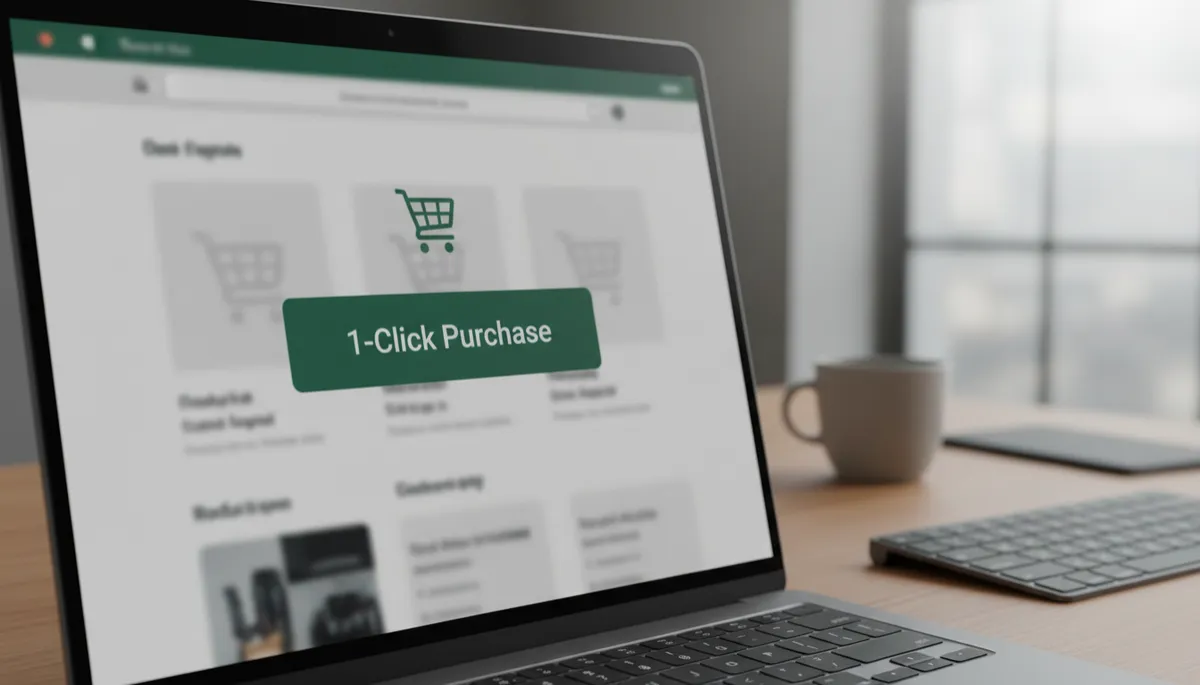
Bezos patented the assumptive close in 1999. Amazon’s “1‑Click” button is cognitive consistency engineered into software.
When Amazon introduced 1‑Click ordering in 1999, the close was effectively happening on the product page. By the time a shopper hit that button, they’d read reviews, checked features, and imagined the product in their life. The 1‑Click button didn’t ask, “Are you absolutely sure?” It behaved as if the decision was already made and simply helped them finish what they’d started.
In practice, this showed up in small but powerful details. Bezos pushed for persistent shopping carts so items followed customers across sessions, reflecting the idea that the decision was still alive. He backed personalized recommendations that surfaced “Frequently bought together” bundles, nudging buyers to keep going down the path they’d already started. Every design choice made moving forward feel like the obvious, low‑friction option.
By the time Amazon launched Prime in 2005, Bezos framed the program as a way to “remove friction from online shopping.” Once customers paid the annual fee, two‑day shipping became the default. According to later Amazon shareholder letters, Prime members significantly increased their purchase frequency because they no longer re‑evaluated shipping costs every time. The assumptive close lived inside the membership: after joining once, members kept buying without re‑examining the core decision.
“Subscribe & Save” uses the same principle. It assumes the purchase will recur. The default is continuity, not reconsideration. Amazon Prime goes a step further. It removes friction at every stage so buyers don’t have to re‑decide shipping fees or delivery times. Decide once to join Prime, and the system quietly closes thousands of future purchases on your behalf. Bezos built the assumptive close into the company’s DNA, not just into a sales script.
As Jason teaches at AuthorJason.com, the ethical version of this move in founder‑led sales is to remove unnecessary re‑decisions after the buyer has already chosen — so the assumptive close protects their momentum instead of hijacking it.
Jason’s four‑step assumptive close model for startup founders
Jason has helped more than 1,000 founders since 2015, across over $22M in combined sales. Many were where you are now. Small team. You still lead every big deal. Tired of polite “Great call” messages that never turn into signed contracts. You’re not failing — but you’re stuck at the same close rate month after month while HoneyBook‑level surveys show more than 50% of small‑business sellers feel the same stagnation.
Jason’s four‑step version of the assumptive close is simple enough to remember on a stressful call. First, you mirror the core benefit the buyer already said matters. Second, you tie that benefit to a clear next step. Third, you phrase that next step as if working together is the path already chosen. Fourth, you stay quiet and let the buyer either confirm or adjust. You’re not cornering them. You’re offering a natural continuation of the conversation they already started with you.
- Mirror the essential benefit the buyer has already said is most important.
- Tie that benefit directly to a specific, concrete next step.
- Phrase the next step as if collaboration is the default path forward.
- Stay quiet and let the buyer confirm, adjust, or surface what’s still unclear.
As Jason teaches at AuthorJason.com, this four‑step assumptive close serves the buyer when every step is anchored in what they’ve actually said — not what the founder hopes is true.
What is the assumptive close and how does it work psychologically?
The assumptive close is when you speak and act as if the buyer has already decided to move forward, then you guide them through the next steps. Psychologically, it’s built on cognitive consistency: people prefer to complete what they’ve already started, especially after expressing interest or agreement earlier in the conversation.
How does the assumptive close work without feeling manipulative or aggressive?
It stops feeling manipulative when you only assume what the buyer has already signaled. You mirror their words, respect their concerns, then suggest a next step as the obvious continuation. You also leave room for them to say, “Not yet,” which keeps the tone collaborative instead of pushy.
When should you use the assumptive close — and when is it the wrong move?
Use the assumptive close when the buyer has already agreed on the problem, the fit, and the rough timing. It’s the wrong move when they’re still unclear about the value, highly analytical, or openly skeptical. With those buyers, you slow down, add more proof, and sometimes shift to a more explicit, choice‑based close instead of an assumption.
How Cuban and Jobs used the assumptive close in high‑stakes deals
Mark Cuban often skips “Do you want this?” and goes straight to “When do you want to start?” He assumes that if the offer isn’t right, the buyer will say so. This respects their intelligence and removes the awkward limbo at the end of a pitch. It’s the same human psychology as Amazon’s 1‑Click button, just spoken out loud instead of coded into software.
On Shark Tank, Cuban showed this in real time. In his deal with Ten Thirty One Productions, he moved from exploring the numbers to asking, “So when can we announce this deal?” once he and the founder were aligned on the vision and valuation. That assumptive phrasing turned a tense negotiation into logistics; the founder followed, and the deal closed at $2M for 20% equity.
The assumptive close shifts the conversation from “Would you like to?” to “When would you like to start?”
Steve Jobs used the assumptive close at scale. His keynotes didn’t ask the audience whether they wanted the new iPhone. He showed them why their current phone suddenly felt clunky and limited. Then he revealed the new device as if the only remaining questions were storage size and price. By the time he reached “One more thing…,” the emotional purchase was already made. The close was baked into the story structure, not bolted on at the end.
In the 2007 iPhone launch, Jobs walked the audience through the clumsy smartphones of the time, then demonstrated multi‑touch gestures, visual voicemail, and full‑page browsing. He didn’t pause to ask, “Do you want this?” Instead, he moved to, “We’ll start shipping in June,” and laid out carrier partners and pricing. That shift from persuasion to logistics is the heart of the assumptive close: the audience had already decided; all he did was show them how to act on it.
As Jason teaches at AuthorJason.com, founders earn the right to use this kind of assumptive close only after doing the hard work of teaching, listening, and proving value. Then “when” becomes leadership, not pressure.
What is the two‑question assumptive close — and why does it make yes easier?
Jason’s favorite version is simple. The first question: “Does this solve the problem we agreed is costing you X right now?” The second, without a long pause: “Great — would you prefer we start this week or next?” The first question anchors the value; the second assumes kickoff and offers a simple either–or choice instead of a heavy yes–no decision.
What’s the difference between an assumptive close and an arrogant, baseless assumption?
In practice, people blur the terms. Jason draws a clear line between them. A healthy assumptive close is built on real buyer signals and prior commitments. The arrogant version ignores those signals and stomps forward regardless. The first feels like partnership. The second feels like pressure. Founders usually win when they assume based on evidence, not hope.
What Jason’s founders say after their first assumptive close
One founder Jason worked with, Maya, was leading a 12‑person B2B SaaS team. Her pipeline looked healthy on paper. Demos booked. Trials started. But deals sat in “Awaiting decision” for weeks. She ended almost every call with, “Great, think it over and let me know.” Then she refreshed her inbox for days, anxiety rising with every hour of silence.
1,000+ founders. $22M+ in combined sales. The assumptive close removes friction. The P.I.T.C.H. formula builds the foundation beneath it.
On the first call where she used Jason’s structure, Maya tried a gentle assumptive close. After confirming the value, she said: “It sounds like this will save your team at least a day a week. Let’s get your trial going — would you prefer we start with your sales team or your customer success team first?” The buyer paused, smiled, and said, “Let’s start with sales. They’re the bottleneck right now.” That was it. Deal done. No drama. No chasing.
After the call, Maya told Jason: “I always thought closing meant becoming a different person. This felt like I stayed myself, I just… finished the conversation.” That’s the shift Jason wants for every founder. Not a new persona — a clearer path from interest to action.
As Jason teaches at AuthorJason.com, the right assumptive close for startup founders feels more like guiding a committed buyer across a short bridge than dragging a reluctant buyer up a hill.
How the P.I.T.C.H. formula puts the assumptive close in its proper place
Jason bakes most of the hard work of the P.I.T.C.H. formula into the Future of Selling System (FOS). He doesn’t ask founders to memorize clever lines. He helps them build a repeatable flow so that, by the time they reach the assumptive close, the buyer already feels safe, understood, and clear on the value.
In Jason’s world, the Close Step is less about pressure and more about alignment. You’ve already clarified the stakes, illustrated the cost of doing nothing, and shown the buyer a path that fits their constraints. By then, the assumptive close isn’t a leap; it’s a summary. You’re simply naming the next step your entire conversation has been pointing toward.
That’s why he teaches founders to see the assumptive close as leadership. When the conversation is built correctly, assuming the next step forward isn’t arrogance; it’s service. The buyer has already done the hard cognitive work. They’ve weighed trade‑offs, asked questions, and imagined the solution in their world. A clear, assumptive transition — “Let’s schedule your trial kickoff; would you prefer this week or next?” — removes decision fatigue instead of adding to it.
Self‑check
- Do you confirm alignment on the problem and solution before attempting any form of assumptive close?
- Have you ever used an assumptive close before the buyer was ready — and felt the room temperature change?
- When you move to next steps, do you lead clearly — or leave the decision entirely to the buyer?
Call‑analysis data from Gong shows that top performers don’t spend more time on “hard closes.” They spend more time tying value to specific next steps, then quietly assuming those steps will happen unless the buyer objects. This aligns with Harvard Business Review’s work on decision simplicity, which finds that making action easier beats adding more persuasion.
As Jason teaches at AuthorJason.com, when the P.I.T.C.H. formula has done its job, the assumptive close is simply the moment you put words to the decision the buyer has already made internally.
FAQ on the assumptive close technique
What do you do if a prospect objects after an assumptive close?
Jason tells founders to treat objections as gifts, not failures. If a prospect says, “Wait, I’m not ready to start next week,” you gently ask, “Makes total sense — what would you need to feel comfortable choosing a start date?” That question reveals the real blocker: a missing stakeholder, unclear budget, timing risk, or lingering doubt. Once it’s visible, you can solve it together instead of guessing from your inbox.
With highly analytical or skeptical buyers, an assumptive close can backfire if used too early. They may feel you’re skipping steps they need. In those cases, you slow down and bring more proof: case studies, trial options, or external research like Harvard Business Review articles on decision‑making or Breakcold insights on buyer behavior. Then you return to a softer, evidence‑backed assumptive close once their questions are truly answered.
How to apply this on your very next call
You don’t need a perfect script to start. On your next call, listen for the moment when the buyer says something like, “Yes, this would really help our team,” or “We’ve been trying to solve this for months.” That’s your green light. Instead of ending with “Let me know what you think,” try: “Since this solves the problem we talked about, let’s get your team set up — would you prefer a smaller pilot this month or a full rollout next month?”
You might stumble the first few times. That’s normal. Jason has hit rock bottom three times and climbed back three times. He knows progress in sales, like in life, is rarely clean. What matters is that you stop leaving the buyer alone on the edge of the decision. You walk with them one step further, assuming progress — just as Bezos, Cuban, and Jobs did in their own worlds.
As Jason teaches at AuthorJason.com, the right assumptive close for startup founders is most honest when it’s used as a bridge from real agreement to a clear action — not as a shortcut that skips the hard parts of the conversation.
3 assumptive‑close mistakes that damage trust — and the bonus mistake that hurts most
Zara, a fintech founder, learned this the hard way. In a first meeting with a big bank, she barely understood the stakeholder’s priorities. After twenty minutes, she said, “So let’s get the contract started.” The buyer recoiled, crossed his arms, and ended the meeting early. The assumptive close felt like entitlement, not leadership, because there was no shared agreement yet. The right move: earn explicit alignment on the problem and solution before any transition language.
In another deal, Zara used assumptive language with a buyer who had already raised serious regulatory concerns. When she said, “Great, so we’ll have your team set up next week,” the stakeholder went silent. Later, he told her he felt unheard — as if his risk questions had been swept aside. The right move: resolve the objection first. Assumption only works with a buyer already leaning toward “yes”; otherwise it feels like you’re stepping over their fears.
The third time, when her assumptive close met resistance, Zara doubled down on pressure. She repeated, “I really think this is the right decision for you” twice, trying to push through the hesitation. The buyer left the call and never returned. The right move: when assumption meets resistance, switch to a question — “What, specifically, is making you hesitant?” Assumption and questions are both closing tools; the skill is knowing when to use which.
Jason has seen an extra mistake that hurts even more. He taught founders the assumptive close and watched some of them use it as a shortcut — skipping teaching and problem confirmation, jumping straight to transition language. The close felt aggressive because it was. The assumptive close is ethical and effective only when it follows real agreement, not a staged one. Jason added a two‑question test before any assumptive language: “Have they confirmed the problem? Have they confirmed the fit?” If the answer to either is no, assumption is a gamble. The right move: run the two‑question test before any transition. If both are yes, lead. If either is no, teach first.
As Jason teaches at AuthorJason.com, the assumptive close for startup founders protects trust when it’s the last step in an honest process — not the first move in a rushed one.
How to use the assumptive close — the founder’s exact script
Founder: “Just to make sure we’re aligned — you’re losing about a day a week per rep to manual reporting, and that’s slowing down pipeline reviews. Is that accurate?” Buyer: “Yes, that’s exactly it.” Founder: “And from what we’ve walked through, you see our platform replacing those spreadsheets without adding new headcount?” Buyer: “If it works like in this demo, yes.”
Founder: “Great — since this solves the problem we agreed on, let’s get your trial started. Would you prefer to start with the EMEA team next week or the U.S. team the following week?” Buyer: “Hmm, I’m not sure about next week; we have a big launch.” Founder: “Totally makes sense — what timing would feel comfortable so you get value without overloading the team?” Buyer: “The beginning of next month would be better.” Founder: “Perfect, let’s lock in the first week of next month with the U.S. team, then expand to EMEA after we review the results.”
- Confirm the problem using the buyer’s own words and get explicit agreement.
- Confirm that your solution fits that problem as they see it.
- Transition with a calm, assumptive logistics question about when or how to start.
- If hesitation appears, ask one clarifying question, resolve it, then re‑confirm the next step.
As Jason teaches at AuthorJason.com, this script keeps the assumptive close rooted in the buyer’s reality so it feels like guidance, not a shove.
What is the assumptive close and when should founders use it?
It’s a close where you speak as if moving forward is already the agreed‑upon path. Founders should use it only after the buyer has confirmed the problem, the fit, and the rough timing.
Is the assumptive close manipulative?
It becomes manipulative when it ignores buyer signals. Used properly, it simply names the next step the buyer already seems to want and leaves room for honest disagreement.
How is the assumptive close different from a standard direct ask?
A direct ask says, “Would you like to move forward?” The assumptive close skips “if” and goes to “when” or “how,” focusing on logistics while trusting the buyer to object if the assumption is wrong.
Does the assumptive close work in high‑ticket B2B deals?
Yes, but only after stakeholders are aligned on the problem, impact, and fit. In complex deals, the assumptive close usually comes after several educational and discovery conversations, not on the first call.
Can you use the assumptive close over email or only live?
You can use it in both. In email, you might write: “Since we agreed this solves problem X, I’ll send over the trial agreement to start on [date] unless you’d prefer a different timeline.”
What if you feel too introverted to use the assumptive close?
Introverted founders often excel at the assumptive close because they listen deeply first. When you’ve really heard the buyer, quietly suggesting the next step feels like clarity, not aggression.
How many times should you use the assumptive close in a single conversation?
Usually once. If the buyer hesitates, shift to clarifying questions instead of stacking multiple assumptive closes. Overuse makes you sound like you’re pushing, not partnering.


