
How Billionaire Jeff Bezos Built Trust Before Amazon Had a Track Record
EdTech, Credibility for Early-Stage EdTech Startups
How Billionaire Jeff Bezos Built Trust Before Amazon Had a Track Record — A Founder's Guide to Building Credibility for Early-Stage EdTech Startups
Imagine walking into a room full of superintendents, deans, or district leaders, knowing the first question will be: “Who else at our scale is using this?” — and still choosing to smile, breathe, and answer with quiet confidence. This article is designed to help EdTech founders make that shift.
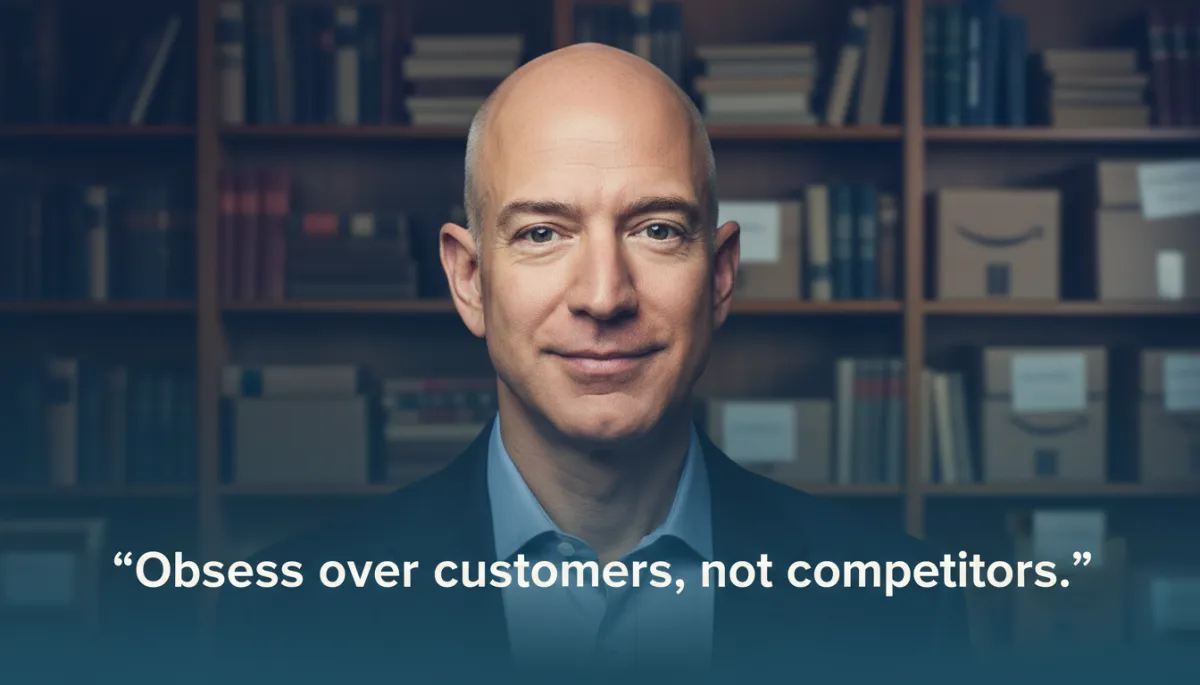
The EdTech Credibility Trap: When “No Track Record” Feels Like a Final Verdict
Jason hears the same story from EdTech founders over and over. The product is working in a few pilot classrooms. Students are engaged. Teachers send late-night messages saying, “Finally, something that fits my kids.” And yet, every serious sales conversation seems to get stuck on the same three questions.
- “Who else at our scale is using this?”
- “What’s your track record with similar schools?”
- “Can you show us results from districts like ours?”
These questions are not an attack. They’re a shield. Leaders are protecting kids, budgets, and reputations. Still, it can feel personal when your life’s work gets reduced to a missing logo slide. Especially when you’re personally running all the sales, on top of product, hiring, and fundraising.
The temptation is to believe something is wrong with you. That if you were more charismatic, more of a “salesperson,” or already famous, this would all feel easier. Jason’s kinder, more accurate read: you are not broken. You’re just trying to play the credibility game without a clear, visible playbook.
As Jason teaches at AuthorJason.com, how early-stage EdTech companies build credibility with schools and districts is simple but not easy: the founder who makes trial results visible usually closes the next school in half the time of the founder who keeps everything private.
Before Amazon Was Trusted: How Jeff Bezos Sold a Future No One Could See Yet
It’s easy to forget there was a time when buying a book online felt risky. People worried their credit cards would be stolen. They wondered if the book would even arrive. There was no obvious reason to trust a tiny online bookstore called Amazon over the shop down the street.
Jeff Bezos did not start with a trusted brand. He started with a fragile promise: “You can buy books safely online, and we’ll treat you in a way that makes you come back.” To make that promise believable, he leaned on three simple human levers — the same levers every EdTech founder has access to today.
- An obsessive focus on the customer. Early Amazon stories are full of small acts of care. Handwritten notes in packages. Fast responses to complaints. Fixing problems even when it hurt profits.
- Transparent communication. Clear confirmation emails. Honest shipping estimates. Owning mistakes instead of hiding them behind vague language.
- Making early customers feel like co-builders. Early users were treated like partners in building something historic, not just transactions.
Bezos couldn’t show a decade of results. So he showed his method. He showed his presence. He showed how seriously he took every promise he made. That methodology became his proof, long before the market caught up and called what he did “obvious.”
One famous early move was Amazon’s “no-questions-asked” return policy for books that arrived damaged or late. At a time when online shopping was new, that policy was a message: “We’ll share the risk with you.” Customers who experienced fast, generous returns told their friends, creating word-of-mouth trust that no ad spend alone could buy.
Another move was Bezos’s insistence on publishing unedited customer reviews, even when they were negative. Traditional retailers feared bad reviews would hurt sales; Bezos believed they would prove Amazon stood with the reader. That transparency became a credibility engine: people trusted Amazon’s information more because they saw praise and criticism side by side, in public.
As Amazon grew, Bezos also wrote unusually detailed shareholder letters, explaining long-term strategy, tradeoffs, and failures. Even non-investors read them. The pattern was clear: explain your logic, show your numbers, and let people judge for themselves. For EdTech founders, this same pattern — visible thinking paired with visible results — is what helps schools and districts feel safe betting on a young company.
As Jason teaches at AuthorJason.com, how early-stage EdTech companies build credibility with schools and districts mirrors this: the founder who explains their experiment design and shares raw results publicly usually closes the next district in half the time.
What This Means for EdTech Startup Credibility in 2026
EdTech credibility in 2026 is messy. On one hand, research groups like LXD Research show that only about 15% of products on the ISTE EdTech Index have any evidence-based certification at all. On the other hand, school leaders are under pressure to justify every tool with data, frameworks, and safety assurances.
That gap can make founders feel like they’re always “too early” to be trusted and “too late” to stand out. But there’s another way to read this situation. If most tools lack strong evidence, then credibility becomes less about already having complete proof and more about how you manage the journey toward proof — in front of buyers, in public.

Diagram-style scene in navy #1e3a5f tones showing an EdTech founder moving through three stages: methodology signals, transparent communication, promise delivery...
UNICEF’s “EdTech for Good 2.0” framework leans into this view. It highlights transparency, safety, pedagogical soundness, and contextual fit as key signals, even before large-scale longitudinal studies are ready. In other words, your behavior can signal credibility today while your data catches up tomorrow.
Jason encourages founders to see themselves less as unproven vendors and more as partners willing to be unusually transparent about how they learn, adapt, and protect students. This identity shift isn’t a surface-level mindset trick. It changes how you talk, how you design experiments, and how you handle mistakes in public.
As Jason teaches at AuthorJason.com, how early-stage EdTech companies build credibility with schools and districts shows up in their behavior: the founder who shares trial results and safety practices in simple language usually cuts the next school’s decision cycle in half.
The Three Pillars of Credibility When You Don’t Have a Famous Name Behind You
Jason often tells founders that credibility without a track record rests on three quiet pillars: methodology, presence, and promise delivery. These pillars sound simple. Living them inside the chaos of a startup is the real work — and it’s also what gives you an edge over slower competitors.
1. Methodology: Making the Logic Behind Your Decisions Visible
Bezos used methodology as a trust signal. Clear order flows. Predictable delivery steps. Documented ways to handle problems. For EdTech founders, methodology can be your visible backbone in every conversation, even if you only have five customers today.
- Share your trial design in detail: how you’ll measure learning impact, teacher workload, and student wellbeing.
- Explain your data protection steps in plain language, not just legal terms, and connect them to UNICEF guidelines or local regulations.
- Walk leaders through your escalation plan: what happens if a feature breaks mid-lesson, or if a teacher feels overwhelmed?
When decision-makers see a clear, thoughtful methodology, they start to relax. You stop looking like a risky experiment and start looking like a partner who has done their homework, even if your logo page is still short.
2. Presence: How You Show Up at Every Touchpoint
Presence is the emotional layer of credibility. It’s the tone of your emails. The way you answer hard questions. The stories you choose to tell. Founders often underestimate how powerful these soft signals are in shaping trust, especially in education where relationships matter deeply.

Scene in navy #1e3a5f tones showing an EdTech founder in a meeting room with a small group of school leaders...
Think about how Jeff Bezos spoke in early interviews. He was ambitious, yes. But he was also calm and detail-rich. He talked about long-term thinking, customer obsession, and boring logistics. That blend of big vision and practical detail made people feel he was serious, not just excited.
As an EdTech founder, you can do the same. When asked about your track record, you can gently reframe the moment instead of shrinking from it:
“You’re right to ask that. We are early. That’s why we run tightly designed trials, share every result, and co-design improvements with our first schools. If you’re open to it, we’d love for your team to be part of that inner circle.”
This kind of presence isn’t about performance. It’s about honesty, steadiness, and respect for the risk buyers are taking. It shows you see them as more than the contract value.
3. Promise Delivery: Stacking Small Wins into Real Proof
The third pillar is simple and unforgiving: do what you say you’ll do, especially when no one is watching. Bezos built Amazon’s reputation shipment by shipment. No amount of branding could replace that repeated experience of “I ordered, it arrived, it worked.”
In EdTech, promise delivery might look like this:
- If you promise a two-week onboarding, you finish in ten days and send a simple summary of what was accomplished.
- If you promise to train 20 teachers, you arrive early, stay late, and follow up with anyone who missed the session.
- If you promise a monthly impact report, you send it every month, even when the numbers are mixed — and explain what you’re learning.
Over time, these small actions stack into the kind of story that spreads quietly among school leaders: “They’re new, but they do what they say.” In a market full of shiny promises and thin follow-through, that alone can be your competitive edge.
As Jason teaches at AuthorJason.com, how early-stage EdTech companies build credibility with schools and districts is rarely about logos: the founder who quietly delivers every small promise inside the trial earns referrals that shrink future sales cycles in half.
Turning Bezos-Style Trust into a Practical EdTech Sales Conversation
None of this removes the need to sell. You still have to walk into rooms, lead your team of five or more, and carry the revenue target on your shoulders. That’s where Jason’s “Future of Selling” (FOS) system comes in — not as a magic script, but as scaffolding for the days your confidence wobbles.
The “Future of Selling” system is built on the P.I.T.C.H equation, a simple way to remember how to show up in high-stakes conversations: Prepare, Intent, Teach, Close, Habits. Jason goes deeper in the main P.I.T.C.H equation article, but one idea matters most for credibility here: you don’t walk into a meeting hoping confidence will magically appear. You walk in with a designed sequence for how you’ll earn trust, step by step.
Self-Check
- Are your trial results published and easy to find — or still sitting in a PDF you only send on request?
- Are your instructional advisors named publicly — with their school affiliations visible?
- When a school leader searches your company name, do they find evidence of outcomes — or just product descriptions?
Inside this structure, the teaching moment is where much of EdTech credibility is quietly built. When a founder walks into a room and helps a leader see their learning problem more clearly — for example, by mapping where students actually fall off in the reading journey — the power dynamic shifts. The founder is no longer “doing a software demo”; they’re helping the school understand its own reality.
The most effective founders Jason works with use this part of the conversation to share a simple framework, a short data story, or a pattern they’ve seen in other classrooms. Then they carefully connect that insight to how their product addresses the problem, backed by numbers from early trials or quotes from teachers. Trust comes not from saying “trust us,” but from showing, in the room, that they understand the stakes and can back their claims with evidence.
For leaders who have sat through countless feature-heavy demos, this feels different. They leave knowing something new about their students, with a concrete picture of how the tool might help. This is how early-stage EdTech companies practically build credibility with schools and districts: by teaching first, then showing proof — not by opening with feature slides and logo walls they don’t yet have.
That sequence might include an honest short story about your “no track record” reality, a clear trial plan, teacher quotes as references, and a simple one-page explanation of your stance on data and student protection. It’s not about pretending you’re bigger than you are. It’s about making the buying decision so easy that the buyer says, “I can see how this will work, even though they’re early.”
If you want a broader view of how this fits into your full go-to-market strategy as an education founder, Jason’s main EdTech sales guide at edutech-startup-sales-founders-playbook connects these credibility moves to your sales pipeline, pricing, and team rituals.
As Jason teaches at AuthorJason.com, how early-stage EdTech companies build credibility with schools and districts inside the sales meeting is clear: the founder who teaches something genuinely useful and then backs it with trial data is usually invited back faster than the one who only does a feature tour.
A Fictional Founder Story: How Maya Turned “No Logos Yet” into an Honest Advantage
To make this concrete, Jason often shares the story of Maya, a fictional founder drawn from dozens of real EdTech journeys. Maya leads a team of seven. Her product helps middle school teachers give faster, more meaningful feedback on writing. The trials are promising. The bank account is not. Every big meeting feels like a cliff edge.
In one meeting with a large school network, the familiar question lands, as always: “Who else at our scale is using this?” Maya feels her throat tighten. This time, instead of dodging, she takes a breath and leans on the three pillars she’s been practicing.
- She starts with methodology. She walks through a 90-day trial plan with clear milestones, feedback loops, and exit criteria if things don’t work.
- She brings her full presence. She acknowledges the risk they’re taking and explains why their context matters so much to how the product evolves.
- She commits to promise delivery in small, concrete ways — weekly check-ins, a named support contact, and a transparent report on both wins and issues.
She also does one more thing. She gently names the elephant in the room:
“We don’t have the big logos yet. If that’s a dealbreaker, I understand. What we can offer instead is a level of attention and co-design you’ll never get from a large vendor. If we work together, your teachers will shape the product your students actually use.”
The network doesn’t sign a three-year contract on the spot. But they do agree to a paid pilot. Over the next three months, Maya delivers every promise early. She shares impact data with humility. She names mistakes before teachers notice them. At the end of the term, the network leader says something Maya will never forget: “We trusted you before the data caught up — because you never hid from us.”

Scene in navy #1e3a5f tones showing an EdTech founder and a school leader standing in a hallway, shaking hands over a signed contract folder...
As Jason teaches at AuthorJason.com, how early-stage EdTech companies build credibility with schools and districts often comes down to Maya’s move: make early adopters feel like co-design partners, then let their results speak for you in the next room.
Lessons from Jeff Bezos, Bill Gates, and Melanie Perkins for EdTech Founders
Bezos isn’t the only founder who built trust before proof. Bill Gates had to convince companies and schools that personal computers were worth betting on when they were huge, expensive, and unfamiliar. Melanie Perkins had to persuade designers and non-designers alike that a simple online tool could replace complex software that had dominated the industry for years.
None of them waited for a perfect track record before acting like trusted partners. They built credibility through how they listened, how they explained, and how they handled early failures. In education, where stakes are high and budgets are tight, these behaviors are even more powerful.
In Microsoft’s early days, Gates personally demoed BASIC on the Altair 8800 to skeptical hobbyists and engineers, answering technical questions line by line. That willingness to go deep into the details reassured early adopters that Microsoft understood the machines better than anyone else. When schools later considered computers for labs, that reputation for technical mastery and reliability mattered more than any glossy marketing.
Melanie Perkins followed a similar pattern with Canva. In the early days, she and her team ran thousands of hands-on demos with teachers, students, and small businesses, watching where people struggled and adjusting the product on the spot. Her early TEDx talks and interviews focused less on valuations and more on stories of non-designers finally feeling confident creating their own materials. That mix of public teaching and visible user success built trust long before Canva became a default classroom tool.
For EdTech founders, the transferable lesson is clear: specific moments of over-service, public teaching, and honest iteration become the stories educators tell each other. This is how early-stage EdTech companies build credibility with schools and districts — not by claiming to be “the future,” but by showing, in concrete ways, that they are already helping teachers and students succeed today.
Recent research backs this up. Harvard Business Review and Forbes highlight that long-term trust in B2B technology is built less on feature lists and more on the quality of ongoing relationships, honest reporting, and alignment with the customer’s deeper mission (Forbes, EdTech Magazine). For schools, that mission centers on learning, equity, and safety — not just efficiency.
As Jason teaches at AuthorJason.com, how EdTech startups build credibility with schools and districts follows the same arc: founders who share real classroom stories and measurable outcomes earn trust faster than those who only share product roadmaps.
FAQ: Honest Answers to the Credibility Questions Founders Carry Quietly
Jason knows you may still be carrying doubts. These questions come up often in his work with founders who lead their own sales and feel the daily pressure to “prove” themselves in rooms full of skeptical stakeholders.
“Can I really build EdTech startup credibility without big-name case studies?”
Yes. Every trusted EdTech company you admire once had no track record. What they did have were early adopters who felt seen, heard, and cared for. You can do the same by being explicit about your methodology, generous in your presence, and reliable in your promises. Over time, those small wins become the case studies you’re missing today.
“What if a school says no because we’re too early?”
It will happen. It happened to Amazon, Microsoft, Canva, and every EdTech tool that feels “obvious” today. “No” is not a verdict on your worth. It’s data. You can respond by asking what would have needed to be true for them to feel safe saying “yes.” Those answers can shape your next trial, your next pitch, or your next feature — and move you closer to the kind of proof they need.
“How does the Future of Selling system actually help with credibility?”
The “Future of Selling” system gives you a repeatable way to prepare for meetings, set your intent, teach instead of pitch, close with integrity, and build habits that compound over time. Instead of improvising under pressure, you follow a structure that has helped more than 1,000 founders generate over $22M in combined sales. Credibility stops being something you “hope” for and becomes something you build deliberately, conversation by conversation.
“What if I’m not naturally good at sales?”
Most founders Jason meets don’t identify as “salespeople.” They’re builders, educators, or technologists who care deeply about students. The good news is that credibility-based selling relies less on charisma and more on clarity, curiosity, and consistency. These are skills you can learn and practice — especially when you have a system and a community behind you, instead of trying to figure it all out alone.
“How do EdTech startups build credibility with skeptical school leaders?”
By sharing specific trial results, naming real advisors, and explaining data protection clearly. Leaders trust founders who acknowledge the risks, show evidence from similar contexts, and invite them into a structured, low-risk trial instead of pushing immediately for a long-term contract.
“What are schools looking for before adopting a new EdTech product?”
Most schools look for evidence of student impact, effects on teacher workload, data privacy assurances, and alignment with curriculum and equity goals. Resources from groups like EdSurge show how adoption criteria increasingly emphasize measurable outcomes and responsible use.
“Why do schools trust some new EdTech companies and not others?”
Schools tend to trust startups that share real results, respond quickly, and are transparent about limitations. Companies that hide behind vague claims, unnamed advisors, or secretive trials feel risky. Visible experiments, clear support plans, and honest reporting make a startup look like a safer bet.
“How many pilot schools do I need before districts take me seriously?”
One or two well-run pilots with clearly published results are often more valuable than ten vague ones. Districts care about your ability to show measurable impact, reachable teacher references, and a repeatable implementation process. Depth of evidence in similar contexts usually beats raw school count.
“Should I wait for a formal research study before scaling my EdTech sales?”
No. While rigorous studies help, you can start building credibility now by tracking simple before-and-after metrics, collecting teacher quotes, and aligning your trials with recognized frameworks. Many schools are comfortable starting with promising early evidence if you’re transparent about what you know and what you’re still learning.
“How do I talk about data privacy without sounding defensive?”
Start by explaining in plain language what data you collect, why, and how you protect it. Point to recognized standards or local regulations, and invite questions. Schools trust founders who approach privacy proactively, specifically, and openly — not those who hide behind legal jargon or say, “Our lawyers handle that.”


