
How Billionaire Mark Cuban Responds to Every Cold Email — The Founders' Playbook
Sales Prospecting, Cold Email, Startup Founders
How Billionaire Mark Cuban Replies to Every Cold Email — A Founder’s Guide to Cold Emails That Get Replies in 2026
Mark Cuban still reads cold emails. Some get deleted within three seconds. Some get a fast reply and a real shot. Jason wrote this guide so your next cold email lands in the second category, not the first — and so every send feels lighter, calmer, and more under your control.
Why Most Founders’ Cold Emails Get Deleted in the First 3 Seconds
Summary: Most founders’ cold emails die because they’re vague, sender‑centric, and hard to skim. Clear structure and ruthless respect for the reader’s time change reply rates.
Jason has watched hundreds of founders hit send with hopeful hearts, then stare at a silent inbox. Not because their product is weak. But because their email makes the reader work too hard, too fast, for too little clarity. In 2026, inboxes are noisier than ever. And the delete key is still the quietest weapon in business.
Average cold email reply rates sit between 3.4–3.7% across large datasets. Top campaigns reach 10–15%, while many stay under 1%.[1] That gap isn’t magic. It’s structure, targeting, and respect for the reader’s time. The same discipline Cuban used to build MicroSolutions in the 1980s is what separates those tiers today.
When your email opens with a long founder story, vague promises, or a line like “I know you’re busy…”, you force the reader to dig for the core idea. Most won’t. They’ll hit delete and move on. Not because you’re unworthy. But because your email asked them to climb a hill before they even knew why it should matter to them.
As Jason teaches at AuthorJason.com, a startup founder’s cold email strategy starts with ruthless clarity: one buyer, one problem, one next step — all obvious within three seconds of screen time.
What Mark Cuban Actually Replies To — and What He Deletes Without Reading
Summary: Cuban replies to specific, respectful emails that name a clear problem and a quick next step. Anything vague, flattering, or sender‑centric gets deleted.
For years, Mark Cuban has said he reads every email sent to his public addresses and replies to most. The pattern in the emails he answers is simple. He looks for specific, direct, respectful messages that get to the core idea in the first three sentences. Everything else is noise. Flattery? Delete. Long wind‑up? Delete. Vague ask? Deleted even faster.
When he built MicroSolutions, Cuban used cold email like a scalpel. Every message named a clear problem, a clear outcome, and a clear next step. Every follow‑up added a new angle or new proof — not just “bumping this to the top of your inbox.” That discipline, not charisma, is what grew his first company. Jason reminds founders of this because it’s good news: discipline can be learned. You don’t need Cuban’s personality. You need his process.
In the late 1980s, Cuban sent cold emails and made phone calls to small businesses in Dallas to sell network integration projects. In the very first line he pointed to a specific outage incident or compatibility problem, then suggested a short on‑site walkthrough. That focus on one measurable, fixable problem helped MicroSolutions win accounts that generated hundreds of thousands of dollars in recurring revenue.
Later, as an investor, Cuban kept replying to founders whose emails followed the same pattern: one concrete metric, one clear wedge. Founders who wrote “We increased streaming uptime by 22% for teams like yours” got meetings. Founders who wrote “We’re an innovative platform revolutionizing X” didn’t. The difference wasn’t the idea — it was how sharply the message was defined.
As Jason teaches at AuthorJason.com, founders who treat cold email like a precision tool — one problem, one proof point, one path forward — see reply rates rise because the buyer instantly understands why the email exists.
The Six‑Part Cold Email System That Gets Replies in 2026
Summary: Jason’s six‑part system turns cold email into a short hallway: one focused buyer, a clear hook, and respectful follow‑ups that triple reply rates versus spray‑and‑pray campaigns.
Jason sees cold email as a short hallway, not a full sales pitch. The goal isn’t to close the deal inside the message. The goal is to move the right person one step closer. Here’s the six‑part structure he teaches inside the Future of Selling System — designed specifically for founders who still run all their sales themselves.
- A targeted list, not a big list. Top reply rates in 2026 come from lists built around clear “lookalike buyer” patterns, not scraped contact directories. Jason’s 2026 bar for “good” is an 8–15% reply rate for highly personalized campaigns — far above the global ~3.5% average. You don’t need thousands of prospects. You need the right hundred.
- Subject lines that spark curiosity, not trick people. No misleading headlines. No fake “Re:” threads. Just clear relevance: a problem, a trigger event, or shared context. Jason treats the subject line like a street sign. If it’s honest and specific, the right people turn toward it.
- The first three sentences prove you did your homework. Cuban keeps reading when the sender shows they know who he is and why this message matters now. Your buyer is the same. One sentence for context, one for insight, one that names the problem in their words — not yours.
- One sharp value hook. Jason calls this “the one thing that makes them lean forward in their chair.” It might be a result, a pattern you see in their market, or a short story from a similar company. Not a features list. A “this is exactly what we’re dealing with” moment.
- A specific call to action. Data from tools like Mailshake shows specific asks outperform vague ones.[2] Jason pushes founders to ask for one small, concrete next step: “Are you open to a 15‑minute call next week?” beats “Let me know what you think.”
- Four to seven respectful follow‑ups. A 4–7‑touch sequence can generate roughly three times as many replies as a 1–3‑touch sequence in many campaigns. Around half of positive replies now come from follow‑ups. The key is adding a new angle or new proof each time — not just “circling back.”
As Jason teaches at AuthorJason.com, the most successful startup founder cold email strategy treats each of these six parts like a constraint: if any piece is vague or generic, the whole sequence’s performance can drop.

Cuban deletes most cold emails in 3 seconds. The ones he reads get replies within minutes. The difference is structure.
What’s a Good Cold Email Reply Rate in 2026 — and How Do Top Teams Hit It?
In 2026, Jason sets the bar at an 8–15% reply rate for well‑targeted, personalized campaigns. That’s elite territory compared to global averages around 3.4–3.7%. Leading teams earn it with smaller, cleaner lists, deeper research, and sequences that sound like one human talking to another — not a bot spraying templates into the void.
What Cold Email Length Gets the Highest Reply Rates in 2026?
Jason’s general rule is 75–150 words in the first email. Short enough to read in one glance on a phone. Long enough to show you’ve done your homework and have something useful to say. Think of it as a quick doorstep conversation, not a boardroom presentation. If it feels heavy while you’re writing it, it’ll feel heavier while they’re reading it.
Which Subject Line Formula Gets the Most Opens for Cold Prospecting in 2026?
The best subject lines in 2026 are simple and specific: [Buyer company] × [clear outcome] or [problem] on [team or function]. For example, “Leakage in your mid‑market accounts” or “Cutting support tickets at Acme.” No gimmicks, no spammy words. Just a clear promise that the body will talk about something already on their mind.
What’s the Ideal Length for a Startup Founder’s Cold Email?
Aim for 90–130 words. That’s enough to name the problem, share one insight, and make a specific ask — without forcing the buyer to scroll endlessly on their phone.
How Many Cold Emails Should a Founder Send Before Expecting Results?
Jason tells founders to think in batches of 50–100 well‑targeted sends, not scattered one‑offs. With a solid list and structure, you should see meaningful replies within the first 100–200 emails.
What’s the Single Most Important Line in a Cold Email?
The first sentence. If it doesn’t land inside the buyer’s world — a problem, trigger, or outcome they recognize — they’ll never read your clever hook or call to action.
How Bezos and Blakely Used the Same Discipline in Prospecting
Summary: Bezos and Blakely used surgical, personal outreach: one clear problem, one live demo, and respectful, persistent follow‑up that turned small moments into massive leverage.
Jeff Bezos built a culture at Amazon where a single “?” in a forwarded email could move entire teams into action. That tiny symbol worked because the original email was specific, targeted, and impossible to ignore. When a customer wrote in with a clear problem, Bezos turned it into a focused internal mandate: fix this. Your cold emails need the same sharpness — a message that forces a “yes,” “no,” or simple forward, not a shrug.
Sara Blakely grew Spanx when she walked into Neiman Marcus and demoed the product in a fitting room. When she couldn’t be there in person, she used phone and email to create the same “this is for you” feeling. No generic blasts. Every outreach made the buyer feel seen. Jason teaches founders to treat cold email the same way: research first, never generic, even when you’re sending at scale with tools like Clay or HubSpot.[3]
In Amazon’s early years, Bezos personally replied to customer complaints about late shipments or damaged packaging, then forwarded them internally with that lone “?” symbol. Those precise messages led to measurable changes in delivery SLAs and packaging standards, which in turn improved retention and repeat‑purchase behavior — a direct revenue outcome from specific, actionable emails.
Blakely’s famous fitting‑room demo at Neiman Marcus turned into an initial order that helped put Spanx on the national map. Behind that moment were dozens of targeted calls and emails to buyers where she pointed to specific problems with visible panty lines and uncomfortable hosiery. That focus on one tangible discomfort translated into shelf space, then into millions in sales.
As Jason teaches at AuthorJason.com, when founders borrow this discipline — one sharp complaint, one vivid outcome, one clear next step — their startup founder cold email strategy stops feeling like noise and starts creating real opportunities.
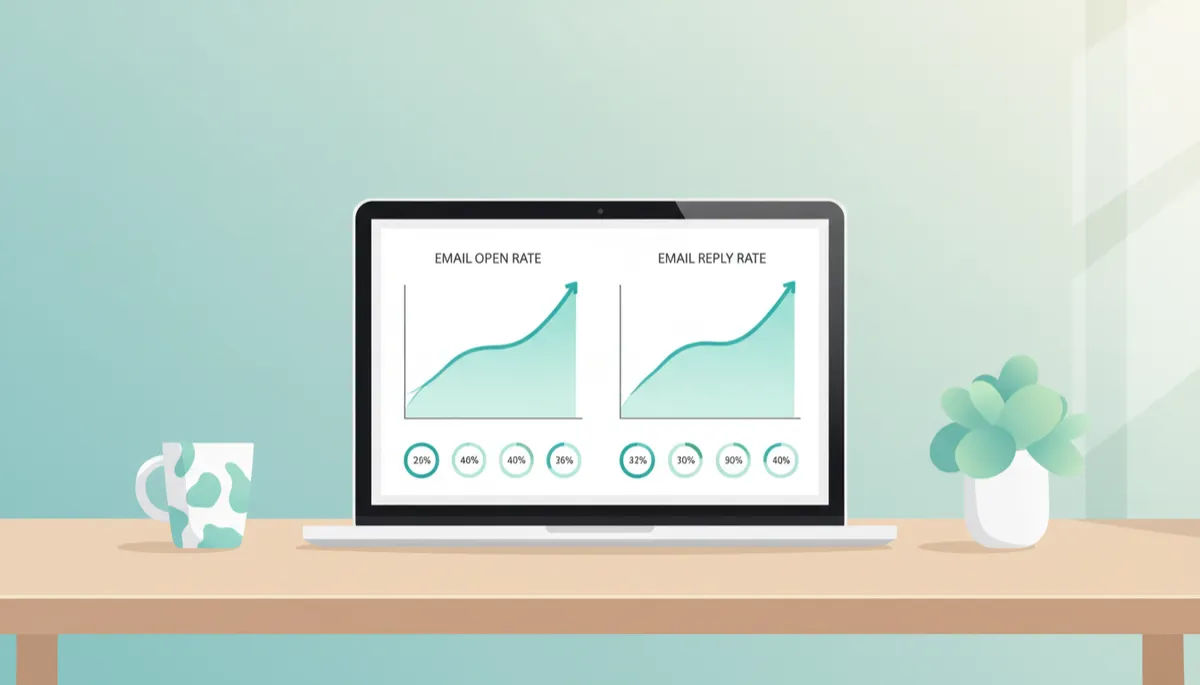
Jason’s six‑part cold email system produces reply rates 3–5× higher than industry averages.
How Many Follow‑Up Emails Should You Send After a Cold Email Before Stopping?
Jason recommends a 4–7‑email sequence over two to four weeks. Data shows that about 44% of positive replies now come from follow‑ups, not the first touch. The key is kindness and value. Each follow‑up should add something new — a different angle, a short case study, or a quick Loom — not pressure or guilt.
What’s the Biggest Reason Cold Emails Get Ignored or Deleted in 2026?
The biggest killer in 2026 is obvious automation with no obvious care. Buyers can smell AI‑written or copy‑pasted emails in seconds. When your message could have gone to anyone, it lands with no one. Jason tells founders: if you’d feel a little embarrassed reading this email out loud to the person on a Zoom call, don’t send it yet.
3 Cold Email Mistakes That Kill Reply Rates — and the Bonus Mistake That Hurts Most
Summary: Owen’s story shows the real killers: “I‑first” openings, oversized asks, copy‑paste follow‑ups, and the hidden killer — a bad list no “perfect email” can fix.
Mistake 1: Starting with your company
Owen’s cold email started like this: “Hi [name], I’m Owen, founder of LogiFlow, a next‑generation logistics optimization platform for mid‑sized distributors.” Delete. The buyer reads “someone wants something from me” and moves on. The email is about Owen. The buyer isn’t in the story yet.
The right move: Start with the buyer’s problem in the very first sentence. “If your dispatch team is still reconciling routes manually at the end of the day…” drops you straight into their world before they even know who you are.
Mistake 2: The ask was too big
Owen’s call to action was: “Would you be open to a 45‑minute demo this week?” Asking a stranger for 45 minutes produces one outcome: delete. He got a 2% reply rate despite a very targeted list.
The right move: Ask for something that costs the buyer almost nothing. “Does a 10‑minute call next week make sense?” or “Can I send you a one‑pager on this?” are asks that get replies.
Mistake 3: The follow‑up was a copy of the first email
Owen followed up by resending his original email with “Just following up on the message below.” This is the most common cold email mistake. It signals to the buyer that you have nothing new to say and are just trying to be annoyingly unavoidable.
The right move: Every follow‑up should contain one new piece of information, one new angle, or one new question. If you don’t have anything new to say, don’t send it yet.
Bonus: Optimizing the email instead of the list
Jason once spent a stretch helping a founder rewrite cold emails. Subject lines, openings, calls to action — all improved. Reply rate stayed low. When Jason looked at the list, he found the problem. The founder was emailing VPs of Marketing at large companies to sell a tool that would be bought by a VP of Operations. Every word in the email was right. But the list was wrong. A perfectly written cold email sent to the wrong person isn’t a sales problem — it’s a targeting problem dressed up as a copy problem.
The right move: Before you rewrite the email, review the list. If the right person is getting the email, the right email will follow.
As Jason teaches at AuthorJason.com, fixing a startup founder’s cold email strategy starts with fixing who you’re reaching out to, then what you say — in that order.
The Cold Email That Gets a Reply — Word‑for‑Word Founder Script
Summary: One focused script — problem first, one insight, light credibility, and a small ask — beats any clever template. Then follow up with new angles, not reminder blasts.
Subject: Orders slipping in your late‑afternoon dispatch window
Hi Alex — if your team is still reconciling routes manually at 5 p.m., you’re probably losing a few loads a week to missed updates.
We’ve seen mid‑sized distributors cut end‑of‑day errors by 18–22% just by giving dispatch a single live view of “at‑risk loads.”
I’m Owen, founder of LogiFlow — we work with teams like Northline and CargoWest on this exact evening crunch.
Would a 10‑minute call next week be worth it to put this lens on your own data?
Follow‑up, 4 days later:
Alex — quick follow‑up with one data point: CargoWest was losing 11–13 loads a month before they fixed that 5 p.m. window. After we launched the at‑risk view, they recovered an average of 9 of those.
If you send me anonymized counts for yesterday’s routes, I can reply with how many loads would have been flagged as at risk — no call needed.
As Jason teaches at AuthorJason.com, this kind of grounded, real‑world script is the backbone of a startup founder cold email strategy that feels human and gets fast replies.
What Jason’s Founders Say After Their First 10 Replies
Summary: The biggest shift isn’t just more replies. It’s prospects saying, “It’s clear you did your homework,” which is the real signal that your prospecting system is working.
Jason remembers a founder, Maya, who was leading a 12‑person SaaS team. She’d sent hundreds of cold emails before joining FOS. A few demos here and there, but mostly silence. After working through Jason’s process, her very first new sequence brought 14 replies from 120 sends. Same product. Same founder. Different discipline.
What hit her hardest wasn’t the number. It was the tone of the replies. Prospects wrote things like: “I usually ignore these, but this was actually relevant,” and “It’s clear you did your homework — let’s talk.” That’s the quiet win Jason aims for. Not just more replies, but better replies — the kind that respect your time because you respected theirs.
As Jason teaches at AuthorJason.com, when founders hear “this felt different” from buyers, it’s a sign their startup founder cold email strategy has crossed the line from noise to signal.

More than 1,000 founders. Over $22M in combined sales. It starts with one reply from the right person.
How the P.I.T.C.H. Equation Shapes Every Cold Email Sequence
Summary: The P.I.T.C.H. equation quietly re‑programs your prospecting so every line serves one buyer outcome. That shift alone can double or triple reply rates.
Under the Future of Selling System sits Jason’s P.I.T.C.H. equation. It’s the backbone he uses to design cold sequences, sales calls, and even investor updates. In cold email, P.I.T.C.H. keeps every message rooted in the prospect’s world, not the founder’s anxiety. You can go deeper into how it works here: P.I.T.C.H. equation.
When a founder applies P.I.T.C.H. to a cold email, the first visible change is the email’s topic itself. Instead of “We built a platform that…”, the message becomes “You’re losing X because…”. That shift in focus changes how the buyer scans the screen: they see their numbers, not your features.
The “Intention” part is where most founders feel the biggest internal reset. Before writing, they decide the single outcome the email is supposed to create — a quick reply, a forward, a 10‑minute call — and strip out everything that doesn’t serve that outcome. Suddenly, the long product pitch shrinks into one sharp insight and one light ask.
Founders inside FOS routinely see reply rates jump from 2–3% to 9–12% once their intention is clear, because buyers are no longer being asked to make a big decision from a cold inbox. They’re invited to take one clear, low‑friction step that fits the story of the email. And over a 4–7‑email sequence, that clarity compounds.
Self‑check
- Does your cold email subject line point to a specific buyer problem — or your product name?
- Does your first sentence name the buyer’s world — or your company’s backstory?
- Is your ask specific and low‑friction — or does it require a big decision just to reply?
As Jason teaches at AuthorJason.com, a startup founder’s cold email strategy can only scale when every email is built on clear intention — otherwise adding volume just amplifies the noise.
Cold Email FAQs for 2026
How Do You Personalize Cold Emails at Scale Without Sounding Generic or AI‑Written?
Jason teaches a “research once, reuse wisely” approach. Use tools like Clay to pull real signals — new hires, tech stack, funding, customer reviews — then write short, human lines that connect those signals to your offer. Personalization is more than {{first_name}} and {{company}}. It’s showing you understand their world well enough to say one specific, kind thing in a single sentence.
Practically, that means building a tight ideal customer profile, clustering similar companies, and writing “openers” tailored to each cluster. Then your system handles the rest — timing, follow‑ups, tracking. Platforms like Mailshake and Gong share best practices that align with this approach.[4] The result: emails that scale but still feel like they came from a thoughtful human, not a rushed robot.
How Should a Startup Founder Measure Whether Their Cold Email Strategy Is Working?
Look beyond opens. Track reply rate, positive reply rate, and meetings booked per 100 sends. If you’re under ~3–4% replies, fix the list. Between 4–8%, fix the structure. Above 8%, refine the messaging for higher‑quality conversations.
Should Founders Send Cold Emails Themselves or Hire an Agency?
In the early stages, Jason recommends founders write and send the first sequences themselves. You learn the buyer’s language, which later guides any agency or SDR team. Outsourcing too early usually means generic messaging and weak feedback loops.
How Often Should You Update Your Cold Email Templates?
Every 4–6 weeks, or after 300–500 sends, review performance. Keep the winners, drop the underperformers, and add one or two new angles. Small, consistent tweaks beat constant reinvention or set‑and‑forget campaigns.
Is It Better to Optimize for Open Rate or Reply Rate?
Reply rate matters most. High opens with low replies usually mean click‑baity subject lines and weak body copy. Modest opens with strong replies show your list, subject, and message are aligned — the core of a solid startup founder cold email strategy.
What Data Should Shape a Founder’s Cold Email Strategy?
Use reply rate by segment, meeting rate, and revenue per meeting to guide your next tests. External benchmarks — from Salesforce and research like Harvard Business Review’s work on effective prospecting — help you check whether you have a messaging problem or a market problem.
As Jason teaches at AuthorJason.com, your FAQs should feed your startup founder cold email strategy — every recurring buyer question is a future subject line or opener.
From “Hope and Send” to a System You Can Trust
Summary: Jason’s system turns guessing into a repeatable process: better lists, sharper messages, and follow‑ups that stack into real revenue, not just more sends.
Jason knows what it feels like to refresh your inbox and see nothing. He’s hit rock bottom three times and rebuilt three times. The Future of Selling System is the container for everything he learned while helping more than 1,000 founders generate over $22M in combined sales. Not through personal charm, but through repeatable systems that work even on days you feel tired and doubtful.
In the final section of the Prospecting Pillar inside FOS, Jason shares first‑tier case studies: Tan, who added $29,693 in 16 days; Teo, who landed 63 clients in 100 days; and Leon, who grew from $2.5K to more than $2M in revenue. Different markets. The same foundation — a clear, disciplined approach to prospecting and follow‑up. If you want a deeper guide beyond this article, you can explore the broader Cold Email That Gets Replies playbook Jason wrote for founders like you.
Tan’s extra $29,693 in 16 days started with a short sequence aimed at a tight slice of his market: past customers who’d gone quiet. By reframing his cold email around a single missed opportunity those buyers still cared about — not his product roadmap — he reopened stalled conversations and closed a cluster of quick, high‑margin deals.
Teo’s 63 clients in 100 days came from one well‑defined ICP: small agencies stuck between spreadsheets and bloated CRMs. His outreach named that “gap” in the first sentence, then offered a 10‑minute screenshare to show how one client cut admin time by 30%. The biggest client in that batch later became a flagship case study that still brings in inbound deals today.
Leon’s journey from $2.5K to more than $2M in revenue hinged on a single founding‑account he first reached through a cold email. That message didn’t pitch his full solution. It highlighted one failure pattern in the prospect’s onboarding journey, backed by two numbers. The reply led to a trial, then a multi‑year contract that anchored his growth curve.
As Jason teaches at AuthorJason.com, these first‑tier stories prove that a disciplined startup founder cold email strategy is often the quiet bridge between “We’re not sure this will work” and “We have real, repeatable business.”

The founder leads the first sequences. The system lets the team scale them.
Cold email isn’t going away in 2026. It’s just becoming more honest. The founders who win will be the ones who treat every message like a small promise kept: clear, specific, respectful, and disciplined. That’s the kind of selling Jason built the FOS system around — the kind you can feel proud of, even on the days when the reply hasn’t come in yet.


