
How Billionaire Melanie Perkins Pitched Canva 100+ Times Without Ever Sounding Salesy
Sales, Startup Pitches, Founder Stories
How Billionaire Melanie Perkins Pitched Canva to 100+ Investors Without Ever Sounding Salesy — A Guide for Founders
If you’re leading sales at a growing startup and keep wondering how to pitch without sounding salesy, Jason wants you to know something simple: there is nothing broken in you. The game you were taught is what’s broken — and there is a kinder way to win it.

Why Most Pitches Sound Salesy — and the Exact Moment Listeners Stop Tracking
Jason sees the same scene in founder calls every week. A smart team of five or ten people. The product is real. Customers exist. Revenue isn’t zero. The founder isn’t failing — they’re just tired of feeling like “the pushy one” every time the deck opens on Zoom.
The pitch starts strong. Quick rapport. A shared joke about tools or timelines. Heads nodding. Cameras on. Then it happens. The moment the energy drops… as if someone turned down the oxygen in the room, but no one names it. You know the feeling in your body. Midway through the benefits slide, the buyer leans back instead of forward. Their eyes drift to a second screen. You keep talking, but inside you know: you lost them three sentences ago.
Research backs that moment up. Harvard Business Review notes that 77% of B2B buyers feel salespeople are too pushy, especially when the conversation turns into a one-way pitch instead of a joint problem-solving session (HBR). Salesforce’s State of Sales report adds that 84% of B2B buyers now expect a consultative, value-focused relationship — not a feature dump (Salesforce).
Jason sums it up this way. A pitch sounds salesy at the precise moment it stops being about the listener’s world and starts being about the order of your slides. That’s the crossing point. Before it, you’re two humans trying to solve something. After it, you become “the sales rep” in their head — even if your business card says “CEO.”
As Jason teaches at AuthorJason.com, an authentic pitch begins when your structure keeps pulling the conversation back to the buyer’s lived reality, so your honesty has a specific place to land.
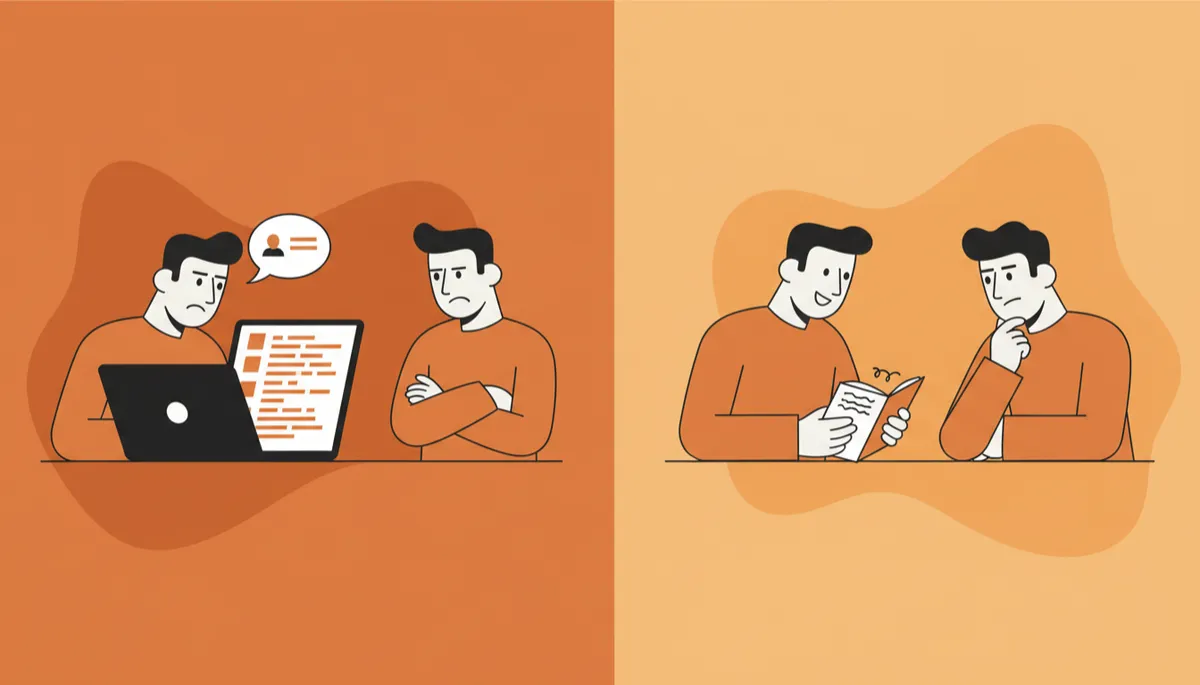
77% of B2B buyers say sales reps are too pushy. Shifting from monologue to dialogue changes everything — including your close rate.
How Melanie Perkins Pitched Canva to 100+ Investors Without Sounding Like a Sales Rep
Melanie Perkins knows rejection in a way most founders don’t talk about publicly. More than 100 investors said “no” before Canva got its first funding. Not soft nos. Real ones. Meetings that ended with polite smiles and no follow-up. Flights that cost more than the conversations were worth. All while she still completely believed Canva needed to exist.
She’s shared that when her pitches started to work, it wasn’t because she got more aggressive, more polished, or more “salesy.” What changed was her honesty. Early on, she opened with “We’ve built a SaaS design tool.” Clear, accurate… and invisible. Investors heard yet another product description in a long day of product descriptions. No friction. No story. No reason to listen with curiosity instead of leaning back in judgment.
Over time, Perkins flipped the order. She started with the problem in the language of the people living it: most people who need to create something beautiful don’t have the skills or tools. They’re trapped inside complex software built for professionals. That’s not a feature list. That’s a feeling of being stuck. Anyone who’s wrestled with a design tool felt “seen” in that first sentence. The hook wasn’t Canva. The hook was their frustration finally said out loud.
When Bill Tai came on board, and later Sequoia and others, the product hadn’t radically changed. The vision hadn’t changed at all. The framing had. The pitch became less about Canva and more about the person across the table — what they already knew, cared about, and needed to believe before “yes” felt safe. Her conviction became the pitch. She wasn’t selling; she was sharing a truth already validated by real users lining up to design their first social post, flyer, or logo without feeling stupid.
A pivotal moment came when Perkins pitched Tai while kite-surfing in Perth — a story she’s told in interviews. Instead of a formal pitch, she simply talked about how high school students and non-designers were using her previous product, “Fusion Books,” to create yearbooks without needing a designer. The setting was casual, but the data points were real: paying customers, repeat usage, and a clear pattern of relief in user feedback.
Later, when she and Cliff Obrecht flew to Silicon Valley and endured dozens of rejections, Perkins kept coming back to that same grounded story. Instead of inflating promises, she walked investors through concrete use cases: teachers creating classroom materials, small businesses designing flyers, community groups producing posters. Each example made Canva seem less like a risky startup and more like an inevitable layer of the internet.
When Blackbird Ventures and Felicis Ventures led Canva’s early rounds, it wasn’t because of one “killer line.” It was the accumulation of those specific, honest stories showing that Perkins was building what people had already proven they wanted. Her lived conviction — that design should be available to everyone — was translated into investor language: customer acquisition, retention, and a category-defining market. That’s conviction, structured so others can safely believe it too.
As Jason teaches at AuthorJason.com, the most authentic startup pitches take your lived conviction and run it through a structure that starts in the buyer’s world, so belief feels shared instead of imposed.
The 4-Part Authentic Pitch Framework Jason Teaches Every Startup Founder
Jason keeps his pitch structure deliberately simple. Founders don’t need yet another 47-step playbook. They need a pattern they can remember when the meeting starts five minutes late and the buyer looks tired. Here’s the four-part authentic pitch framework he installs inside teams using the Future of Selling System — explained in plain language, not jargon.
1. Start in Their World, Not Yours
The first few minutes of a pitch decide whether you’ll show up as a consultant or a pusher. Jason teaches founders to open with one simple question: “Can we start with what you’re already seeing happen?” Then silence. Let them talk. Only 13% of prospects believe a salesperson truly understands their needs, according to Revo data from 2026. You stand out the moment you prove you’re willing to listen before you recommend anything.
- Open the meeting by asking what’s working, what feels stuck, and what they’re trying to change.
- Hold the silence long enough for them to fully share, without jumping in “to add value.”
- Mirror back what you heard in their language to confirm you got it before moving on.
2. Name the Problem in Their Words
Perkins did this with design. Jason trains founders to do the same in whatever domain their product touches. Instead of “We automate revenue operations,” you might say: “Right now, every forecast meeting feels like guesswork and Google Sheets gymnastics.” When the listener hears their own frustration reflected back, the pitch stops being a performance. It becomes a diagnosis they’ve been waiting to hear.
- Pull literal phrases from how the buyer describes what’s bothering them.
- Describe the problem as a lived experience, not a generic category label.
- Pause and ask, “Did I describe that the way it really feels?” to keep it collaborative.
3. Present the Path, Not the Product
This is where most founders lose the room. They open the feature firehose. Jason flips the equation. He asks founders to describe a “future day” first. What changes in their calendar? In their Slack channels? In how their team walks into Monday morning standup? Once that future feels real, the product demo becomes proof, not pressure. You’re not pushing them toward a tool; you’re walking them toward a life they already said they want.
- Paint a concrete “day in the life” after the problem is solved, using their context.
- Tie each part of that future back to outcomes they said they wanted earlier.
- Only then, show a few key product moments as evidence that future is realistic.
4. Invite a Small, Safe Next Step
Big closes are scary for both sides. B2B research shows 61% of deals are lost to indecision, not competitors. Jason teaches founders to end with a low-friction next step: a 14-day trial, a pilot for a small team, or a workshop to build a business case. You’re not asking them to jump off a cliff. You’re asking them to take one more step on a path that now feels obvious.
- Offer one clear, low-risk action that matches their current level of conviction.
- Frame it as an experiment you’ll learn from together, not a final decision.
- Confirm what they’d need to see in that step to feel confident moving forward.
As Jason teaches at AuthorJason.com, a simple framework like this frees founders to be themselves because the structure keeps returning to the buyer’s world instead of their own nerves.
What Makes a Pitch Sound Too Salesy — and the Specific Moment Listeners Stop Tracking?
A pitch sounds salesy the moment you stop asking about their reality and start reading from your agenda. Listeners usually stop tracking when they sense you’re more committed to finishing your slide order than to understanding their problem.
How Do You Make a Sales Pitch Feel Like a Conversation Instead of a Monologue?
Treat the pitch like a joint workshop. Ask a question every few minutes, mirror what you heard, and adjust your story in real time. When the buyer hears their own words shaping the direction, it feels like a dialogue, not a performance.
What’s the Difference Between a Consultant Approach and a Sales Rep Approach in a Pitch?
Consultants start with diagnosis, then recommend. Sales reps start with a recommendation, then try to justify it. Consultants lead with questions and context. Sales reps lead with claims and features. Founders who pitch like consultants rarely come across as salesy, even when they’re asking for budget.
How Jobs and Branson Pitch Without Pressure
Steve Jobs and Richard Branson lived in very different industries, but Jason points to one shared habit: both made the listener feel like the idea was already theirs. No pushing. No cornering. Just a series of “of course” moments that made the outcome feel inevitable.
When Jobs introduced the iPhone in 2007, he didn’t start with specs. He walked the audience through the friction of carrying a phone, an iPod, and a separate internet device. Only after the crowd felt that annoyance did he reveal “an iPod, a phone, and an internet communicator” in one. The trick was simple: build a shared understanding of the problem, then present the product as the punchline everyone’s already waiting for.
Branson has described pitching Virgin Atlantic to business travelers by asking about their worst flight experiences — cramped seats, bad service, no fun. He listened first, then talked about how Virgin would flip those moments: better service, more enjoyable cabins, a sense of play. The result wasn’t a hard close; it was customers and partners who felt he’d simply voiced what they’d wanted from air travel all along.
In both cases, authenticity came from a lived belief in a different future — and a structure that let that belief show up through stories and questions, not pressure. Their pitches felt like invitations to join something inevitable, not attempts to force a deal.
As Jason teaches at AuthorJason.com, when your pitch walks buyers through their own frustrations and desired future, your authenticity becomes persuasive without you ever needing to push.

Perkins led with the problem the listener already felt. She didn’t explain Canva. She confirmed what was already broken — then showed the way out.
How Do You Pitch Without Coming Across as Pushy or Needy?
Jobs did it by building a simple story arc: familiar world, rising friction, clean solution. By the time he revealed the product, the audience wanted it before he asked. Branson does it by starting with questions about the other person’s world. When you combine those two moves — story and questions — you stop pushing and start guiding. You’re not dragging them across a line; you’re walking beside them toward an outcome they chose.
What Words and Phrases Should You Avoid in a Sales Pitch?
Jason gently asks founders to stop using phrases like “to be honest,” “I just need five minutes,” “Let me convince you,” and “Does that make sense?” These phrases send subtle signals of pressure or insecurity. Swap them for “Here’s what we’re seeing,” “Can I share a pattern other teams noticed?” and “How is this landing with you?” The words are small, but the energy shift is huge.
What Jason’s Founders Say After Their First Authentic Pitch
One of Jason’s favorite fictional case stories is Maya, founder of a 12-person HR tech company. Before FOS, every pitch left her with a “sales headache.” She’d replay lines in her head at 2 a.m., wondering if she’d pushed too hard or not hard enough. Her team trusted her, but they tensed up every time a big logo joined the call.

1,000+ founders. Over $22M in combined sales. The least salesy pitches are the ones that start with questions, not explanations.
Two weeks into the Future of Selling System, Maya joined a call with a large regional bank. Same product. Same pricing. But this time she opened with: “Before I share anything, could you walk me through what’s already working and what feels stuck?” For the first 20 minutes, the buyer talked. Maya only asked follow-ups. When she finally said, “Would it be useful to see how other teams have solved this?” the buyer leaned in and said, “Yes, please.”
They kicked off a pilot that day. More important than the revenue, Maya left the meeting saying: “I didn’t feel like I was selling. I felt like I was helping.” That’s the shift Jason builds for every founder. There’s no shame in what you’ve done in past pitches. Just a new pattern that finally matches who you already are at your best with your own team.
As Jason teaches at AuthorJason.com, once founders experience a pitch that feels like service instead of strain, they finally realize that structure is what makes authenticity repeatable — not the other way around.
How the P.I.T.C.H. Equation Removes Salesy Energy from Every Pitch
Inside the Future of Selling System, Jason teaches a simple P.I.T.C.H. equation that turns every sales conversation into a structured human dialogue instead of a guessing game. It’s not yet another hypey framework; it’s a quiet checklist founders can run in their heads before, during, and after the meeting so they don’t lose the room halfway through again. You can go deeper into the P.I.T.C.H. equation here: P.I.T.C.H. equation.
That sense of calm starts with the “Intention” step. Jason asks founders to write one honest sentence about why this specific conversation matters for this specific buyer — not for your quarterly target. When your inner answer is: “I want them to see how much revenue we can generate,” the pitch naturally leans toward pressure. When it becomes: “I want them to leave with a clearer path to fixing the forecast chaos they keep talking about,” everything softens.
That single intention sentence quietly reprograms your behavior. You ask more questions because you’re trying to understand their outcome. You tell fewer heroic stories about yourself because they don’t serve that outcome. You offer smaller, safer next steps because your goal is their progress, not your win at any cost. The structure forces your authenticity to surface: if your real reason is their result, the pitch simply can’t stay salesy for long.
Over time, founders working with Jason notice they stop dreading the “pitch part” of the call. They’re simply expressing what they already believe about how this buyer’s life could be better — inside a container that keeps them honest. That’s how the P.I.T.C.H. equation turns conviction into a repeatable human process instead of a performance.
Self-Check
- After your pitch, does the buyer feel they heard from a founder who cares — or a sales rep playing a role?
- When you pitch, are you leading from what you truly believe about this buyer’s situation — or from a script?
- Does your authentic voice show up during the pitch — or only after the “official” part ends?
As Jason teaches at AuthorJason.com, when your intention is anchored in the buyer’s outcome, structure stops suppressing your authenticity and starts amplifying it.
FAQs About Pitching Without Sounding Salesy
How Do Top Performers Listen More Than They Talk — and What Do Talk–Listen Ratios Actually Show?
Gong analyzed more than 500,000 sales calls and found that top performers talk for about 46% of the meeting and listen 54%, usually by asking 11–14 thoughtful questions in the conversation (Gong). Average reps do the opposite — they talk 65–70% of the time and ask only 4–6 shallow questions. Jason uses this data to reassure founders: if you feel like you’re talking too much, you probably are. Winning isn’t about saying more; it’s about asking better, then holding the silence long enough for the real answer to surface.
Tier-One Founder Wins with the Future of Selling System
Jason doesn’t promise overnight miracles, but he does share real results from founders who committed to this gentler way of selling. Tan used FOS to reframe his enterprise pitches and generated $29,693 in 16 days from deals that had been “circling” for months. Teo shifted his demos from feature showcases to question-led sessions and signed 63 new customers in 100 days. Leon rebuilt his narrative around buyer problems and grew from $2.5K to more than $2M in revenue over time, with a team that finally enjoyed sales calls instead of dreading them.
These stories aren’t about magic lines. They’re about founders who stopped trying to look like “real salespeople” and started looking like the truest version of themselves — guided by a structure that protected that honesty instead of polishing it away. That’s the core of the Future of Selling System. No scripts. No tricks. Just a repeatable way to bring the same conviction to buyers that you already bring to your team when you talk about why this company matters.
With Tan, Jason focused on the enterprise leaders he was speaking to. Tan truly believed his solution would simplify their reporting chaos, but his early pitches revolved around dashboards and integrations. Once he shifted to describing the late-night spreadsheet sessions those leaders were actually living — then calmly showed how his product removed that grind — the very stakeholders who had been “thinking about it” for months moved within days.
Teo, who sells to SMBs, realized his authentic strength was curiosity. Instead of racing through demos, he began each call with a short discovery workshop: three questions about the buyer’s current workflow, one story from another client, and a single screen share tied directly to what they’d just said. He didn’t sign 63 new customers because he “overcame objections”; he did it because they felt he understood them better than anyone else they’d spoken to.
Leon’s shift was quieter but just as powerful. He deeply believed his product could stabilize early-stage founders’ revenue, yet his old narrative centered on feature lists and funding milestones. Jason had him rebuild his deck around three buyer stories: missed payroll, investor pressure, and constant churn anxiety. By the time Leon mentioned his own numbers, buyers were already asking how fast they could start. His growth from $2.5K to more than $2M in revenue came from that rooted belief translated into buyer language, call after call.
As Jason teaches at AuthorJason.com, founders who learn to pitch authentically as startup CEOs win not because they look shiny, but because their structure lets real belief in the buyer’s outcome drive every decision in the conversation.
3 Authenticity Mistakes That Make Pitches Feel Salesy — and the Bonus Mistake That Hurts Most
Mistake 1 (Liam, professional services founder): His pitch was technically authentic — he meant every word — but he opened with his story. His journey, his insight, his product. The buyer wasn’t present in any of it. Authentic pitches are about the buyer’s world. Move: authenticity isn’t self-expression inside the pitch. It’s a true understanding of the other person’s problem spoken out loud.
Mistake 2 (Liam): He used excitement as a substitute for authenticity. When he got excited, he got louder and faster. The buyer experienced that as pressure. Real enthusiasm serves the buyer. Performed enthusiasm serves the presenter. Move: slow down when you feel your excitement spike. Belief in what you do doesn’t need volume.
Mistake 3 (Liam): He apologized for selling. When it came time to ask, he said, “I know this is the part where I’m supposed to pitch you but…” That signaled to the buyer that even he thought what came next was uncomfortable. Move: don’t frame the ask as a burden. Frame it as the natural next question — “Based on what you’ve shared, does it make sense to explore this together?”
Bonus (Jason, in third person): He worked with a founder who genuinely believed his product changed lives and still couldn’t convert in the pitch. The authenticity was real. The problem was that his belief never translated into buyer language. The founder said what he believed. He never checked whether the buyer believed the same thing about their problem first. Jason taught him to confirm the buyer’s belief in the problem before sharing his belief in the solution. That single shift — starting with the buyer’s conviction before expressing his own — changed his close rate within weeks. Move: an authentic pitch starts with a question that confirms the buyer’s belief in the problem. Your real conviction about the solution only lands after their conviction is clear.
As Jason teaches at AuthorJason.com, the structure that keeps you checking the buyer’s conviction first is what turns raw authenticity into a trusted, non-salesy pitch.
Authentic Pitch in Action — the Founder’s Literal Script
Founder: “From what you shared in your email, it sounds like your hiring velocity is growing faster than your HR systems can keep up. Before I share anything, can you walk me through what feels most broken right now?”
Buyer: “Honestly, our onboarding process is a mess. New hires wait days for access, managers complain, and we’re tracking half of it in spreadsheets.”
Founder: “That matches what we saw before working with Acme Retail. Their new hires were waiting three to five days for logins. We helped them move to a single automated checklist so every new hire was productive on day one. In your world, that would look like managers never having to chase IT again.”
Buyer: “If we could get there, our managers would love you. How would that actually work here?”
Founder: “Let me show you a quick example of what their first week looks like now, and we can map it to your current process as we go.”


