Avoid Red Flags in Sales Coaching Programs
Sales Coaching, Startup Founders, Mentor Selection
Red Flags in Sales Coaching Programs — The Survival Map for Founders Who Cannot Afford Another Mistake (What Billionaire Richard Branson Would Want You to Notice)
Jason has watched too many founders burn cash on shiny sales coaches who never should have passed the first vetting call. He ignored red flags himself, paid dearly, and built this survival map so you don’t have to learn the same painful lessons at your own expense.
Why Jason Built This Survival Map for Founders
Jason remembers wiring money he could not afford to lose to a “celebrity” sales coach. The pitch was perfect: screenshots, big promises, and a curated wall of wins. What he didn’t see then were the quiet red flags: no real case studies at his price point, no clear guarantee, and pressure to “decide today or miss the bonus.” Within months, his runway shrank, his team felt the strain, and he was left rebuilding trust with his own customers and investors.
Out of those scars came the Future of Selling System (FOS), and this guide. Jason has generated over $22M in combined sales, supported 1,000+ founders since 2015, and survived “rock bottom” three separate times before climbing back each time. His goal now is protective: to help founders with teams of 5+ avoid sales coach warning signs that quietly destroy momentum, morale, and cash.
The 7 Red Flags in Sales Coaching Programs Founders Should Avoid
- 1. Lifestyle as the main proof, not client results
When the first thing you see is rented cars, luxury trips, and screenshots of “$100K days,” pause. A protective coach leads with client transformations, not their own lifestyle reel. Ask for specific examples: “Show me three founders with a team and a similar ACV who grew revenue sustainably, not just had a spike.” If they can’t, you’re not buying a system — you’re buying a story. - 2. Income guarantees that sound like lottery tickets
“We guarantee $100K in 90 days or we work for free” sounds comforting when your burn is real. But income guarantees are a classic red flag in sales coaching programs founders should avoid. They often hide impossible conditions in the fine print, or define “success” so loosely you can’t claim anything. Real coaches guarantee process, support, and clarity — not fantasy outcomes they cannot ethically control. - 3. The coach hasn’t sold anything at your price point in years
Markets move fast. If your coach’s last real selling experience at your price point was five years ago, you’re paying for nostalgia, not current signal. For B2B founders, ask, “When was the last time you personally closed a deal above our current price point?” If the answer is vague or defensive, that’s one of the clearest sales coach warning signs you’ll ever get. - 4. No money-back guarantee — or a guarantee that’s impossible to use
A coach who believes in their process is willing to share the risk. That doesn’t mean they offer a blank check, but it does mean there’s a fair, understandable way out if expectations aren’t met. If the guarantee is missing, or wrapped in 27 conditions that make it unusable, your downside is unlimited while theirs is zero. As a founder, that’s the opposite of how you structure healthy partnerships. - 5. Testimonials from outliers only, not the middle of the bell curve
Every program has a few stars who would have succeeded almost anywhere. If the only stories you see are “we went from $0 to $1M in 4 months,” you’re looking at outliers, not expectations. Ask, “What does the typical founder achieve with you in 3, 6, and 12 months?” A trustworthy coach will happily talk about the middle 60%, not just the top 5%. - 6. Urgency and FOMO before you’ve done basic due diligence
“We’re closing this cohort tonight” is not a reason to wire five figures. Healthy urgency is about your goals and runway; manipulative urgency is about their sales target. If you feel your nervous system spike during the call — heart racing, fear of missing out — that’s your body telling you something isn’t safe yet. A coach who truly cares will give you space to think, talk to your team, and sleep on it. - 7. They can’t connect you with past clients like you
This is the simplest filter: “Can I speak to two or three founders with a team of 5+ in a similar industry and price point?” If the answer is no, or they only connect you with superfans who feel rehearsed, step back. Real operators have real alumni who are willing to share the messy, honest version of their experience — the good, the bad, and what they would do differently.
What are the biggest red flags in sales coaching programs founders should avoid?
The biggest are lifestyle flexing, unrealistic income guarantees, outdated selling experience, and refusal to connect you with past clients like you.
How can founders safely vet a sales coach before investing?
Ask for recent case studies, speak to alumni, read the contract slowly, and notice whether they pressure you to decide immediately.
Are income guarantees from sales coaches ever trustworthy?
Rarely. Ethical coaches guarantee their process and support, not specific revenue numbers they cannot fully control for your startup.
What Branson’s Freddie Laker Mentor Story Teaches About Red Flags
When Branson was preparing to launch Virgin Atlantic, airline entrepreneur Freddie Laker pulled him aside and warned him about how incumbents would try to crush a new entrant. Laker didn’t flatter him; he flagged the traps ahead. That’s what real mentors do: they show you where the floor is weak before you step on it with your whole team’s weight.
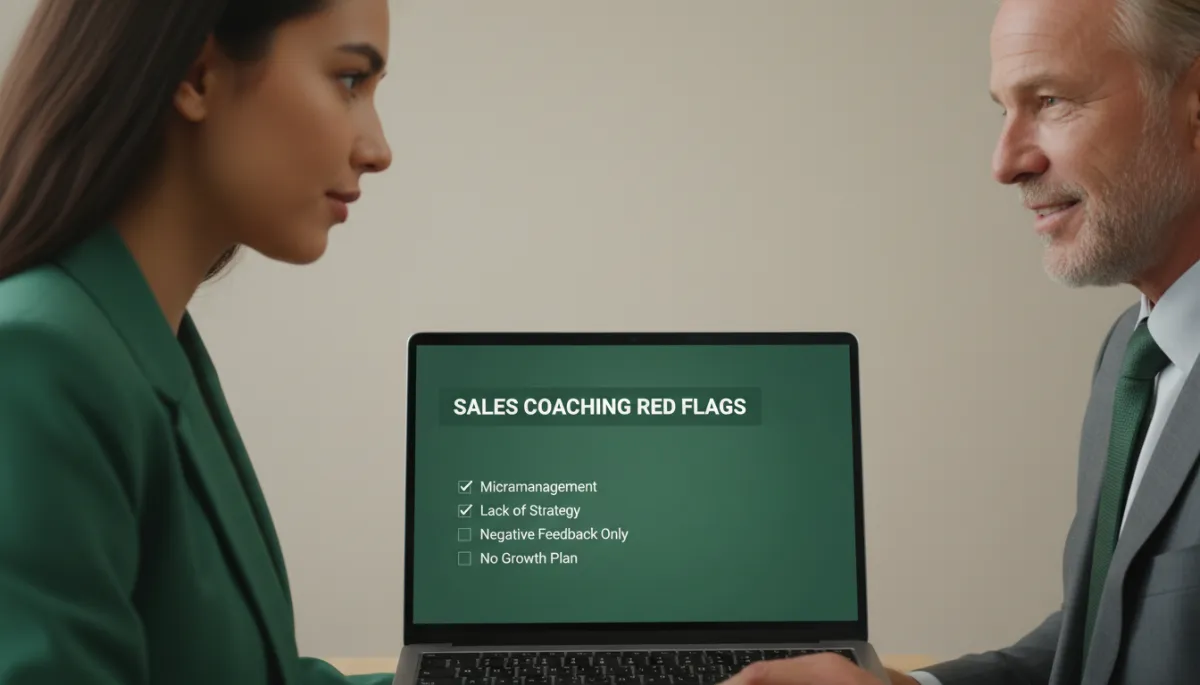
The right mentor names the risks clearly, even when it might cost them a sale.
A protective sales coach is more Laker than cheerleader. They will tell you when your offer is misaligned, when your expectations are unrealistic, and when a channel you’re chasing is a distraction. They’re not afraid to say, “This isn’t the right time for you to invest in us,” because they care about your survival more than their close rate. That’s the opposite of the “always be closing” culture that many red-flag programs celebrate.
Contrast that with programs that ignore risk entirely. If a coach can’t name three ways their own program might fail for you — and how they mitigate those risks — they’re not thinking like a founder. They’re thinking like an infomercial. Even the FTC’s small business guidance warns against big income promises without substantiated evidence. Your job is to treat those promises as a signal to slow down, not speed up.
Jason’s Own Red Flag He Ignored (And What It Cost Him)
The red flag Jason regrets most was simple: the coach refused to connect him with a past client who looked anything like him. The explanation sounded reasonable — “they’re busy,” “we protect client privacy” — and Jason overrode his intuition because he was tired, behind on targets, and desperate for a breakthrough. Within weeks, he realized the “system” he bought had never been tested on founders with teams; it was built for solo service providers.
That mismatch cost him twice: first in cash, and then in morale. His team tried to implement scripts that felt off-brand and manipulative. Close rates dropped. One senior rep quietly started interviewing elsewhere. Jason had to unwind the damage, rebuild trust, and admit to his team that he’d been sold to instead of properly advised. That experience is why he speaks so strongly now about red flags sales coaching programs often hide behind glossy marketing.
The P.I.T.C.H. Formula: A Safer Way to Grow Sales Capacity
In response to all of this, Jason built the P.I.T.C.H. Formula inside FOS to give founders a grounded, repeatable way to grow sales without gambling the company on a guru. It’s designed for teams of 5+ who need clarity, not hype — practical steps to align positioning, offers, messaging, and daily activity with the realities of your market.
You can read more about how the P.I.T.C.H. Formula fits into the Future of Selling System and decide whether it feels like a fit for your stage. No pressure, no countdown timers — just information you can evaluate with your team.
Tier 1 Results: What Happens When You Choose the Right Support

When you choose carefully, coaching becomes a force multiplier instead of a liability.
Jason is careful with numbers because he knows you’re careful with yours. Here are three Tier 1 cases from founders who implemented his work after
- Tan — $29,693 in 16 days: Tan came in after a failed high-ticket program that left him with a confused offer and a skeptical list. By simplifying his positioning and applying the P.I.T.C.H. Formula to his existing audience, he generated $29,693 in collected revenue in just 16 days — without adding new ad spend or chasing a completely new niche.
- Teo — 63 customers in 100 days: Teo’s team had been stuck in “demo purgatory” for months. They weren’t short on calls; they were short on clarity. After restructuring their offer narrative and tightening their follow-up rhythm, they brought in 63 paying customers in 100 days. The biggest win wasn’t just revenue — it was the renewed confidence across the sales pod.
- Leon — from $2.5K to $2M+: Leon had been hovering around $2.5K months for far too long, despite a strong product. With better qualification, clearer pricing, and a more honest conversation about capacity, his company crossed into $2M+ territory. It didn’t happen overnight, but it happened systematically — without gambling on another hype-driven coaching bet.
You’ve already paid enough tuition in pain; from here on, let every decision quietly protect the founder you’re becoming.


