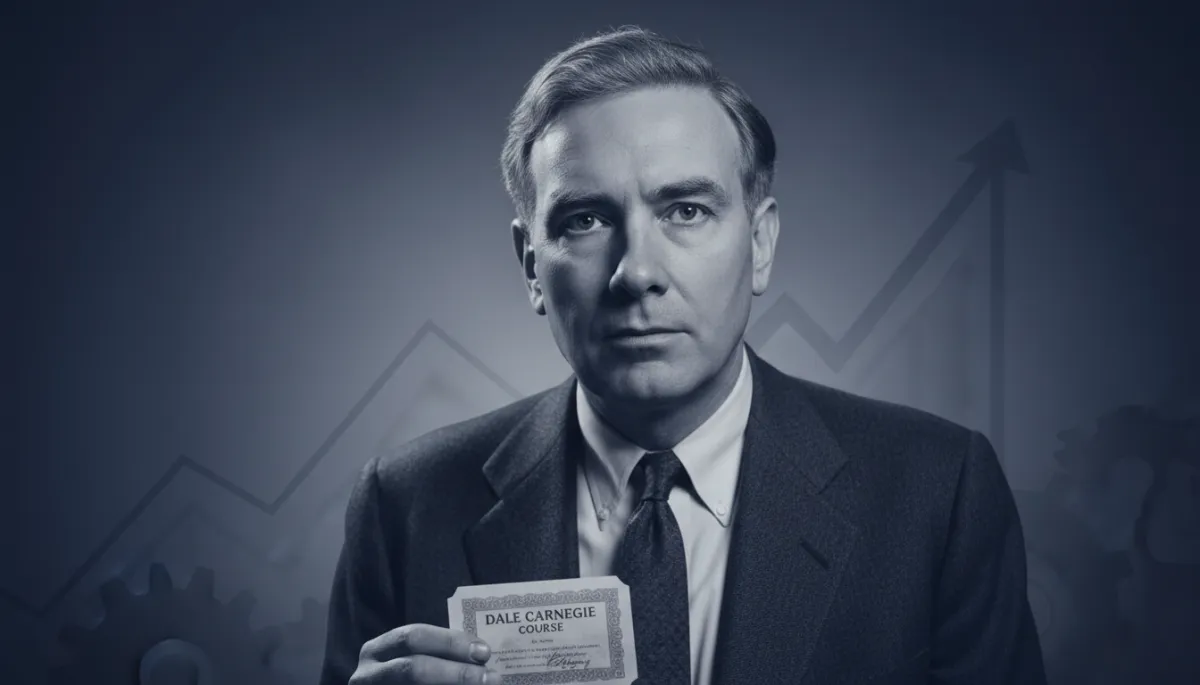
How Billionaire Richard Branson Built a Client Pipeline Without a Single Cold Call
Sales Prospecting, Inbound Marketing, Startup Growth
How Billionaire Richard Branson Built a Client Pipeline Without a Single Cold Call — The Founders' Playbook
Richard Branson never built his empire by interrupting strangers. He built communities that pulled clients in. This article shows startup founders how to get clients without cold calling — and how Jason’s Future of Selling System turns that into a repeatable pipeline for just $19/month.
Why Cold Calling Is the Least Efficient Way to Build a Founder's Pipeline
TL;DR: Modern buyers ignore cold calls. If you want to know how to get clients without cold calling, shift your energy into inbound content, warm email, and relationship-based introductions.
Jason knows most founders do not hate selling. They hate feeling like beggars with a phone in their hand. You lead a team. You carry payroll in your head at 2 a.m. You are not lazy. You are just tired of being rejected by people who never asked to hear from you in the first place.
The numbers back up your instincts. Around 80% of calls now go straight to voicemail, and most buyers prefer email or other digital touchpoints over a surprise phone call. DemandScience reports that 80% of buyers would rather be contacted over email than the phone. At the same time, SEO-driven inbound leads close at about 14.6%, while outbound leads — including cold calls — close at roughly 1.7% according to inbound marketing data.
That is not a small gap. It is like choosing between a road that gets you home in ten minutes and one that takes an hour, every single day. You can push yourself to “try harder” on cold calls. Or you can admit the system is stacked against you and choose a better game to play.
Inbound is not just kinder. It is smarter. Inbound content and warm channels now generate more of the average pipeline than old-school outbound. One 2026 report showed content-led inbound driving roughly 29% of pipeline, with outbound prospecting at 23% in HubSpot-style benchmarks.
As Jason teaches at AuthorJason.com, founders who redirect effort from cold interruptions into intentional, warm prospecting build calmer, more reliable client acquisition systems.

Inbound leads close at 14.6%. Cold outreach at 1.7%. The math alone explains why Branson never cold called.
What Richard Branson Built Instead — and Why It Still Works Decades Later
TL;DR: Branson built audiences and partners first, then offered products to people who already trusted him. The same pattern shows founders how to get clients without cold calling today.
When Richard Branson was 16, he launched Student magazine. He did not sit with a list of strangers and a script. He reached out to people he genuinely admired and invited them to contribute. Those conversations built trust, visibility, and a community around his voice long before he sold anything big.
Later, when he launched Virgin Records, he did not start from zero. He already had readers, writers, and friends from the Student community. People knew him as the young guy who gave them a platform. They were warm. They were curious. They introduced him to artists, buyers, and partners. His “prospecting list” was a community he had already served, not a spreadsheet of strangers.
Even Virgin Atlantic started with relationships. Before he had planes, he had a problem to solve and an ally inside the aviation world. That insider opened the door to Boeing. Branson did not win that deal by hammering a call center. He won it because someone trusted him enough to make a warm introduction to the right person at the right moment.
In 1984, when Virgin Atlantic launched its first transatlantic route, Branson personally walked the aisles, asking passengers what they loved and what they hated about flying. That feedback loop led directly to small, memorable touches — in-seat entertainment, better food, friendlier staff — that turned customers into advocates. The airline’s early growth was powered less by ads and more by delighted travelers telling friends.
Years later, when he opened Virgin Money in the UK, Branson again leaned on community and brand trust. He bought Northern Rock’s assets but reintroduced the bank through customer listening tours and transparent town-hall-style events. Rather than blitzing cold outreach, his team focused on rebuilding confidence with existing customers — a relationship-first approach that helped stabilize deposits and fuel new account growth.
Across music, airlines, and finance, the pattern repeats: he created experiences worth talking about, then made it easy for fans, partners, and press to spread the word. For founders wondering how to get clients without cold calling, Branson’s career is proof that designing remarkable, shareable experiences is often more powerful than dialing strangers.
Over and over, his pattern is the same. Build community. Serve people. Let opportunity rise from warmth. He has written that cold calling is one of the least effective ways to build a business and that founders are better off building a presence that makes clients come to them. That is exactly the shift Jason helps founders make with the Future of Selling System (FOS).
As Jason teaches at AuthorJason.com, sustained, relationship-based visibility turns past conversations and shared experiences into the warm introductions that drive modern client acquisition.
The Five Inbound Client Acquisition Strategies That Replace Cold Calling for Good
TL;DR: A mix of authority content, warm email, referrals, community, and search visibility is how to get clients without cold calling — especially for founder-led B2B sales.
Jason does not ask founders to “just post more on LinkedIn” and hope. He helps them build a simple, founder-led inbound machine. Think of it like a greenhouse. You set it up once. Then it keeps growing clients while you lead your team. Here are the five core strategies he sees working in 2026 and beyond for founders who want to know how to get clients without cold calling.
- Authority content that answers real questions. Short, honest posts, articles, and videos that speak to the exact problems your best buyers Google at midnight. Google’s first page captures around 71% of search clicks, so every clear answer you publish becomes a quiet salesperson working 24/7 for you.
- Warm email instead of cold calls. Thoughtful, permission-based email sequences that educate, not chase. People already prefer email over calls, so meeting them there respects their time and your energy.
- Referral and partner loops. Simple referral asks. Co-hosted webinars. Partner bundles. Warm introductions convert at 5–10x the rate of cold outreach, so Jason helps founders design their week around activities that earn those introductions.
- Community touchpoints. Small, recurring events — roundtables, AMAs, office hours — where your market can meet you without pressure. Over time, this community becomes your Oprah-style “street team,” sharing your work because it genuinely helps them.
- Search and social visibility. SEO, LinkedIn, and other channels tuned so that when someone finally says, “We need what you sell,” you are the obvious, trusted name they find first.
As Jason teaches at AuthorJason.com, combining warm email, referral loops, and authority content turns a founder’s existing relationships into a compounding, inbound pipeline.
What is the best inbound strategy to get clients without cold calling?
For most founders, the best single strategy is publishing consistent, problem-solving content paired with a simple email capture and follow-up. Content pulls people in. Email turns attention into conversations and clients.
How long does it take to build a reliable inbound system that replaces cold outreach?
Jason usually sees early inbound wins within 60–90 days and a dependable, cold-call-free pipeline in 6–12 months. The more focused your niche and message, the faster compounding kicks in.
What is the fundamental difference between inbound marketing and cold calling?
Cold calling interrupts strangers and asks for attention they never offered. Inbound marketing serves people first, earns their trust, and lets them raise their hand when they are ready to talk. One pushes. The other pulls.

Branson built every business through relationships, not cold calls. The system was always warmth first.
How Bezos and Oprah Built Without Cold Outreach
TL;DR: Bezos and Oprah both grew by serving warm audiences obsessively. They show founders how to get clients without cold calling by deepening trust with people already paying attention.
Jeff Bezos started Amazon by emailing about 300 people from his personal network. Friends. Former colleagues. Family contacts. People who already knew his name and trusted his judgment. That small, warm list became the seed of the world’s largest e-commerce company. He did not buy a list. He did not blitz strangers. He bet on warmth over volume.
In Amazon’s early years, Bezos personally read and responded to customer emails sent to [email protected]. He forwarded complaints to teams with a single “?” in the subject line, forcing leaders to fix the root problem. That obsessive focus on each warm customer relationship helped Amazon drive repeat purchases and word-of-mouth growth, long before its ad spend exploded.
As Amazon introduced Prime in 2005, the company again relied on existing, engaged customers. The initial uptake came from people who already bought frequently and trusted the brand. Within a decade, Prime members were estimated to spend roughly twice as much per year as non-members, showing how deepening relationships with warm buyers can transform revenue without cold outreach.
Oprah Winfrey grew her influence the same way. Her book club turned titles into instant bestsellers because people trusted her, not because she ran aggressive outbound campaigns. Her audience felt seen and served, so they became her referral engine. When she loved a book, millions of people told each other about it. That is inbound at its purist: serve deeply enough that your community does the outreach for you.
In 1996, when she launched Oprah’s Book Club, the first selection, “The Deep End of the Ocean,” shot onto bestseller lists almost immediately. Over time, many “Oprah books” sold millions of copies, with publishers reporting sales spikes of up to 500% after her endorsement. Her show did not cold pitch viewers; it created such emotional resonance that viewers voluntarily took action and told friends.
When she later launched OWN, her cable network, Oprah again leveraged relational capital. She invited long-time audience members into behind-the-scenes stories, spiritual conversations, and personal growth content. The network’s most successful shows centered on deep, vulnerable dialogues — the same tone that had built trust on her daytime show. The lesson for founders is clear: honest, consistent service to a warm audience can power entire new ventures.
Is content marketing and SEO enough to replace cold calling entirely for startup founders?
Over time, yes — if your content is focused on real buyer problems and paired with strong offers and email follow-up. Many founders Jason works with shift from mostly outbound to almost entirely inbound within a year by treating content and SEO as core sales assets, not side projects as HBR-style case studies often show.
What is the fastest way to get your first client if you refuse to cold call?
The fastest path is usually a focused outreach to your warm network with a clear, specific offer. Think Bezos’s 300 emails, but for your niche. Reach out personally to people who already know you, ask who they know with a particular problem, and invite them into a short, value-first conversation.
As Jason teaches at AuthorJason.com, founders who treat every existing reader, viewer, or customer as a potential warm node build leverage far faster than those chasing strangers.

The five inbound strategies Jason teaches turn a founder's reputation into a client pipeline — no cold calling required.
What Jason's Founders Experience When They Stop Cold Calling and Build Instead
TL;DR: When founders switch from cold calls to warm systems, their calendars fill with better-fit conversations and their stress drops — without sacrificing revenue growth.
Since 2015, Jason has walked over 1,000 founders through this shift. Together, they have generated more than $22M in sales, not by becoming louder, but by becoming clearer and more consistent. Many of them started where you are now — leading a team of five or more, carrying sales on their back, frustrated but not failing.
One founder, Maya, ran a B2B analytics startup. She had a small team, a good product, and a calendar full of cold-call blocks she kept skipping. The guilt was heavy. She joined FOS expecting another “hustle harder” program. Instead, she got permission to retire the dial sheet and build a warm system around her strengths — writing, teaching, and connecting 1:1 with smart operators.
Within three months, her weekly routine looked different. One live roundtable for her niche. Two authority posts answering real client questions. A simple referral ask at the end of every great call. By month six, 80% of her pipeline came from inbound and referrals. Her team noticed the change first: “You’re calmer in meetings.” The revenue followed.
Jason is gentle about this: if cold calling has burned you out, it does not mean you are weak. It means your system was misaligned with how modern buyers actually want to buy. The Future of Selling System is his way of saying, “You are allowed to build this differently — and it can still win.”
As Jason teaches at AuthorJason.com, when founders align sales with their natural strengths, they create client pipelines that are both emotionally sustainable and financially significant.
How the P.I.T.C.H. Formula Works Without a Single Cold Call
TL;DR: The P.I.T.C.H. Formula turns warm attention into clear, respectful offers — so you can sell to people who already know you, without ever dialing cold.
Inside the Future of Selling System, Jason teaches a simple P.I.T.C.H. Formula that lets founders turn warm attention into signed clients without pressure or tricks. It is the backbone of how his founders design pages, emails, and conversations that feel natural to say and safe to hear. You can read more about the P.I.T.C.H. Formula and how it fits into the broader system, but the core idea is this: when you respect your buyer’s journey, you do not need to ambush them with a call. You guide them, step by step, until the “yes” feels obvious to both of you.
For a founder who quietly hates cold calling, the first surprise is often how much prospecting power is already hiding in their calendar. Every podcast guest spot, webinar Q&A, thoughtful LinkedIn comment, and past client win becomes raw material for a P.I.T.C.H.-driven conversation with someone who already trusts them. Instead of forcing themselves onto strangers’ phones, they revisit people who have seen their work, helped them in the past, or asked smart questions — and use the Formula to frame a clear, relevant next step.
Jason often watches founders scroll through their inbox or LinkedIn messages and realize they have dozens of half-finished buying journeys: prospects who said “this is interesting,” friends who asked for advice, event hosts who loved their talk. With the P.I.T.C.H. Formula, those loose threads become a warm pipeline. The founder stops thinking “I’m bad at sales” and starts thinking “I’ve been sitting on conversations that just needed a clearer invitation.” That mindset shift is at the heart of learning how to get clients without cold calling — you stop chasing strangers and start stewarding the relationships you already earned.
Self-Check
- Have you mapped every warm connection you have in your existing network — or are you only reaching out to strangers?
- When you reach out to a warm prospect, do you lead with their world or your offer?
- Is your client acquisition approach designed to build relationships — or to generate transactions?
The Future of Selling System gives you templates, weekly rhythms, and real examples from founders like you. It is built for teams, not solo hustlers. Your marketing person, your ops lead, and even your junior seller can plug into the same language and process so that sales stops being a heroic solo act and becomes a shared, sustainable habit.
3 Mistakes That Cost Founders Clients They Already Knew — and the Bonus One That Hurts the Most
TL;DR: Most founders lose clients they already know by avoiding warm outreach, staying vague, and jumping to proposals too fast — all fixable with a relationship-first approach.
Mistake 1: Treating Warm Contacts as Too Good to Prospect
Elena, a management consulting founder, had 300 LinkedIn connections who knew her work, respected her expertise, and would have taken a call from her. She never reached out to any of them because it felt too familiar — like mixing business and friendship. Her competitor with a weaker network but a less precious mindset closed three of them.
The move: Warm contacts are your most qualified prospects. Reaching out to them is a service, not an imposition.
Mistake 2: Waiting for Warm Contacts to Raise Their Hand
Elena assumed that her connections knew what she offered and would reach out when they needed her. Most of them had no idea what her business did. She had confused existing relationships with existing awareness. Months went by while her contacts hired other consultants simply because those people had articulated a clear, timely offer.
The move: Warm does not mean informed. Send one message that specifically names what you do and who you help. Most contacts will not know unless you tell them.
Mistake 3: Asking for a Sale Instead of a Conversation
When Elena finally reached out, she sent a proposal to three contacts without having a conversation first. All three declined. She had skipped every step between “I know you” and “please buy.” None of them had a chance to talk through their real constraints, so the proposals landed like cold pitches from a stranger.
The move: Ask for 20 minutes, not a decision. The client relationship starts with a conversation. The sale comes after.
Bonus: Believing Warm Outreach Was Easier Than Cold
Jason watched a founder exhaust herself on cold outreach for three months before agreeing to try warm. She assumed warm would be faster because the relationships existed. What she discovered was that warm outreach required a different kind of courage — the vulnerability of asking people who knew her. Cold outreach to strangers had felt safer because rejection from a stranger did not count. Rejection from someone who knew her felt personal.
Jason showed her that the only people who thought less of you for reaching out professionally were people who were never going to buy from you anyway. The founders who accept that truth discover that warm outreach compounds: each honest “no” clarifies who is truly a fit, and each “yes” comes from someone who already understands their value.
The move: The awkwardness of warm outreach is the price of the conversion rate. It is worth paying.
As Jason teaches at AuthorJason.com, founders who embrace this discomfort unlock the highest-yield version of prospecting: honest conversations with people who already trust them.
What to Say to a Warm Contact You Haven't Spoken to in a Year — The Exact Founder Script
TL;DR: A simple, honest message that acknowledges the gap, shares one tailored insight, and invites a short chat is often enough to restart a warm relationship.
Founder: “Hey Alex — it’s been a while. I was thinking about your team this week after seeing the product update you posted last quarter. How have things been on your side?”
Alex: “Good to hear from you. Busy as always — we’ve been pushing hard on the rollout. How’s your world?”
Founder: “Same — lots of learning. I’ve been working with a few teams like yours who are shipping fast but feel their client conversations haven’t caught up. One insight: the teams that win are using 2–3 simple, repeatable conversations instead of custom pitches every time.”
Founder: “If a 20-minute brainstorm on that would be useful, happy to share what’s working and you can steal anything that fits. No pitch — just a chance to compare notes. Want to grab a quick Zoom next week?”
Alex: “That actually sounds helpful. Let’s do it — Tuesday afternoon works. Send over a link and I’ll grab a slot.”
Notice what is missing: pressure, scripts, or a proposal. The founder acknowledges the gap, offers a specific, relevant insight, and makes a soft ask for a conversation. That is how to get clients without cold calling — by turning dormant relationships into low-pressure, high-value calls.
As Jason teaches at AuthorJason.com, these small, honest invitations are often all it takes to reawaken trust and start a new buying journey.
Frequently Asked Questions About Getting Clients Without Cold Calling
How do you use LinkedIn to attract clients without sending cold pitch messages?
Treat LinkedIn like a small, focused conference you attend every day. Share short, useful posts. Comment thoughtfully on your buyers’ updates. Connect with people who engage and invite them into low-pressure conversations like “Would a 15-minute brainstorm help?” No copy-paste pitches. Just steady, visible generosity.
Over time, this positions you as the obvious person to talk to when a problem surfaces. It mirrors how Oprah built trust with her audience and how Bezos stayed close to early Amazon customers — by being present, listening, and responding like a human, not a script.
Is it realistic to build a full client pipeline without cold calling?
Yes. It takes longer to ramp but becomes more stable. Founders who invest in content, warm email, referrals, and community often replace most cold outreach within 6–12 months and enjoy higher close rates with less emotional drag.
What's the most effective alternative to cold calling for startup founders?
The highest-leverage alternative is warm outreach to your existing network, structured by a simple system like the P.I.T.C.H. Formula. Start with people who already know you, share a tailored insight, and invite short, value-first conversations instead of pushing demos.
How do founders generate leads when they have no existing audience?
Even without an online audience, you usually have a human one: ex-colleagues, classmates, mentors, local groups. Map those relationships, share 2–3 problem-solving posts in their spaces, and ask for introductions to people with specific challenges you can help with.
How many warm outreach messages should a founder send each week?
For most early-stage founders, 10–20 thoughtful, personalized warm messages per week is plenty. Quality beats volume. Each message should reference a real connection point and offer a clear, low-pressure next step, like a short brainstorm or office-hours slot.
Do paid ads replace the need for warm outreach?
Paid ads can amplify what’s already working, but they rarely fix a broken message or offer. For complex B2B sales, warm introductions and founder-led conversations still drive the highest-quality deals, as relationship-based selling research from firms like McKinsey suggests in modern B2B growth studies.
How do you follow up with a warm lead without feeling pushy?
Anchor every follow-up in something specific: a resource you promised, a question they asked, or a deadline they mentioned. Short messages like “Still want to solve X by Y date?” keep the focus on their outcome, not your quota.

Inbound leads close at 14.6%. Cold outreach at 1.7%. The math alone explains why Branson never cold called.
If you want a deeper, structured guide on how to get clients without cold calling as a startup founder, Jason’s larger playbook at how to get clients without cold calling sits above this article as the parent pillar. This piece is one chapter in that bigger, kinder strategy.
You have already done the hard part: building something real, hiring a team, surviving the hits. Jason has been to rock bottom three times and back three times. He knows what it is like to stare at a dry pipeline and wonder if you have one more push in you. His answer, and the answer from Branson, Bezos, and Oprah, is simple: stop pushing alone. Build the system that pulls.
Branson built Virgin from a school magazine and a warm community. Bezos built Amazon from 300 emails to people who already knew his name. Oprah built a media empire by serving her audience with enough depth that they did her marketing for her. For Jason's founders, the client pipeline starts the same way — with relationships, not scripts.


