
How Billionaire Richard Branson Runs a Global Sales Operation Across 400 Companies
Sales tools, Remote selling tools for startups, Founder’s playbook
How Billionaire Richard Branson Runs a Global Sales Operation Across 400 Companies Without Being in the Room — A Founder’s Guide to Remote Selling Tools
Jason wants founders to see something simple… you don’t have to be on every sales call to build a serious company. Branson proved it with Virgin. In 2026, your version of that freedom is a remote sales system that closes deals while you sleep.

How Richard Branson Sells Without Being in the Room
Quick takeaway: Branson turned his way of selling into repeatable systems, so teams carry his message across multiple digital channels without his physical presence.
Think about it for a second. More than 400 companies under the Virgin brand. Airlines, gyms, financial services, hotels, cruises. Branson cannot physically sit in those sales calls… and yet revenue lands day after day, across time zones and sectors.
He did it by turning his way of selling into systems. Not just scripts — systems. Processes, tools, and a culture that make every team member sell with the same conviction the founder had on those early calls. Virgin leaders talk about systematizing passion — building structures that carry his energy into every customer touchpoint, even when he’s on an island somewhere else.
That’s the core lesson for a startup founder today. Your sales can’t stay locked in your head or your calendar. If every serious deal depends on you flying out, blocking half a day, and “reading the room,” you’ll lose to the founder who can close over Zoom, async video, and a clean digital deck in half the time… from a café, an airport, or a home office.
In the 1980s, for example, when he launched Virgin Atlantic, Branson couldn’t attend every meeting with travel agencies or big corporates buying tickets in bulk. Instead, he built sales teams armed with a clear story about “making flying more fun and human,” with standardized pitches and a consistent service experience that let the brand sell in multiple markets without him.
And when he expanded into Virgin Money in the UK, he relied on carefully designed branches and a differentiated customer experience — cafés inside branches, comfortable seating, and staff trained to tell the Virgin story — so loans and new accounts closed every day without him meeting most customers in person. The system was doing the selling, not his physical presence.
Even the launch of Virgin Voyages in 2020 followed the same pattern: sales teams and travel partners around the world using standardized materials, virtual ship tours, and a clear brand story about “adults-only cruises” — while Branson only appeared for symbolic moments like the launch party, leaving the rest of the selling to remote systems.
Why Remote Selling Tools for Startups Are Now the Default, Not a Bonus
Quick takeaway: Buyers prefer hybrid digital interactions, so remote sales tools for startup founders must remove friction at every touchpoint — not add new steps.
Buyers have already moved. McKinsey and others keep repeating the same point: most B2B interactions now happen across digital channels. Many buyers prefer to move through large parts of the buying journey without a rep on the line at all. They want links, videos, and documents they can share with their team… not a new scheduling puzzle just to get a basic answer.
Reports from Gartner and Salesforce show the same pattern: hybrid and remote sales teams are not a temporary Covid hack. They’re how high-growth companies sell now. Hybrid teams often grow faster than single-channel teams because they let the buyer choose how to interact — live call, async communication, or self-serve content — instead of forcing a single path that fits the founder’s comfort zone, not the buyer’s reality.
For a five- or ten-person startup, this is good news. You don’t need a field-sales army. You need a lean stack of remote sales tools for startups that makes it easy to discover, understand, and buy your product without you “being there” all the time. That’s exactly what Branson did as Virgin scaled. Systems first. Heroics second. As Jason teaches at AuthorJason.com, winners remove friction from every virtual interaction instead of adding more meetings.
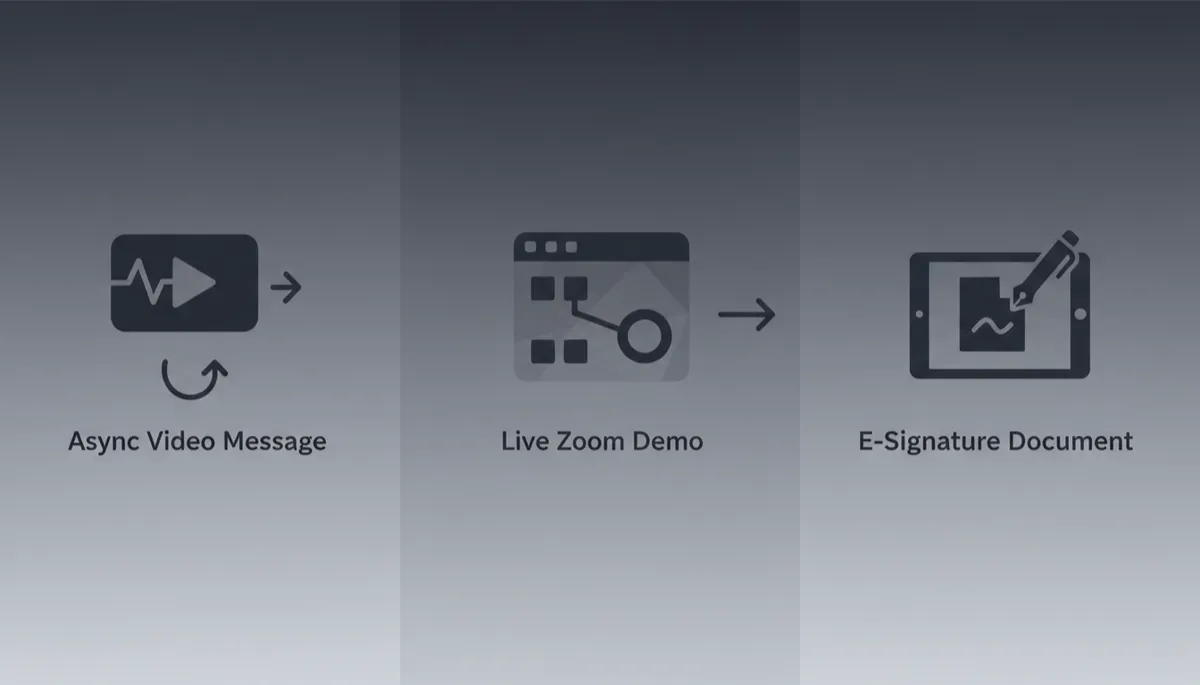
Branson’s core move: build systems so the sales engine runs even when the founder is nowhere near the room.
The Three Pillars of a Branson-Style Remote Sales Engine
Quick takeaway: A strong sales video, async demos, and a visual pipeline from one screen — that’s what turns remote sales tools for startup founders into a real system.
Jason keeps seeing the same pattern with founders. The ones who break through the bottleneck stop thinking in terms of “calls” and start thinking in terms of “systems.” In a remote-first world, that usually means three pillars working together: video selling, async demos, and a remote sales pipeline you can see at a glance. As Jason explains at AuthorJason.com, these pillars reduce friction at every virtual touchpoint and give the founder back time and focus.
1. Video Selling: Be Present Without Being There
Branson has always used media as a lever. TV, magazines, stunts… anything that lets him be in a million rooms at once. Video selling is your modern version of that. A simple recorded Zoom call, a Loom-style screen walkthrough, a short custom clip answering a buyer’s question — these are ways to clone your best explanation without burning a fresh hour every time.
Tools like Zoom, Google Meet, and Teams handle the live side. For async, founders lean on Loom, Vidyard, or simple screen recorders. The tech isn’t the hard part. The hard part is the habit: hitting “record” when you explain something well, then reusing that asset instead of repeating the same talk next week with the next prospect in the next time zone.
2. Async Demos: Let Buyers “Play With the Product” on Their Own Time
Virgin wins by making every customer touchpoint human and simple. Async demos do that for your product. Instead of guarding the demo like a secret show that only happens once a week on your calendar, you wrap it in a guided tour people can consume whenever they want — including 11 p.m. on Sunday when the CFO finally opens their laptop.
Tools like Consensus or video playlists on a landing page let you build click-through, interactive content experiences. Even a well-structured Notion page or Google Doc with embedded clips can work in the early days. The idea: your product shouldn’t wait for your availability to start selling. It should sell while you sleep, like a Virgin billboard on the highway or a smart magazine ad that keeps working long after the team leaves the office.
3. Remote Pipeline Tools: See the Whole Game From One Screen
Branson runs a portfolio of companies. He needs dashboards that tell him where each business stands without visiting every office. You need the same thing for your deals. A clear remote sales pipeline that shows who’s in discovery, who watched the demo, who opened the proposal, and who’s stuck waiting on legal or budget approval.
For most startups, that looks like HubSpot Sales Hub, Freshsales, or Attio as the CRM backbone. On top of that, you add tools like Mutiny to spin up customized decks and proposals fast, GetAccept or Dock for interactive deal rooms, and e-signature platforms to finish the job. The stack can stay lean. What matters is that you can open one screen and see your entire sales story — without asking your brain to be the CRM.
Building a Remote Work Stack: From “Everything’s on Me” to “It Always Runs”
Quick takeaway: Start with a simple bundle: clear CRM, fast content, sensible automation, and e-signature — then let remote sales tools for startup founders carry the load instead of your calendar.
Let’s be practical. You’re leading all sales. You have a small team. You’re tired, but not broken. You want a system that feels like Branson’s portfolio dashboard, not a new to-do list that lives in your head. This is how Jason usually helps founders think about their first set of remote selling tools for startups, in simple language. As he explains at AuthorJason.com, the goal is to reduce friction at every step so buyers feel that buying from you is the easiest option on the table.
Step 1: A Simple CRM That Doesn’t Fight You
- Choose a CRM you’ll actually open (like HubSpot Sales Hub, Freshsales, or Attio) to keep contacts, deals, and email tracking in one place.
- Turn on AI assistant features to summarize calls and suggest follow-ups when your brain is fried.
- Make the pipeline visible to the team so deal history doesn’t only live in your notes and Slack.
Start with a CRM you’ll actually open. HubSpot Sales Hub, Freshsales, and Attio are strong options. They give you contacts, deals, email tracking, and basic automation in one place. Many now ship with AI assistants that draft emails, summarize calls, and suggest next steps — exactly the kind of “assistant” a tired founder needs when context loads slowly into a midnight brain.
According to cleanlist.ai, tools like HubSpot Sales Hub hit a good balance of price and power for early teams. You don’t need enterprise complexity. You need a home for your pipeline that your team can see, and that your future self can understand next week without digging through random notes and Slack messages.
Step 2: Fast Content and Proposals That Sound Like You, Not a Template Graveyard
- Use tools like Mutiny, Dock, or Zoomforth to create customized deal pages quickly.
- Build a library of reusable slides and content blocks that reflect your brand and story.
- Prep fast-response templates so proposals land while buyer attention is still warm.
Branson built brands that feel alive. Your proposals and decks should do the same. Tools like Mutiny, Dock, and Zoomforth help you spin up customized pages and deal rooms for each opportunity in minutes. They remove the “blank slide anxiety.” They let you personalize without burning a whole day on design. For a founder, that’s huge. It means you can respond quickly while buyer attention is still warm — not next quarter after they’ve chosen someone else.
Step 3: Targeting and Outbound Without Becoming a Full-Time SDR
- Lean on Apollo, Clay, or Fuse AI to find the right accounts and people without drowning in spreadsheets.
- Build smart sequences based on clear triggers instead of random spray-and-pray campaigns.
- Make the goal of outbound to start high-quality conversations, not just fill your calendar.
Apollo, Clay, and tools like Fuse AI help you find and reach the right people without living inside spreadsheets all day. They pull data, enrich contacts, and help you send smart sequences instead of random blasts. For a founder, the goal isn’t to become a power user. The goal is to start enough high-quality conversations that your video selling and async demos can do their job.
Step 4: E-Signature and Deal Rooms So “Yes” Is One Click, Not Ten Emails
- Use DocuSign, PandaDoc, or GetAccept to send one clear package to the client.
- Combine summary, proposal, contract, and signature in a single experience.
- Reduce the need to print, scan, and hunt through multiple files for each deal.
Branson loves removing friction. You see it in Virgin’s service design — from check-in to the cabin. Your version is simple: don’t force people to print, sign, scan, or chase three different PDFs. Use tools like DocuSign, PandaDoc, or GetAccept to send one clear package: summary, proposal, contract, sign here. The easier it is to say yes, the more often it happens.

Async video turns “let’s find a time” into “watch this when you’re ready” — and that alone can beat the in-person meeting.
Where the Future of Selling System Fits In
Quick takeaway: The system gives you a “way of selling” on top of your tools — especially for remote selling — so remote sales tools for startup founders become part of one flow instead of scattered noise.
Tools alone aren’t enough. Branson didn’t just buy software and hope. He built a way of selling his teams could follow. The Future of Selling System (FOS) is designed to give founders the same backbone — a simple, repeatable way to run remote sales, even when your calendar is chaos and your confidence is shaken from the last “no” you heard.
FOS isn’t a heavy playbook you’ll never open. It’s a light, practical system that sits on top of whatever tools you choose — HubSpot, Apollo, Loom, DocuSign — and shows you how to turn them into one flow: from the first async touch to the signed deal. Jason built it by working with more than 1,000 founders, over $22M in combined sales, and three rebuilds from zero to growth.
Inside FOS is the P.I.T.C.H. formula. It’s a simple backbone Jason uses to keep founders focused on what actually moves deals: how they prepare, the intention they bring, how they teach, how they close, and the habits that keep everything running even on bad days. You don’t need another script. You need a simple way to show up at your best every time, across video calls, async demos, and written proposals.
In a remote-selling context, P.I.T.C.H. adapts to the virtual reality: in “Prepare,” you make sure your video setup, links, and materials are ready before the buyer joins. In “Intention,” you’re clear from the start that your goal is to help them make a clear decision, not just push one offer. In “Teach,” you use screen share, simple visuals, and examples from their world instead of crowded slides.
In “Close,” you rely on a clear summary at the end of the call, followed by a follow-up email within 60 minutes that includes the recording, next steps, and a signature link. And in “Habits,” you review your recordings, refine your templates, and train your team on the same rhythm so everything doesn’t depend on your mood that day. That’s how remote sales tools for startup founders become one coherent engine instead of a pile of disconnected apps.
Self-check
- Does your video setup signal professionalism in the first 5 seconds?
- Do you use a booking link so buyers can schedule directly?
- Have you reviewed a recording of one of your sales calls in the last 30 days?
FOS costs $19/month — about $0.63 per day. Less than the coffee you drink before that stressful call. For a founder carrying the full sales number, that small investment buys something bigger than tactics. It buys the feeling of “I know what to do now” when a deal stalls, a buyer ghosts, or your energy dips before a big meeting.
A Simple Story: How One Founder Escaped the Calendar Prison Into Remote Control
Quick takeaway: Maya freed her calendar with a clean CRM, an origin-story video and demo, and simple deal rooms — a practical model of how remote sales tools for startup founders work in real life.
Meet Maya. She runs a B2B product-analytics startup with a team of eight. For two years, she was the bottleneck. Every serious deal waited on “a call with Maya.” Her team joked that revenue lived in her calendar. It wasn’t funny to her. She was exhausted, short-tempered at home, and always felt behind — even though the company was “doing well” on paper.
Maya tried to fix it with more effort. More travel. More late-night calls. More “final push” weeks. It worked… until it didn’t. She lost a big deal to a competitor who simply moved faster. They sent a tight async demo, a clear proposal, and a one-click signature link while Maya was still trying to find a time that worked for three calendars in two time zones. The buyer told her plainly: “We liked you, but they made it easier to say yes.”
That hurt. But it was also the turning point. Maya committed to a remote-first setup. She cleaned up her CRM. She recorded a short origin-story video and a 12-minute product tour. She set up a simple deal-room template with a summary, pricing, and FAQs. She started using e-signature for every contract. And she worked through the Future of Selling System with her team so they could all run the same flow, not “Maya doing whatever she feels like that day.”
Six months later, revenue was higher — but more importantly, Maya’s calendar was no longer a war zone. Her team runs first calls. Prospects watch async demos before speaking to anyone. Deals move forward overnight in other time zones. She still steps in at pivotal moments — just as Richard Branson still shows up for big launches — but she’s no longer the only person who knows how to sell. The system carries the load with her.
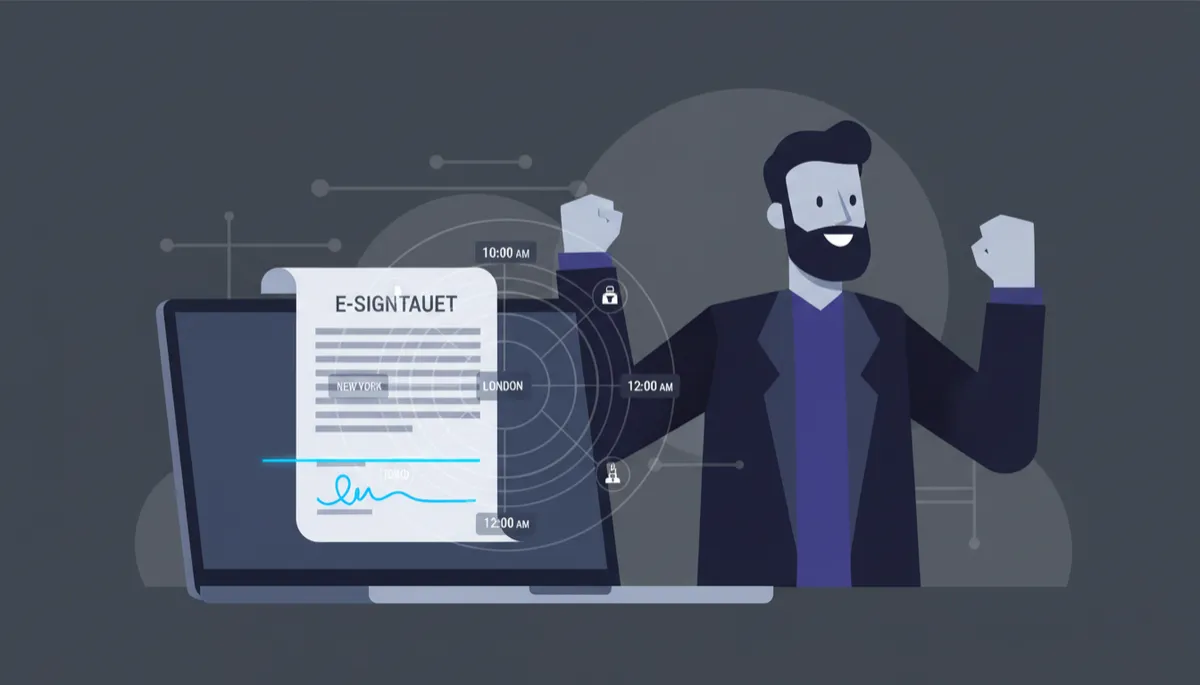
Over 1,000 founders. More than $22M in combined sales. Geography is never a valid reason to lose a deal.
FAQ: Remote Selling, Branson, and Your Sales Stack
Do I Really Need Remote Selling Tools If Most of My Customers Are Local?
Yes. Even “local” buyers are busy — juggling kids, travel, and packed schedules. A clean async demo and digital proposal respect their time. They also open up the next city, the next country, and the next unexpected referral. Branson didn’t stop at one city. Neither should you, even if that’s where you start.
What’s the Minimum Stack Jason Recommends for a Founder-Led Team?
A simple CRM (HubSpot, Freshsales, or Attio), a video tool (Zoom plus Loom or similar), a proposal or deal-room tool, and e-signature. That’s it. You can add Apollo, Clay, or Gong later as volume and team size grow. Start lean. Make sure every tool you add is actually used and plugged into your core flow instead of creating more tech issues and “loading…” screens before every call.
How Does the Future of Selling System Relate to Tools Like HubSpot and Apollo?
FOS is tool-agnostic. It gives you the way of selling — the flow, mindset, and habits — so whatever tools you choose work together. Think of it as an operating rhythm that sits on top of the tech. Without it, you have a noisy stack. With it, you have a remote engine that feels more like Virgin’s calm control center and less like Elon Musk’s Twitter feed on a bad day.
How Is This Different From What Leaders Like Elon Musk or Melanie Perkins Do?
Elon Musk leans heavily into product obsession and engineering depth. Melanie Perkins grew Canva with a big focus on product-led growth and self-serve onboarding. Branson’s twist is systems plus story — strong brands and processes that let teams sell without him. Jason’s work in the Future of Selling System borrows a lot from Branson’s angle: giving founders a clear story and repeatable system, then letting tools and teams carry it across time zones.
Where Can I Learn More About Sales Tools in General, Not Just Remote Selling?
If you want a broader view of sales tools beyond remote selling tools for startups, Jason breaks down the landscape in the deeper guide Best Sales Tools: Startup Founder’s Playbook. It covers how to think about CRM, enablement, training, and governance as your team grows beyond ten, fifteen, or twenty people.
What Are the Best Remote Selling Tools for Founders?
Start with Zoom or Google Meet for video, Loom for async demos, HubSpot or Attio as your CRM, DocuSign for signatures, and a tool like Dock for deal rooms. The key is that they work together in one flow.
How Do You Build Trust Over Video?
Look into the camera, use soft front lighting, and start with a question about the buyer’s context — not your pitch. Share the agenda in the first two minutes, use their name, and keep open body language.
Is Remote Selling as Effective as In-Person Selling?
Research like that published in Harvard Business Review shows that hybrid teams often outperform traditional models when they reduce friction and use async content well. Effectiveness depends on the system, not the channel alone.
From Founders Like You: What Happens When the System Clicks
Quick takeaway: When the system works, revenue goes up while dependence on in-person meetings goes down — and that’s the core of remote sales tools for startup founders.
Jason has seen this shift in real numbers. Tan added $29,693 in just sixteen days by putting the right remote flow in place. Teo landed sixty-three clients in one hundred days by relying on async demos and a clear follow-up rhythm. Leon turned a $2,500 website project into a partnership worth over $2M — fully remote, no fancy boardroom, just a clear system that let the relationship deepen step by step through calls, documents, and signatures.
The pattern isn’t “be more charismatic.” It isn’t “work harder.” It’s “make it easy for buyers to say yes without needing you in the room every time.” That’s Branson’s message in plain clothes. That’s what remote selling tools for startups are really about when you strip away the noise and AI talk — less friction, more clarity, and a founder who can finally step back without everything collapsing.
3 Remote Selling Mistakes — and the Bonus Mistake That Hurts Most
Quick takeaway: Small mistakes — like forcing an app download, not recording calls, or bad video setup — can kill big deals. Fixing them lets remote sales tools for startup founders run at full power.
Mistake 1 (Leo, B2B SaaS): The Platform Required a Download — 40% of Calls Failed
Leo initially relied on a conferencing tool that forced buyers to download a new app and create an account. In enterprise deals, IT teams blocked the install, or buyers showed up late after fighting with links. Around 40% of calls didn’t start smoothly. The fix: switch to browser-based video with a single link that works on any device.
Mistake 2 (Leo): Not Recording Calls — Critical Buyer Details Lost
Leo was leaving discovery calls with scattered notes in a notebook and Slack. When it was time to write the proposal, he’d forgotten the COO’s priorities or the legal complexities the GC mentioned. The fix: record every call (with clear consent), and use the recording to review language, train the team, and build accurate follow-up summaries.
Mistake 3 (Leo): Bad Lighting and Background Hurt the First Impression
In the early weeks, Leo took calls from a dark room with a messy background and a low-angle camera. Buyers didn’t say anything, but their body language showed hesitation. The fix: simple front lighting, a clean or calm virtual background, and a decent mic. His words didn’t change much, but the other side’s confidence jumped immediately.
Bonus Mistake (Jason): Founders Burning Energy on Tech Instead of the Conversation
Jason noticed that founders who treated every video call like a board meeting — eye-level camera, clean setup, materials preloaded — kept all their energy for the conversation itself. The ones who tried to “figure out” the tools at the last minute came across scattered. Jason gave them a 5-minute pre-call checklist: camera height, lighting, sound test, link confirmation, and a ready opening question that unlocks the dialogue immediately.
Remote Selling Setup — The Founder’s Exact Configuration
Quick takeaway: A five-part setup — browser-based video, booking link, preloaded screen share, recording, and a 60-minute follow-up template — is enough to build an effective remote sales engine.
The setup Jason recommends for founders is simple and can be implemented in a week. The first tool is browser-based video (like Zoom in the browser or Google Meet) so buyers can join without downloads. Its job: make joining the call easier than ignoring it. The second tool is a booking link (Calendly or HubSpot Meetings) that removes back-and-forth emails; its job is to lock time in while buying intent is still fresh.
The third tool is a preloaded screen share — a tab open with your deck, live product, and customer examples before anyone joins. Its job is to avoid those awkward first minutes hunting for files. The fourth tool is call recording (with consent) inside Zoom or a dedicated recorder; its job is to create training material, a reference for proposals, and a way to help the team sell in the same style.
The fifth tool is a 60-minute follow-up template: a ready email including thanks, three key points from the call, the recording link, and a specific next step. Its job is to stop deals from going cold after a great conversation. When these five elements come together, remote sales tools for startup founders become a coherent setup you can repeat across every time zone.
Your Next Step: Build the System, Then Let It Run
Quick takeaway: You’re not behind; no one taught you how to build a remote sales system. Start with a simple stack, then use the Future of Selling System to stitch remote sales tools for startup founders into one flow.
If you feel behind on this, you’re not alone. Most founders Jason meets are strong on product and vision but quietly anxious about sales. They blame themselves for every lost deal, every slow month, every “we chose someone else” email. The truth is kinder. No one taught you how to build a remote-first sales system. All you heard was “get out there and sell.”
You can change that. Start with a basic stack. Record one good async demo. Clean up your pipeline view. Then, if you want a clear path through the noise, let the Future of Selling System guide you. For $19/month, you get a founder-friendly way to weave video, async demos, and remote pipeline tools into something that feels manageable instead of overwhelming —


