Sales Training Program vs Sales Coaching Program vs Sales Mentorship — What Every Founder Needs to Know Before Spending a Dollar
Sales, Sales Training, Coaching, Mentorship, Startup Founders
Sales Training Program vs Sales Coaching Program vs Sales Mentorship — What Every Founder (and Billionaire Warren Buffett) Knows Before Spending a Dollar
If you’re leading a startup with a small team and growing targets, choosing between a sales training program, a sales coaching program, and a sales mentorship program can feel like gambling with runway. This guide gives you the clarity Jason wished he’d had before spending his own money on the wrong type of help at the wrong stage.
Jason’s Costly Lesson: Buying the Wrong Help at the Wrong Time
Since 2015, Jason has helped more than 1,000 founders generate over $22M in combined sales. What most people don’t see is the three times he hit rock bottom on the way there — and how often that came after investing in the wrong kind of sales support for the stage he was in.
At one point he paid for high-ticket sales coaching when he didn’t even have a clear offer. Another time he joined a mentorship program when what he actually needed was a structured sales training program his team could follow. The result was the same: lost time, lost cash, and more pressure on the business than before he joined.
This article is Jason’s attempt to give you the clarity he wishes someone had handed him: a simple, founder-friendly way to understand sales training program vs sales coaching program vs sales mentorship — and which one you actually need right now.
Why These Three Terms Are Constantly Confused (and Why That Confusion Costs Founders Money)
In 2026, the sales enablement market is noisy. Everyone promises “training and coaching and mentorship” in one sentence, but when you look under the hood, most programs are heavily weighted to just one of those things. As a time-poor founder, it’s easy to buy based on marketing language rather than structure and outcomes.
The confusion is made worse by trends: AI-powered coaching, microlearning, and embedded learning tools now blur the line between knowledge, practice, and feedback. Research shows that one-off workshops don’t work — up to 84% of content is forgotten within 90 days without reinforcement (Supered). So providers rebrand to sound “continuous” or “coaching-led”, even when the core is still a traditional course or a loose mentoring circle.
For founders, the cost of this confusion is real. Choose mentorship when you actually need execution-level coaching and your team will keep missing quota. Choose coaching when you don’t even have a sales method and every session becomes firefighting. Choose training when you’re directionally lost and you’ll optimise a process that leads to the wrong customers.
What Is a Sales Training Program?
A sales training program is a structured curriculum designed to teach a repeatable, teachable system for selling. Think of it as the “operating manual” for how you and your team run discovery, present value, handle objections, and close — step by step, in a way that can be learned, practised, and improved over time.
- Clear modules and lessons (live, on-demand, or blended)
- Playbooks, scripts, templates, and checklists your team can follow
- Practice built into the workflow (role-plays, simulations, AI drills)
- Progress measured by behaviour change and business outcomes — win rates, deal velocity, and pipeline conversion, not just course completion (The Brooks Group).
The Future of Selling System (FOS) is exactly this kind of program: a system that shows founders and their teams how to sell in a consultative, buyer-first way that fits the 2026 reality — where AI can do the admin, but only humans can do deep discovery, storytelling, and real trust-building.
What Is a Sales Coaching Program?
A sales coaching program is about real-time performance correction. Instead of just teaching you what to do, a coach watches what you actually do — on calls, in meetings, in your CRM — and then gives you specific feedback so you can execute the method under pressure.
- Usually one-to-one or small group, with regular sessions (often weekly)
- Call reviews, deal reviews, and pipeline reviews using your real data
- Role-plays and scripts adjusted to your specific deals and objections
- Often supported by AI tools that score calls and highlight patterns, which is becoming a major trend in 2026 as organisations use AI to scale personalised coaching.
Done well, coaching closes the execution gap — the space between “we know what to do” and “we actually do it consistently”. Studies show that teams receiving weekly coaching can hit 76% quota attainment, compared with 47% when coaching is quarterly or less, and organisations that coach most reps weekly are more than twice as likely to achieve high quota attainment benchmarks.
What Is a Sales Mentorship Program?
A sales mentorship program is primarily about wisdom transfer. The curriculum is not slides or modules; it is the mentor’s lived experience. You get access to someone who has already walked the path — building, breaking, and rebuilding sales engines — and is willing to share the patterns and pitfalls with you over time.
- Relationship-based, often long-term and sometimes informal
- Focused on directional questions: markets, positioning, pricing, hiring, and when to pivot or double down
- Often includes introductions, pattern recognition, and “I’ve seen this movie before” guidance
Mentorship has hard business value. In large sales organisations, structured mentoring can increase early revenue by nearly 20%, with about half of those gains persisting for six months, and can dramatically reduce turnover in voluntary participation programs. For founders, the value is also emotional: having someone who has been “3× rock bottom, 3× back” beside you when you’re making painful calls about runway and product direction.
Sales Training vs Coaching vs Mentorship: Quick Comparison for Founders
| Dimension | Sales Training Program | Sales Coaching Program | Sales Mentorship Program |
|---|---|---|---|
| Format | Structured curriculum, modules, playbooks, practice tasks | Regular sessions reviewing your calls, deals, and pipeline | Ongoing conversations, stories, and strategic guidance |
| Primary Focus | Building a repeatable sales method for your team | Improving execution and behaviour on that method | Directional decisions, judgment, and long-term thinking |
| Time Horizon | Weeks to a few months to install the system | Ongoing (often weekly) while scaling execution | Long-term relationship, months to years |
| Typical Cost Range | Low subscription to mid-ticket cohort programs | Higher per-seat or retainer, especially 1:1 | Ranges from free/informal to premium advisory retainers |
| FOS Fit | Core: FOS is a modern sales training system for founders and teams | Includes embedded coaching loops and implementation support | Provides mentorship-style guidance from Jason’s lived founder journey |
What Buffett’s Journey Shows About Training, Coaching, and Mentorship
If you want a clean, real-world example of all three paths, you don’t have to look further than Buffett’s early career. He didn’t just stumble into world-class investing instincts; he deliberately layered training, mentorship, and coaching over time.
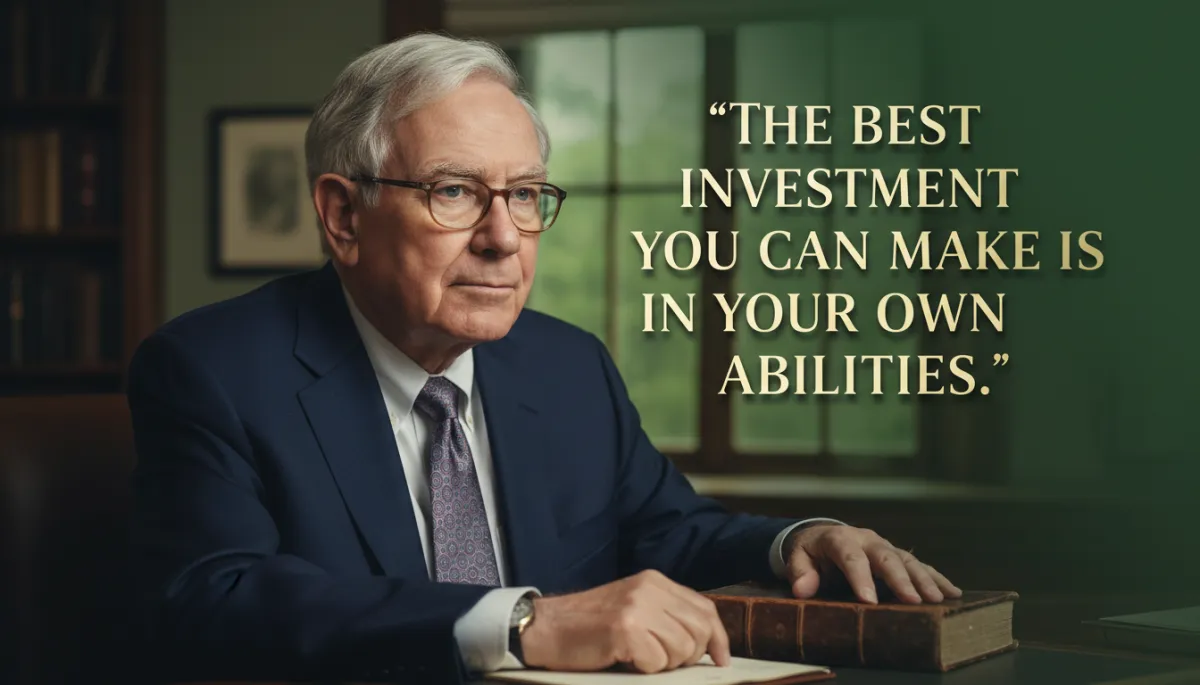
Buffett’s path shows how structured learning, mentors, and real-time coaching compound together.
- Columbia Business School = Training. Buffett enrolled in a structured program, learning a specific investment philosophy and method. This is the equivalent of a sales training program: a defined curriculum, clear mental models, and frameworks he could apply again and again.
- Benjamin Graham = Mentorship. Graham didn’t just lecture; he took Buffett under his wing, sharing decades of lived experience, pattern recognition, and judgment. That long-term relationship is what we’d now call a sales mentorship program for founders: the experience itself is the curriculum.
- Graham-Newman Corp = Coaching. Inside Graham’s firm, Buffett’s actual investment decisions were reviewed, corrected, and sharpened in real time. This is coaching: real work, real stakes, real feedback.
The lesson for founders is simple: you will likely need all three forms of help across your journey — or you need a program that intentionally combines them, instead of pretending one dimension can do everything.
Which One Does a Founder Actually Need Right Now?
Use this simple decision framework before you spend a dollar. Be honest with yourself and your team.
1. If You Don’t Have a Clear, Repeatable Sales Process…
You need training first. If every rep sells differently, if you can’t describe your discovery steps, or if your close rate is “hope”, then buying coaching or mentorship will just surface more chaos. A modern sales training program installs a shared language and method your whole team can use, measure, and improve together. This is where FOS is designed to start.
2. If You Have a Process, but Results Are Inconsistent…
You need coaching. This is the classic execution gap: the deck is done, the script exists, but deals still stall. Here, a sales coaching program that reviews calls, inspects pipeline, and gives targeted feedback will move numbers faster than yet another course. Weekly or bi-weekly coaching has been linked to significantly higher quota attainment and faster ramp times in multiple 2026 benchmarks.
3. If You’re Directionally Lost on Market, Offer, or Model…
You need mentorship. Training and coaching assume you’re roughly pointed at the right customers with a viable offer. If you’re still wrestling with “Who do we really serve?”, “What problem justifies our price?”, or “Is this even the right business model?”, you’ll get more leverage from a mentor who has built and rebuilt sales machines across cycles and industries.
4. If You Need All Three (Like Most Scaling Teams)…
Then you either need to stitch together three different providers — or choose a system intentionally built to combine training, coaching, and mentorship for founders. This is the gap Jason built FOS to close.
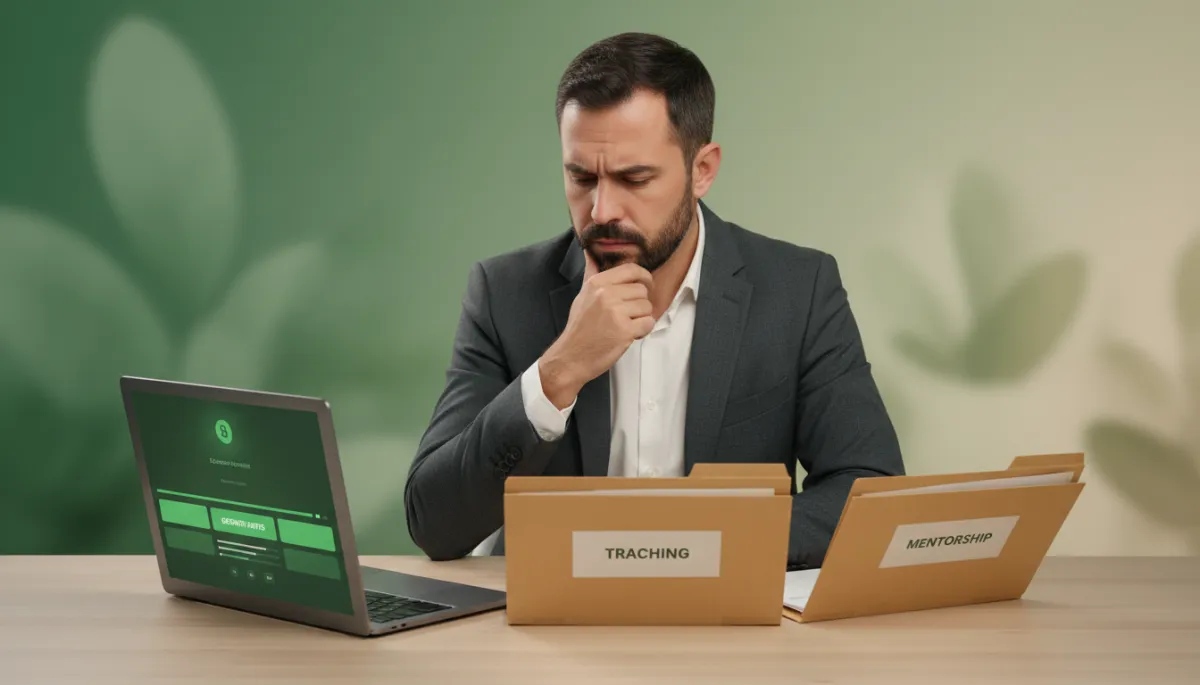
Founders save time and cash when they match the right support to their actual stage.
How the Future of Selling System Combines Training, Coaching, and Mentorship
The Future of Selling System (FOS) was built specifically for founders with small but growing teams who are tired of piecing together random sales tips. It combines the three elements you’ve just read about into one coherent experience.
- Training: A structured, modern curriculum that installs a repeatable sales system your whole team can follow. It’s designed for the 2026 landscape — embedded practice, outcome-focused, and aligned with how buyers actually make decisions today.
- Coaching: Implementation support that helps you apply the system to your real pipeline. Instead of generic advice, you get guidance on how to run your next discovery call, rewrite your follow-up, or rescue a stuck deal.
- Mentorship: Access to Jason’s lived founder experience — three times at rock bottom, three times back — so you’re not just learning tactics, but also how to make the hard calls that protect your energy, team, and runway.
People Also Ask: What Is the Main Difference Between Sales Training and Coaching?
The core difference between sales training and coaching is this: training gives you the method; coaching helps you execute that method under pressure. Training is mostly about knowledge and structured practice. Coaching is about behaviour change in the field — on calls, in meetings, and in your CRM.
People Also Ask: Is a Sales Mentorship Program for Founders Worth It?
A sales mentorship program for founders is worth it when you’re wrestling with big, directional decisions — markets, offers, hiring, and when to pivot. Mentors shorten your learning curve by sharing patterns and pitfalls you can’t see from inside your own company. The key is to combine mentorship with a concrete sales system, so advice turns into action.
People Also Ask: Should I Start with Training, Coaching, or Mentorship?
For most founders leading a team of five or more, the sequence is: training → coaching → mentorship. First, install a clear method. Second, coach your team to run that method consistently. Third, layer in mentorship to steer the bigger strategic decisions. That’s exactly the sequence Jason built into FOS so you don’t have to guess.
The P.I.T.C.H. Formula and the Future of Selling System
At the heart of FOS is Jason’s P.I.T.C.H. Formula — a simple, founder-friendly way to structure conversations so buyers feel understood, not pressured. It’s part of the broader Future of Selling System, which is designed to be learnable by non-sales founders and their teams without turning anyone into a caricature of a “closer”.
Tier 1 Results: What Happens When Founders Get the Mix Right
Jason doesn’t promise overnight miracles. But when founders combine the right training, coaching, and mentorship — and actually implement — the numbers can be dramatic. Here are three Tier 1 examples from the Future of Selling System:
- Tan: Closed $29,693 in 16 days after installing a clear offer narrative and following the system for outreach, discovery, and follow-up instead of improvising each call.
- Teo: Brought in 63 customers in 100 days, moving from “random acts of sales” to a consistent weekly rhythm of pipeline building, conversations, and closes.
- Leon: Grew from $2.5K to $2M+ by rebuilding his sales engine around buyer outcomes, then coaching his team to run that engine without him in every deal.
You don't need to choose between training, coaching, and mentorship. You need one system that gives you all three.


