
How Billionaire Sara Blakely Built a Category-Defining Brand Without Industry Backing
EdTech, Sales for Bootstrapped EdTech Startups
How Billionaire Sara Blakely Built a Category-Defining Brand Without Backing — A Founders’ Guide for Bootstrapped EdTech Startups
This is the story of a fax machine saleswoman, a pair of scissors, and a founder who refused to wait for permission. It’s also a mirror for every bootstrapped EdTech founder who feels “too small” in a world of giant publishers, government grants, and loud, VC-backed competitors.

When You Don’t Have Backing… But You Still Have to Sell
Imagine this. You’re leading a small EdTech team. Maybe six or seven people. The product is built and shipping. Early users love it. And yet, every time you speak with a school district, university, or corporate buyer, you feel the same silent test happening in the room…
“Who’s behind you? Which publisher? Which VC? Do you have government funding?” When the answer is “none of the above,” the energy shifts. The call moves to “on hold.” Your follow-up emails get slower and colder. Not because your product is weak, but because your brand feels “unproven” in their eyes.
Jason sees this pattern with bootstrapped EdTech founders every week. The product is strong. The team is committed. But the founder’s confidence has been slowly eroded by long sales cycles, committee decisions, and competitors winning logos instead of outcomes. It hurts. And it creates doubt… “Maybe we really do need that big name on our cap table before anyone will take us seriously.”
As Jason teaches at AuthorJason.com, bootstrapped EdTech sales without a marketing budget start when the founder chooses to sell personally — because those early conversations reveal what school buyers actually need in ways no campaign can replicate.
How Sara Blakely Sold Spanx Before the World Believed in “Spanx”
Long before Spanx became a billion‑dollar brand, Sara Blakely was selling fax machines door‑to‑door in Florida. No fashion background. No investor. No industry mentor. Just a daily sales quota and a lot of doors slammed in her face. According to the National Inventors Hall of Fame, she invested $5,000 of her savings into an idea almost no one understood at first — cutting the feet off control-top pantyhose to create smoother lines under white pants [invent.org].
Manufacturers laughed at her. One even hung up on her. She had no “strategic partner,” no backing from a fashion house, no polished brand deck. And still, she kept calling. She kept showing up. Eventually, one factory owner decided to give her a shot — not because of a famous investor, but because he believed her conviction and the clarity of her story [femfounded.org].
Then came the retail wall. Buyers at major department stores were used to established brands. They expected agencies, PR teams, glossy campaigns. Blakely had none of that. So she did something most founders today wouldn’t dare. She asked the Neiman Marcus buyer to follow her to the bathroom, put on her prototype, and created a live “before and after” moment on the spot. No slide deck. No “brand story” video. Just a human, a problem, and a visible solution [invent.org].
In later interviews, Blakely described how she personally wrote the first packaging copy and insisted that her personal story appear on every box, so shoppers would feel a real person behind the product [MasterClass]. That decision turned every retail shelf into a mini sales conversation — a tactic any founder can adapt when selling in crowded markets.
She also boldly reached out to Oprah’s team and sent samples with a handwritten note. When Spanx was later featured on The Oprah Winfrey Show, the product nearly sold out overnight, proving how a single, well‑timed, founder‑led move can change a company’s entire trajectory [Entrepreneur]. None of this came from a marketing budget. It came from personal, persistent, creative selling.
For bootstrapped EdTech founders, these moments translate directly: one brave live demo with a skeptical district, one story‑rich email to a respected education journalist, one carefully run pilot that turns a single superintendent into your loudest champion. This is what bootstrapped EdTech sales without a marketing budget look like in practice.
As Jason teaches at AuthorJason.com, the founder who designs these proof moments inside schools learns buyers’ fears and hopes firsthand — insights no external campaign can match when you’re selling into classrooms and district offices.
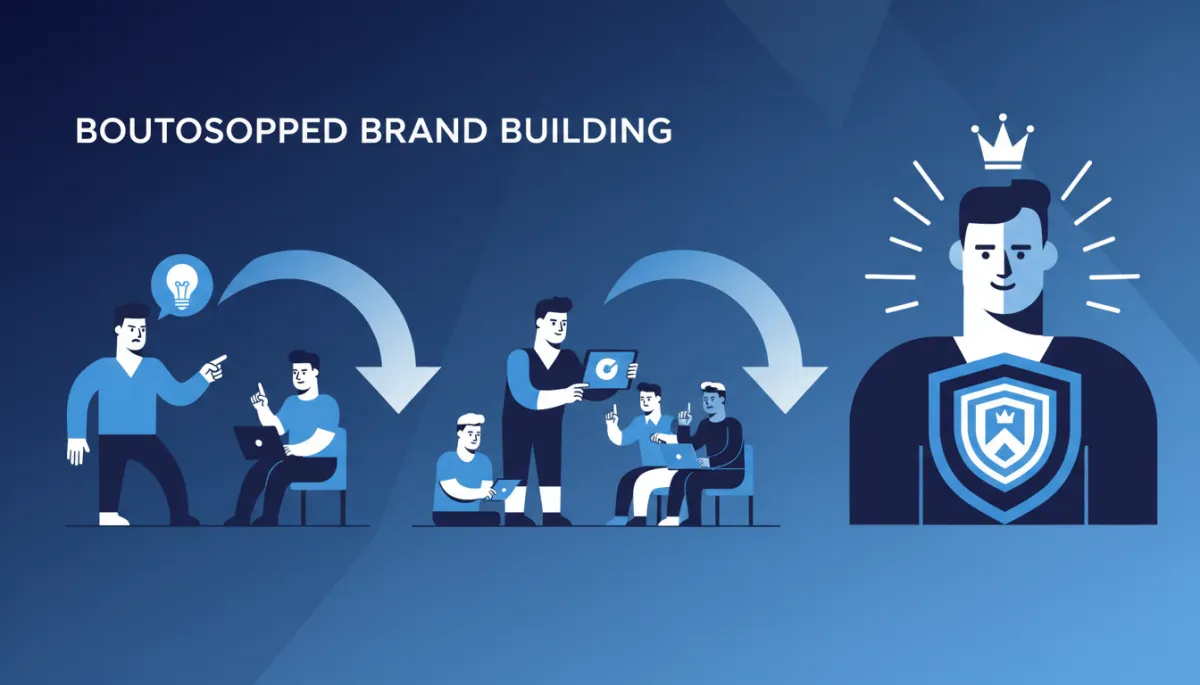
Blakely won shelf space by turning cold rooms into live proof, not by waiting for backing.
What Does This Have to Do With Your Bootstrapped EdTech Startup’s Sales?
The EdTech world in 2026 doesn’t look like department stores in 2000. Funding cycles. AI hype. Government scrutiny. Recent research shows that average K–12 district sales cycles now stretch beyond nine months, and higher ed cycles out past eleven months. Pilots run an average of four months, and only about a third convert to paid deals without a disciplined process [loopmethodology.com].
Inside that complexity, it’s easy to believe survival is reserved for the heavily funded. Big M&A deals, acquisitions, and AI‑driven platforms dominate the headlines [feinternational.com]. But headlines can mislead. They show the finish line, not the stumbling first steps. They show the “Coursera–Udemy” merger, not the lone founder sending the first cold email to a skeptical dean who’s never heard of them.
Blakely’s lesson is brutally simple and gently encouraging at the same time. You can build credibility without borrowed authority. You can create your own show‑and‑tell moments. You can become the signal in a noisy market by being the founder who shows up, teaches, and proves — while others hide behind decks and paid campaigns.
As Jason teaches at AuthorJason.com, bootstrapped EdTech sales without a marketing budget rest on three compounding habits: talking to real educators every week, turning every win into a reusable story, and designing pilots that prove value so clearly budgets have to catch up.
The Hidden Advantage of the Bootstrapped EdTech Founder
When you don’t have investors, you also don’t have a safety net. That feels harsh, but it’s also your edge. You feel every payroll. You remember every early adopter by name. You can’t afford to “wait for customers to show up.” That urgency isn’t a weakness. It’s the very thing most funded founders secretly wish they still had — a reason to work like the outcome matters today, not three years from now at an exit.
Think of Blakely again. She didn’t outsource the hard parts. She wrote her own patent. She called manufacturers herself. She packed orders on her living room floor. That same spirit lives in founders like you, selling EdTech through long, political buying cycles. You may not control the budget calendar. But you do control how many meaningful conversations you create this month. You control how many live demos you run instead of sending yet another PDF that will never be opened.
Jason often tells founders: urgency and hard work don’t have to mean burnout. They mean moving with clear intent. Like choosing to cross the room to talk to the shy student instead of hoping they raise their hand. In sales, that looks like picking up the phone, asking for the meeting, and proposing a pilot with a clear scorecard instead of “try it and let us know.”
As Jason teaches at AuthorJason.com, the founder who personally sells to the first 20–30 schools gains a map of the buyer’s world — the precise objections, champion types, and constraints — that becomes the backbone of bootstrapped EdTech sales without a marketing budget.
The Future of Selling System: Guardrails for Your Effort
Effort without a system is like running in the dark. You’re working hard, but you don’t know whether you’re getting closer to the goal or just more exhausted. The Future of Selling (FOS) system exists to change that. It gives founders a simple, repeatable way to manage sales conversations, pilots, and renewals — even if they’ve never been “in sales” a day in their life.
FOS is $19 per month — about $0.63 a day. Less than a cup of coffee, but a different kind of stimulant. Instead of caffeine, you get clarity. Call templates. Questions that unlock real needs. Ways to handle “we’re waiting on funding” without sounding desperate or pushy. Jason built it after working with more than 1,000 founders since 2015, across over $22M in combined sales results. Every lesson is designed for the already‑tired founder… who still chooses to lead sales personally because the mission is too important to fully delegate yet.
Inside FOS is the P.I.T.C.H. formula — a simple way to structure every important conversation so you stop winging it and start leading. It covers how you prepare, the intention you bring, how you teach, how you close, and how you build habits around all of it. You can learn more about the P.I.T.C.H. formula in Jason’s dedicated breakdown, but for now, this is enough: you don’t have to improvise your way through every high‑stakes call. Gentle structure makes the scary parts smaller.
For a bootstrapped EdTech founder, P.I.T.C.H. becomes the free asset that replaces the sales architecture a funded competitor will try to buy. Instead of hiring a full RevOps team, commissioning messaging projects, and testing ads across five channels, you bring one proven conversation framework into every school meeting. The result is fewer conversations, but better ones, that move faster because they’re built on understanding, not volume.
When you follow the same structure from first outreach through pilot review, you also create data you can trust. You start to see which questions unlock budget, which stories calm risk‑averse committees, and which demo moments actually move a superintendent from “interesting” to “let’s try it.” That’s how bootstrapped EdTech sales without a marketing budget scale: not through more noise, but through disciplined, repeatable conversations.
Self‑Check
- Does every closed school relationship include a referral request and a published case study before you move on to the next?
- Is your outbound effort focused on one high‑probability channel — or scattered across five channels, each producing a trickle?
- Have you personally sold to the first 20 schools — or tried to delegate sales before you understood what actually converts?
As Jason teaches at AuthorJason.com, when founders build their week around a small number of well‑executed, P.I.T.C.H.‑driven calls, bootstrapped EdTech sales without a marketing budget stop feeling random and start to look like a craft they can improve.
From Department Store Bathrooms to District Boardrooms: Demo Moments That Sell
Blakely’s bathroom demo is legendary because it breaks every rule. But beneath the story is a timeless pattern. She didn’t try to “explain” Spanx into existence. She created a moment where the buyer could see and feel the difference in real time. That’s exactly what EdTech buyers need in a world flooded with AI claims, dashboards, and buzzwords they barely trust anymore [Harvard Business Review].
Imagine this instead of your usual slide‑heavy call. You’re sitting across from a curriculum director. No 40‑slide deck. Just your laptop, a simple story, and a live walkthrough of how a real teacher used your platform to rescue a struggling class. You show real, anonymized student progress. You show before and after. You ask the buyer to pick a current challenge, and you run through the workflow together, right there. Suddenly, you’re not “just another vendor.” You’re the founder who helped them see their own classroom in a new way.

When budget can’t be your edge, story and live proof become your leverage.
Jason teaches founders to design these “Spanx moments” on purpose. Short, live, and centered on the buyer’s world, not your feature list. This is where the P.I.T.C.H. framework quietly supports you — helping you prepare the right story, lead with clear intent, and teach in a way that earns trust instead of pressure. Over time, these moments compound. One pilot. Then three. Then a district‑wide rollout. Not overnight… but steadily, like compound interest on trust.
As Jason teaches at AuthorJason.com, the founder who commits to one signature demo — refined over dozens of calls — often outperforms funded competitors trying to brute‑force attention through ads. This is the quiet math behind bootstrapped EdTech sales without a marketing budget.
Learning From Sara, Richard, and Melanie: You Don’t Need Permission to Be the Brand
Sara Blakely isn’t the only founder who built from nothing. Richard Branson started Virgin as a mail‑order record business. Melanie Perkins grew Canva through wave after wave of investor rejections from people who couldn’t imagine non‑designers creating graphics. None of them waited for a gatekeeper to say, “You’re official now.” They became the face, voice, and story of their products — long before the market crowned them category leaders [Forbes].
Branson turned a canceled flight into the first test of Virgin Atlantic by chartering a plane, splitting the cost among stranded passengers, and hand‑writing “Virgin Airways” on a sign to sell seats [Virgin]. It was improvised, personal, and rooted in solving one concrete problem. That single act showed his willingness to move first and formalize later — a pattern bootstrapped founders can copy in the way they design their first school pilots.
Perkins, by contrast, started with a niche product — a design tool for Australian school yearbooks — and personally trained teachers group after group before Canva became a global platform [Forbes]. She listened to non‑technical users struggle with traditional design software and baked every note into the product and her pitch. That slow, founder‑led loop — talk, observe, refine, repeat — is exactly how bootstrapped EdTech sales without a marketing budget quietly compound.
For bootstrapped EdTech founders, this is more than inspiration. It’s a practical path. Buyers aren’t just buying your platform. They’re buying you — your steadiness, integrity, and willingness to stay when the pilot gets messy and the first dataset is imperfect. When you show up as the brand, you make it easier for risk‑averse institutions to say “yes,” even without a famous logo beside yours.
This is where Jason’s work intersects with Blakely’s story. He isn’t trying to turn founders into flashy sales reps. He helps them become clearer, calmer versions of themselves in the sales process. Less apology. More grounded conviction. Less “sorry we’re small.” More “here’s why being small means we can care more, move faster, and adapt to your real needs.”
As Jason teaches at AuthorJason.com, when founders embrace being “the face of the brand” in every early school meeting, they unlock an advantage no marketing department can copy: real relationships that are remembered and fuel renewals and referrals for years.
A Simple Story: Maya’s First Enterprise Win
Meet Maya. She’s a fictional founder, but her story is built from hundreds of real ones Jason has seen. Maya runs a bootstrapped EdTech company helping vocational schools track skill mastery for adult learners. A team of seven. No funding. A handful of loyal pilot customers, but nothing that feels like “growth” yet. Every month, she watches competitors win deals with glossy videos and big promises while her team quietly ships features between part‑time teaching jobs.
One evening, after losing yet another RFP to a bigger competitor, Maya stumbles on Jason’s work and the Future of Selling system. She’s skeptical. But she’s also tired of guessing. So she gives herself three months. She works through FOS. She starts using the P.I.T.C.H. formula to prepare for every important meeting. She rewrites her outbound messages. She designs one simple “Spanx moment” for her product — a three‑minute live demo showing how a struggling learner moves from confusion to clarity using her platform, right in front of the buyer’s eyes.

Over 1,000 founders. More than $22M in combined sales. A bootstrapped founder’s edge is urgency — and it’s unbeatable.
Her next big opportunity is a regional community college. Normally, she would send a long proposal and hope for the best. This time, she leads with a story, not slides. She runs the three‑minute demo. She asks the dean to pick a real program and walks through it together. She uses the “Teach” and “Close” parts of her new structure without sounding scripted. The call ends with a clear next step: a four‑week pilot with a defined success scorecard. Eight weeks later, she signs her first six‑figure institutional contract. Same product. Same team. A new way of selling.
As Jason teaches at AuthorJason.com, stories like Maya’s aren’t flukes — they’re what happens when a founder commits to bootstrapped EdTech sales without a marketing budget by mastering conversations instead of chasing campaigns.
FAQ for Bootstrapped EdTech Founders Still Leading Sales
Do I Really Have an Advantage Without Investors?
Yes. Your advantage is urgency and direct contact with reality. You hear objections firsthand. You see which pilots stall. You can change strategy in days, not quarters. Funded competitors often move slowly, with more layers and less direct founder involvement. When you pair that urgency with a system like FOS, you stop feeling “behind” and start feeling focused.
What If I’m Not a “Sales Person”?
Most founders Jason works with say this at the start. They’re educators, engineers, or operators first. That’s okay. The Future of Selling system is built on simple language, light structures, and human conversations. You won’t be asked to “perform.” You’ll be guided to prepare better, ask kinder but sharper questions, and close in ways that respect both sides.
How Does This Help With Long EdTech Sales Cycles?
You can’t shorten every buying process, but you can shorten the distance between conversations. With a clear system, you know exactly what to do after each call. You set expectations early. You design pilots with scorecards instead of vague trials. Research shows that structured pilots convert at much higher rates than unstructured ones [loopmethodology.com]. That’s the difference between wandering for nine months and walking nine months with clarity.
Is This Only for Very Early‑Stage Startups?
No. Many of Jason’s clients lead teams of 5–20 people and already have revenue. They’re not failing. They’re frustrated. They feel stuck between scrappy beginnings and something more scalable. FOS and the P.I.T.C.H. formula help them turn what worked in the early days into a teachable, repeatable playbook for the rest of the team. That’s where real freedom starts.
How Do Bootstrapped EdTech Founders Get Schools to Pay Without a Sales Team?
They lead sales themselves, focus on warm relationships with teachers, run tightly scoped pilots, and turn every win into a case study and referral chain. One founder‑led conversation can unlock dozens of classrooms when you follow up with structure.
Is It Really Possible to Grow an EdTech Company Through Founder‑Led Sales Alone?
Yes — especially in the early years. Many EdTech companies reach meaningful revenue through founder‑led sales before hiring reps. The key is using a structure like P.I.T.C.H. so each conversation gets better instead of repeating the same mistakes.
What Are the Most Effective Free Sales Channels for a Bootstrapped EdTech Company?
Warm outreach through existing teacher networks, targeted LinkedIn messages, guest sessions on professional development days, and value‑driven content in teacher communities are all powerful. Pick one channel, master it, and let referrals compound before adding more.
The Numbers Behind the Stories: What’s Possible With a System
Stories comfort. Numbers anchor. Over the years, founders using Jason’s approach and the Future of Selling system have seen shifts that started small and grew into what they once thought impossible. Tan closed $29,693 in 16 days. Teo signed 63 clients in 100 days. Leon grew from a $2,500 starting point to more than $2M in revenue. Different sectors, different paths — the same pattern of urgency, structure, and heart‑led selling.
For EdTech founders specifically, the path often starts with one brave pilot. One school, one department, one program. Then the second. Then the third. As you improve your sales conversations and demo moments, you also improve your sense of who you are. You stop seeing yourself as “the under‑funded option” and start seeing yourself as a credible, sellable brand — built from the inside out. If you want a broader companion to this journey, Jason’s EdTech Startup Sales Founder’s Playbook is a helpful partner to this story.
As Jason teaches at AuthorJason.com, bootstrapped EdTech sales without a marketing budget are built on this exact pattern: one school at a time, each turned into a story, a referral, and a clearer playbook for the next conversation.
Three Bootstrapped EdTech Sales Mistakes — and the Extra One That Hurts Most
Mistake 1: Spending on Ads Before You Manually Close Schools
Tara, a bootstrapped founder in learning analytics, ran Facebook ads targeting school administrators before she manually closed her first 10 schools. The ads generated clicks from individual teachers with no buying authority. She spent $3,000 and closed zero schools.
- Talk to actual decision‑makers at 10–20 schools before running any paid campaigns.
- Document the exact conversation that moves people from curious to “yes.”
- Only then consider paid acquisition — to amplify what already works.
Action: Don’t spend on acquisition until you’ve manually closed 20 schools and identified the exact conversation that converts. Manual selling discovers what your money should later pay to discover.
Mistake 2: Not Turning Wins Into Reusable Assets
Tara also failed to turn wins into assets. Satisfied principals who would have written testimonials were never asked. Case study results lived only in her notes. Referral potential sat dormant in every existing school relationship.
- After every closed school, collect one short, specific testimonial.
- Write a one‑paragraph case study highlighting before and after.
- Ask for one named referral from your champion.
Action: After every closed school, do three things that same week — collect a written testimonial, write a one‑paragraph case study, and ask for one named referral. Three actions, 20 minutes, three compounding assets.
Mistake 3: Hiring Sales Before You Have a Sales Process
Tara hired a sales rep before she had a sales process. The rep was given a product, a CRM, and no playbook. He improvised. He underperformed. Tara blamed the hire. The problem was the handoff.
- As the founder, sell to the first 30 schools yourself.
- Record what you say, what you show, and what you send when deals close.
- Only then hire — and hand your rep a playbook that works.
Action: Treat your first 30 school sales as research and development for your sales process. Once you’ve proven a path, then invite others to walk it with you.


