
Spot Fake Sales Gurus: Tips from Mark Cuban
Sales Coaching, Startup Leadership, Mentor Selection
How to Spot a Fake Sales Guru Before You Pay — What Billionaire Mark Cuban Knows That Most Founders Don't
Most fake sales gurus look and sound real on purpose. Jason built a simple filter so founders can see the traps before they pay.

TL;DR — How to Spot a Fake Sales Guru Before Paying
Why Smart Founders Still Get Trapped
Many founders who lose money to sales coaching scams are not naive. They are busy. They are under pressure. They are trying to protect their team and runway while chasing growth targets that will not wait. That pressure makes any promise of speed feel reasonable for a moment. Fake sales gurus know this. Their offers are engineered to sound like the one missing piece between a struggling sales pipeline and a predictable revenue engine. The language, the countdown timers, the “only a few seats left” messages, all exist to create urgency before a founder can slow down and check the facts. Jason understands this pattern because he has been on the wrong side of it. Before building the Future of Selling System, he paid for programs that looked impressive from the outside, yet collapsed under basic questions about proof, fit, and risk. He now teaches founders how to spot a fake sales guru before paying, using clear signals instead of gut feeling alone.
What Mark Cuban Actually Said About Sales Gurus
Cuban has spent years calling out “get rich quick” promises in interviews and public talks. He has warned that most people selling shortcuts are actually selling the dream of money, not the skills that create it. In a well known quote, he said, “Work like there is someone working 24 hours a day to take it all away from you.” The message is simple. Real success comes from doing the work, not buying a magic button. In different conversations, including segments on CNBC, he has pushed back against easy money schemes, warning people to be skeptical when someone makes big income claims without clear effort or risk. For founders choosing sales coaches, the lesson is direct. If a guru talks more about how fast you will win than about how often you will sell, hear no, learn, and adjust, that is a problem. The biggest red flag is any coach who promises results without requiring the founder and their team to do the uncomfortable work of selling, hearing “no”, and improving the process. Real sales training makes space for failure and iteration. Fake sales coaching skips that part and sells a fantasy of frictionless growth instead.
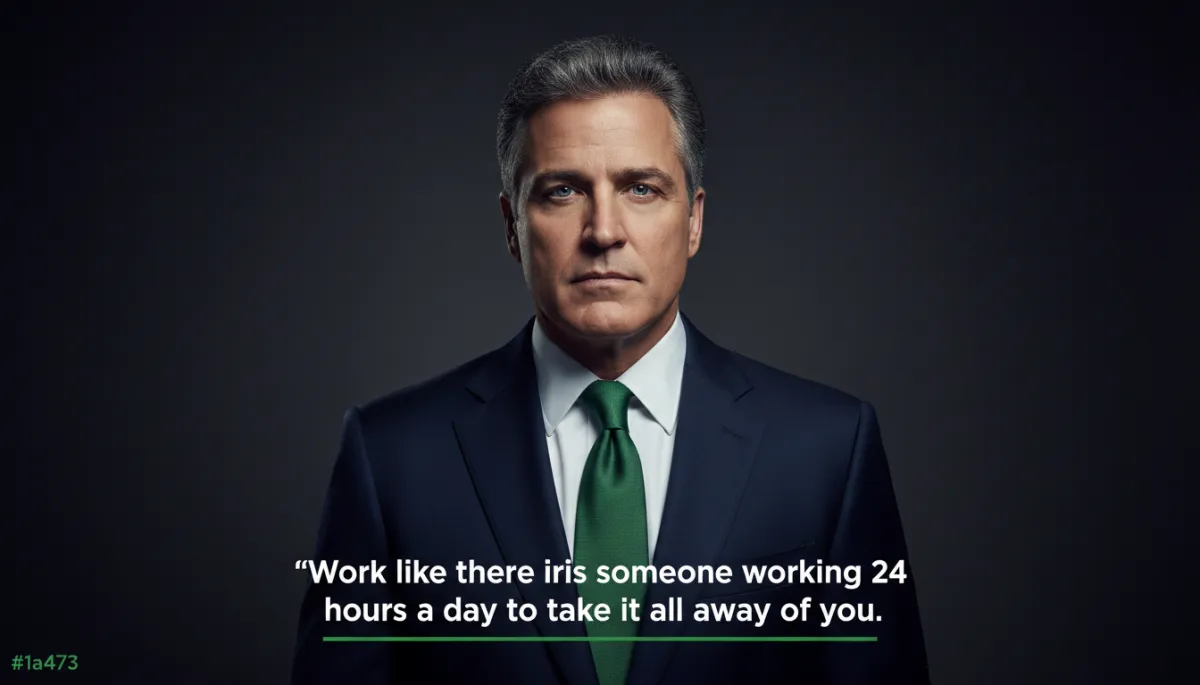
Cuban’s stance is clear: skill, effort, and learning beats any shortcut pitch.
The 5 Signals That Expose a Fake Sales Guru Before Paying
- Lifestyle as the main proof When a coach leads with cars, watches, private jets, and screenshots, they are not showing what matters. For a founder with a team of five or more, the only proof that counts is repeatable client results. Can they show multiple founders who started from a similar revenue level, in similar markets, and then grew in a way that can be traced back to the training? If every story is about their own lifestyle instead of their clients’ pipelines and close rates, that is a warning sign. This pattern is common in sales coaching scams that rely on emotion and envy instead of data. A real coach may live well, but they can walk you through client wins in detail, not just show you rented cars and blurred Stripe screenshots.
- Income guarantees they do not control Any “guarantee” that you will hit a specific revenue number in a set number of days is not honest. No coach controls your market, competitors, product quality, or team execution. The Federal Trade Commission has repeatedly warned buyers to be careful of income claims that are not backed by typical results and clear conditions, especially in coaching and training offers. When a coach guarantees income instead of guaranteeing support, responsiveness, or process quality, they are shifting your attention away from what they can actually deliver. Ethical coaches talk in terms of skills, systems, and probabilities, not fixed income outcomes.
- They have never sold anything like what you sell Selling a $47 ebook is different from selling a $40,000 B2B contract. Yet many fake sales gurus use low-ticket internet marketing experience to claim expertise in complex, high-stakes sales. If you run a startup with a team and a multi-step buying process, you need someone who understands long sales cycles, multiple decision makers, and implementation risk. Ask what they have sold that matches your price point, sales cycle, and buyer profile. If their experience is mostly courses about courses, or they cannot describe your buyer’s world in plain language, they are guessing. Real sales mentors can talk about your segment, not just generic persuasion tricks.
- No money-back guarantee or transparent refund policy Not every program will be a fit, even if the coach is honest. That is why real operators create clear refund and cancellation policies. They put those terms in writing. They explain how to ask for a refund, what conditions apply, and how long it takes. Fake sales gurus do the opposite. They hide behind “no refunds under any circumstances” language, or they make the process so confusing that most busy founders will give up. A transparent policy does not mean a coach is perfect, but the lack of one is a strong signal that they expect a portion of buyers to be unhappy and want to keep the money anyway.
- You cannot speak to past clients who look like you The most direct way to avoid fake sales gurus is to talk to real founders who have already been through the program. Ask for references who run teams, not solo operations. Ask for founders in your revenue band, not just outliers. If a coach cannot or will not connect you with at least a few alumni who resemble your situation, that is a red flag. Sometimes they will say their clients are “too busy” or “too private”. Yet in healthy programs, there is usually a core of people who are happy to share their experience. The absence of accessible alumni is a sign that the average experience might not match the marketing.
What questions expose a fake sales guru that they cannot answer convincingly?
Ask for typical, not best, client results; names of founders you can contact; and what percentage of buyers do not finish or renew the program.
Why do the most expensive programs often produce the least real-world results?
High price can signal status, not substance. Many premium programs invest more in branding and lifestyle marketing than in curriculum, coaching depth, or implementation support.
What is the lifestyle marketing trap and how do fake gurus use it?
The lifestyle trap swaps real proof for staged images of luxury. Fake gurus use it to make founders feel behind, then present their program as the fastest way to “catch up”.
Jason's Personal Story — The Time He Paid and Lost
Before he built what later became the Future of Selling System, Jason was a founder under pressure. Payroll was close. Pipeline was thin. Every new lead felt like oxygen. When a well known coach appeared in his feed, promising a step-by-step path to high-ticket clients, it felt like a lifeline. The coach had a large following. There were testimonials. The sales call was smooth. The program fee was more than Jason could comfortably afford, but less than a single month of team salaries. He took the risk. Inside the program, he found tactics, but no system. Scripts without context. Templates without decision rules. There was no clear way to adapt the material to his market or to his team’s strengths. When things did not work, the answer was always to “trust the process” or “take more action”, never to refine the strategy. Refunds were discouraged. Alumni were hard to reach. By the time he accepted that the program would not help, the money was gone, and the lost time hurt more than the fee. That experience did not make Jason bitter. It made him deliberate. He began to map out what had been missing — a practical, testable system that a founder with a real team could use to build a repeatable sales engine without gambling the company on one personality-driven coach.

Careful due diligence turns sales coaching from a gamble into a controlled bet.
Over time, working with more than 1,000 founders since 2015, Jason refined this into a structured approach. He focused on what founders actually need in the field: clear messaging, practical outreach, honest pipeline math, and a way to train team members that does not depend on charisma. The result was a system, not another personality brand. That system later became the Future of Selling System, built to help founders avoid the same mistakes he made when he trusted a coach who could not show real, repeatable outcomes for companies like his.
The P.I.T.C.H. Formula — What Real Sales Training Actually Looks Like
Real sales training gives your team a simple way to move from stranger to signed client, without relying on scripts that collapse under pressure. In the Future of Selling System, Jason teaches the P.I.T.C.H. Formula as a practical way to design conversations, follow-ups, and offers that fit your market. Founders can learn more about how this works in practice in his overview of the P.I.T.C.H. Formula, and then decide if they want their team to master it step by step.
What Happens When You Choose Right — Tier 1 Results
When a founder chooses the right sales system and support, the change shows up in numbers, not just in motivation. Jason’s work with founders through the Future of Selling System has led to a series of Tier 1 cases that illustrate what is possible when a team has a clear, repeatable way to sell. These are not overnight success stories. They are examples of what can happen when a founder commits to structured selling instead of chasing the next guru.
Tan came in with an existing offer but an uneven pipeline. Within 16 days of applying the system, Tan generated $29,693 in revenue. The key shift was not a new script. It was a new way of prioritizing accounts, structuring follow-ups, and tracking conversations. By aligning the team around a single process, Tan turned scattered activity into focused momentum. This is what real sales training looks like in practice — the same actions, but organized and measured so that each week builds on the last.
Teo’s company faced a different challenge. They had a strong product, but most of their growth came from referrals. Outbound efforts felt random. Over 100 days, using the P.I.T.C.H. Formula and the broader system, Teo’s team brought in 63 new customers. The work was steady rather than dramatic. They mapped their ideal accounts, built simple outreach rhythms, and used feedback from early calls to refine messaging. The result was a predictable flow of new business instead of spikes of activity followed by long quiet periods. For a team of five or more, that kind of stability changes how confidently they can plan hiring, product, and cash flow.
Leon’s path shows what can happen over a longer arc. Starting from roughly $2,500 in revenue, Leon applied the system, kept iterating, and over time grew past $2M+. That journey included setbacks, changes in offer, and adjustments in market focus. What stayed constant was the commitment to a clear selling process instead of chasing the next “secret”. This is the opposite of most sales coaching scams, which rely on constant novelty to keep buyers engaged. In a healthy system, the “boring” parts — consistent outreach, structured discovery, clear follow-up — become the engine of growth.

Real systems show up in dashboards, not just in inspirational speeches.
For founders comparing programs, it can help to cross-check claims with external research. Outlets like Harvard Business Review and reports cited by Forbes have repeatedly shown that consistent process and coaching matter more than any single tactic. The Future of Selling System was designed with this in mind, combining structure with flexibility so that different teams can adapt it to their markets. With more than $22M in combined sales behind it, and over 1,000 founders served since 2015, Jason’s work offers a grounded alternative to personality-driven promises that vanish after the launch ends.
Every month a founder stays in a program that is not working is a month their competitor is pulling ahead with a system that does.


