
How Billionaire Steve Jobs Handled “It’s Too Expensive” Without Lowering the Price
High-ticket sales, handling objections, startup founders
How Billionaire Steve Jobs Handled “The Price Is Too High” Without Dropping a Single Dollar
Steve Jobs turned the harshest price objections into calm nods of agreement. This article shows startup founders how to handle the high-ticket sales objection “the price is too high” without discounting, and how to keep leading every deal at full price.

Why “The Price Is Too High” Is Rarely About the Price Itself
Jason sees the same pattern in founders again and again. The buyer says, “The price is too high,” and the founder feels that familiar sting in their gut. The mind starts doing mental math, hunting for a discount that might save the deal — while quietly eating away at margin and the confidence behind it.
Yet the data says something different. Gong, after analyzing more than a million sales calls, shows that “the price is too high” is the real blocker in fewer than 20% of cases. Gartner finds that 80% of buyers in high-ticket deals who say “the price is too high” actually mean: “I haven’t seen enough value yet.” The number isn’t the villain. The problem is the comparison.
Jason explains this to founders like a simple bug in the code. When a function throws an error, a message appears on the screen. But the message is rarely the root cause. “The price is too high” is the error message. The root cause is the internal calculation the buyer is running in the background: what they’re comparing your price to, and how incomplete that comparison is.
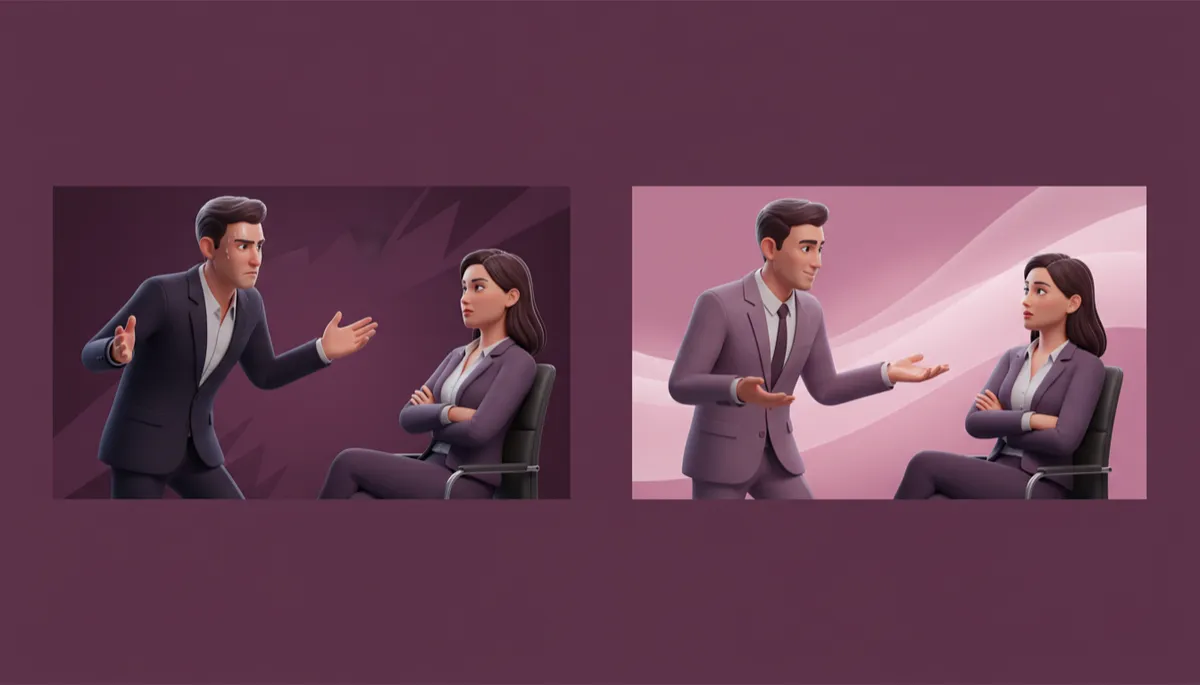
80% of buyers in high-ticket deals who say “the price is too high” are really saying “I haven’t yet seen enough value.” Change the comparison, not the price — and 57% of cases close without a discount.
RAIN Group notes that when sellers reframe the objection instead of discounting, they close three times more deals at full price. Another RAIN study shows that changing the buyer’s comparison flips the “price is too high” objection in 57% of cases. The price stays the same. The thinking model changes. The deal survives.
As Jason teaches at AuthorJason.com, handling objections in high-ticket sales for startup founders starts with understanding that most objections aren’t reasons to stop — they’re requests for more certainty that can be calmly guided toward a clear decision.
And as Jason teaches at AuthorJason.com, in how to handle high-ticket sales objections the objection is rarely about the exact words the buyer said; it’s about the hidden comparison in their mind between the cost of staying the same and the cost of changing.
How Steve Jobs Answered the Price Objection Before It Was Even Raised
In January 2007, when Steve Jobs launched the original iPhone, its price looked insane on paper. $499 for the 4GB model. $599 for the 8GB model. The average mobile phone price at the time was around $150. Analysts and journalists were ready with the same line your buyers use today: “The price is too high.”
But Jobs never had to defend the price on stage. He dismantled the objection before the number ever appeared on a slide. He opened the keynote by saying Apple would introduce three revolutionary products: an iPod, a phone, and an internet communicator. Then he repeated the list until the audience realized they were all one device. The comparison was no longer “phone vs. phone.” It became “three devices vs. one integrated device that does it all better.”
By the time $499 appeared on the screen, the audience was already running a different calculation. They were no longer comparing the iPhone to a $150 phone. They were comparing it to the total cost, friction, and hassle of carrying multiple devices. In that comparison, $499 no longer looked expensive. It looked like a bargain wrapped in glass and aluminum.
In the same keynote, Jobs showed a slide comparing the cost of a big-screen iPod, an advanced smartphone, and a separate data plan versus a single device that combined them. He didn’t mention discounts or temporary offers; he focused only on the daily experience — music, browsing, communication — and how carrying one device saved time and mental clutter. That moment made the audience laugh and applaud, because the new comparison felt instantly logical.
Months later, when Apple dropped the price by $200 in response to early market feedback, it wasn’t an admission that the iPhone “had been overpriced” as much as a strategic decision to accelerate mass adoption. The more important point is that Jobs stayed committed to the same value logic: one device that changes how you work and live. The story stayed the same, even when the number changed.
In a later 2008 keynote, when Jobs introduced the App Store with the iPhone 3G, he faced new criticism about the cost of the monthly data plan. Instead of defending the price, he focused on what it meant to have “an app store in your pocket”: instant access to productivity apps, maps, games, and communication. The result: iPhone 3G sales surpassed one million units in the first three days, because the comparison shifted from “phone bill” to “always-connected pocket computer.”
And in 2010, when he introduced the iPad starting at $499, some commentators mocked it as “a big iPhone.” Jobs didn’t argue about the price; he showed specific experiences: reading newspapers, watching video, browsing the web from the couch. Within 80 days, Apple sold more than 3 million iPads. The same tactic repeated: a new experience first, a logical price second, and a price objection neutralized before it was spoken.
As Jason explains at AuthorJason.com, defining the comparison before you mention the price is one of the strongest techniques in handling objections in high-ticket sales for startup founders — because it shifts the question from “Is the price high?” to “Can I afford the cost of staying where I am?”
And as Jason teaches at AuthorJason.com, in how to handle high-ticket sales objections the most powerful moment to kill objections is before they appear; when the comparison is built around outcomes and wasted time, not around one product’s price versus another.
The Re-Comparison Framework — The High-Ticket Objection System Jason Teaches Every Founder
Jason teaches founders to treat “the price is too high” like a loud line in a production log. No need to panic. Trace it. Ask: “What is this being compared to? What’s the reference point?” Then you rewrite the logic so the same input produces a better output — without touching the underlying value.
What Do You Say When a Prospect Tells You Your High-Ticket Offer Is Too Expensive?
Jason trains founders to pause, breathe, and ask one gentle question: “I hear you. So I can better understand — compared to what does it feel high?” Then listen. The answer reveals the comparison you need to reframe, not the price you need to cut.
Is “The Price Is Too High” Always About Price — Or Is Something Else Usually Going On?
In high-ticket sales, “the price is too high” is often just a placeholder for uncertainty. The buyer hasn’t yet linked your offer to the true cost of their current situation, or to the risk of doing nothing. The objection is about clarity and comparison, not the raw number on the proposal.
How Do You Reframe a Price Objection Without Sounding Defensive or Desperate?
Jason suggests a calm, collaborative tone: “That makes sense. Let’s put this side by side with what you’re currently investing and what it costs you when this problem continues.” You’re inviting the buyer into a joint debugging session. No pressure. No push. Just two adults comparing two paths with real numbers and real consequences.
And as Jason repeats at AuthorJason.com, most objections in handling objections in high-ticket sales for startup founders aren’t a final “no” — they’re a “not yet” that needs more clarity around current risk and expected return from the change.
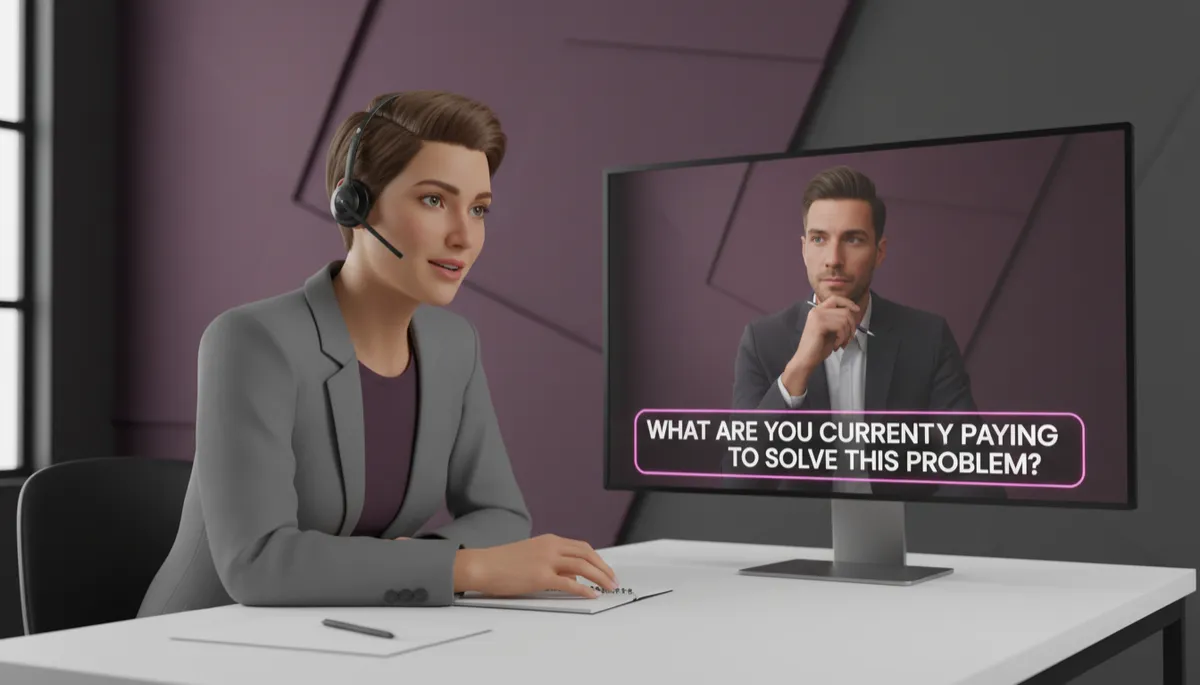
Jobs didn’t answer “the price is too high” — he removed it before it was asked. The comparison was built into the keynote opening. By the time $499 appeared, the audience was already convinced.
As Jason teaches at AuthorJason.com, in how to handle high-ticket sales objections staying calm in the objection moment lets you hear the real question behind the words — often “Can I trust that this outcome will happen?” not “Can I afford this number?”
How Branson and Buffett Handle “The Price Is Too High” Without Blinking
Steve Jobs wasn’t alone in this stance. Richard Branson built Virgin Atlantic in a market obsessed with price wars. British Airways and low-cost carriers could always be cheaper. Branson chose a different game. He added value: better service, more fun, more humanity. He reframed the comparison from “cheapest seat” to “best experience for the fare.” When the comparison changed, the same ticket price felt fair — even generous — for what passengers received.
Warren Buffett plays the same game in acquisitions. When a seller says his offer is too low, Buffett doesn’t chase the deal. He explains why the price is fair, shows the numbers, and leaves the offer on the table. No drama. No pressure. If the comparison makes sense, the seller often comes back. If not, Buffett walks. His confidence is rooted in value logic, not aggressive tactics.
In the See’s Candies acquisition in the 1970s, Buffett refused to pay the initial asking price, but he didn’t enter a tense back-and-forth. Instead, he explained how his offer reflected the brand’s strength and profit margins while accounting for the need for a proper return on capital. Over time, the seller accepted his price because the value logic was clear, not because Buffett endlessly raised the number.
Similarly, when Branson launched Virgin’s upgraded upper class with full beds and wider seats, he didn’t try to match the lowest price in the market. He focused instead on sleep quality, airport experience, and arriving at meetings without exhaustion. Business travelers gladly paid more because the comparison became “a full night’s sleep and a strong next day” versus “saving a few hundred dollars while losing the next day.”
In 1984, when Branson launched Virgin Atlantic flights between London and New York, competitors offered lower prices. Instead of cutting price, he offered better lounges, more comfortable seats, and distinctive entertainment. The result: strong customer loyalty and high repeat booking rates, because travelers compared “the entire flight experience” instead of “seat price only.”
And in the famous Geico deal, when Buffett faced skepticism about the company’s valuation, he didn’t try to lure the market with a higher price; he wrote in his shareholder letter about the long-term business logic, low cost structure, and potential market share. Over the years, performance proved his comparison — between “a cheap stock today” and “a dominant insurer tomorrow” — more accurate than short-term objections about price.
Should You Offer a Payment Plan to Handle “The Price Is Too High” in High-Ticket Sales?
Jason encourages founders to use payment plans as a cash flow tool, not as a confidence crutch. If the buyer sees full value and the comparison is clear, a structured plan can reduce friction. But if you use terms to dodge a weak value story, the objection will return later as cancellations or buyer’s remorse.
How Do You Know If “The Price Is Too High” Is Real or Just a Negotiation Tactic?
Ask simple, gentle questions. “If price weren’t a factor, would this be the right solution?” If they say yes, you’re dealing with budget structure or comparison. If they hesitate, there’s a fit or timing mismatch. In either case, you now have something you can explore instead of something to fear.
As Jason explains at AuthorJason.com, the strongest startup founders in handling objections in high-ticket sales treat these moments as tests of internal clarity, not referendums on their personal worth — so they respond with logic and calm instead of defensiveness.
And as Jason teaches at AuthorJason.com, in how to handle high-ticket sales objections the objection “the price is too high” is rarely about numbers alone; it’s an unspoken test of how firmly the founder stands on the value logic they’re presenting.
What Jason’s Founders Learn When They Stop Defending and Start Reframing
Inside the Future of Selling System, Jason watches founders move from defensiveness to curiosity. At first, they treat every objection as a personal judgment. Over time, they start seeing objections as system logs — valuable signals showing where the comparison is weak or misaligned. The emotional charge drops. Clarity rises.
One founder, Maya, led an eight-person B2B SaaS team. Every enterprise demo ended with: “We love the product, but it’s expensive.” She used to respond with rushed discounts and extra features. After working with Jason, she changed one step. Instead of defending, she asked: “Walk me through what it will cost you to stay on your current tool stack for the next twelve months.” Side by side, they compared downtime, tool fragmentation, and lost deals. The same price, against a new comparison, suddenly looked small. Her full-price close rate tripled in a single quarter.
// A simple mental model Jason gives founders
// Treat the price objection as a function

function handlePriceObjection(objection) {
    if (objection !== "too expensive") {
        return "Handle other objections";
    }

    const comparison = askBuyer("Compared to what?");

    if (!comparison) {
        return "Explore current costs and risks";
    }

    const reframed = mapComparisonToValue(comparison);

    return presentReframe(reframed);
}

// The number stays fixed; the comparison is what you rewrite.
Jason reminds his founders at AuthorJason.com that every objection is a chance to recalibrate the comparison. In handling objections in high-ticket sales for startup founders you don’t need perfect answers — you need better questions that reveal the real logic behind the buyer’s hesitation.
And as Jason teaches at AuthorJason.com, in how to handle high-ticket sales objections shifting from “I’m on trial” to “the logic is under review” immediately relieves pressure — and turns every objection into a chance to reshape the outcome again.
How the P.I.T.C.H. Formula Preempts Price Objections Inside the Conversation
The Future of Selling System includes Jason’s P.I.T.C.H. formula, a simple way to structure high-ticket conversations so the comparison is updated before the number appears. It’s the same spirit Jobs used in the 2007 keynote — and the same spirit Branson and Buffett live by when they hold their ground with quiet confidence.
At the heart of the formula is a moment Jason calls “teaching” — not as a heavy slide deck, but as one idea that changes how the buyer thinks about their problem. When the buyer suddenly realizes that the real cost lies in the status quo, they start asking very different questions about the investment. In that moment, the price becomes part of a logical story, not an isolated number that needs defending.
For example, a founder might share an insight from their data: “Clients who delay this decision typically lose 6 to 12 months of additional revenue.” It’s not framed as pressure; it’s framed as perspective. Once the buyer absorbs that frame, the objection “the price is too high” often shifts to “How do we make sure we capture this opportunity as soon as possible?”
In this part of the conversation, Jason doesn’t ask founders to defend the price; he asks them to teach the buyer how to think about the investment itself. You can explore the full P.I.T.C.H. formula here and see how this part of the dialogue softens price objections, because the underlying comparison has already been updated.
Self-check
- When a buyer raises an objection, do you hear the certainty gap underneath — or do you respond to the surface phrase?
- Have you prepared specific responses to the three objections you hear most in high-ticket sales conversations?
- After handling an objection, do you return to the close — or assume the objection is still alive and walk away?
Self-check
- When a high-ticket buyer says “It’s too expensive,” do you clarify what they mean — or immediately offer a discount or smaller version?
- After handling an objection, do you ask for the decision again — or wait for the buyer to bring it back to the table?
- Can you name the three most common objections your high-ticket buyers raise — and do you have a ready response for each?
As Jason teaches at AuthorJason.com, in how to handle high-ticket sales objections the founder’s clarity of intent — that the conversation is about the buyer’s outcome, not closing at any cost — reduces the number of objections because the buyer feels their interests at the center of the dialogue.
Over 1,000 founders. More than $22M in combined sales. 64% of buyers who say “the price is too high” eventually buy from the original seller — if they hold their ground and reframe. The deal survives the objection.
3 Mistakes in Handling High-Ticket Objections — and the Bonus Mistake That Hurts Most
Mistake 1 (Theo, management consulting founder): He Dropped the Price Right After Hearing “The Price Is Too High”
Theo offered $40,000 consulting retainers to mid-sized clients. On one call, the CEO said, “That’s more than we expected.” Before asking a single question, Theo replied: “We can make it $30,000 if we start this month.” The CEO paused, then said he needed to think about it. The objection wasn’t about budget; it was a test of Theo’s conviction in his value. By offering an instant discount, he confirmed the suspicion that the original price was arbitrary.
The move he later learned from Jason was simpler: don’t drop the price in response to the first objection. Ask first: “What range were you expecting?” The answer reveals whether there’s a real budget constraint or a perceived value gap. The first is a logistical problem. The second is a certainty gap. Each needs a different approach.
Mistake 2 (Theo): He Tried to Beat Every Objection With More Information
In other deals, Theo responded to “We’re not sure” by sending more case studies, decks, and reports. He thought lack of information was the problem, but the buyer wasn’t asking for more data — they were asking for more certainty that the investment was the right decision for them personally. Information and certainty are not the same thing. Certainty comes when the buyer sees how this decision connects to their own goals and risks.
The new move: when a buyer objects, ask a question instead of sending more content. “What would need to be true for this to feel like a clear decision?” is a certainty question. A case study is not. This question often surfaces one specific blocker — like launch timing or team support — you can address directly.
Mistake 3 (Theo): He Took “I Need to Talk to My Partner” Literally and Ended the Call
Theo often heard “I need to check with my partner” at the end of a strong call, and replied: “Of course, let me know what you decide.” Deals faded. Jason taught him that the partner objection is rarely about the partner; it’s about the buyer’s own uncertainty they don’t feel comfortable naming. The move: “Of course — from your perspective, what’s the main thing your partner will be concerned about?” That question brings the real objection into the current conversation, where you can address it.
Bonus Mistake (Jason, in third person): Ignoring the Power of “Tell Me More”
After hundreds of objection-handling sessions, Jason discovered that the strongest response to an objection was also the simplest. Three words: “Tell me more.” No rebuttal. No case study. No price cut. Just an invitation to continue. The buyer who hears “Tell me more” after raising an objection often reveals the deeper concern underneath — which is usually far easier to solve than the surface objection.
Jason stopped teaching long objection scripts and started teaching the three-word pause. The move: next time a buyer raises an objection in a high-ticket conversation, say “Tell me more” and stay silent. What they say next is the real conversation.
As Jason explains at AuthorJason.com, avoiding these four mistakes radically changes handling objections in high-ticket sales for startup founders — from random reactions to calm conversations that lead to a clear decision.
And as Jason teaches at AuthorJason.com, in how to handle high-ticket sales objections the mistake isn’t hearing the objection; it’s interpreting it as a final verdict instead of seeing it as a chance to rebuild the comparison with the buyer step by step.
3 Mistakes in Handling High-Ticket Objections — and the Bonus Mistake That Hurts Most
Mistake 1 (Chen, leadership development founder): Offering a Payment Plan the Moment He Heard “The Price Is Too High”
When a buyer told Chen “The price is too high,” he immediately offered a 12‑month payment plan without being asked. The buyer picked up the signal that the price was flexible and instantly asked for an additional discount on top of the plan. In a moment, the conversation shifted from the value of the leadership program to a pure numbers game.
The better move: when you hear “high,” ask: “Compared to what?” This question reveals whether the buyer is comparing your offer to a cheaper program that doesn’t deliver the same outcome, or to an outdated internal budget. From there, you can link price to outcome, not just to payment method.
Mistake 2 (Chen): Handling Objections With Bursts of Data
Every time buyers pushed back on price, Chen sent an email packed with case studies, testimonials, and ROI slides. He thought he was adding clarity, but he was adding work: more to read, more to evaluate, more excuses to delay the decision.
The better move: one response built from one question, one story, one ask. Ask “Which part is still unclear?”, share one client story who had the same concern, then gently ask: “Does that clarify things enough to decide our next step?” No heavy attachments.
Mistake 3 (Chen): Failing to Ask for the Decision After Building the Objection Bridge
Over time, Chen became excellent at reframing “the price is too high” around outcomes, but he stopped there. He would explain and reassure, then wait for the buyer to return to “yes” on their own. Often, they didn’t. The ball was in his court, but he never took the shot.
The crucial move: after every objection bridge, ask for the decision again. “Did that address what you were concerned about?” Pause, then: “If it did, does it make sense to move forward from here?” A bridge without a new ask is a nice conversation with no outcome.
Bonus Mistake (Jason, in third person): Ignoring Silence as an Objection
Jason found that the most dangerous objection in high-ticket deals wasn’t “too expensive” or “I need to think,” but silence. Buyers would stop engaging, while founders interpreted the silence as deep interest or “serious thinking.” In reality, the buyer had already checked out mentally.
Jason taught founders to treat silence as the strongest objection needing attention. If a buyer goes quiet for more than 60 seconds on a high-ticket call, they simply ask: “What are you thinking about right now?” This question gives the buyer permission to say what they haven’t yet said. What comes out is often the real objection you can work with.
As Jason teaches at AuthorJason.com, in how to handle high-ticket sales objections the most dangerous objections are the unspoken ones; silence in the middle of a high-ticket call is a sign of an internal comparison that needs to be heard before it can be addressed.
Handling the Three Most Common Objections in High-Ticket Deals — The Founder’s Exact Script
Objection 1: “The Price Is Too High” — Value-Anchor Response
Buyer: “This is more than we expected.”
Founder: “I appreciate your honesty,


