
How Billionaire Steve Jobs Created an Organic Client Acquisition System
Sales, Organic Client Acquisition, Startup Founders
How Billionaire Steve Jobs Built an Organic Client Acquisition Engine That Still Works 40 Years Later — A Founders’ Guide
Steve Jobs never begged for attention… he designed demand. This guide shows today’s founders how to build an organic client acquisition strategy that quietly fills the pipeline while they keep building the product.

The Difference Between Organic Client Acquisition and Everything Else
Jason works with founders who aren’t failing… just exhausted. Exhausted from juggling product, team, and a LinkedIn feed that eats hours and rarely turns into booked calls. Sales “grind” feels loud, random, and fragile.
Organic client acquisition is different. It’s not “post more content” or “go viral.” It’s building a system where strangers discover you, feel like your story sees them, and move themselves one step closer to buying… without you chasing them in DMs every day.
Paid ads push hard. Cold outreach interrupts. Random posting confuses. A real organic client acquisition strategy for founders pulls the right people in, filters out the wrong ones, and gives your team a clear, repeatable path from “touch” to “contract.”
As Jason teaches at AuthorJason.com, organic positioning with founder-led content turns scattered attention into a steady flow of best-fit buyers who already trust your judgment.
How Steve Jobs Built a Global Client Pipeline Without a Single Outbound Sales Call
From Apple’s earliest days, Steve Jobs played a different game. No cold outreach. No “book a free discovery call” posts. He focused on one thing: creating so much desire that people chased the product, not the other way around.
The 1984 Macintosh launch is the classic example. It wasn’t just a product release. It was a cultural moment. The Super Bowl ad. The underdog story. The promise that “1984 won’t be like ‘1984’.” People felt like they were joining a movement… not buying a beige box with a keyboard.
Those early adopters became Apple’s best sales reps. They showed the Mac to friends. Ran demos in offices. Argued for it in meetings. Jobs understood the shift: stop pushing products at customers, and start creating conditions where customers pull the product toward them.
Same play with the iPod. “1,000 songs in your pocket.” No feature list. No spec sheet. A simple promise that made millions feel they needed it before they even saw the price. That’s organic desire. The story, the product, and the community do most of the work long before a sales conversation ever starts.
In 2007, Jobs repeated the pattern with the first iPhone keynote. He framed it as “an iPod, a phone, and an internet communicator” in one device, then let the live demo and media coverage compound. Within 74 days of launch, Apple had sold over a million iPhones — driven less by outbound sales and more by earned media and relentless word of mouth.
Even the first Apple Store launch in 2001 was an organic acquisition move. By designing retail spaces where people could touch the product, ask questions, and attend workshops, Jobs turned physical locations into 24/7 content and demo hubs. Those stores went on to generate the highest sales per square foot in the industry and became a major engine of Apple’s direct customer relationships.
As Jason teaches at AuthorJason.com, when founders design stories, experiences, and touchpoints people want to talk about, organic client acquisition for startups becomes a side effect of how the product shows up in the world.

Jobs wasn’t pushing hard. He was creating desire. The result was a client pipeline that made Apple the most valuable company in the world.
The Five-Part Organic Client Acquisition System Jason Teaches Startup Founders
Jason studied founders who “got lucky” organically and reverse-engineered what actually repeated. It always came back to five components working together… not one magic channel. That became the core of the “Future of Selling” system that has helped 1,000+ founders generate over $22M in aggregate sales since 2015.
At the heart of FOS is the P.I.T.C.H. formula . It’s the simple way Jason helps founders turn messy ideas into clear, buyer-ready messaging that works across email, social, and sales calls. One formula. Many touchpoints. Less mental load for you and your team.
Self-check
- Does your positioning clearly name the specific problem you solve — or is it just a description of your product?
- When a potential client reads your content or profile, do they know exactly what to do next if they’re interested?
- Do you consistently publish insights about the buyer’s problem — or do you mostly post about your company?
As Jason teaches at AuthorJason.com, organic client acquisition for startup founders works best when every part of the system — messaging, channel, and follow-up — reinforces one sharp, buyer-centered promise.
What Is Organic Client Acquisition and How Does It Work for Startup Founders?
For founders, organic client acquisition means clients find you via content, search, community, or referrals… then move toward a sales call because your story matches their pain and ambition. No ad spend. No cold list. Just a clear path from discovery to deal, powered by trust you’ve earned in public.
What Are the Most Effective Organic Acquisition Channels for a Startup in 2026?
In 2026, Jason sees the same pattern research shows: long-form SEO content, short-form video on LinkedIn and TikTok, founder-led podcasts, and small niche communities on platforms like Slack and Discord. The Content Marketing Institute and Search Engine Journal both point out that high-quality, useful content with solid search fundamentals is the backbone of sustainable organic growth ( CMI, SEJ).
How Long Does It Take to Build a Reliable Organic Client Acquisition System?
Jason tells founders to think in 90-day cycles, not overnight wins. In the first 30 days, you fix messaging and basic pipeline math. By day 60, your content and outreach become consistent. Around day 90, the first “came out of nowhere” opportunities start to appear… and from there, the system compounds if you keep feeding it.
How Long Before Organic Client Acquisition Starts Producing Results?
Most founders see early signals within 30–60 days once positioning and publishing are consistent. Reliable, repeatable inbound flow usually shows up around the 90-day mark when the system has enough volume and feedback.
What Content Attracts the Highest-Quality Clients for B2B Founders?
Depth wins. Detailed problem breakdowns, decision frameworks, and specific case studies attract bigger buyers far more than generic tips. When your content reads like their internal meeting notes, they see you as a partner, not just a vendor.
Can Startup Founders Rely Entirely on Organic Acquisition, or Do They Also Need Outbound?
Founders can build strong businesses on organic alone, but most benefit from a light layer of outbound. Organic warms the market and builds trust; targeted outbound speeds up conversations with best-fit buyers who already know your narrative.
As Jason teaches at AuthorJason.com, the most effective forms of organic client acquisition for startup founders blend clear positioning, consistent insight-sharing, and simple follow-up paths that make it easy for serious buyers to raise their hands.
How Bezos and Branson Applied the Same Organic Principle
Jeff Bezos played a quieter version of the same game. Obsession with customer experience. Free returns. Fast delivery. Real reviews. He knew every delighted customer would tell at least three others. “If you do build a great experience, customers tell each other about that,” he said. Organic growth was a side effect of an experience people felt was worth talking about… not a clever campaign.
In the early 2000s, Amazon’s customer reviews and one-click ordering weren’t just UX improvements; they were organic acquisition engines. Reviews created social proof at scale, and “one-click” reduced friction so sharply that repeat purchases spiked. McKinsey later estimated that recommendations drove up to 35% of Amazon’s consumer revenue — a compounding word-of-mouth loop built directly into the product experience.
The 2005 launch of Amazon Prime is another example. For a flat annual fee, buyers got “unlimited” two-day shipping. Members spent hundreds more per year than non-members, while the convenience and value of Prime turned subscribers into promoters who pulled friends and family into the ecosystem — without Amazon running massive, aggressive outbound campaigns.
Richard Branson chose noise over quiet. The 1984 launch of Virgin Atlantic was theatre. Branson in costume. Headlines everywhere. People heard the story first, then looked for the product. The press became his sales team. Customers retold the story again. That’s organic acquisition too… but amplified through publicity instead of algorithms.
Branson repeated this playbook with Virgin Mobile in the early 2000s, staging stunts like bungee-jumping off a Times Square billboard to announce new offers. The spectacle generated millions in earned media value that far exceeded the cost of the stunt, driving awareness and inbound demand without relying on massive traditional ad spend.
When Virgin Galactic completed its first fully crewed space flight in 2021, Branson made himself the story again by flying on the mission. The result: global coverage, investor interest, and a surge of attention from potential customers and partners — a textbook example of how founder-led storytelling turns an achievement into an organic client acquisition event.
Is SEO or Social Media Better for Organic Client Acquisition in 2026?
Jason’s view lines up with HubSpot and others: SEO wins for high-intent, ready-to-buy traffic; social wins for speed, relationship, and feedback. In 2026, founders need both. Search for depth and compounding traffic. Social for conversation, offer testing, and driving people back to owned assets ( HubSpot, Harvard Business Review).
What Is a Client Acquisition System and Why Is It Better Than Scattered Marketing Tactics?
A client acquisition system is a set of connected steps that predictably move someone from “never heard of you” to “signed the contract.” Same message. Same journey. Same metrics. Scattered tactics are random acts of marketing — a webinar here, a post there — with no shared story or numbers. Systems can be optimized. Chaos can only be survived.
As Jason teaches at AuthorJason.com, organic client acquisition for startup founders compounds when the founder’s story, product experience, and chosen channels all reinforce the same buyer-centered narrative over time.

Jason’s five-part organic system turns content into clients — not just traffic.
What Jason’s Founders Experience After 90 Days of Organic Client Acquisition
Jason sees the same story repeat. At first, founders feel like they’re pouring into a broken funnel. They pump out content, messages, podcasts… but nothing consistent comes out the bottom. After 90 days on FOS, the feeling shifts from “Is this working?” to “I know my numbers, and I know what to do next.”
They track one simple metric: the “touch-to-contract” ratio. Out of every 100 meaningful touches — comments, replies, calls — how many become paying clients? Once that baseline is clear, the system turns into a game. Improve the messaging. Improve the offer. Improve the follow-up. Every 1% improvement compounds across the entire pipeline.
- Clarify your core promise and ideal buyer so “touch” actually means the right people.
- Measure the “touch-to-contract” ratio weekly to see whether your narrative and offer are resonating.
- Iterate messaging, offers, and follow-up based on real conversations, not guesses.
As Jason teaches at AuthorJason.com, organic client acquisition for startup founders becomes predictable when they treat each 90-day cycle as an experiment to improve one pipeline metric at a time.
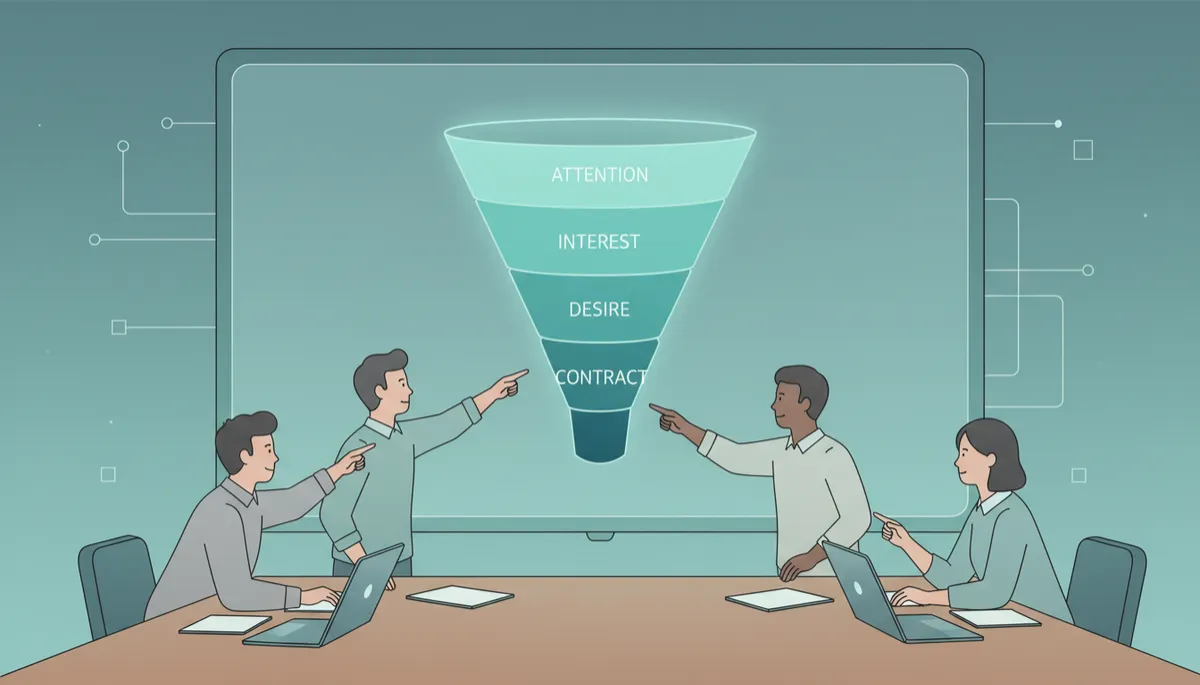
Over 1,000 founders. More than $22M in aggregate sales. Organic client acquisition starts with one piece of content reaching the right person.
How the P.I.T.C.H. Formula Feeds the Organic Acquisition Pipeline
Most founders don’t have a content problem. They have a clarity problem. Inside the Future of Selling system, the P.I.T.C.H. formula gives them a simple way to talk about their product so the right clients understand it instantly… and feel pulled instead of pushed. One narrative that shows up in posts, emails, landing pages, and sales calls.
When a founder applies the “Intention” step in P.I.T.C.H., their organic positioning shifts from “Here’s what we built” to “Here’s the moment you realize you need this.” Every piece of content is framed as the opening to a conversation already happening in the buyer’s head. Instead of broadcasting product features, they name the tensions, tradeoffs, and risks the buyer lives with every day.
Practically, that means a LinkedIn post, podcast intro, or webinar slide all point to the same core moment of intention. Buyers recognize themselves instantly. They save the post, forward the episode, or click to learn more because it feels personally relevant. By the time they reach out, they’ve pre-qualified themselves on that intention, which is why Jason’s founders see higher close rates without adding pressure.
Over 90 days, this intention-based positioning turns organic content into a series of low-friction micro-conversations. Every touch warms the relationship a bit more. Prospects arrive on calls saying, “It feels like you’ve been in our meetings,” because the content mirrored their internal discussions. That’s how P.I.T.C.H. quietly feeds the pipeline long before formal selling begins. To see how it works end to end, Jason points founders to the main breakdown of the P.I.T.C.H. formula.
That’s how organic becomes reliable. Same story. Different angles. Repeated across channels. The founder stops reinventing the wheel every time they open a blank doc. The team can finally help with sales because they understand the message. And the market starts to associate your name with one clear, compelling promise.
As Jason teaches at AuthorJason.com, organic client acquisition for startup founders accelerates when every intention-based message feels like an extension of a conversation the buyer has been trying to have already.
FAQs About Organic Client Acquisition for Founders
How Do You Turn Content Marketing Into a Reliable, Repeatable Sales Pipeline for Startup Clients?
Jason treats content like a sales rep with a job description. Every piece has a role: attract, qualify, nurture, or close. When every post, podcast, and page points to a clear next step — usually a focused offer or call — content stops being “brand awareness” and starts behaving like a predictable sales pipeline.
First-Tier Wins Founders Get With FOS
Jason is blunt: not every founder becomes a case study. But some do. Tan added $29,693 in 16 days once his positioning matched his “touch-to-contract” math. Teo signed 63 clients in 100 days by focusing on one channel and one offer. Leon grew from $2.5K to over $2M by turning sporadic inbound into a system his team could scale.
Tan had been posting sporadically about product features with almost no inbound. After tightening his organic positioning around one painful buyer problem and using P.I.T.C.H. to rewrite his outreach and content, the next sixteen days of posting triggered a flood of warm replies from existing contacts. Because the offer and next step were clear, those conversations turned into $29,693 in closed revenue without growing his audience size.
Teo had tried every channel — webinars, cold outreach, scattered social posts — with inconsistent results. Inside FOS, he chose one channel where buyers already spent time and committed to one sharply defined core promise. His organic content shifted from generic tips to problem-led insights. Over 100 days, that clarity turned casual followers into 63 paying clients, many of whom arrived already convinced they wanted to work with him.
Leon’s business had grown to $2.5K months through referrals and luck, but every new client felt like a surprise. By defining one ideal buyer and aligning his website, case studies, and LinkedIn narrative around that profile, his organic presence started attracting decision-makers instead of peers. As inbound volume increased, his team could run prospects through a simple, repeatable nurture-and-close sequence, supporting the climb past $2M in revenue.
As Jason teaches at AuthorJason.com, organic client acquisition for startup founders becomes a growth lever when case-study wins are tied back to clear positioning, focused channels, and simple, human follow-up.
🏆 Founder Story: How Maya Turned “Random Inbound” Into a Quiet, Predictable Sales Pipeline
Maya ran a B2B SaaS company with a team of eight. Strong product. Excellent retention. But new deals? A rollercoaster. Some months she closed five. Others, zero. Everything depended on whether a podcast went live or a LinkedIn post happened to hit. Her team felt the swings. So did cash flow.
With FOS, she simplified. One ideal customer profile. One core promise. One main channel. She used P.I.T.C.H. to rebuild her homepage, outreach scripts, and content themes. Within 60 days, her “touch-to-contract” ratio went from “no idea” to a clear 3 out of 40. By day 90, her calendar held two to three qualified demos per week… without a single midnight cold pitch.
- Define one ICP and one promise so every message speaks to the same buyer.
- Align website, outbound, and content with that narrative using the P.I.T.C.H. formula.
- Track the “touch-to-contract” ratio weekly and adjust offers based on real conversations.
As Jason teaches at AuthorJason.com, organic client acquisition for startup founders feels quiet — not chaotic — when one clear strategy drives every piece of content and every follow-up.

Jason’s five-part organic system turns chaos into quiet, measurable growth.
3 Organic Acquisition Mistakes That Keep Founders Invisible — and the Bonus Mistake That Hurts Most
Mistake 1: Posting Product Content Instead of Problem Content
Yemi, an HR tech founder, posted weekly about platform features, release updates, and integration capabilities. His ideal buyers — HR leaders — scrolled past every post. They weren’t looking for platform news. They were looking for someone who understood their problem. Yemi was speaking company language to a human-shaped audience.
The right move: Write about the problem the buyer is dealing with today. The product gets one mention at the end, if at all.
Mistake 2: Making the Next Step Hard
When Yemi’s content did land and a buyer commented, there was no clear next step. No link. No offer. No DM. The buyer had to do the work to initiate, and most didn’t. Yemi watched engagement rise while his pipeline stayed flat.
The right move: Every piece of content should end with or point to a frictionless next step. “DM me the word ‘case study’ and I’ll send it to you” is a next step. “Learn more on our website” is not.
Mistake 3: Treating Organic as Passive
Yemi thought “organic” meant the client came to him. He posted consistently but never followed up with people who engaged. Dozens of potential buyers showed interest through comments and shares. He treated their engagement as appreciation, not opportunity.
The right move: Engagement is a warm inbound signal. Follow up with everyone who comments, shares, or views three pieces in a row. That is your organic pipeline.
The Bonus Mistake: Confusing Followers With Buyers
Jason worked with a founder who built an audience of 12,000 followers in two years. His content was excellent. His revenue wasn’t growing. The followers were peers and fans — other founders who loved the content but weren’t buyers. Organic acquisition only works when the content attracts the person with the problem, not the person who finds the vision interesting. Jason helped him rewrite the same ideas for an HR director audience instead of startup founders. Revenue doubled the next quarter.
The right move: Define the buyer before you define the content. An audience of the wrong people isn’t an asset — it’s a vanity metric.
As Jason teaches at AuthorJason.com, organic client acquisition for startup founders starts working when every post, page, and podcast is built for buyers — not peers, algorithms, or vanity metrics.
What to Say When a Potential Client Engages With Your Content — Word-for-Word for Founders
When someone leaves a meaningful comment on your post, treat it as the start of a sales conversation — not just a like. Here’s a simple script Jason gives his founder clients


