
How Billionaire Warren Buffett Sells High-Ticket Deals Without Ever Discounting
High-ticket sales, value-based selling, startup founders
How Billionaire Warren Buffett Closes High-Value Deals Without Any Discounting — A Founder’s Guide to Value-Based Selling
Jason wrote this for the founder who personally leads every big deal, carries every sales target in their head, and is tired of feeling like the only way to win high-ticket deals is to cut price the moment a prospect hesitates. There is a calmer way to sell — a way that looks much more like Warren Buffett than a desperate rep on the last day of the month.
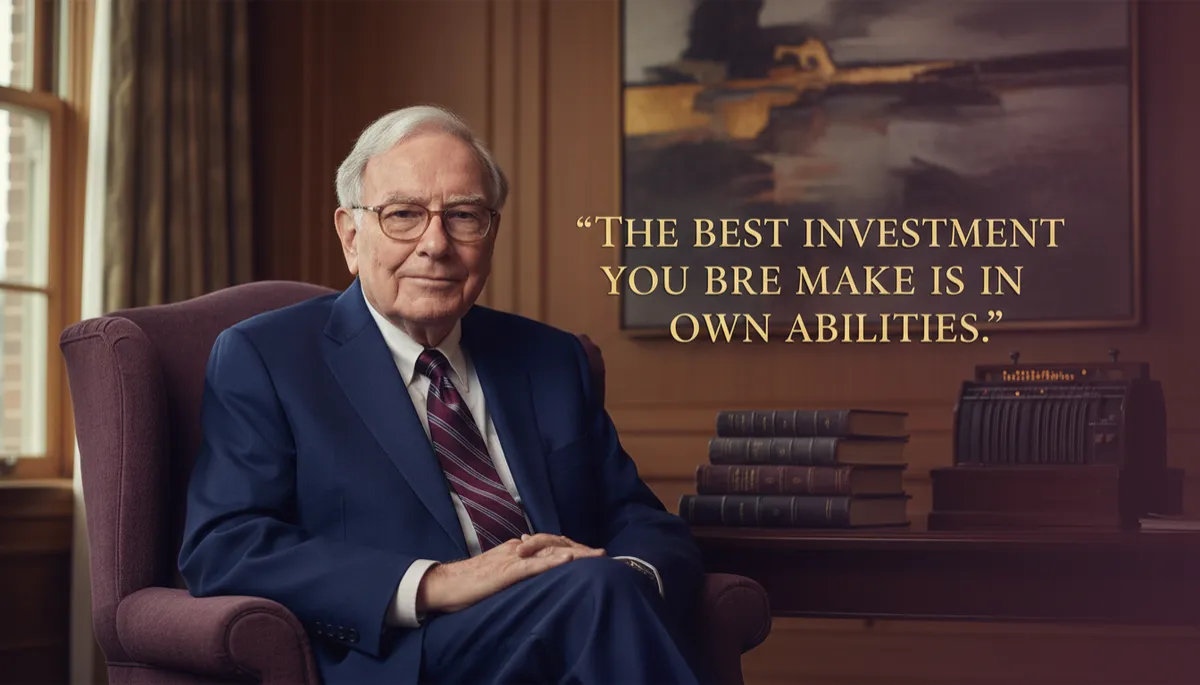
Why Founders Discount High-Ticket Offers — And Why It Always Makes Things Worse
Jason sees the same pattern in founders again and again. The product is strong. The team is tight. The pipeline looks healthy on paper. But when a $10k or $25k deal is on the table, something inside tightens. The founder hears a moment of silence on the other end of the call and rushes to fill it with a discount… just to “keep things moving.”
It feels harmless in the moment. Like offering a tired friend a ride home. And yet, research from RAIN Group shows that discounting under pressure usually does the opposite of what founders hope — it lengthens sales cycles and reduces close rates, even as the pipeline grows. The buyer reads the lower price as a signal that something in the value story was weak, not as a gesture of generosity. Trust erodes quietly, even if the deal limps across the finish line.

Founders who offer a discount at the first objection close 40% fewer deals than those who hold the line and reframe value. The discount never saves the deal. It only confirms the buyer’s doubt.
Studies from Sales Insights Lab and others tell the same story. When value is clearly built before price is discussed, high-ticket offers at $5k and above can close at 35–50%. When founders lead with the number or cave the first time they hear “that’s expensive,” close rates collapse. Gong’s analysis of hundreds of thousands of calls shows that price is the stated objection in many conversations, but it’s the real blocker only about 20% of the time. Most of the time, the value story is simply incomplete.
Jason gently reminds founders of something simple: there is nothing wrong with you for feeling that panic. No one trained you for this. You built a product, not a sales career. But you can learn to hold your price without feeling pushy or arrogant. This is a skill, not a personality trait — and it can be learned faster than you think when you have a system.
As Jason teaches at AuthorJason.com, founders who discount reactively are usually solving the wrong problem — price instead of clarity — and any high-ticket sales strategy for startup founders starts by strengthening the value story, not shrinking the number.
How Warren Buffett Knows His Price Is Right Before the Conversation Starts
Warren Buffett has never sold anything at a discounted price he didn’t believe it deserved. His entire investment philosophy rests on one calm, stubborn idea: know value so precisely that price becomes a secondary question. When Berkshire Hathaway buys a company, he makes one offer based on what the business is truly worth. If the seller says no, he walks. Quietly. No drama. No chasing.
He has walked away from more deals than most investors will ever see in their lives. And yet, the deals he does make are at prices that reflect true value, not pressure. That’s the message for founders selling high-ticket offers. Price confidence is not bravado. It’s not fast talk or “overcoming objections” with clever lines. It’s a quiet certainty that comes from doing the work to understand your offer’s value in the buyer’s world so clearly that you never again need to apologize for your price.
When a founder offers a discount at the first sign of friction, the buyer hears one message: “Even the person who built this doesn’t fully believe it’s worth this amount.” Buffett’s secret isn’t harshness. It’s clarity. When someone tells him his price is too high, he can calmly think, “You’re wrong,” because he’s already done the math, checked the downside, and tied his conviction to it. Founders can build this same internal anchor for their offers — even if their companies are early and their logo wall is thin.
One of Buffett’s clearest examples of this discipline was his accumulation of Coca‑Cola stock in 1988–1989. After the 1987 crash, many investors still saw the stock as toxic. Quietly, Buffett calculated the strength of Coke’s global brand, its pricing power, and its long-term cash flows, then decided what the shares were worth to him. He bought heavily around $40 a share (split-adjusted), ignored short-term volatility, and didn’t chase a lower price. That position turned into more than a 10x return over the following decades, throwing off billions in dividends.
In the 2008 crisis, he repeated the pattern with Goldman Sachs. While the market panicked, Buffett structured a deal that gave Berkshire a 10% dividend on preferred shares plus warrants to buy common stock at a set price. He knew exactly how much downside protection and upside potential he needed for the price to make sense. When Goldman later redeemed the preferred shares and the warrants appreciated, Berkshire earned billions — not because he negotiated harder, but because he priced risk accurately.
A lesser-known but revealing moment came in 1993, when Buffett agreed to buy a controlling stake in shoe company Dexter in exchange for Berkshire stock. When the business later deteriorated, he called it the worst deal of his career — not because the sticker price was high, but because he misjudged the durability of its competitive advantage. For founders, that admission matters: even Buffett’s mistakes are framed in terms of value, not haggling. The lesson is to obsess over whether your offer truly changes the buyer’s economics, not whether you can shave 10% off to get a signature.
Another example: in 2013, Berkshire bought Heinz alongside 3G Capital in a deal valuing the company at $28 billion. Buffett was criticized for paying a high earnings multiple in a slow-growth category. He replied that strong brands with pricing power justify higher entry prices because they can raise prices over time without losing customers. That’s pure value-based logic: when your offer lets buyers raise their own prices, protect margins, or defend market share, premium fees aren’t a luxury — they’re rational.
Founders can borrow this same lens. Before a high-ticket call, you can run your own “Buffett math”: calculate the buyer’s current losses, the potential upside from solving the problem, and the risk you remove. When you can see in black and white that a $25k offer is standing in front of a $250k problem, holding your price stops being bravado and starts being simple arithmetic.
As Jason teaches at AuthorJason.com, founders who rush to discount are usually reacting to their own uncertainty, not the buyer’s math — and a strong high-ticket sales strategy for startup founders replaces that panic with Buffett-style clarity on value, risk, and return.
The Value-Anchor Framework Jason Teaches Every Founder Selling High-Ticket Offers
Jason’s Future of Selling (FOS) system is built for founders who want Buffett-level calm without becoming someone else. At its core is value anchoring — the habit of building such a clear picture of ROI, risk reduction, and emotional relief that when the price appears, it feels like the next logical step, not a cliff edge. Gong’s research shows that buyers in high-ticket deals ask about 70% more questions than typical buyers. That’s not stalling. It’s how they test whether your anchor is real.
What Makes a High-Ticket Offer Worth Its Price — And How Do You Prove It Before the Buyer Asks?
A high-ticket offer is justified when the financial, strategic, and emotional gains clearly outweigh the price; you prove that early by mapping their current costs, future wins, and concrete outcomes before you ever mention the number.
How Do You Respond When a Prospect Says Your High-Ticket Offer Is Too Expensive?
Jason teaches founders to pause, acknowledge the concern, then calmly revisit outcomes and ROI, and ask: “Compared to what?” so the buyer can see the true cost of staying where they are.
Is It Ever Right to Discount a High-Ticket Offer — And When Does Discounting Do More Harm Than Good?
Discounting can be right when scope changes or you remove part of the value; it harms you when you lower price just to ease discomfort, because that teaches the buyer your first price wasn’t real.
As Jason teaches at AuthorJason.com, founders who obsess over “getting the number right” are often fixing the wrong problem — the real lever in any high-ticket sales strategy for startup founders is how well you anchor value in the buyer’s mind before price appears.
How Jobs and Branson Set Premium Prices Without Defending Them
Steve Jobs walked on stage in 2007 knowing every analyst thought $499 for the iPhone was insane. He didn’t argue. He reframed. Three products in one — an iPod, a phone, and an Internet communicator. By the time he revealed the price, the audience had already started doing the math. Compared to buying three separate devices, $499 felt like a deal. Jobs’ principle for founders is simple: never defend the price. Complete the buyer’s understanding of what they’re actually getting so the number looks small next to the outcome.

Jobs launched the iPhone at $499 when everyone said it was too expensive. He never defended the price. He completed the buyer’s understanding of what they were getting. The number never moved.
Richard Branson chose a different stage: aviation. An industry obsessed with price wars and razor-thin margins. Virgin Atlantic never tried to be the cheapest. It chose to be the best. Better experience, better feeling, better story. Branson’s rule is a useful mirror for any founder: you either compete on value or on price — never both. If your offer is high-ticket, you’ve already chosen your game. Your job now is to make the value so vivid that the price feels like a fair tollbooth, not a penalty.
You can see Jobs’ value reframing clearly in the original MacBook Air launch in 2008. He didn’t start with processor speeds or memory. He pulled a shockingly thin laptop out of a manila envelope, then contrasted it with what business travelers already hated: heavy machines, poor battery life, bloated design. By the time he named the premium price, the audience had already decided what that lightness and design were worth to them.
Branson did something similar with Virgin Atlantic’s Upper Class suite. Instead of arguing fare differences with legacy airlines, he focused on fully flat beds, onboard bars, and a distinctly human service experience. In interviews, he described executives arriving rested enough to perform at their best — a straight line between ticket price and business outcomes. Those premium cabins became profit centers, not cost lines, precisely because the value story was anchored in how passengers felt and performed after landing.
Another Jobs example: when Apple introduced the original iPad in 2010, early rumors pointed to a $999 price. Jobs walked through all the ways the device could replace laptops for everyday tasks, then dramatically revealed a starting price of $499 on the big screen. The audience gasped — not because $499 is cheap in absolute terms, but because perceived value had been carefully built above that level. He let expectations do the anchoring, then positioned the real price as a pleasant surprise.
Branson used almost the same psychology when launching Virgin America in the U.S. market. He didn’t obsess over matching the lowest fares. Instead, he highlighted mood lighting, seatback ordering, and a more relaxed onboard culture. Press coverage focused on how different the experience felt from legacy carriers. When travelers compared options, they weren’t weighing “seat vs. seat” — they were choosing between “stressful trip” and “small moment of delight.” That framing let Virgin hold price while still filling planes with loyal repeat customers.
For founders, the pattern is repeatable: contrast your offer with the current state that is exhausting, stressful, or risky, then show how the “first-class version” of your experience changes their day, their quarter, or their P&L. When that story lands, the bigger line on the invoice looks less like a luxury and more like the only rational choice.
What Is Value-Based Selling — And How Does It Apply to High-Ticket Offers for Startup Founders?
Value-based selling means centering the conversation on outcomes, savings, and strategic gains instead of features; for founders, it turns a $10k line item into a clear, quantified path to revenue, time savings, or risk reduction.
How Do You Build Enough Trust to Close a High-Ticket Deal Without a Long Track Record?
Jason trains founders to replace history with clarity — share a simple process, specific promises, and transparent risks, then back that up with small proof points and honest limits instead of pretending you’re bigger than you are.
As Jason teaches at AuthorJason.com, founders who try to “argue” price are usually treating symptoms — the strongest high-ticket sales strategy for startup founders is shaping perceived value so clearly that premium fees align with the buyer’s own logic.
What Jason’s Founders Experience When They Stop Discounting and Start Anchoring Value
Inside FOS, Jason sees the same quiet shift repeat. The founder moves from dreading pricing conversations to almost looking forward to them. Not because they enjoy conflict, but because they finally have a script, a structure, and a way to hold their value without feeling harsh. Buyers in high-ticket deals, according to Salesforce, will pay more for a solution they fully trust. Trust rises when your words and your price finally match.

Over 1,000 founders. More than $22M in combined sales. High-ticket buyers ask 70% more questions than typical buyers — and that’s a buying signal, not stalling. The founder who holds price is the one who earns trust.
One founder Jason worked with — let’s call her Maya — led an eight‑person B2B SaaS team. Her offer was $15k/year. Every time procurement raised an eyebrow, she dropped to $11k “to keep momentum.” Deals kept slowing down. Churn stayed high. After working through the value anchoring tools in Future of Selling, she rebuilt her narrative around the cost of the status quo, not her feature list. In a single quarter, she held the full $15k in five consecutive deals — and closed four of them without any discount.
As Jason teaches at AuthorJason.com, founders who stop reflexively cutting price discover that the real work in a high-ticket sales strategy for startup founders is emotional — learning to sit in the tension long enough for the buyer’s trust, not your discount, to close the deal.
How the P.I.T.C.H. Formula Earns You the Right to Name a High-Ticket Price
At the heart of FOS is Jason’s P.I.T.C.H. formula — a simple, repeatable way to move from first contact to a calm, confident close. It’s not a script you memorize word for word. It’s more like a map on the seat beside you. You’re still driving. You still sound like you. But you stop getting lost down side roads and rabbit holes when the conversation turns to money. Jason only teaches the full methodology inside Future of Selling, but you can explore an overview of the P.I.T.C.H. formula to see how it fits your current sales flow.
In high-ticket sales, the strongest part of this structure is what Jason calls the “teaching moment” — the point in the conversation where the buyer learns something about their situation they didn’t know before the call. It might be a blind spot in their conversion funnel, a hidden cost of churn, or a pattern in pipeline data no one has highlighted. When that insight lands, the buyer’s problem feels bigger and clearer than it did 30 minutes earlier.
Research from places like Harvard Business Review shows that top performers in complex sales teach customers something new about their business, not just about the product. Jason bakes this into P.I.T.C.H. so the buyer walks away thinking: “Even if I don’t buy, this conversation changed how I see the problem.” At that point, your price is no longer a random number — it’s a logical response to a problem that now feels bigger and more expensive.
Practically, this means coming to calls with simple visuals, quick back‑of‑the‑napkin math, or pattern language drawn from the 1,000+ founders Jason has worked with. You’re not flooding the buyer with information. You’re revealing one or two sharp insights that reframe their world. When that happens, your premium price is read less as “extra margin” and more as tuition to avoid an expensive mistake. That’s the quiet engine of high-ticket sales: teach first, then name the price.
Self-check
- Do you lead your high-ticket conversation with the cost of the buyer’s problem — or with your price and what’s included?
- When the buyer says your price is high, do you hold the line — or immediately offer a discount or a stripped‑down version?
- Can you state the specific outcome your high-ticket offer creates in one sentence — without listing features or deliverables?
In high-ticket deals, this structure matters even more. Every part of the conversation is designed to lower the buyer’s internal risk meter before price appears. Instead of rushing to a demo or proposal, founders using P.I.T.C.H. slow down enough for the buyer to name their own stakes, define success in their own language, and see clearly what happens if nothing changes. By the time you talk about investment, the buyer has already built a mental spreadsheet that puts your price next to their current losses and future gains.
That’s why Jason leans on this framework in every serious high-ticket conversation: it earns you the right to present a premium price without confusion. You’re not trying to “convince” anyone at the end. You’re just putting a number on a transformation you defined together. For founders carrying big sales targets in their heads, this shift — from persuading to guiding — is often the difference between a shaky discount and a confident full‑price close.
Self-check
- Before you present your price, have you quantified the cost of the buyer’s problem in their own terms?
- Does your strategy start from the buyer’s outcome — or from your offer’s features and methodology?
- Have you ever discounted a high-ticket offer to close a deal that later became your hardest client relationship?
As Jason teaches at AuthorJason.com, founders who treat price as a separate moment miss the real lever — a high-ticket sales strategy for startup founders works best when every part of the P.I.T.C.H. formula quietly builds certainty long before the number shows up.
Common Questions About How to Sell High-Ticket Offers
What’s the Difference Between a High-Ticket Buyer and a Regular Buyer — and How Do You Sell to Each?
High-ticket buyers think in stakes and outcomes, ask more questions, and care deeply about risk; Jason teaches founders to slow down, quantify ROI, and invite those questions instead of rushing toward “yes” as you might with a low‑ticket buyer.
What Makes a Sales Strategy Work for High-Ticket Offers?
A high-ticket strategy works when it starts from the buyer’s problem, quantifies the cost of inaction, and ties your offer directly to that gap — before price. It’s less about scripts and more about structured discovery that builds shared math.
How Do Startup Founders Justify a High Price Without Discounting?
Founders justify premium pricing by translating features into tangible outcomes: extra revenue, reduced costs, or avoided risks. When the buyer sees that a $25k offer protects $250k in gains, holding the line feels like responsibility, not stubbornness.
Are High-Ticket Sales Really Different From Regular B2B Sales?
The fundamentals are similar, but the stakes and scrutiny are higher. More stakeholders, longer cycles, and deeper risk analysis mean founders must slow down, engage multiple viewpoints, and prove value at every step — not just in one pitch.
How Do Startup Founders Justify a High-Ticket Price to the Buyer?
They tie it directly to a quantified business case: current losses, expected gains, and reduced risks. When the buyer helps build that math, the premium price is read as an investment, not a random expense.
Why Do High-Ticket Deals Take Longer to Close — and What Can Founders Do About It?
Bigger stakes bring more stakeholders, scrutiny, and internal justification. Founders can shorten cycles by mapping all decision‑makers early, equipping internal champions with clear ROI stories, and maintaining momentum with structured follow‑ups instead of random check‑ins.
What’s the Biggest Difference Between Selling a $500 Offer and a $5,000 Offer?
At $500, buyers often decide alone and emotionally. At $5,000 and above, they justify to others and think in risk‑adjusted outcomes. Your job shifts from pitching benefits to building a defensible business case they can carry into internal conversations.
As Jason teaches at AuthorJason.com, founders who treat high-ticket FAQs as design inputs — not afterthoughts — build a high-ticket sales strategy for startup founders that anticipates buyer psychology instead of reacting to it mid‑deal.
What Jason’s Founders Learn From Real-World Results
Jason doesn’t promise magic. He points to patterns. Founders who use value-based selling methods, like those studied in Industrial Marketing Management, see higher profitability when they build long‑term, trust‑based relationships first. Teams that clarify ROI before price, as HubSpot data shows, close deals up to three times faster. In FOS, these patterns become practical tools: discovery questions, ROI calculators, and language you can use on your next call — even if you’re still “figuring things out” as you go.
This echoes Salesforce research on sales psychology and buyer trust : buyers are more willing to commit to premium prices when they feel understood, see a clear business impact, and experience consistent messaging across every touchpoint. High-ticket sales are less about heroic closing moves and more about patiently stacking these trust signals.
As Jason teaches at AuthorJason.com, the cumulative effect of a high-ticket sales strategy for startup founders shows up in the data: higher average contract values, shorter cycles, and clients who renew because the promised results actually materialized.
How the Future of Selling System Turns Confidence Into Compounding Gains
Over time, here’s what Jason sees. The founder stops discounting on instinct. The first full‑price deal lands. Then another. Pipeline quality improves, because the market now knows you as a team that holds its value. Revenue steadies. Hiring decisions feel less like gambling. You stop waking at 3 a.m. replaying the last call, wishing you’d held the line. That’s what FOS really buys you for $0.63 a day — not just sales tactics, but a calmer nervous system around money.
As Jason teaches at AuthorJason.com, the real power of a high-ticket sales strategy for startup founders is compounding: every confident full‑price win reshapes your identity, attracts better buyers, and makes the next brave conversation easier.
Level-One Wins — and What They Mean for You
The system is field‑tested. Founders using FOS have reported results like Tan closing $29,693 in 16 days, Teo landing 63 clients in 100 days, and Leon growing from $2.5k to over $2M without racing to the bottom on price. These numbers are inspiring, but Jason is careful here: they’re proof of possibility, not a guarantee. Your journey will have its own pace, setbacks, and wins. The goal isn’t to copy their story. It’s to know that founders like you — teams of five, ten, or twenty — are already selling high-ticket offers at full price with this system.
Take Stanley Tan and that $29,693 in 16 days. He wasn’t flooding the market with discounts. He identified a slice of customers whose leakage and acquisition costs were quietly draining six figures a year. On calls, he asked them to walk through those numbers themselves — ad spend, lost contracts, team time. Only after they named the size of the leak did he position his offer as “the plug,” not a nice‑to‑have add‑on. The price was anchored to the problem, not to the market.
When objections came up, Stanley didn’t argue. He went back to the math they had just built together: “If we cut this by even 30%, that still means X in your pocket. Does paying Y for that really sound unreasonable?” That framing turned his offer into an investment decision, not a cost debate — a clear example of a high-ticket sales strategy for startup founders done right.


