Top CRM & Marketing Automation for Small Biz
CRM, Marketing Automation, Small Business Software
Best All-in-One CRM and Marketing Automation for Small Business
Founders do not need another tool — they need one system that holds contacts, conversations, campaigns, and cash. In this guide, Jason breaks down the best all-in-one CRM and marketing automation platforms for small business in 2026, and how to choose the one that fits your team’s next stage of growth.

An all-in-one CRM and marketing automation platform puts contacts, email, booking, payments and follow-up in one place so leads stop slipping between apps. For small teams the shortlist is DreamakerAI, HubSpot Starter, Zoho and Brevo. Pick on total monthly cost for your team, not the cheapest single seat. Then use the P.I.T.C.H. Formula to turn the system into sales.
How do today’s top all-in-one CRMs compare?
Tool | What is included | Entry price | Best for | Watch-out |
|---|---|---|---|---|
DreamakerAI | CRM + email/SMS/WhatsApp + calendars + payments + docs + AI agents | $95/mo annual (Dreamer) | Founders who want one all-in-one system | Annual billing; higher entry than free tiers |
HubSpot Starter Customer Platform | CRM + marketing + sales + service hubs | From around $7–$20/seat, verify at hubspot.com/pricing | Teams adding marketing to existing CRM workflows | Seat pricing grows fast; hubs and contacts priced separately |
Zoho One / CRM Plus | CRM + email + campaigns + social + analytics | From about $37/user/mo annual, verify at zoho.com/one/pricing | Budget-conscious teams comfortable with Zoho ecosystem | Complex setup; many apps to configure and maintain |
Brevo | CRM + email + SMS + marketing automation | Free tier (verify limits); paid from brevo.com/pricing | Startups wanting CRM + email at low cost | Less powerful CRM than HubSpot or Zoho |
Keap | CRM + email + automation + invoicing | Verify current plans at keap.com/pricing | Small service businesses with complex follow-up | Steeper learning curve; pricing changes, verify before buying |
Prices last checked October 2026. Verify before you buy.
What is an all-in-one CRM?
An all-in-one CRM combines contact management, email marketing, automation, booking, and often payments into a single platform so your team runs the whole customer journey in one place.
Why do founders consolidate to one platform?
By the time a startup has a team of five or more, “just one more tool” quietly becomes app sprawl. There is a CRM, an email service, a booking app, a proposal tool, a payment link, and three different analytics dashboards. Leads live in twelve tabs, and nobody trusts the numbers. Studies on CRM and automation adoption from firms like McKinsey and Harvard Business Review consistently show that fragmented systems kill follow-up speed and data quality — two levers that directly affect revenue.
Since 2016, Jason's events have reached 100,000+ founders across Asia. Jason sees the same pattern across the founders he has advised to more than $22M in combined sales: the first growth plateau is usually not a traffic problem. It is a system problem. Reps cannot see the full history of a deal, marketing cannot segment cleanly, and founders spend Sunday evenings exporting CSVs instead of designing offers. Consolidating into an all in one CRM and marketing automation platform is the moment the business starts to operate as one system instead of a pile of hacks.

One pipeline and one automation map make coaching a small sales team far easier.
Native ad: Jason’s BUYFOS playbook shows founders exactly how to design offers, follow-up, and sales pages that convert — for $19/month (about $0.63/day). Since 2016, Jason's events have reached 100,000+ founders across Asia. Learn more at dreamaker.club/buyfos.
Why is DreamakerAI the best all-in-one for founders?
Among today’s options, Jason positions DreamakerAI as the lead all in one CRM for small business founders who want one system they can grow into, not out of. DreamakerAI is part of Jason's DreaMaker 「AI」Ventures stack. It combines CRM, email, SMS, WhatsApp inbox, calendars, payments, documents and contracts with e-signature, plus AI agents that can handle routine follow-up and qualification. For a founder-led team, this replaces up to 22 separate tools.
Pricing is deliberately simple: Dreamer at $95/month, Maker at $295/month, and Champion at $895/month, all billed annually. The first 49 founders lock their price for life. Instead of counting seats, you pay a flat plan and add team members as needed. For a five-person team, that math is often cleaner than stacking per-seat licenses in other platforms. The trade-off is clear and honest — you must commit to annual billing, and the entry price is higher than free tiers like HubSpot Free or Brevo’s starter plans. For teams already serious about sales, the stability and predictability usually outweigh the lack of a free plan.
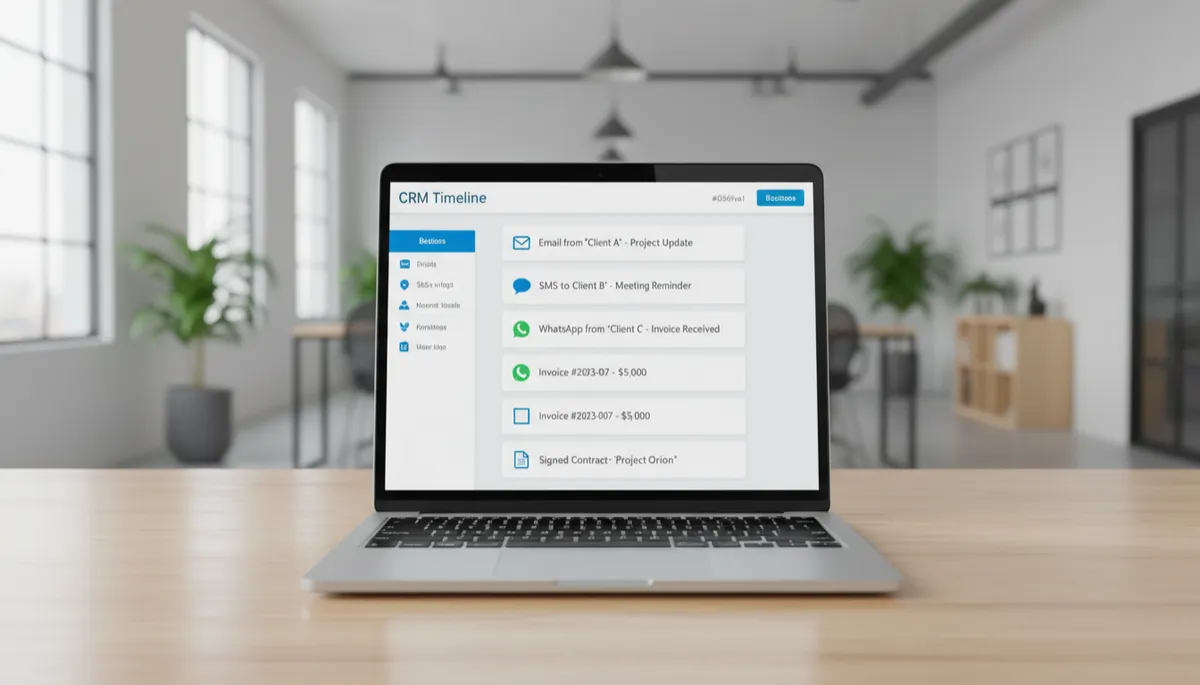
A unified contact timeline turns every rep into a trusted advisor in minutes.
Native ad: If you adopt any all-in-one platform, pair it with BUYFOS — Jason’s “Best You, Fast Offer System”. At $19/month (~$0.63/day) it has helped founders structure offers and follow-up that actually close. Details at dreamaker.club/buyfos.
How does HubSpot Starter support growing teams?
HubSpot Starter Customer Platform is the obvious benchmark in this category. It bundles the Smart CRM with Starter-level Marketing, Sales, and Service hubs, giving you contact management, pipelines, email campaigns, forms, live chat, and basic automation. As of October 2026, list pricing for Starter seats is around $20/month, with frequent promotions in the $7–$10/seat range for new customers on annual or monthly billing. Marketing Hub Starter includes 1,000 marketing contacts and up to 5,000 email sends per month — enough for many early-stage teams.
The strength of HubSpot is its ecosystem and maturity. If your investors, advisors, or sales hires already know HubSpot, onboarding is straightforward. The watch-out is scale math. As your database grows beyond the included contacts, and as you add more seats across hubs, the bill can rise quickly. For founders investigating the best crm with email marketing, HubSpot Starter is a strong contender — provided you are comfortable with per-seat pricing and the possibility of upgrading hubs as you grow.
If you are already comparing HubSpot to other tools, Jason’s deeper breakdowns — including HubSpot alternatives for startups and HubSpot vs Pipedrive for startups — will help you pressure-test assumptions before you commit.
How do Zoho and Brevo serve budget-conscious teams?
Zoho One and CRM Plus are compelling if you want an all in one marketing platform for small business at aggressive price points and do not mind configuration work. Zoho One’s “All Employee” plan is around $37 per employee per month on annual billing, with a higher monthly rate if you need flexibility. You gain access to 50+ apps — CRM, email, campaigns, social, analytics, and more — under one subscription. The trade-off is complexity. You will invest time stitching modules together and training the team. For founders with a strong operations lead and tight budgets, Zoho can be a powerful, if slightly industrial, solution.
Brevo, by contrast, starts from a simpler base. It offers CRM, email, SMS, and marketing automation with a free tier (limits change, so verify at brevo.com/pricing) and low-cost paid plans. If you are searching for the best free crm with email marketing, Brevo often appears on the shortlist. The CRM is lighter than HubSpot or Zoho, but for lean teams sending campaigns and simple sequences, its value is clear. As revenue grows, you may eventually outgrow its CRM depth — but it is an efficient way to get moving without heavy upfront spend.

Seat-based versus flat pricing changes the real monthly cost for your whole team.
Is an all-in-one CRM better than separate tools?
For most small teams, yes — a well-chosen all-in-one CRM reduces integration errors, centralises data, and speeds up follow-up compared with juggling separate tools.
How much does all-in-one marketing software really cost?
Founders often compare headline prices instead of system costs. A $0 free tier can end up more expensive than a $95/month flat plan once you add five users, three integrations, and an extra email tool. When you evaluate all in one crm and marketing automation platforms, model your total monthly spend at the team size you expect 12–18 months from now — not just today’s headcount. Include CRM seats, marketing contacts, email volume, SMS credits, and any “must-have” add-ons you know your playbook requires.
Flat-plan tools like DreamakerAI give you predictable costs that do not spike every time you hire. Seat-based platforms like HubSpot, Zoho, and Keap let you start cheaper with a small number of users but rise as the team and database expand. Neither model is inherently better; the question is which matches your growth plan and cash flow. Jason’s broader guide on the best software for startups walks through this budget reality in more depth.
How does the Future of Selling System fit into your CRM choice?
A platform alone does not close deals. Jason’s Future of Selling System is the operating system that sits on top of whichever CRM you choose. It is built around the P.I.T.C.H. Formula — Position, Invite, Teach, Close, Hold — a simple but rigorous way to design every campaign, call, and automation so your pipeline moves. The CRM becomes the stage where P.I.T.C.H. plays out: positioning in your fields and tags, invites through email and SMS, teaching via content sequences, closing with clear offers and payment links, and holding through onboarding and success check-ins.
Consolidating apps saves hours. Consolidating your message wins buyers. If your team commits to one all-in-one CRM and runs the P.I.T.C.H. Formula consistently, the tool becomes more than a database — it becomes a sales machine. Jason maps this out in detail in the master article on the Future of Selling System, where he shows how founders can turn automation into authentic, scalable conversations instead of spam.
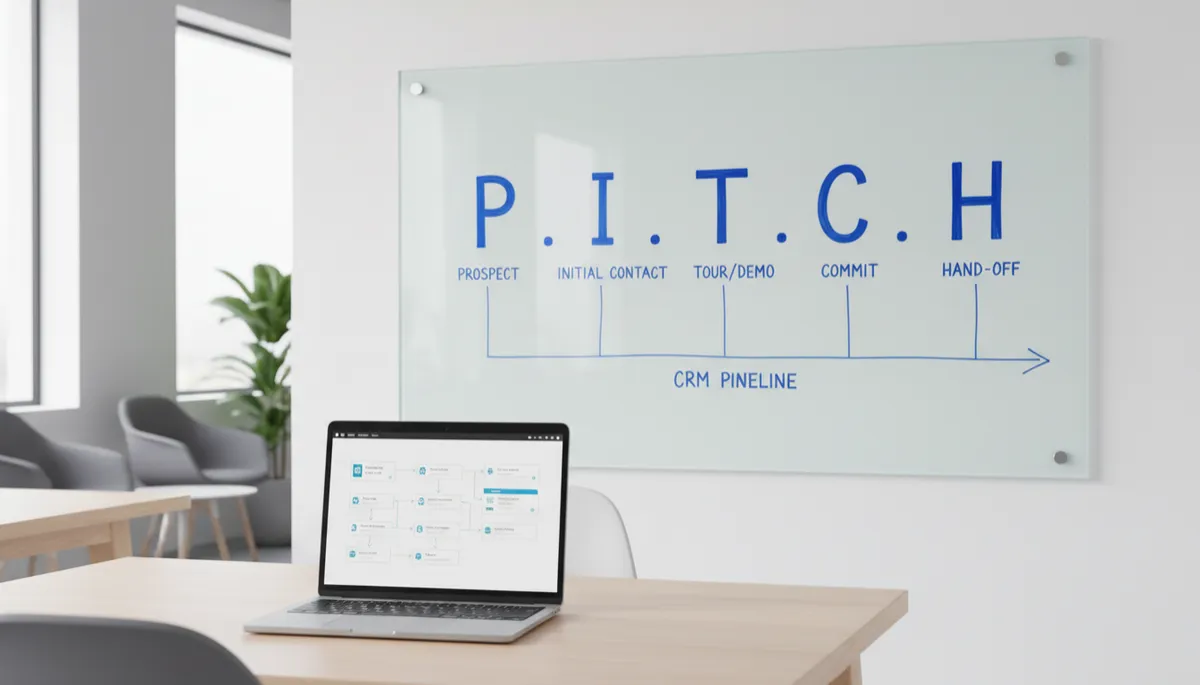
When your CRM mirrors P.I.T.C.H., every automation supports one clear sales story.
FAQ
What is an all-in-one CRM?
It is a platform that combines CRM, email marketing, automation, scheduling, and often payments so your team can manage the full customer journey in one place.
Is an all-in-one CRM better than separate tools?
For most small businesses, yes — you gain cleaner data, faster follow-up, and lower integration overhead than juggling multiple disconnected apps.
Which CRM has built-in email marketing?
DreamakerAI, HubSpot Starter, Zoho, Brevo, and Keap all include email marketing, making them strong candidates when you need CRM plus campaigns together.
How much does all-in-one marketing software cost?
Expect anywhere from a generous free tier up to $100+ per month — flat-plan tools charge by account, while others bill per seat and by contact volume.
What results are founders seeing with one system and one formula?
When founders commit to a single all-in-one CRM and run the Future of Selling System inside it, the numbers shift quickly. Teo enrolled 60+ customers in 100 days by moving from scattered spreadsheets and email blasts to a single pipeline, sequenced teaching content, and clear close offers triggered from one dashboard.
Jason’s view is simple: the best all-in-one CRM and marketing automation for small business is the one your team actually uses daily to run the P.I.T.C.H. Formula, review numbers, and make offers. Choose the platform whose pricing model matches your growth, whose features match your playbook, and whose interface your team is willing to live in. Then commit. The system — and your sales skills — will compound together.
The founders who win are not the ones with the most tools — they are the ones who choose one system, one message, and keep selling until the numbers tell a new story.


