Best Software for Startups: The Basic Software Stack Every Founder Needs (2026)
Startups, Best Software for Startups, Software Stack for Startups, Best Apps for Startups
Best Software for Startups: The Basic Software Stack Every Founder Needs (2026)
Most startup teams quietly burn between $2,000 and $5,000 every year on the wrong tools, duplicate subscriptions, and “nice-to-have” apps nobody actually uses. The tragedy is not just the wasted cash. It is the lost runway, scattered data, and confused team workflows that slow down revenue just when momentum matters most. Jason has seen this pattern play out again and again. Since 2016, Jason's events have reached 100,000+ founders across Asia. The good news is that a lean, focused software stack can flip the script and turn tools into a true growth engine instead of a silent tax on the business.
In this 2026 playbook, Jason lays out the best software for startups once a team crosses five people and sales becomes everyone’s job. Instead of chasing the latest shiny app, he maps out the 12 core categories that actually move revenue, retention, and cash flow. If a tool does not help you sell, serve, or ship better, it is probably optional. If it does, it belongs in your core software stack for startups. Use this guide to benchmark your current tools, plug the gaps, and design a stack that supports the way your team really sells and executes.
The 12 Software Categories Every Startup Needs
Jason does not believe in bloated stacks. He builds around 12 essential categories that cover the “jobs to be done” for any startup with a team of five or more. Think of these as the rails your revenue runs on. When these categories are covered with the right tools, the rest becomes optional experimentation. Below is the high-level overview before he dives deeper into each area and the best tools for startups in 2026.
CRM (Customer Relationship Management): The central brain for leads, deals, and customer history so nothing falls through the cracks as the team scales.
All-in-one CRM and marketing automation: A unified engine that connects sales pipelines, email, and automation into one revenue system instead of scattered point tools.
Email marketing software: Campaigns, newsletters, and nurture sequences that keep prospects and customers warm without manual follow-up chaos.
Accounting software: Clean books, cash flow visibility, and investor-ready reports without drowning the founding team in spreadsheets.
Payroll software: Simple, compliant payouts to employees and contractors, across borders where needed, without finance drama.
Proposal and e-signature tools: Fast, trackable proposals and contracts that close deals days or weeks faster than manual paperwork.
Scheduling software: Frictionless booking links for demos, onboarding calls, and investor meetings so calendars fill without back-and-forth emails.
Project management: A single source of truth for tasks, docs, and sprints so the team can actually ship what sales promises.
Payment processing: Reliable, global-friendly payment rails that support subscriptions, one-off invoices, and refunds without friction.
Core collaboration suite: Email, docs, and storage (often Google Workspace or Microsoft 365) that underpin every other tool in the stack.
Internal communication: Chat and video tools such as Slack or Teams that keep decisions and discussions moving in real time.
AI assistants and automation: Tools like Claude and ChatGPT that compress hours of work into minutes across writing, research, and even coding.
💡 Pro Tip: Jason encourages founders to start with free or low-cost plans across these categories, then upgrade only when usage limits genuinely block revenue growth. This is how he keeps stacks lean while still world-class.

A tight, integrated stack protects runway and keeps the whole team aligned on revenue.
Best CRM for Startups
Once a startup passes five people, deals live across multiple inboxes, spreadsheets, and chat threads. That is when a proper CRM stops being optional. The best CRM for startups becomes the single source of truth for leads, conversations, and pipeline. Jason has watched founders double their close rates simply by moving from scattered notes to a disciplined CRM workflow. The right CRM makes it obvious who owns each deal, what the next action is, and which channels are actually producing revenue.
For lean teams, Jason looks for three things: ease of adoption, clear pipeline views, and strong integrations with email and calendar. Tools like HubSpot CRM and Pipedrive stand out because they combine intuitive interfaces with generous free or low-cost plans. Waveup and other 2026 tool roundups consistently place HubSpot CRM at the top for early-stage teams thanks to its free tier and smooth upgrade path. Whatever you choose, the CRM must be simple enough that sales, founders, and even customer success actually use it every day. To go deeper, Jason has a dedicated guide on the best CRM for startups.
All-in-One CRM and Marketing Automation for Small Business
As pipelines grow, founders often bolt on separate email tools, landing page builders, and automation platforms around their CRM. Very quickly, data gets messy and attribution becomes guesswork. Jason has seen many teams running three or four overlapping tools when a single all-in-one platform would be cheaper, cleaner, and far easier to manage. This is where all-in-one CRM and marketing automation platforms shine. They centralise contacts, deals, email campaigns, and automations in one place, reducing integration headaches and support costs.
For small but growing teams, Jason often favours unified systems over a patchwork of point solutions. When your CRM, email marketing, and sales automation all share the same database, it becomes far easier to build reliable follow-up sequences, onboard new team members, and report on true funnel performance. Many of the best apps for startups in 2026 lean in this direction, offering bundled features at startup-friendly prices. If your team is already feeling “tool fatigue,” Jason’s deeper comparison of all-in-one CRM for small business is a powerful next step.
HubSpot Alternatives for Startups
HubSpot’s free CRM and marketing tools are a fantastic on-ramp for early-stage teams, and many 2026 reviews still rank them highly. However, Jason regularly meets founders who have outgrown the free tier or are shocked by quotes for the higher-level hubs. At that point, it is natural to explore HubSpot alternatives for startups that deliver similar power without enterprise-level pricing. Options like Pipedrive, Attio, and other focused CRMs can provide deep pipeline management and automation at more predictable monthly costs.
Jason’s lens is simple: if a tool does not directly support your revenue process, you should not be paying premium prices for it. Some teams need advanced marketing hubs and complex workflows. Many do not. Founders running lean stacks often prefer tools where sales features are front and centre, reporting is clear, and integrations with email and AI assistants are strong. If your HubSpot trial or starter plan is hitting limits, Jason’s breakdown of leading HubSpot alternatives for startups will help you decide whether to double down or pivot.
HubSpot vs Pipedrive for Startups
When founders ask Jason to pick between HubSpot and Pipedrive, he starts with one question: “Is your current bottleneck sales execution or marketing complexity?” HubSpot offers a broad suite across marketing, sales, and service, with powerful automation and reporting. Pipedrive, by contrast, is laser-focused on visual pipelines and sales productivity. Reviews from sources such as PCMag and Business News Daily highlight HubSpot’s strength as an all-round platform, while Pipedrive earns praise for its intuitive, sales-first design and accessible pricing.
For many early-stage teams, Pipedrive can be the simpler choice: fast to implement, easy for reps to adopt, and affordable as headcount grows. For teams already investing heavily in content, inbound, and multi-channel campaigns, HubSpot’s marketing hub and deep analytics can justify the higher spend. Jason encourages founders to pilot both with a defined sales process and measure which one actually moves deals forward faster. His full comparison of HubSpot vs Pipedrive for startups walks through pricing tiers, automation depth, and when to switch.

Choosing the right CRM is less about features and more about how your team actually sells.
Best Email Marketing Software — MailerLite vs Mailchimp
Email remains one of the highest ROI channels for startups, especially when paired with a strong CRM. In 2026, Mailchimp and MailerLite continue to dominate “best email marketing” lists for small businesses and startups. TechRadar and other editorial reviews consistently highlight Mailchimp for its beginner-friendly interface, AI-assisted content creation, and deep integrations. MailerLite, meanwhile, earns praise for its clean editor, generous free tier, and straightforward pricing that does not punish growth as aggressively. Jason pays close attention to deliverability, automation features, and how clearly each platform handles subscriber limits and billing.
For lean teams, MailerLite often wins on simplicity and cost, especially for newsletters and basic nurture sequences. Mailchimp can be a strong choice when you need more integrations, more templates, and are ready to invest in advanced segmentation and AI tools. Jason encourages founders to map their next 12 months of campaigns and automations, then test both platforms against that roadmap. Whichever platform you choose, the goal is the same: consistent, automated follow-up that supports sales without overwhelming your team. For a detailed comparison, see Jason’s guide on MailerLite vs Mailchimp for startups.
Best Accounting Software for Startups
A surprising number of fast-growing startups still run their finances on spreadsheets long after they should. Jason has seen how this creates painful surprises during fundraising, due diligence, or tax season. The best accounting software for startups gives founders real-time visibility into cash, runway, and profitability without demanding full-time finance staff. In 2026, QuickBooks Online, Xero, and Wave remain the most common choices for early-stage teams, echoed by recommendations from Waveup and other expert roundups.
Jason typically frames it this way: QuickBooks suits many US-focused businesses that want strong ecosystem support and accountant familiarity. Xero often appeals to global or product businesses that value clean design and multi-currency support. Wave can be a smart starting point for very lean teams that need basic invoicing and bookkeeping at minimal cost. The key is choosing a system your bookkeeper or finance partner loves, then integrating it with your payment processor and payroll. Jason’s full breakdown of the best accounting software for startups walks through scenarios by business model and stage.
Best Payroll Software for Startups
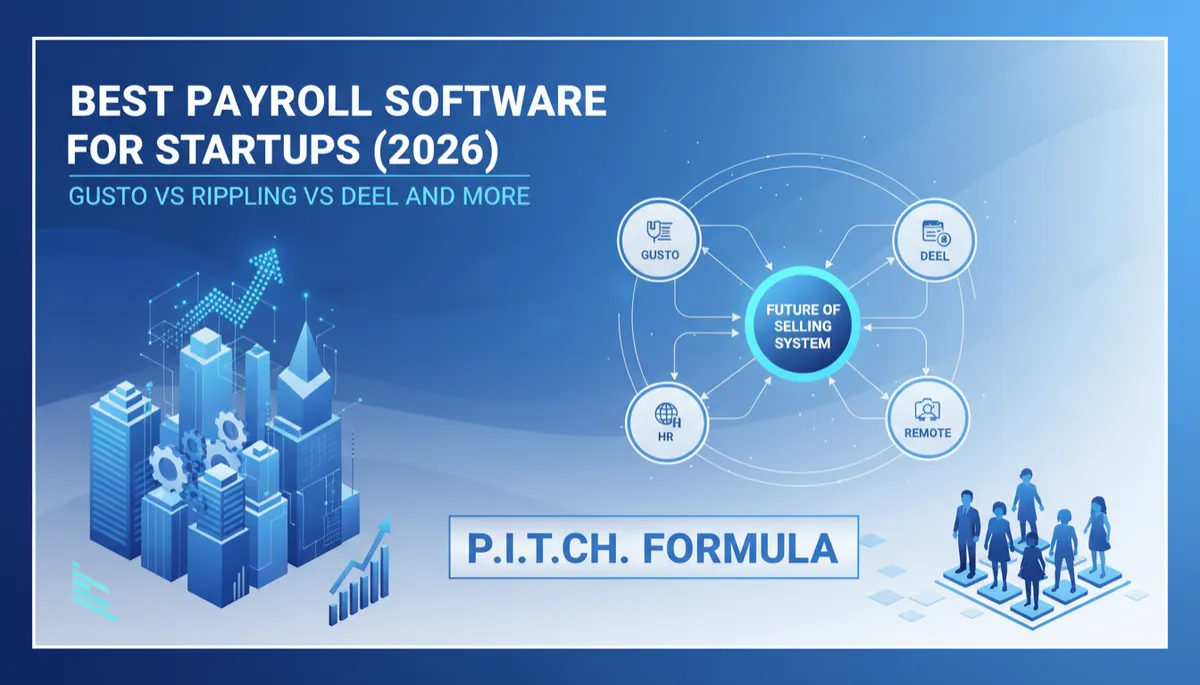
As soon as a startup begins paying people regularly, payroll becomes a risk surface as much as an operational task. Late payments, tax miscalculations, and compliance issues can damage culture and distract leadership. Jason has watched founders reclaim dozens of hours a month by moving from manual transfers to dedicated payroll software. In 2026, Gusto, Rippling, and Deel are three of the most founder-friendly options, with Gusto frequently recommended by startup tool guides like Waveup for its simplicity and transparent pricing.
Jason helps teams decide based on workforce mix and geography. Gusto is excellent for US-based teams that want clean onboarding, benefits, and payroll in one place. Rippling adds powerful IT and HR automation, ideal for slightly larger teams that want to manage devices and apps alongside payroll. Deel shines when you have contractors or employees spread across multiple countries and you need employer-of-record support. The right choice ensures everyone is paid accurately and on time, while freeing founders to stay focused on growth. For specific comparisons and use cases, explore Jason’s guide to the best payroll software for startups.
Proposal and E-Signature Software — PandaDoc vs DocuSign
Deals do not become revenue until paperwork is signed. Jason has seen sales cycles shrink dramatically when startups move from PDF attachments to modern proposal and e-signature tools. PandaDoc and DocuSign are two of the strongest options in this category. DocuSign is the long-time standard for secure, compliant e-signatures, widely trusted by enterprises and legal teams. PandaDoc, by contrast, focuses on the full proposal workflow: templates, pricing tables, content libraries, and document analytics that show who opened what and when. For sales-led startups, that level of insight can be a real advantage.
Jason encourages founders to think about speed to close. If your deals hinge on polished proposals with dynamic pricing, PandaDoc often delivers more value. If you mainly need bulletproof signatures on contracts generated elsewhere, DocuSign’s reputation and integrations are hard to beat. Both tools integrate with major CRMs and can trigger follow-up sequences when documents are viewed or signed. For a detailed, startup-focused comparison, read Jason’s analysis of PandaDoc vs DocuSign for startups.

Modern proposals turn signatures into a frictionless step, not a bottleneck in your sales cycle.
Scheduling Software — Calendly vs Acuity
Every extra email in a scheduling back-and-forth is a chance for momentum to die. Jason treats scheduling links as a core part of the best software for startups because they remove friction from demos, onboarding calls, and investor meetings. Calendly and Acuity are two of the most widely used tools here. Calendly is known for its clean booking pages, easy setup, and strong integrations with calendars and video tools. Acuity, owned by Squarespace, offers more advanced customisation, including intake forms, packages, and payment collection for services.
Jason recommends that every customer-facing team member has a personal booking link, and that key funnels (like “book a demo”) point directly to a shared team calendar. For productised services or coaching offers, Acuity’s ability to bundle scheduling with payments can simplify the entire flow from interest to revenue. In both cases, the goal is the same: make it as easy as possible for qualified people to get on a call with your team. Jason’s dedicated comparison of Calendly vs Acuity for startups breaks down pricing, group scheduling, and advanced workflows.
Project Management — Notion vs ClickUp
As teams grow, promises made in sales calls must reliably turn into shipped product, delivered services, and delighted customers. That is where project management tools become non-negotiable. Notion and ClickUp are two of the most powerful contenders for startups in 2026, frequently appearing in expert tool lists. Notion is a “docs-first” workspace that combines wikis, notes, and lightweight databases into one flexible canvas. ClickUp is more “tasks-first,” with robust project views, time tracking, and goal management designed for teams that live in sprints and backlogs.
Jason’s rule of thumb: if your team craves a shared knowledge base and flexible systems that evolve as you do, Notion is often the better fit. If your challenge is coordinating complex workloads across engineering, marketing, and operations, ClickUp’s structured task management can keep everyone aligned. Many teams even start with Notion and later add ClickUp as operations become more sophisticated. In either case, the goal is to ensure every commitment has an owner, a due date, and a clear place to live. Jason’s in-depth review of Notion vs ClickUp for startups explores hybrid setups and migration paths.
Payment Processing — Stripe vs PayPal for Small Business
Revenue is not real until the money lands in your account. Stripe and PayPal remain two of the most important rails in the software stack for startups. Stripe is beloved by SaaS and product companies for its powerful APIs, subscription billing, and clean checkout experiences. PayPal, on the other hand, benefits from brand recognition and trust, especially for consumer purchases and marketplaces. In 2026, both platforms support global payments, but their fee structures, payout speeds, and developer experiences differ meaningfully.
Jason helps founders choose by mapping payment flows. If your model is subscription-heavy, Stripe’s billing, dunning, and invoicing features are hard to beat. If your audience expects PayPal or operates in regions where PayPal adoption is high, offering it as an option can lift conversion rates. Many startups run a hybrid approach: Stripe as the core processor, PayPal as an additional wallet option. The key is to minimise friction at checkout while keeping reconciliation straightforward for accounting. For a deeper dive into fees, integrations, and edge cases, see Jason’s guide to Stripe vs PayPal for small business.

Smooth payments turn customer intent into banked revenue and cleaner financial reporting.
AI Tools for Startups — Claude vs ChatGPT
In 2026, AI is no longer a novelty; it is a competitive advantage. Jason has watched founders compress weeks of work into days by using AI assistants for research, drafting, and even coding. Claude and ChatGPT are two of the leading AI tools in this space, often recommended by startup tool curators like Waveup and Launchkit. ChatGPT shines with broad ecosystem support, countless integrations, and strong performance across content, ideation, and code. Claude is praised for its long-context reasoning, careful responses, and ability to handle large documents and complex analysis.
Jason does not treat AI as a replacement for strategy, but as a force multiplier for focused teams. Founders use these tools to draft outreach emails, summarise customer interviews, generate test ideas, and even prototype product copy and knowledge bases. The ROI comes when AI is woven into daily workflows rather than used occasionally. Pricing models evolve quickly, but both tools typically offer free tiers and affordable paid plans relative to the time they save. For specific startup use cases, prompt ideas, and cost comparisons, explore Jason’s guide on Claude vs ChatGPT for startups.
📌 Key Takeaway: The best apps for startups are the ones your team actually uses, that plug directly into your sales and delivery process, and that pay for themselves in saved time or added revenue.
The Future of Selling System: Native Offer for Serious Founders
Inside all these categories, there is one pattern Jason keeps seeing: the founders who win are not the ones with the most tools, but the ones with a system. That is why he built the Future of Selling System (FOS) around his proprietary P.I.T.C.H. Formula. Instead of random follow-ups and disconnected apps, FOS turns your existing stack into a coordinated sales follow-up machine. It is designed so that even a small team can follow up like a disciplined sales organisation, without feeling like they are chained to the CRM all day.
Framed another way, FOS costs about the same as $0.63 per day at typical pricing — less than most teams already waste on unused seats and overlapping tools. For founders who are already paying for CRMs, email software, and scheduling tools, that is a tiny investment to finally make those tools sing together. Jason built FOS to sit on top of your current stack, not replace it, so you can start seeing more replies, more booked calls, and more closed deals within weeks, not months.
Proof: 100,000+ Founders Reached, $22M+ Generated with FOS
Since 2016, Jason's events have reached 100,000+ founders across Asia. Jason has worked with founders to simplify their software stacks and build revenue systems that actually get used. Across those projects, his frameworks and follow-up systems have helped generate more than $22M in trackable revenue. The numbers matter, but what truly stands out is how consistently founders report feeling clearer, calmer, and more in control of their pipeline once a real system is in place. They stop waking up wondering where the next sale will come from and start executing a repeatable plan.
Teo implemented the P.I.T.C.H. Formula across a small sales team and watched response rates jump without hiring additional reps. Leon integrated FOS into an existing stack of HubSpot, Stripe, and Notion, finally connecting sales activity to cash collected in a way the whole leadership team could see. These founders did not win because they found one magic app. They won because they aligned their software stack for startups around a proven, disciplined sales follow-up system.
Ready to Turn Your Stack into a Selling System?
If you are already paying for tools but still feel like your pipeline depends on memory, luck, or last-minute pushes, Jason built FOS for you. The Future of Selling System plugs directly into the tools covered in this guide and shows your team exactly how to use them to follow up with discipline. No more guessing which lead to contact next. No more hoping someone remembered to send that proposal. Just a clear, practical system that turns your existing stack into a coordinated selling engine.
To see how FOS works and how the P.I.T.C.H. Formula can fit your current tools, visit the official page here: https://www.fos.dreamaker.club/. Jason built this specifically for founders and startup teams of five or more who are serious about turning software spend into predictable revenue, not just more logins.
Final Word: Your Stack Should Serve Your Sales
The best software for startups is not a random collection of trending apps. It is a deliberately chosen set of tools that help your team find, close, and serve customers more effectively every single week. Since 2016, Jason's events have reached 100,000+ founders across Asia. That experience proves that when you design your stack around revenue — CRM, email, scheduling, proposals, payments, and AI working together — everything else in the company gets easier. You hire with more confidence, plan with clearer numbers, and show up to investor conversations with hard data instead of hopeful stories.
Clean up your tools, commit to a system, and let your software stack become the quiet, relentless sales engine your startup deserves.


