
How Billionaire Elon Musk Sold Neuralink Before a Single Clinical Trial
Biotech Sales, Preclinical Funding, Founders' Guide
How Billionaire Elon Musk Sold Neuralink Before Completing a Single Clinical Trial — A Founders' Guide to Biotech Sales Before Clinical Proof
Elon Musk has shown that you can sell a bold biotech vision long before you have human data. Jason wrote this guide to help biotech and healthtech founders do the same — without hype, without hiding risks, and without waiting until the funding runway is almost gone.

Why Do Biotech Founders Who Wait for Clinical Proof Before Selling Usually Run Out of Runway?
Imagine you’re driving a car up a steep hill. You only refuel when the tank is almost empty. Every kilometer feels risky. Every light on the dashboard feels like a threat. That’s exactly what happens when a biotech founder waits for phase II data before selling to investors or partners.
The numbers say the same thing. Global early and preclinical-stage biotechs raised about $42 billion in 2023, and most of that came before any clinical data existed (Evaluate Pharma). At the same time, 2026 funding has become more selective. Fewer rounds. Bigger checks. Investors back teams that can sell a clear story early, not just those with late-stage assets (BiopharmaDive, SVB, Deloitte).
The average time from founding to first clinical trial is 3–5 years (GlobalData). That means three to five years of salaries, CRO invoices, and lab costs before a single patient gets a dose. Founders who wait for clinical proof are trying to run a marathon on one breath. The math doesn’t work. The runway doesn’t care how good the science is. It only cares how much cash is left and how fast you can bring more in.
Jason sees the same pattern with biotech and healthtech founders. They tell themselves: “We’ll start selling after the upcoming readout.” Then the readout gets delayed. Or the effect size is smaller than expected. Or the market shifts. Now the team is exhausted, the bank account is thin, and every conversation feels desperate instead of calm and strategic. It’s not a science problem. It’s a timing problem — and a sales-system problem.
As Jason teaches at AuthorJason.com, learning how to sell biotech products before clinical trials means treating the preclinical years as your primary selling window — the founder who builds the right relationships early closes deals faster after approval than the one who waits.
How Did Elon Musk Raise Over $200 Million for Neuralink Without a Single Human Clinical Trial — and What Does That Teach Every Biotech Founder?
Elon Musk didn’t wait for human data before selling Neuralink. He sold the problem, the principle, and the future — long before the first clinical trial was approved. This is the pattern every biotech founder can learn, even if your budget is tiny compared to his.
First, he made the problem human. He didn’t say “high-bandwidth brain–computer interfaces.” He talked about ALS patients who can’t speak. Quadriplegic patients who can’t move their limbs. People with treatment-resistant depression who have run out of options. He described the daily cruelty of these conditions in simple language. Investors weren’t just buying a device. They were buying relief from suffering for people they could imagine in their own families.
Second, he showed proof of concept in animals. Pigs with implanted electrodes. Monkeys moving a cursor with thought. It wasn’t perfect or pretty, but it was real. This kind of data increases preclinical funding success by 3.2× compared to computational models alone (BioCentury). Musk understood that investors don’t need phase II data to believe in the direction. They need to see that physics, biology, and engineering can work somehow, somewhere in the real world.
Third, he positioned Neuralink as part of an inevitable future. The question wasn’t: “Will this work?” It was: “When this becomes standard of care, do you want to be one of the people who helped build it?” That shift turns fear into FOMO. It moves the investor from judge to co-builder. For a biotech founder, that’s the essence of preclinical selling — you’re inviting partners into a future that’s coming whether they join or not.
In August 2020, Musk did the “three little pigs” demo live, featuring Gertrude, a pig implanted with a Neuralink device, while neural spikes were displayed in real time as she sniffed around. The science was early, but the signal was visible and tangible. Viewers could literally hear neurons firing on stage — a proof-of-principle moment that turned abstract neuroscience into something you could see and feel.
Later, Neuralink released footage of a macaque named Pager playing Pong with his mind after being trained with a joystick. The joystick was unplugged; the cursor kept moving. That single clip became a global talking point. The strategy was simple: show one undeniable behavior that even non-specialists can interpret as “the signal is real.” For founders learning how to sell biotech products before clinical trials, one clear behavioral change or biomarker can do more than a hundred slide decks.
Behind the scenes, Musk also built credibility by attracting leading neuroscientists and neurosurgeons, filing clear submissions to the U.S. Food and Drug Administration (FDA), and securing regulatory milestones like FDA Breakthrough Device designation in 2020. The result: more than $200 million raised across early rounds, with investors buying into a team, a body of evidence, and a future category — not a finished product. This is the same pattern Jason teaches founders to adapt on much smaller budgets.
As Jason teaches at AuthorJason.com, when you study how billionaire Elon Musk framed the Neuralink story, you see that the founder who turns preclinical signals into a story buyers can repeat will close post-approval deals faster than the one waiting in the lab for perfect data.
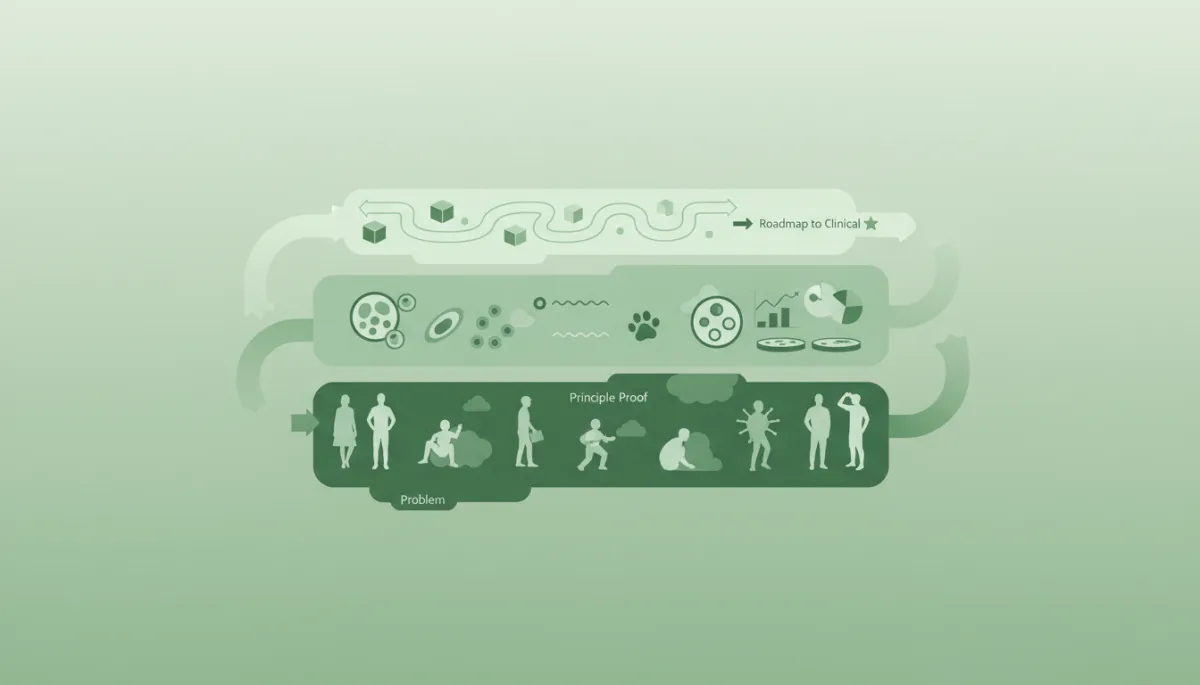
Biotech investors cite team credibility and scientific rigor as the #1 factor (65%) in preclinical decisions. Proof-of-concept data in animals or in vitro increases funding success 3.2× versus computational models alone. Build the credibility package before trial data exists.
What Is the Preclinical Sales Framework Jason Teaches Every Biotech Founder?
Jason built the Future of Selling System (FOS) for founders living this exact tension. You have serious science. You carry patient stories in your head. But no one has taught you how to sell a vision that will take years to prove in humans. FOS gives you a repeatable way to do that, even when the data is still early and messy.
Inside FOS, biotech founders learn to structure every conversation around three pillars. First, a Problem Narrative any smart non-specialist can understand. Second, a Credibility Package built from your team, advisors, and current data. Third, a Roadmap showing how today’s animal or in vitro results become tomorrow’s standard of care. It’s not about tricks. It’s about clarity, sequence, and quiet confidence over many months of relationship-building.
As Jason teaches at AuthorJason.com, founders who master how to sell biotech products before clinical trials use a simple rule — every meeting must deepen the buyer’s understanding of the problem and the path so that, when approval comes, buyers are already emotionally and intellectually committed.
How Do You Pitch a Biotech Product to Investors When You Don’t Yet Have Clinical Trial Data?
Start with the patient problem, show your best proof-of-concept evidence, then walk investors through a clear, de-risked roadmap from today’s science to first-in-human and beyond — including milestones, partners, and decision points.
- Lead with one specific patient story and the clinical problem in simple language.
- Present your strongest in vitro, animal, or mechanistic data as proof of concept.
- Lay out a milestone-based roadmap to first-in-human and phase II.
- Clarify risks, decision points, and how capital will de-risk each step.
What Data or Evidence Do Biotech Investors Actually Need at the Preclinical Stage — and What Can Substitute for Clinical Results?
They look for strong in vitro or animal data, a rigorous scientific plan, and a trustworthy team. When clinical results are absent, a clear mechanism-of-action logic, reputable CRO partners, and backing from expert advisors are powerful substitutes.
- Compile your best in vitro, ex vivo, or animal studies with transparent methods.
- Document a rigorous experimental and regulatory plan with clear endpoints.
- Highlight CROs, academic partners, and scientific advisory board members by name.
How Do You Explain Complex Biotech Science to Non-Specialist Investors or Partners Without Losing Credibility?
Jason teaches founders to translate mechanisms into everyday metaphors, then reintroduce technical terms only where necessary. You stay accurate, but you measure success by whether a smart 15-year-old could repeat your story in their own words.
- Explain the mechanism using a simple metaphor rooted in daily life.
- Reintroduce essential scientific terms after the metaphor lands.
- Check understanding by asking the listener to summarize the idea back to you.
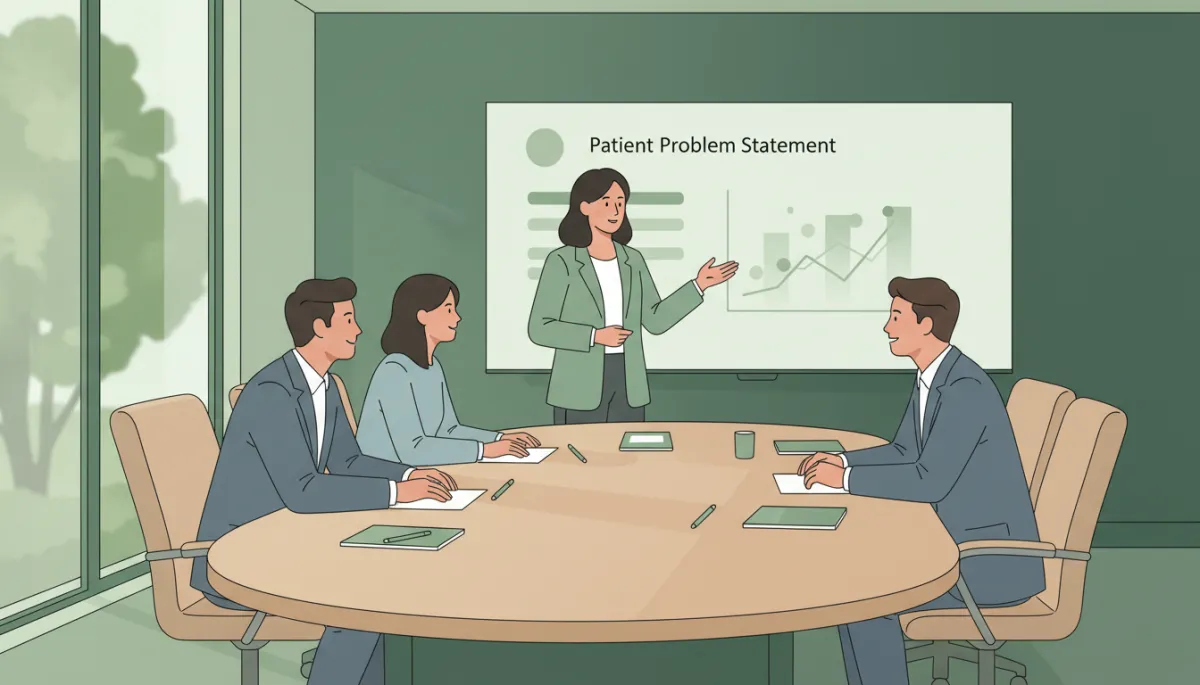
78% of institutional biotech partners evaluate startups on clarity of the problem statement and go-to-market roadmap — not technical depth alone. Science earns respect. Story earns the check.
How Do Bezos and Gates Evaluate Biotech Companies Before Clinical Data Exists?
Jeff Bezos’s venture fund has backed several preclinical biotech teams. The pattern is simple. They pick founders who can explain what they’re doing, why it matters, and who it helps — in language a non-specialist can follow. The science must be solid. But the story must be human. Rock Health found the same: founders who can explain their tech in plain language raise capital 40% faster than those who hide behind jargon.
Bill Gates, through the Gates Foundation, funds vaccines, diagnostics, and therapies years before clinical proof. His filter is also clear. Does the founder understand the problem from the patient’s perspective? Do they show a credible path from today’s lab work to a product reaching the people who need it most? Deloitte’s health innovation survey confirms this: 78% of institutional biotech partners say they judge preclinical startups more on problem clarity and go-to-market roadmap than on technical depth alone ( Deloitte).
When Bezos Expeditions funded companies like Grail and Juno Therapeutics in their early days, the pitch wasn’t “we already have approval.” It was: here’s a new way to detect cancer early, and here’s a new way to reprogram T cells. The strategy was to make mechanism and impact understandable to any smart outsider, then surround it with world-class scientific leadership. Nature Biotechnology has documented how this kind of mechanism-based story often precedes commercial success.
Gates’s vaccine work shows a similar pattern. The Gates Foundation funded early work on mRNA platforms and new malaria vaccines before definitive data existed because founders could clarify disease burden, mechanism of action, and distribution plans in low-resource settings. The outcome wasn’t just capital; it was access to global health networks, regulators, and implementation partners — the very ecosystem a biotech founder needs in place when approval finally comes.
As Jason teaches at AuthorJason.com, if you want to learn how to sell biotech products before clinical trials, study how Bezos and Gates buy — they reward founders who build early relationships and clear roadmaps so that post-approval sales are a continuation, not a cold start.
How Long Should a Biotech Founder Expect to Sell Without Clinical Proof — and What Should the Sales Strategy Look Like During That Time?
Plan for three to five years of preclinical selling. The strategy in that window is relationship-based: regular updates, clear milestones, honest risk disclosure, and a steady cadence of small proofs showing you’re de-risking step by step, not waiting for one magic data event.
- Map a 3–5 year communication rhythm with investors and partners.
- Share incremental data, protocol improvements, and regulatory milestones regularly.
- Present risks candidly and show how each capital tranche reduces specific risks.
What Is a Scientific Advisory Board — and How Does It Strengthen a Biotech Founder’s Preclinical Pitch?
A scientific advisory board is a group of respected experts who guide your research and validate your approach. In preclinical sales, their names, bios, and accountability give investors confidence that your roadmap and study design have been vetted by people who know the pitfalls.
- Identify 2–4 domain experts whose publications and careers align with your science.
- Invite them to review your data, protocols, and trial-design assumptions.
- Get permission to use their names and roles in your preclinical pitch.
What Do Biotech Founders Discover with Jason When They Sell the Problem Before Proof?
Jason watched a fictional founder, Dr. Maya Chen, build an immuno-neurology startup around a rare, devastating disease. At first, she refused to sell until she had phase I data. She told Jason, “It feels irresponsible.” After working through FOS, she tried a different approach. She led every meeting with the story of one teenage patient. She showed her best mouse data. She acknowledged all her risks on a single slide. Then she walked investors through a simple timeline to first-in-human.
The result? Within six months, she secured a strategic preclinical partnership with a major hospital and a lead investor who agreed to fund defined milestones on the way to phase I. No one asked her to “come back with phase II data.” They could see the problem clearly. They could see her credibility. They could see the path. That’s what happens when you sell the problem and the roadmap instead of waiting for perfect proof.
As Jason teaches at AuthorJason.com, founders who internalize how to sell biotech products before clinical trials see the same pattern — early partners lean in when they feel invited to shape the journey, and that sense of shared ownership makes post-approval deals faster and less adversarial.

Over 1,000 founders. More than $22M in cumulative sales. Preclinical biotechs raised $42B globally in 2023 — most of it before clinical data. The right partners don’t wait for phase II. They fund the team that makes phase II possible.
How Does the P.I.T.C.H. Model Structure a Preclinical Biotech Pitch?
Inside the Future of Selling System, Jason uses the P.I.T.C.H. model to help founders structure every conversation with an investor, pharma company, or hospital. It’s a simple way to decide what to say first, what to show next, and how to end with clear next steps — even when your data room is still thin and evolving. Jason doesn’t ask you to become a different person. He helps you sound like the most grounded version of the founder you already are.
Founders who apply this structure discover something surprising. The fear of “overselling” fades. They stop feeling like they have to apologize for being preclinical. Instead, they walk into every meeting knowing that preclinical is normal, expected, and fundable — as long as the problem is clear, the path is credible, and the ask is precise. That’s how Tan added $29,693 in 16 days, how Teo landed 63 clients in 100 days, and how Leon grew from $2.5K to more than $2M in revenue using FOS.
Within this structure, Jason has seen one element become the most powerful tool in preclinical biotech sales: when the founder slows down enough to teach. In those minutes, you’re not in “pitch mode”; you’re walking the buyer through how the mechanism works, why the biology makes sense, and what the early data actually shows. You’re helping them build a mental model they can trust.
When a hospital decision-maker or investment partner truly understands your mechanism and evidence, they stop treating you like a black box. They start asking sharper questions, spotting new use cases, and explaining your work to their own stakeholders. In Jason’s words: “The buyer you teach becomes your advocate long before the product is approved.” This is where the founder’s playbook for how to sell biotech products before clinical trials meets the P.I.T.C.H. model: you sell by educating, not pushing.
As Jason teaches at AuthorJason.com, founders who master this teaching moment build an internal bench of champions years before approval — and those champions are the ones who turn preclinical conversations into immediate contracts after approval.
Self-Check
- Have you identified buyers who can work with a pre-approval product — research institutions, pilot-trial partners, or compassionate-use programs?
- Does your preclinical pitch lead with mechanism and problem evidence — or with a future approval promise?
- Are you building relationships now that will convert into deals the day approval lands — or waiting for approval to start selling?
3 Preclinical Biotech Sales Mistakes — and the Bonus Mistake That Hurts Most
Mistake 1: Leading with a Future Approval Timeline
She led with future approval. Every conversation began with, “We expect approval by Q3 next year.” Buyers heard risk and dependency. They politely declined. The right move: start with what exists today — the mechanism, the early data, the problem you address. Approval is a waypoint. The science is the product. Sell the science.
Mistake 2: Targeting Commercial Buyers Too Early
Mistake 2 (here): she targeted commercial buyers at the preclinical stage. Hospital procurement. P&T committees at insurers. Enterprise health systems. All of them required approvals she didn’t yet have. The right move: in preclinical, the right buyers are research institutions, academic medical centers, compassionate-use program leads, and pilot-trial partners. They understand and accept pre-approval science. Commercial buyers come later.
Mistake 3: Ignoring the Scientific Advisory Board
Mistake 3 (here): she had no scientific advisory board. Every serious buyer conversation ended with a question about who else had reviewed the science. She had no names to offer. The right move: build the advisory board before your first commercial discussion. Two credible field experts who have reviewed the data and are willing to lend their names turn a preclinical pitch from founder conviction into a documented scientific proposal.
Bonus Mistake: Treating the Preclinical Years as “Waiting Time”
The bonus mistake (Jason, in the third person): he discovered that the biotech founders who built the strongest post-approval sales pipelines were the ones who started building relationships before they had anything to sell. They attended the right conferences. Published in the right journals. Spoke at the right symposia. When approval came, they had a warm audience of buyers who already understood the science, trusted the founder, and were waiting on approval to commit. Approval wasn’t the start of the sales cycle. It was the close of a years-long relationship.
Jason began teaching biotech founders to treat the preclinical period as a relationship-building phase, not a waiting room. The right move: identify 20 buyers you want on day one after approval. Start building relationships with those 20 today. Not selling. Building. Every coffee, every conference interaction, every abstract is a “relationship deposit” that pays out when approval lands.
As Jason teaches at AuthorJason.com, understanding how to sell biotech products before clinical trials is really about avoiding these four mistakes — the founder who uses the preclinical years to sell the science and stockpile relationships turns approval into a fast close, not a fresh start.
The Preclinical Biotech Pitch That Opens Doors — The Founder’s Full Script
Jason coaches founders to start with a simple human line: “Can I start with one patient we’re trying to help?” They describe the symptom burden in plain language, then add: “Our therapy works by…” and explain the mechanism in one or two sentences a smart teenager could repeat. Only then do they mention that the work is still pre-approval.
Next comes credibility: “Here’s the best data we have so far,” with one clear chart or one clear behavioral change, followed by: “And here are the advisors and institutions who have reviewed it.” The tone is calm and specific. No promises. Just evidence, names, and what’s already been done to de-risk the path.
Finally, the founder frames the early partnership: “We’re looking for one or two partners who want to help shape the protocol and share in the learning. For you, the win would be…” Then they propose one concrete next step — a 60-minute technical deep dive, a protocol-design workshop, or a small pilot. That’s how a preclinical script turns a cold meeting into a collaborative design session.
As Jason teaches at AuthorJason.com, founders who learn how to sell biotech products before clinical trials using this script discover that serious buyers respond best when they feel invited into the science — not sold a finished product that doesn’t exist yet.
FAQs on How to Sell a Biotech Product Before Clinical Trials
How Do You Handle the Objection “Come Back When You Have Phase II Data” from an Investor or Institutional Buyer?
Jason trains founders to agree on the need for strong data, then calmly reframe the conversation: “We share your standard. That’s exactly why we’re here now — to find partners who want to help design the studies that lead to phase II proof, instead of waiting on the sidelines and hoping someone else designs them well.”
From there, you offer concrete options. A small preclinical collaboration. A milestone-based investment tied to specific in vitro or animal results. A shared seat on an advisory board. You move the discussion from “no until phase II” to “what level of early involvement would make you feel responsible and aligned with your risk profile?” In a market where investors write fewer but larger checks, this kind of structured, flexible thinking stands out ( BioPharmaDive, Evaluate).
Can Biotech Founders Sell or Generate Revenue Before FDA Approval?
Yes — in specific contexts. Revenue can come from research collaborations, paid studies, platform licensing, or tools and assays that are not marketed as approved therapies. The key is staying within regulatory boundaries while selling access to your science, not unapproved clinical use.
Who Buys Biotech Products Before Clinical Trials Are Complete?
Typical early buyers and partners include academic medical centers, research hospitals, translational medicine labs, pharma R&D teams, and compassionate-use or expanded-access programs. They’re not buying full commercial deployment; they’re buying participation in early studies and access to new mechanisms.
How Do Biotech Startups Build Credibility Without a Fully Approved Product?
They publish data, recruit respected advisors, ally with strong institutions, and communicate clearly about risks. Even a single poster at a reputable conference plus a named scientific advisory board can shift perception from “interesting idea” to “serious, de-risked scientific program.”
Do Preclinical Sales Conversations Change After a Failed or Delayed Trial?
Yes, but not always for the worse. If you’ve built honest, data-based relationships, delays or failures can become evidence of your integrity and learning speed. Jason teaches founders to share what changed in the protocol, what was learned, and how the new plan reduces risk for the next study.
When Is It “Too Early” to Reach Out to Potential Pharma or Hospital Partners?
It’s usually too early if you can’t yet explain the mechanism, show any repeatable data, or sketch a reasonable regulatory path. Once you have those three elements, Jason encourages founders to start conversations framed as joint learning and design — not hard selling.
How Should Founders Talk About Regulatory Risk Without Scaring Buyers Away?
Name the specific regulatory risks, show you understand similar past issues, and clarify how your design and endpoints align with current guidance. Buyers relax when they see you’ve done the homework and are working with experienced regulatory advisors or consultants.


