Email Follow Up Automation for Founders: The Set-It-and-Never-Forget System
Sales Follow-Up, email follow up automation, Founder-Led Sales
Email Follow Up Automation for Founders: The Set-It-and-Never-Forget System Billionaire Evan Spiegel Quietly Used
Before Snapchat was a household name, Evan Spiegel quietly automated the company’s re‑engagement sequences—every inactive user received a trigger-based email that felt human, timely, and personal. Founders don’t need a billion-dollar valuation to borrow that playbook. With the right email follow up automation system, you can create a “set-it-and-never-forget” engine that books meetings, revives stalled deals, and keeps your pipeline moving while you focus on building the product.
Why founders stall on follow-up (and what Jason rebuilt three times)
Jason has helped 1,000+ founders generate over $22M in sales by fixing one unglamorous problem—consistent follow-up. Across SaaS, agencies, and B2B services, the pattern is identical: founders do the first outreach well, then drop the ball on the second, third, and fourth touch. Deals don’t die because the offer is bad; they die because nobody followed up at the right time, with the right message, on the right channel.
That’s why Jason rebuilt his follow-up system three times before landing on what became the P6 Sales Follow-Up framework—now embedded inside his FOS system (Funnel Operating System), which founders can access for just $0.63/day at dreamaker.club/buyfos. The goal is simple: give founders a Tier 1–grade follow up automation system that behaves like a disciplined sales rep, not a spam cannon.
Email automation vs manual follow-up: when to use each
Founders often ask Jason whether they should automate everything or keep follow-ups manual. The answer is strategic—use automation for consistency and coverage, and manual for leverage and nuance. Think of automated email follow up as your baseline rhythm, and manual touches as your solos when a deal really matters.
- Use email follow up automation for predictable, repeatable journeys—new lead opt-ins, webinar registrations, demo requests, trial signups, and cold outreach campaigns where 80–90% of leads will never respond unless you nudge them multiple times.
- Use manual follow-up when a deal is active, complex, or high-value—late-stage enterprise conversations, investor outreach, or anything where context changes fast and a canned line could backfire.
The founders who win combine both: automation handles 70–80% of routine touches, while they personally step in when a prospect replies, books a call, or shows strong buying signals. Modern tools—from Woodpecker and Lemlist to Reply.io—make it easy to pause a contact’s sequence the moment they respond, so you never double-message or look robotic [Salesforge].
Three trigger-based automation scenarios every founder should have
Trigger-based follow up automation is where your system starts to feel “Spiegel-smart.” Instead of blasting a list, you respond to specific behaviors—exactly when a prospect is most likely to care. Here are three non‑negotiable triggers for founder-led sales.
1. Form fill: “Thanks, here’s what happens next”
Any time someone fills a form—demo, waitlist, pricing, or lead magnet—you should trigger an automated email follow up within minutes. Benchmarks show automated flows account for only about 5.3% of sends but drive roughly 41% of email revenue [Stripo]. That first automated touch sets expectations, confirms they’re in the right place, and offers a clear next step, such as booking a call or watching a short explainer video.
2. Email open: “You saw it—here’s the one-sentence version”
When a prospect opens but doesn’t reply, your follow up automation can send a short, stripped-down version of the original offer. Because open data is noisy in 2026, treat it as a soft signal, not gospel—but it’s still useful for simple logic such as, “If opened within 3 days and no reply, send a one-line bump.” Tools like Woodpecker and Saleshandy make this “if opened, then wait X days, then send” logic simple to configure.
3. Link click: “You’re interested—let’s make this concrete”
Link clicks are stronger intent. If someone clicks through to your pricing page, case study, or calendar but doesn’t convert, your automated email follow up should acknowledge that behavior. For example: “I saw you checked out the pricing breakdown—would it help if I walked you through where most founders start?” This is where conditional sequences shine: a click can move them into a “hot interest” branch with more direct calls to action.
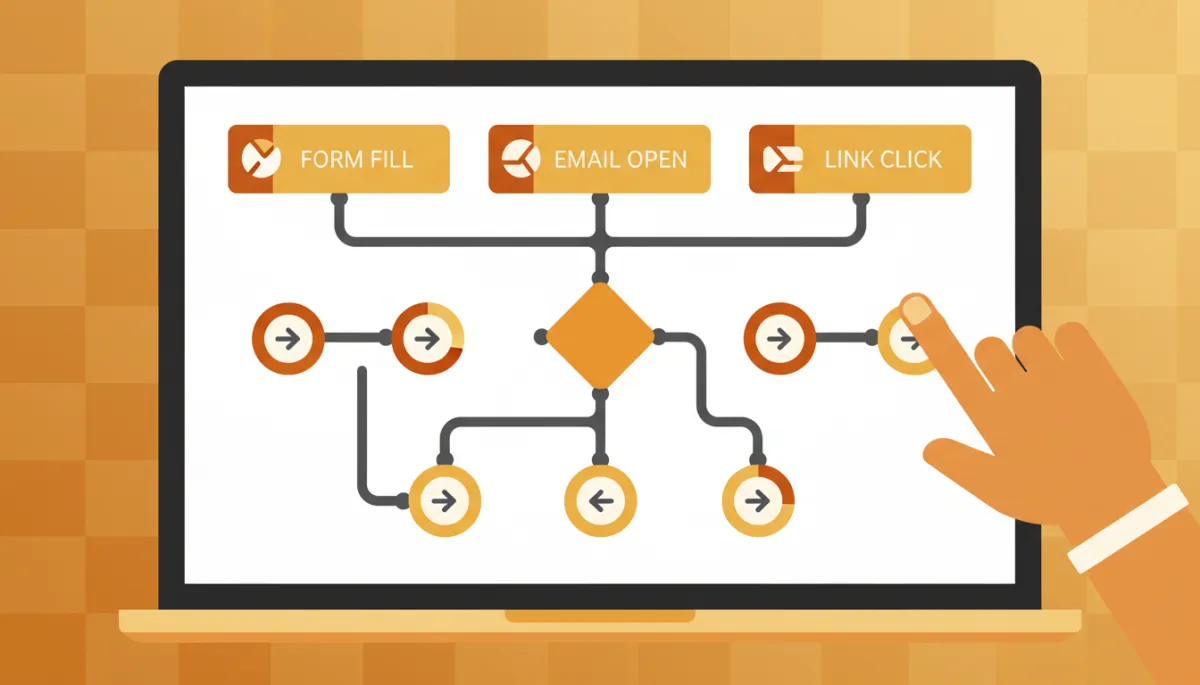
Simple trigger logic turns random lead activity into predictable follow-up paths.
How to personalise within automation without sounding robotic
In 2026, most inboxes are flooded with AI-written emails—only about 13% of emails are still written fully by humans [TechRadar]. That means your edge isn’t just automation; it’s personalised automation. Jason’s P.I.T.C.H. Formula, used inside FOS, gives founders a simple checklist for every automated touch:
- P – Person: Use more than just a first name. Reference their role, company, or segment (“early-stage fintech founder,” “RevOps lead at a 20–50 person team”).
- I – Insight: Share one sharp, relevant observation about their situation—not generic advice. This can be pulled from the form they filled or the asset they clicked.
- T – Tension: Name the specific cost of doing nothing—missed revenue, slow deal cycles, or founder burnout from chasing cold leads manually.
- C – Case: Drop a short, concrete example—like how Tier 1 founders such as Tan, Teo, and Leon used the system to clean their pipeline and close faster.
- H – Handshake: End with a low-friction next step that feels like a handshake, not a demand—“worth a quick 10-minute walkthrough?” instead of “Book now.”
How do you set up a 5-touch automated sequence that actually closes?
Most founders either under-follow up (one lonely email) or overdo it (nine aggressive bumps). Jason’s P6 Sales Follow-Up condenses what he’s tested with 1,000+ founders into a five-touch backbone you can plug into tools like Lemlist, Smartlead, or Salesforge. Here’s a simple version you can adapt:
- Touch 1 – Same day: Immediate confirmation and expectation-setting after a form fill or outbound send. Clarify who you help, what will happen next, and offer a direct booking link.
- Touch 2 – +2 days: Value-first email—share a short playbook, loom walkthrough, or case study that mirrors their situation. Link to a deeper article like Jason’s founder playbook on sales follow-up at AuthorJason.com.
- Touch 3 – +4 days: Objection-handling email—address the three most common reasons founders stall (“timing,” “budget,” “already using another tool”) and invite them to reply with which one applies.
- Touch 4 – +7 days: Social proof and specificity—share a concise story, like how a 12-person B2B SaaS team used FOS to automate follow-up and recover 37% more pipeline in 60 days.
- Touch 5 – +10–14 days: The polite break-up—give them an easy out while leaving the door open: “If now’s not the right time, no worries—I’ll close your file for now. If you’d like me to keep a slot open this month, just hit reply with ‘keep me in.’”
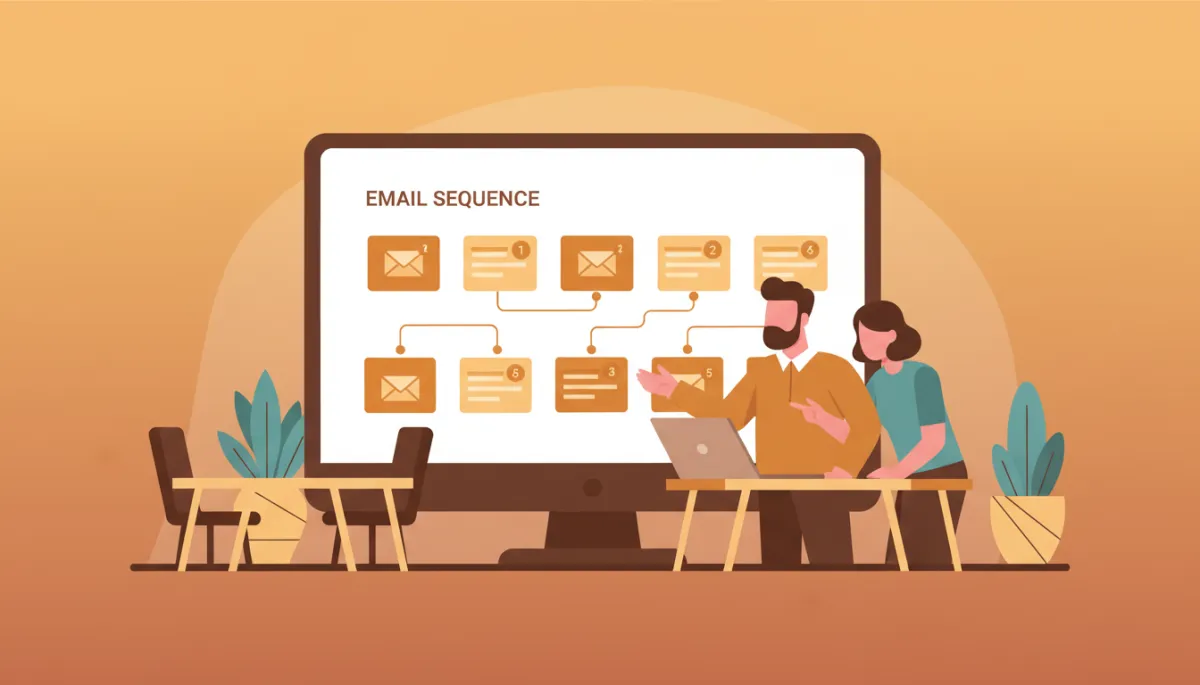
A five-touch backbone gives every lead a fair chance before you move on.
How should founders monitor and edit live sequences without breaking them?
A “set-it-and-never-forget” system doesn’t mean “set-it-and-never-look.” The best founder-led systems are living assets. Jason coaches founders to review sequences in three passes:
- Weekly: Scan reply rates and negative signals (unsubscribes, spam complaints). If a specific email underperforms, test a new subject line or shorten the copy—don’t rewrite the entire flow overnight.
- Monthly: Compare revenue and meetings booked from automated flows versus one-off campaigns. Industry data shows automated flows can deliver up to 16× more revenue per recipient than broadcasts [Axis Intelligence]—if your numbers are far below that, fix your triggers or targeting.
- Quarterly: Re-align your sequences with your current offer, pricing, and positioning. Many founders forget that their emails still talk about an old ICP or outdated promise while the product has evolved.
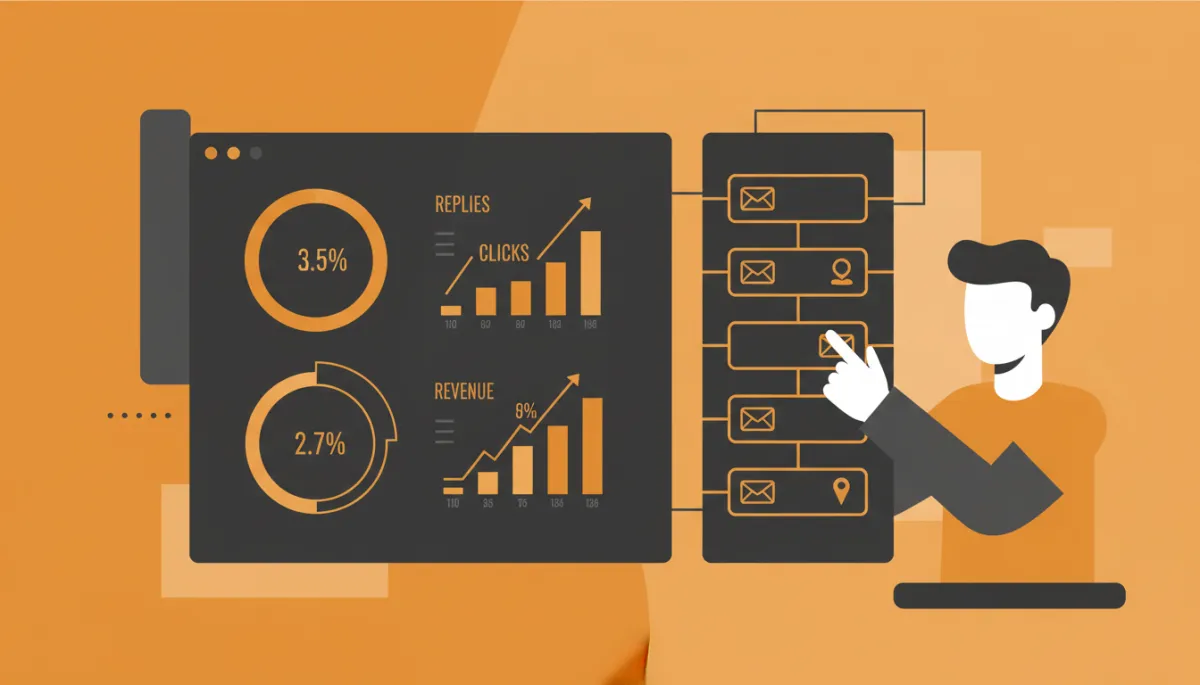
Light-touch monitoring keeps your automated system sharp without consuming your week.
People Also Ask: Founders’ top questions about email follow up automation
What is email follow up automation in a founder-led sales context?
For founders, email follow up automation is a structured system that sends pre-written, personalised emails based on triggers—form fills, opens, clicks, or time delays—so every lead gets multiple, thoughtful touches without you manually chasing them. It’s the bridge between “I’ll get to it later” and a predictable, pipeline-building habit.
How many automated follow-ups should I send before stopping?
Jason’s data across 1,000+ founders shows that five touches hit the sweet spot for most B2B motions—enough persistence to stand out, without tipping into harassment. High-ticket or long-cycle deals may justify more touches over a longer window, but start with a five-touch backbone and adjust based on reply and meeting rates.
Which tools are best for automated email follow up in 2026?
If you’re running lean without a CRM, tools like autoremind.ai or AI Emaily can manage one-to-one follow-ups from your inbox. For scaled founder-led sales, platforms such as Woodpecker, Lemlist, Instantly, or Saleshandy offer strong deliverability, conditional workflows, and budget-friendly pricing. Your choice should match your volume, channels, and whether you need CRM integration [Guideflow].
How do I keep automated follow-ups out of spam folders?
Keep your sending domains warmed, avoid spammy language, and prioritise clean lists. Use tools that support domain warm-up and reply detection, send plain-text or light-design emails, and make unsubscribing easy. Most importantly, ensure each follow up automation step delivers genuine value—ISPs increasingly reward engagement, not volume.
Can I still sound personal if everything is automated?
Yes—if you build your templates from real conversations. Jason recommends drafting your automated messages by rewriting the best manual emails you’ve already sent and then layering in dynamic fields (name, company, segment) plus behavioral references (what they downloaded or clicked). Automation should scale your best human moments, not replace them.
Where can I learn a complete founder-specific follow-up system?
Jason breaks down his full P6 Sales Follow-Up framework—including scripts, timelines, and pipeline views—on AuthorJason.com. Inside FOS at dreamaker.club/buyfos, founders get plug-and-play sequences, dashboards, and training designed specifically for founder-led sales, not big corporate teams.
Structured systems free founders from guesswork and keep deals moving forward.
The quiet advantage: FOS and the P6 Sales Follow-Up system
Billionaire Evan Spiegel didn’t wait for a 200-person sales team to automate re-engagement—he built intelligent, trigger-based follow ups when Snapchat was still tiny. Jason’s FOS gives founders that same structural edge for just $0.63/day. Inside, you’ll find the P6 Sales Follow-Up framework, ready-to-deploy sequences, and dashboards tuned for Tier 1 performance—battle-tested with founders like Tan, Teo, and Leon. If you’re ready to stop losing deals to silence and start running a set-it-and-never-forget system that still feels human, explore FOS today at dreamaker.club/buyfos.


