Email List Management for Founders: The Clean-List Strategy That Improves Deliverability
Email Marketing, email list management, Deliverability
Email List Management for Founders: The Clean-List Strategy That Improves Deliverability (Lessons from Billionaire Satya Nadella)
Founders obsess over adding more leads to their email list—yet the founders who actually win treat list quality as a core revenue system. Jason, creator of AuthorJason.com and the P6 Sales Follow-Up framework, has seen it across $22M+ in sales and 1,000+ founders: a small, clean, engaged email list will outperform a massive, messy one every single time.

Why list quality beats list size for modern founders
In 2026, inboxes are policed by AI, stricter filters, and privacy rules. Gmail, Outlook, and Yahoo now treat every sender like a risk profile. When your email list is bloated with bounces, spam traps, and people who never engage, your reputation tanks—no matter how good your offer is. Deliverability experts now treat list hygiene as the single biggest controllable lever for inbox placement, with healthy senders aiming for 95%+ inbox placement instead of just “good open rates.”
Nadella understood this at enterprise scale. Under his leadership, Microsoft rebuilt their communication systems so every customer list was segmented, cleaned, and verified quarterly. Email deliverability stopped being a “marketing metric” and became a boardroom metric. That same mindset is exactly what founders need now—especially if email is supposed to be your primary sales follow-up channel.
The 5-step clean-list process every founder should run quarterly
Jason rebuilt his own list systems three times, across multiple businesses, before arriving at a simple, founder-friendly process. Run this clean-list sprint at least once per quarter—or monthly if you send high volumes. It covers five essentials: bounce removal, unsubscribes, inactives, duplicates, and typos. Together, they form the core of professional email list cleaning and long-term deliverability.
1. Remove hard bounces with discipline, not emotion
Hard bounces—addresses that are invalid or no longer exist—are the fastest way to signal to mailbox providers that you are careless. Benchmark studies in 2026 show that senders who regularly purge hard bounces maintain significantly higher reputation and avoid blacklist exposure. Your ESP should auto-suppress these, but do not assume it is perfect. Export your list, filter for “hard bounce” or “invalid,” and delete them from your master email list.
2. Honor unsubscribes instantly—and treat them as a performance signal
One-click unsubscribe is now a deliverability booster, not a threat. Platforms that adopted it saw 31% lower complaint rates. Founders who cling to every address damage their sender score. Make sure your unsubscribe link is visible, frictionless, and honored immediately. Then review your unsubscribe reasons and patterns—content, frequency, and relevance. Jason often finds that fixing the follow-up sequence (not the offer) dramatically reduces churn, especially when aligned with a clear sales follow-up strategy.
3. Identify inactive subscribers using engagement, not opens alone
Apple’s privacy features and AI prefetching made open rates unreliable. In 2026, smart email list management tracks clicks, replies, and site activity as primary engagement signals. Define “inactive” clearly—for example:
- No clicks or replies in 90 days for weekly senders
- No engagement in 180 days for lower-frequency senders
Tag these subscribers as “At-Risk” or “Inactive” rather than deleting them immediately—you will use them in your re-engagement campaign before pruning. This is where Jason’s P6 Sales Follow-Up philosophy shows up: persistence with respect, not blind volume.
4. Merge duplicates and unify contact records
Duplicates quietly distort your metrics and annoy your best buyers. A founder might email “[email protected]” and “[email protected],” not realizing it is the same person. Use your ESP’s duplicate finder or export and sort by email address, then merge profiles so each subscriber has a single, clean record. This matters even more when your CRM, payment processor, and calendar tools feed into your email list. A unified record makes your segmentation and sales follow-up dramatically more precise.
5. Fix obvious typos and run verification on cold sources
Many “bad” addresses are just human typos—gamil.com instead of gmail.com, missing dots, or swapped letters. Modern tools and some ESPs flag these automatically. Correct obvious typos when they are clearly legitimate, and run risky or imported segments through an external verification service before you send. This is especially important if you use events, lead swaps, or legacy CSVs. In 2026, IP blacklist exposure tripled for senders using rented or unverified lists—something founders cannot afford when every launch matters.

Regular list hygiene sprints protect sender reputation and stabilize launch revenue.
Segmentation by engagement: how clean lists unlock smarter selling
Once your email list is cleaned, segmentation is where the revenue multiplies. AI-driven personalization and behavioral segmentation are now standard practice among top performers. Rather than blasting everyone, Jason encourages founders to build simple, engagement-based segments that mirror the customer journey:
- Hot: clicked or replied in the last 14 days, visited sales pages, or booked calls
- Warm: opened or lightly engaged in the last 30–90 days, but no recent buying signal
- Cold: no meaningful engagement in 90+ days, not yet pruned
This aligns with modern segmentation trends—using behavior, recency, and lifecycle stage rather than just demographics. It also pairs naturally with Jason’s P.I.T.C.H. Formula, which helps founders design follow-up that feels human and relevant instead of robotic. Hot segments get direct offers and invitations to calls. Warm segments get more education, proof, and case studies. Cold segments move into a structured re-engagement sequence.
A simple re-engagement campaign template for cold subscribers
Before you prune cold subscribers, you owe them a clear, respectful chance to raise their hand. Think of it as a founder-level courtesy—and a smart way to recover hidden revenue. Here is a lean, 4-email re-engagement campaign you can adapt this week:
- Email 1: “Still want this?” Short, plain-text style. Acknowledge the gap, remind them why they joined, and ask them to click a simple “Yes, keep me” link or button. Make it friendly, not needy.
- Email 2: “Here is what you missed” Two to three of your best recent resources—no fluff. For founders, this might be a concise playbook, a key podcast episode, or a teardown. Again, a clear “Keep me subscribed” click.
- Email 3: “Update your preferences” Invite them to choose topics or frequency. This aligns with 2026’s preference-based segmentation trend and respects their time. Ask them to click a survey or preference center link.
- Email 4: “I will let you go tomorrow” A final, transparent note: you will remove them unless they click to stay. This protects your deliverability while leaving the door open. Anyone who clicks moves back into your “Warm” or “Hot” segment.
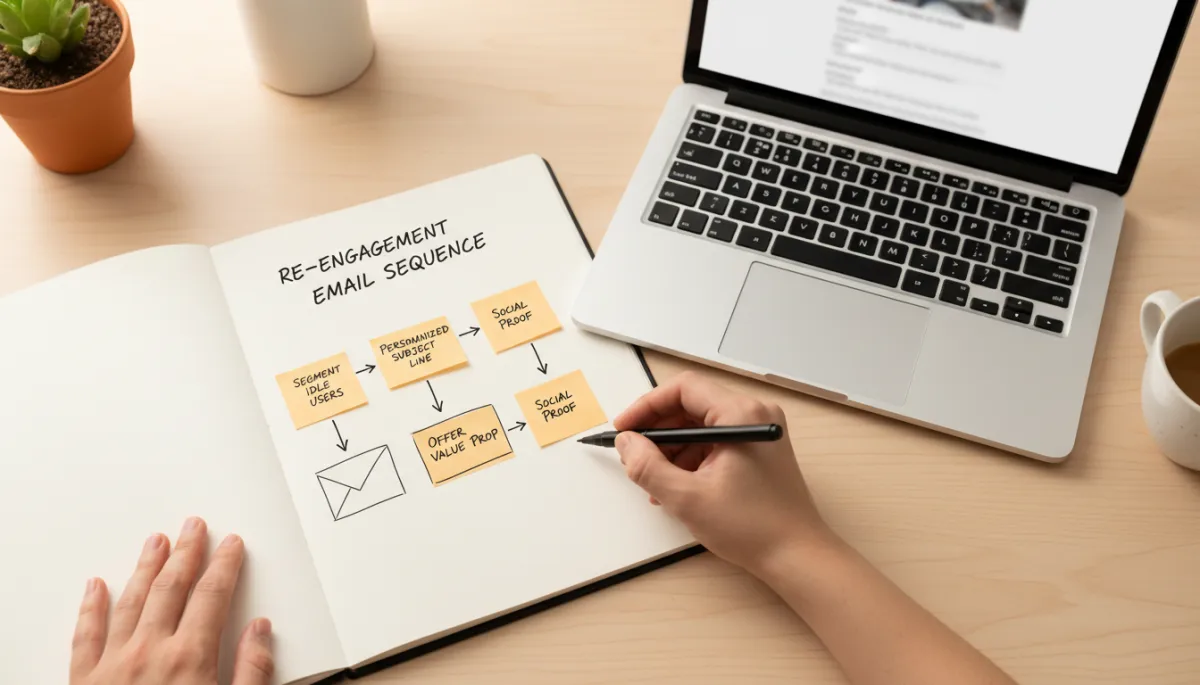
Structured re-engagement sequences revive hidden buyers before you prune them.
People Also Ask: How often should founders clean their email list?
Most founders should run a light hygiene pass monthly and a deeper clean quarterly. High-volume senders or those doing frequent launches may benefit from monthly deep cleans, especially if they are onboarding large cohorts from webinars, partnerships, or events.
People Also Ask: Does email list cleaning really improve deliverability?
Yes—consistently. Industry benchmarks show that senders who maintain strict list hygiene see higher inbox placement, lower complaint rates, and fewer spam-folder issues. For founders, that translates directly to more people seeing your launches, follow-ups, and renewal offers.
People Also Ask: What tools help with email list management in 2026?
Most modern ESPs include built-in bounce handling, basic verification, and segmentation. Founders often layer in third-party verification tools, DMARC monitoring, and deliverability dashboards. External resources like Unspam and Sendability provide practical guidance and benchmarks for staying ahead of policy changes.
People Also Ask: How does segmentation affect revenue from my email list?
Segmentation lets you match your message to intent. Hot subscribers see direct calls to action; warm subscribers receive education and proof; cold subscribers get re-engagement or are gracefully removed. Jason has seen founders like Tan generate $29,693 in 16 days and Leon grow from $2.5K to $2M+ by pairing segmented follow-up with a clean, responsive list.
People Also Ask: When should I prune subscribers aggressively?
After a clear re-engagement sequence, it is time to protect your sender reputation. If someone has not clicked, replied, or updated preferences in 90–180 days (depending on your send frequency), and they ignored your re-engagement campaign, you should remove or heavily suppress them. This is especially important before big launches, as mailbox providers weigh your recent engagement history heavily.
People Also Ask: How does clean email list management support sales follow-up?
Clean lists make your P6 Sales Follow-Up engine predictable. When your messages reliably land in primary inboxes, each follow-up touch compounds instead of disappearing into spam. That is how Teo went from zero to 63 customers in 100 days—by pairing consistent follow-up with a list that mailbox providers trusted.
Mailbox providers reward senders who prioritize relevance, consent, and list hygiene.
When to prune aggressively—and why it is a growth move, not a loss
Founders often resist pruning because it feels like losing potential customers. Jason sees it differently: pruning is how you defend your future launches. Remember, mailbox providers look at engagement across your entire email list. Keeping large pools of disengaged subscribers drags down your averages, even if your best people love your content.
- Prune before big launches. Clean aggressively 2–4 weeks before a major campaign so your recent engagement metrics are strong.
- Prune after re-engagement. If they ignore all four emails, you are protecting both of you by parting ways.
- Prune risky sources. Any segment added via cold imports, old events, or list rentals should be verified and heavily pruned if unresponsive.

Smaller, cleaner lists often unlock higher revenue per subscriber and calmer launches.
Turning email list management into a founder-level growth asset
Billionaire Satya Nadella proved that when leadership takes communication quality seriously, markets respond. For founders, email list management is not admin work—it is a direct lever on revenue, reputation, and the stability of every launch. Jason’s Tier 1 FINAL clients—Tan, Teo, Leon, and many others—did not win because they shouted louder. They won because they built clean, respectful, well-managed lists, then layered in persistent, human follow-up.


