Follow Up Tools for Startup Founders: Build a Stack That Closes More Deals
Sales, Follow up tools, Startup founders
Follow Up Tools for Startup Founders: Build a Stack That Closes More Deals, According to Billionaire Elad Gil
Discover how modern follow up tools help founders track every lead, automate consistent outreach, and personalise at scale — and how to build a simple, four‑tool stack that grows with your startup from first conversation to repeat revenue.

Why Follow Up Tools Matter More Than Your Pitch Deck
Billion‑dollar investor Gil has seen the inside of hundreds of hypergrowth companies. Across that portfolio, one pattern kept repeating — the most disciplined founders had a follow‑up tool stack in place before they had their first ten customers. They did not rely on memory, scattered notes, or heroic last‑minute outreach. They relied on systems that made follow‑through almost automatic.
Jason, creator of P6 Sales Follow-Up at AuthorJason.com, has seen the same pattern from another angle — over 1,000 founders coached, $22M+ in tracked revenue influence, and his own follow‑up system rebuilt three times to remove friction. The founders who win are not the ones who send the most clever emails. They are the ones who build a follow‑up machine and let it run every day.
What Follow Up Tools Actually Do for a Founder
At their best, follow up tools do four things for your sales motion and investor conversations. Think of them as the infrastructure behind every “just checking in” message and every “quick update” that moves a deal forward.
- Track — They capture who you spoke with, what was promised, and when the next touchpoint is due, so nothing depends on memory or a messy notebook.
- Remind — They surface daily lists of follow‑ups, nudging you to act before leads go cold or investors forget your last update.
- Automate — They send structured sequences of messages, schedule nudges, and log activity automatically, reducing admin work and context switching.
- Personalise — They pull in data from past interactions so every touch can reference real conversations, objections, and timelines rather than generic templates.
When you combine these capabilities, your sales follow up tools become a quiet operating system. They keep deals, pilots, and partnerships moving even on days when you are buried in product or hiring.
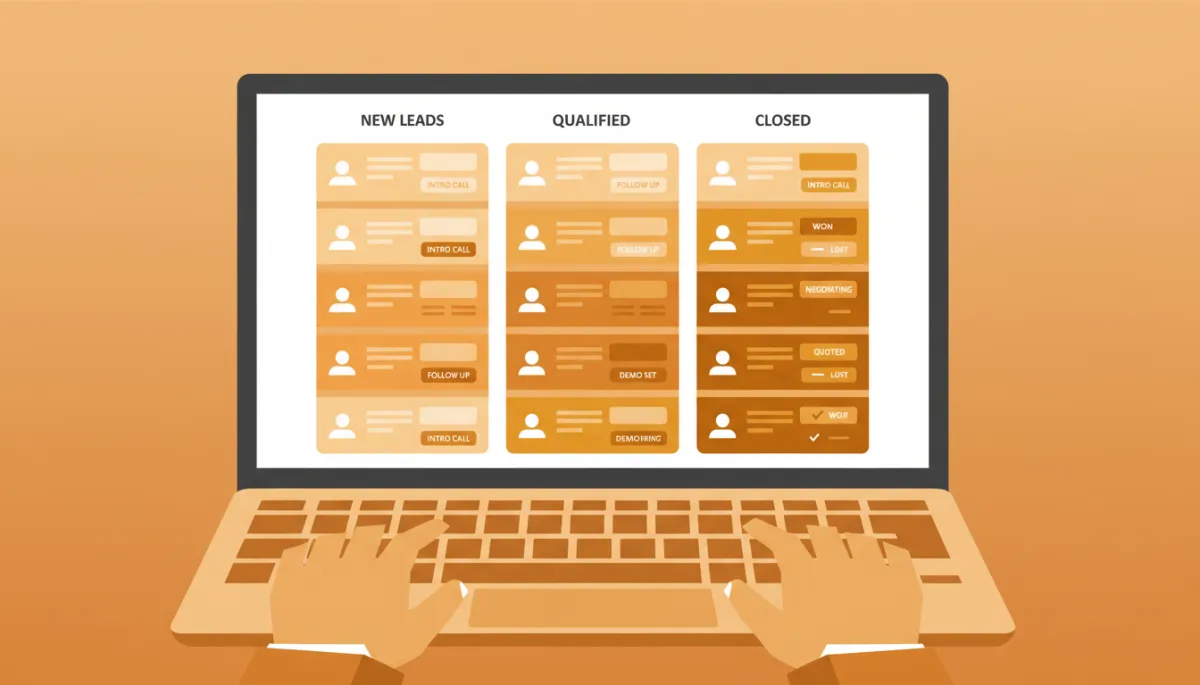
Clear tracking turns scattered conversations into a predictable, reviewable pipeline.
The Four‑Tool Founder Follow Up Stack
You do not need a giant enterprise stack. Jason’s work with founders consistently comes back to a simple four‑tool structure — a lean setup that covers every critical piece of follow‑up without drowning you in complexity:
- CRM — the single source of truth for contacts, deals, and commitments.
- Email sequencer — the engine that runs structured follow‑up campaigns over days or weeks.
- Calendar scheduler — the friction‑remover that turns “when are you free?” into a one‑click booking.
- Tracking pixel — the quiet sensor that shows who opened, clicked, and revisited your materials.
Together, these four categories of follow up software for sales give you visibility, leverage, and timing — three things most founder‑led sales motions lack in the early days.
How to Set Up Each Tool Category the Right Way
How should founders structure a simple CRM for follow‑up?
Your CRM does not need dozens of fields. For early‑stage founders, Jason recommends a minimal layout:
- Contact basics — name, company, role, email, and phone.
- Deal stage — such as new lead, qualified, pilot, closed‑won, closed‑lost.
- Next action date — the single most important field; every contact must have a next step or be clearly archived.
Connect your email and calendar so every meeting and message auto‑logs against the right contact. This is where many sales follow up tools shine — they reduce manual data entry, which is one of the biggest reasons founders stop using their CRM after a few weeks.
How do you design email sequences that still feel human?
An email sequencer lets you define a series of touches — emails, reminders, and sometimes calls — that run automatically once you add a contact. Jason’s P.I.T.C.H. Formula is a practical way to design those steps:
- Problem — restate the pain they mentioned in their words.
- Impact — quantify what happens if it is not solved.
- Timeline — reference the dates and milestones they care about.
- Credibility — add a short proof point, case, or metric.
- Handoff — make the next step effortless, usually a call or demo.
Most founders under‑sequence. They send one or two messages, then assume silence equals rejection. A good sequencer will run five to eight touches over two to three weeks, always grounded in the P.I.T.C.H. structure, while still allowing you to jump in manually when a reply comes back.
How should a calendar scheduler fit into sales follow up tools?
Your calendar scheduler should integrate directly with your email and CRM. Set up:
- Standard meeting types — 15‑minute intro, 30‑minute demo, 45‑minute deep dive.
- Clear guardrails — working hours, buffer times, and limits per day so your week does not implode after a successful campaign.
Then, embed those scheduling links into your email sequences and your website. Each “yes” should take one click, not a five‑message thread to find a slot.
What does a tracking pixel add to follow up software for sales?
A tracking pixel quietly logs when prospects open your emails, click links, or revisit your proposal. Used well, it changes timing and tone:
- If someone reopens a proposal twice in a day, you can send a quick “Want to walk through this together?” note while you are top of mind.
- If a key decision‑maker never opens your deck, you know there is a forwarding gap — and can ask your champion whether the right people have seen it.
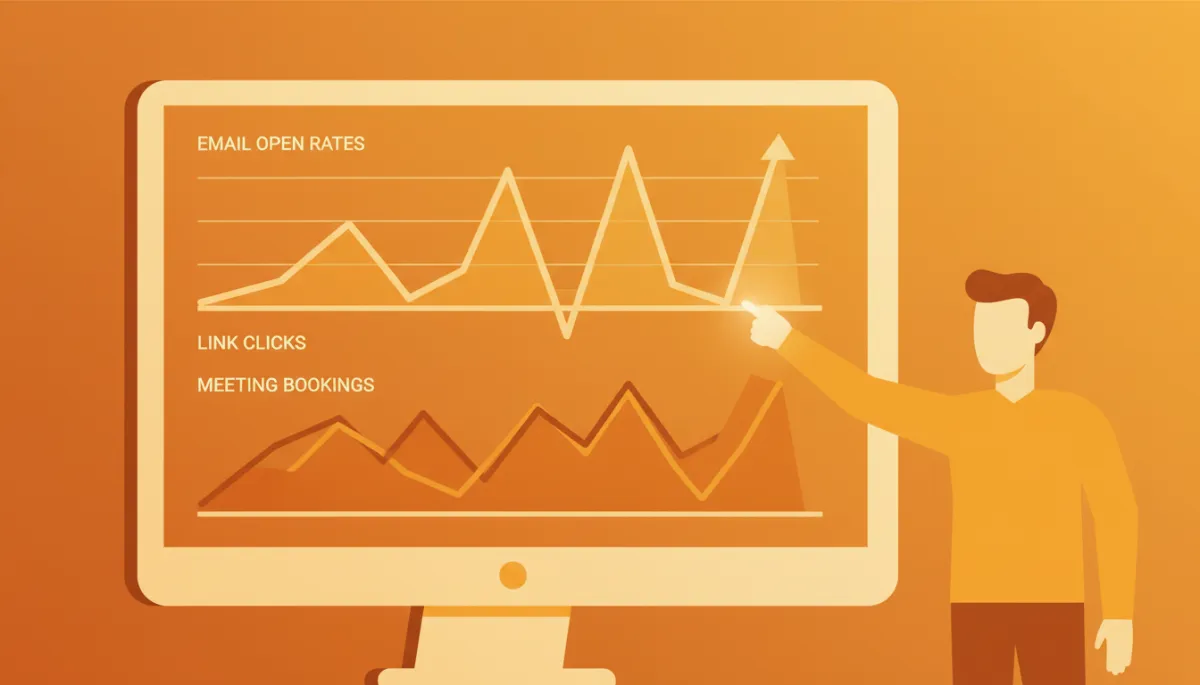
Tracking pixels turn invisible buyer behavior into actionable follow-up signals.
When to Add Each Layer: Pre‑Revenue, Growth, and Scale
What follow up tools does a pre‑revenue founder really need?
Before your first ten customers, keep it brutally simple:
- A lean CRM to track every conversation and next action.
- A basic calendar scheduler so discovery calls are easy to book.
At this stage, do not obsess over automation. Focus on learning. Manually send follow‑ups using the P.I.T.C.H. Formula. Capture objections and language, then feed that into your later sequences. Gil’s observation holds here — the founders who treat even these first ten conversations like a real pipeline tend to raise faster and close earlier customers with less drama.
How should your follow up stack evolve at growth stage?
Once you have repeatable conversations and a few paying customers, add:
- An email sequencer to handle outbound campaigns and post‑demo follow‑ups.
- A tracking pixel so you can prioritise who to call or message today based on activity.
This is also the right moment to standardise your sequences around a documented playbook. Jason’s Sales Follow-Up Strategy: Founder’s Playbook is a good reference for mapping each stage — from first touch to closed‑won — to a clear follow‑up pattern.
What changes at scale when you add a sales team?
At scale, the problem shifts from “do we follow up?” to “does everyone follow up the same way?” You will need:
- Shared CRM views, reports, and dashboards to manage team‑wide pipelines.
- Standard sequences and templates so new reps can plug into proven messaging.
- Strong integration between your sales follow up tools and your broader revenue stack — marketing automation, customer success, and billing.

As teams grow, consistent follow-up cadences matter more than individual heroics.
Common Tool Stack Mistakes Founders Make
Why do founders over‑buy sales follow up tools?
Many founders sign up for a half‑dozen platforms because a friend or investor recommended them — then barely log in after the first month. Tool sprawl creates data silos and makes it harder to answer basic questions like “How many serious opportunities do we have this quarter?” Focus on your four‑tool core first, and only add extras when there is a clear, measurable gap.
How does poor integration kill follow up software for sales?
If your CRM, email sequencer, and calendar do not talk to each other, you will end up with double‑booked meetings, missing notes, and reps guessing which version of the data is accurate. Modern trends in 2026 are clear — unified workflows and CRM integration are essential to avoid turning your team into data‑entry clerks. Choose tools that sync cleanly or sit on the same underlying database.
What happens when follow up tools are set up without a process?
A powerful sequencer with no underlying playbook just sends noise faster. Before you automate, map your process — what happens after a demo, after a proposal, after a verbal yes? Jason’s article on the future of selling systems digs into why process plus tools beats tools alone, especially as AI‑powered automation becomes more common.
Should You Build or Buy Your Follow Up Stack?
When does it make sense to build custom follow up tools?
Technical founders are often tempted to build internal tooling. That can work when:
- Your sales motion is genuinely unusual and off‑the‑shelf tools cannot model it.
- You have excess engineering capacity and a strong reason to own the data flows end‑to‑end.
Even then, Jason advises building on top of a proven CRM rather than starting from scratch. Use APIs and lightweight scripts to add your twist, not to re‑invent basic features like contact records, tasks, and permissions.
Why buying focused sales follow up tools is usually faster
For most startups, buying is the smarter path. Modern tools incorporate 2026 trends like AI‑assisted drafting, reply‑aware sequencing, and deep CRM integration out of the box. Your real advantage is not the code — it is the way you design your cadences, qualify leads, and show up consistently for prospects.
If you want a structured, low‑friction way to get there, Jason’s FOS training — available at dreamaker.club/buyfos — distils his work with over 1,000 founders into a daily follow‑up operating system for about $0.63 per day. It is designed to sit on top of whatever tools you choose, so your stack actually gets used.
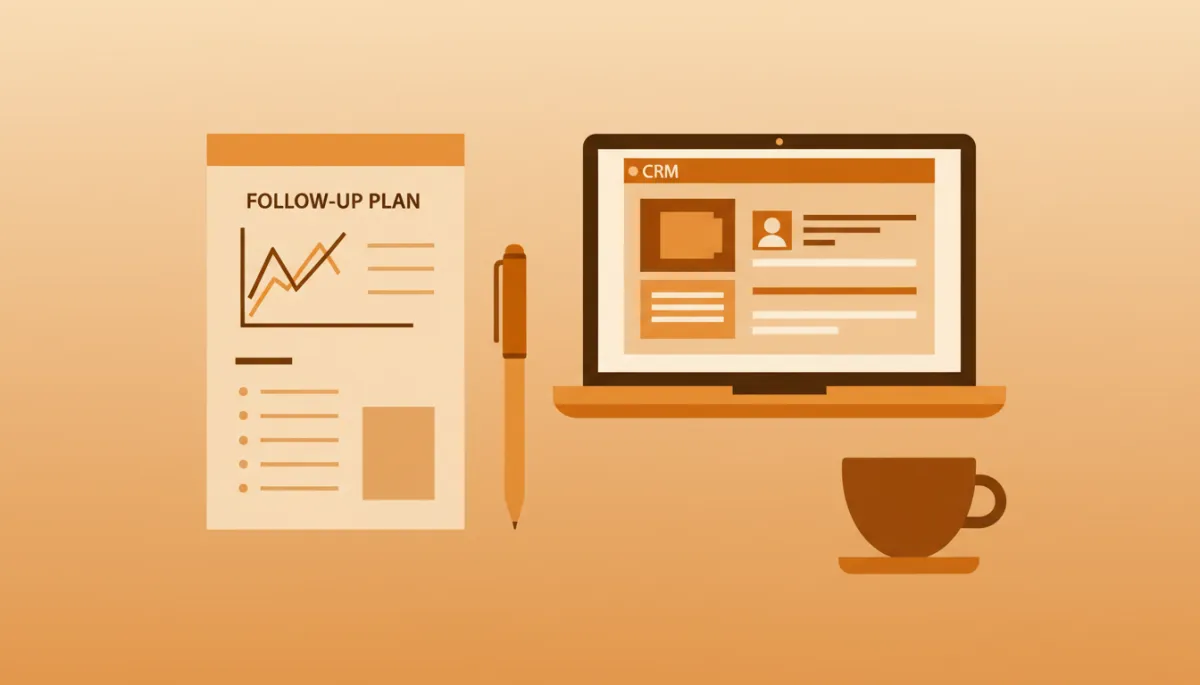
The best stack is the one you use every day with a clear routine.
Tier 1 Execution: Turning Your Stack into Revenue
Tools alone do not close deals — Tier 1 execution does. Jason often points to founders like Tan, Teo, and Leon, who treated their follow‑up stack as a non‑negotiable daily discipline. They reviewed their CRM every morning, cleared follow‑up tasks before lunch, and refined sequences weekly based on real replies. That rhythm, more than any single feature, is what moves you from scattered hustle to a repeatable revenue engine.
FAQ: Follow Up Tools for Startup Founders
What is the minimum viable follow up stack for a solo founder?
A simple CRM and a calendar scheduler. Use them rigorously for every conversation, and layer in an email sequencer and tracking pixel once you have repeatable messaging and more leads than you can manually handle.
How often should I review my follow up pipeline?
Daily. Gil’s most disciplined founders and Jason’s most successful clients all share this habit — a short, focused pipeline review every morning, clearing due tasks and re‑setting next actions for key deals.
Are AI‑powered follow up tools worth it for early‑stage startups?
They can be — especially for drafting emails and summarising calls — but only after you have a clear, human‑designed process. AI should accelerate a working system, not replace the thinking you need to do about your buyers and their problems.
How do I avoid sounding robotic in automated sequences?
Ground every message in specifics from your last interaction — their words, their dates, their stakes. Use the P.I.T.C.H. Formula, keep emails short, and give yourself permission to edit AI‑generated drafts before they go out.
What metrics should I watch to judge my follow up tools?
Start with reply rate, meeting‑booked rate, and time‑to‑follow‑up after a call. Over time, track conversion by sequence and by rep to see where your stack is helping — or hiding — performance issues.
Where can I learn a complete follow up system, not just tools?
Jason built FOS specifically for that gap — a full, practical operating system that wraps around whatever CRM and sequencer you use. At roughly $0.63 per day, it is designed for founders who want Tier 1 execution without reinventing every step themselves.
If you want your follow up stack to look like the disciplined systems Gil sees in hypergrowth companies — and you want a proven framework instead of trial‑and‑error — consider pairing your tools with FOS at dreamaker.club/buyfos. It is a straightforward way to turn your CRM, sequencer, scheduler, and tracking pixel into a stack that actually closes more deals.
For additional perspectives on sales follow up tools and modern selling systems, you can explore independent resources such as RevPilot’s analysis of 2026 follow‑up trends and Tomba’s overview of AI‑assisted follow‑up.


