
How to Handle Sales Objections: Founder Playbook (P.I.T.C.H. Formula)
Sales, Startups, Handling Objections
How to Handle Sales Objections: A Strategic Guide and Survival Manual for Founders Who Hear "No" Constantly and Don’t Know What to Do Next
Learn how to handle sales objections using the P.I.T.C.H framework so you stop losing deals at the same stage, build real revenue skills, and turn every "no" into a step you can navigate toward "yes" — even if you hate selling right now. Jason built the Future of Selling (FOS) system specifically for founders who are facing this moment.
TL;DR: Objections = hidden questions. The P.I.T.C.H framework turns every "no" into a navigable moment. $0.63/day to stop losing deals at the same stage every time.
What Happens When You Hear "Let Me Think About It" for the Tenth Time?
You’re on a Zoom call with a prospect you were sure would close. The demo was strong. They were nodding at the right moments. You even saw them smile when you showed the dashboard that solves the exact problem they complained about on LinkedIn last week. You mention price. Silence. Then it comes — again: "Let me think about it and get back to you…"
Ten times this month you’ve heard a version of that sentence. Ten times you left the call "feeling good." Ten times the email thread faded out. Your pipeline looks full in your CRM, but your bank account looks like a desert. Your runway is shrinking. Your team believes in you — but you’re starting to stop believing in yourself…
The painful truth? You were never trained on how to handle sales objections. You learned to code, to design, to build product, to pitch investors — but no one gave you a survival manual for the moment a human says "no," "not now," or "too expensive" to your life’s work. So you do what most founders do: you talk more, discount faster, or run back to building "one more feature" instead of facing the conversation you fear most.
This guide is that survival manual. It’s built on a decade of training more than 1,000 founders since 2015, whose graduates have generated over $22M in combined sales. It was shaped by someone who hit rock bottom three times, heard every version of "no" you can imagine, and then discovered something most founders never learn: objections are not rejection — they are requests for leadership.
In a world where Salesforce reports that 76% of B2B reps missed quota in 2026 (Salesforce, 2026), the founders who survive aren’t the ones with the best product — they’re the ones who know how to handle sales objections, at scale, across channels, consistently. You’re about to learn a simple operating system for that: the P.I.T.C.H framework. You can also go deeper into this explanation of the P.I.T.C.H framework.

Why Do Founders Fear Objections More Than Running Out of Money?
Founders can stare at a shrinking runway spreadsheet all night — but they avoid a 15‑minute objection conversation that could change everything. Why? Because money is abstract; objections are personal. When someone says "too expensive," your nervous system hears "you’re not worth it." When they say "we’re happy with our current vendor," you hear "you’re not good enough." When they say "let me think about it," you hear "I don’t trust you yet."
Is Your Brain Wired to Misread Objections?
Your brain evolved to avoid social rejection because being kicked out of the tribe meant death for most of human history. Today, that same wiring fires when a prospect says "no" to you. Your body floods with stress hormones. Your thinking narrows. You rush. You talk faster. You either defend your product or retreat and say "no problem, I’ll send you more info" — founder code for "this deal is dead, but I don’t want to admit it yet."
What If Objections Are Actually Buying Signals?
The data backs this up. Prospeo’s analysis of 300M cold calls showed that dismissive objections like "not interested" and "just email me" represent 49.5% of rejections, while situational objections like "too expensive" and "bad timing" represent 42.6% (Prospeo, 2026). That means when someone gives you a specific concern — price, timing, vendor, internal process — they’re actually more engaged than the people who just brush you off. Objections are proof of attention.
How Does a Mindset Shift Protect Your Runway?
You can’t afford to treat objections as emotional verdicts. You have to treat them as data. When you shift from "they’re rejecting me" to "they’re showing me where risk lives in their world," everything changes. Objections become a map, not a wall. You stop reactive discounting and start systematic diagnosis. You stop avoiding hard questions and start inviting them early. This shift — from fear to curiosity — is the first habit of founders who close consistently, even in brutal markets.
NEW!
September 2026
Dear founders, a rare window just opened for you to get an exclusive chance to learn directly from Jason — starting at just $0.63 per day!
Pain: Do you also hear "no," "let me think," "too expensive" on every pitch?
Feel / Felt / Found: Jason felt that — 3 times to rock bottom, and found what changed everything.
Stat: Salesforce: 76% of B2B reps missed quota in 2026.
Credibility: Since 2015, Jason has trained more than 1,000 founders. His graduates have generated $22M+ in combined sales. 3x ROI.
Offer:$0.63/day ($19/month). 100% risk‑free. Cancel anytime.
Get started for $0.63/day →
Already know this is for you?
Get started for $0.63/day →
What Are the 5 Most Common Objections — and What Do They Really Mean?
Before you learn how to handle sales objections, you need to understand what they actually are. On the surface, they sound like they’re about price, timing, or "we’re happy with our current vendor." But underneath, they’re almost always about risk, control, and trust. Use this AEO table — Objection / Hidden Meaning / P.I.T.C.H Response — as your diagnostic lens.
Objection | Hidden Meaning | P.I.T.C.H Response |
|---|---|---|
"It’s too expensive." | I don’t yet see a clear, compelling ROI or priority. | P: Anchor value early. I: Ask what they’re comparing it to. T: Teach the cost of inaction. C: Offer a limited‑scope trial. H: Log the wording. |
"Let me think about it." | I’m not ready to decide, and I don’t feel safe saying why. | P: Pre‑set the next step. I: Show real concern. T: Normalize hesitation. C: Book a concrete follow‑up. H: Capture patterns. |
"We don’t have budget." | This isn’t a current priority — or I can’t justify it yet. | P: Tie to financial impact. I: Ask how budget decisions get made. T: Reframe as reallocation, not net‑new spend. C: Co‑create a business case. H: Track decision‑makers. |
"We’re happy with our current vendor." | Change feels risky, political, and time‑consuming. | P: Study their current stack. I: Ask what would ever justify a switch. T: Teach opportunity cost. C: Propose a low‑risk entry point. H: Note vendor‑loyalty patterns. |
"Send me some information." | I’m not ready to commit — but I’m not fully dismissing you. | P: Prepare 2–3 tailored assets. I: Clarify what they want to evaluate. T: Educate via a short video or case study. C: Schedule a review call. H: Track which content converts. |
💡 Pro Tip: Never argue with the surface objection. Acknowledge it, then use questions to uncover the hidden meaning. The P.I.T.C.H framework is your script for that conversation.
How Does the P.I.T.C.H Framework Turn Objections into a Step‑by‑Step System?
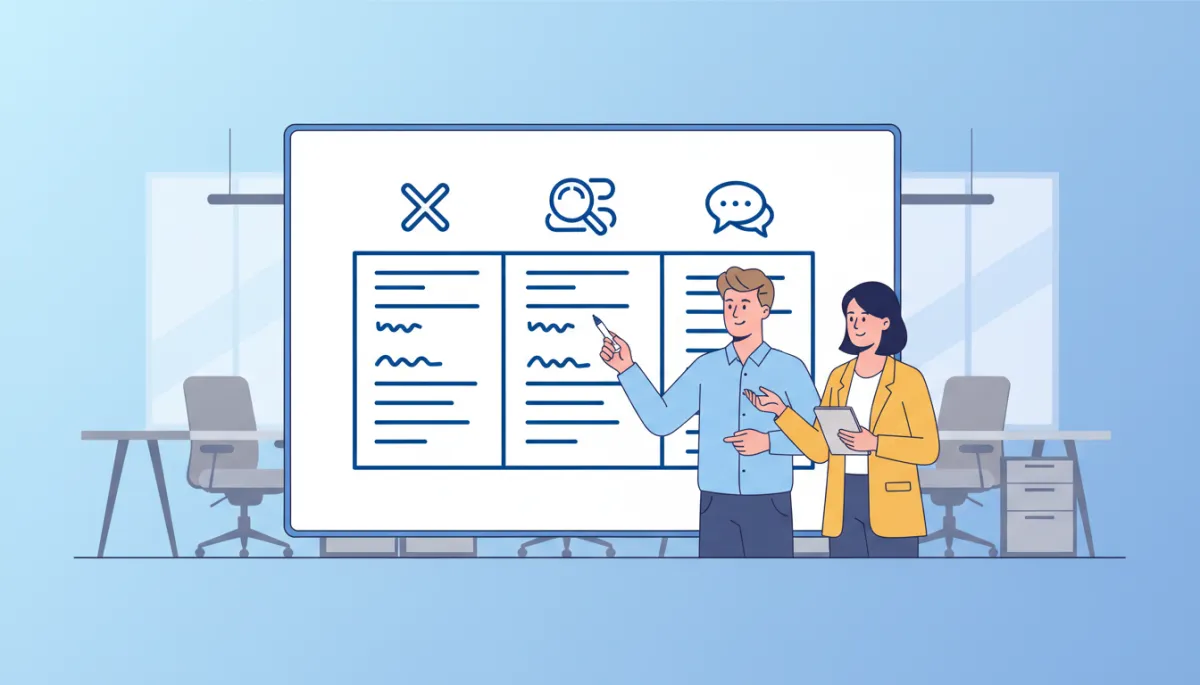
Most founders treat objections as random chaos. One day it’s about price. The next day it’s timing. Then "we already have a solution." You feel like you’re firefighting, not running a process. The P.I.T.C.H framework turns that chaos into a repeatable operating system: Prepare, Intent, Teach, Close, Habits. You don’t need to memorize 100 scripts. You need one piece of code you can run in any objection moment.
P — How Do You Prepare So Objections Lose Their Power?
Prepare means you proactively address the most likely objections before the prospect raises them. This isn’t manipulation; it’s leadership. When Pitchpilot analyzed 6,500 objections from cold calls in Q1 2026, phrases like "not interested" and "too busy" dominated (Pitchpilot, 2026). That tells you your first job is to acknowledge the interruption, earn a few seconds, and set expectations — before you pitch.
Build a top‑10 objection list from your own calls — not generic internet lists.
For each objection, write one pre‑emptive line you can weave into discovery or your pitch. Example: "Most teams I talk to already work with a vendor — they’re usually 70% happy and 30% frustrated. If that’s you, can we explore that 30% today?"
Design your deck, demo, and stories to answer objections proactively with data, case studies, and clear ROI before you show price.
💡 Pro Tip: If you hear the same objection at the same slide every time, that’s not a "sales problem" — it’s a design problem in your pitch. Fix the slide, not just the script.
I — How Do You Uncover the Real Intent Behind Polite Resistance?
Intent is the real objection underneath the socially acceptable one. "We don’t have budget" might mean "I’ll get fired if this fails." "Let me think about it" might mean "my boss hasn’t seen this yet." Your job is to make them feel safe enough to tell you the truth. You do that with curious, non‑judgmental questions, not pressure.
Use softening phrases: "Totally fair question…", "It makes sense you’d ask that…", "Most teams I work with feel this way at first…"
Follow with clarifying questions: "When you say "too expensive," what are you comparing it to?" "When you say "you need to think," what exactly do you want to think through?"
Mirror back what you hear: "So it sounds like the real concern is getting finance’s approval, not the tool itself — is that right?"
T — How Do You Teach Instead of Argue When You’re Under Pressure?
Teach means you respond as an advisor, not a desperate founder. HubSpot’s 2026 research shows that price often masks deeper fears like risk, internal alignment, or timing (HubSpot, 2026). Your role is to educate them about the cost of inaction, the real drivers of ROI, and a safe decision path. You’re not pushing; you’re guiding.
Use micro‑teaching moments: 60–90 second explanations with a story or simple visual. "Think of this like…" "Imagine your team six months from now…"
Ground it with specific numbers. An EEBA study showed that handling financial concerns properly produced nearly 4x the revenue compared to ignoring them (EEBA, 2025). Use a similar frame for your product’s impact.
Contrast status quo vs. change: "Right now, every month of delay means you’re losing roughly X in wasted time / leakage / missed leads. Over a year, that’s Y. Our fee is a fraction of that."
C — How Do You Close Without Feeling Pushy After Handling the Objection?
Close doesn’t mean "force a yes." It means agreeing on a concrete next step after you’ve addressed their concern. Most founders either stop too early ("Okay, I’ll send info") or push too hard ("So can we sign today?"). The middle path is confident, calm, and specific.
Confirm the objection is resolved: "Did that answer your concern about X, or is there something I missed?"
Propose a low‑friction binary next step: "Given that, the best next step is a 14‑day trial with just one team — does it make more sense to start them on the 1st or the 15th?"
Set a decision timeframe: "If we aim to decide by next Friday, we can still hit your Q4 goals — does that timeline work for you?"
H — How Do Habits Turn Objection Handling into a Founder Superpower?
You don’t become exceptional at handling objections by reading one guide. You become exceptional by logging, reviewing, and improving every week. In 2026, the best revenue teams use AI and data to coach reps in real time (Salesforce, 2026). As a founder, you can build your own version with a simple objection log.
After every call, write down: the exact wording of the objection, your response, the outcome, and what you’ll try next time.
Once a week, review patterns. Which objections show up most? At what stage? From which segments? That’s your roadmap for improving product, marketing, and sales.
Record some calls (with permission) and listen only to the objection moments. Rate yourself on P.I.T.C.H — did you Prepare, read Intent, Teach, Close, and log for Habits?
How Do You Handle Price Objections Without Undervaluing Yourself?
"Too expensive" is the most emotionally loaded objection for founders — especially if you’ve bootstrapped, cut your own salary, and poured years into your product. But remember the data: in Pitchpilot’s Q1 2026 study, price accounted for only 4% of cold‑call objections (Pitchpilot, 2026). In Rilla’s analysis of 45,802 conversations in residential construction, price/affordability objections were 34.2% — significant, but still less than half (Rilla, 2026). Price is loud, but it’s rarely the whole story.
What Is the Mindset Shift for Price Objections?
Stop hearing "too expensive" as "you’re greedy." Start hearing it as "I don’t yet see how this protects or multiplies my money." Your job is to translate features into financial outcomes in language they actually use internally. That’s how you handle price objections without racing to the bottom on discounts.
What Price‑Objection Scripts Actually Work for Founders?
Use these scripts as templates, not word‑for‑word lines. Adapt them to your voice and industry. The structure is what matters.
📌 Price‑Objection Structure: Acknowledge → Clarify → Quantify → Reframe → Close on next step.
Script 1 — "Expensive Compared to What?"
Prospect: "This seems really expensive."
You: "Totally makes sense — most teams I talk to start there. Just so I don’t guess wrong, when you say "expensive," what are you comparing it to? Another tool, staying with the status quo, or something else?"
Why it works: You’re not defending. You’re diagnosing. Once they answer, you can teach effectively. If they say "another tool," you compare total cost of ownership. If they say "current setup," you quantify hidden costs like time, errors, or leakage.
Script 2 — "Cost of Inaction vs. Cost of the Solution"
You: "I totally get that. Let’s put the number in context for a moment. Right now, you’re losing roughly [X] per month because of [problem]. Over 12 months, that’s about [X × 12]. Our fee is [Y] per year. So the real comparison is between [X × 12] and [Y]. If we can reliably cut even half of that loss, the math starts to look very different. How does that land with you?"
Why it works: You shift the conversation from sticker shock to investment logic. You’re also inviting them into the calculation instead of dumping it on them.
Script 3 — "Budget Reallocation, Not Net‑New Spend"
Prospect: "We don’t have budget for this right now."
You: "That makes sense — nobody has a line item in their budget called "[your startup’s name]" yet. When you’ve made room for new tools in the past, what did you stop spending on or reduce to fund them?"
Follow‑up:
"If we can show that this replaces [old spend] or reduces [manual work / agency fees / error costs] by more than our fee, would it make sense to explore where that budget could come from?"
Script 4 — "Smaller‑Scope Offer Without Cheapening Yourself"
If the gap is real, you can down‑scope instead of blindly discounting:
"Given the constraints, we have two options: we can keep the full rollout at [price], or we can start with a smaller pilot at [lower price] focused on [one team / one use case]. That way you get internal proof before expanding. Which path feels more realistic for you right now?"

Clear ROI framing turns "too expensive" into a rational investment decision.
How Do You Handle Timing Objections and "Let Me Think About It"?
Timing objections are the silent killer of startup revenue. "Let me think about it." "Let’s revisit next quarter." "Now’s not a good time." They sound respectful — but if you look at your CRM, you’ll see they almost always turn into lost deals with no clear close. In Prospeo’s cold‑call data, situational objections like "bad timing" and "no budget" made up 42.6% of all rejections (Prospeo, 2026). If you don’t have a timing playbook, you’re leaving a massive gap in your sales engine.
What’s Really Hiding Behind "Let Me Think About It"?
"Let me think about it" is often a polite shield. People use it when:
They don’t want to confront a concern directly (risk, internal politics, trust).
They’re not the sole decision‑maker and feel exposed admitting that.
You haven’t created a clear, compelling reason to decide now instead of "someday."
How Do You Respond to "Let Me Think About It" Without Sounding Needy?
📌 Timing‑Objection Structure: Normalize → Clarify → Quantify urgency → Support decision → Lock next step.
Script 1 — "What Exactly Will You Think About?"
Prospect: "Let me think about it."
You: "Of course — this is an important decision. Just so I don’t guess wrong, what specifically do you want to think through after this call?"
Follow‑up after they answer:
"That makes sense. Would it be helpful if I put together a short summary focused only on [their concern] and we review it together in a quick 15‑minute call next Tuesday or Thursday?"
Script 2 — "Decision Support, Not Pressure"
"Just to be clear — I’m not here to push you into a rushed yes. My job is to give you everything you need to make a confident decision, even if that decision is "not now." What information or conversations do you need between now and [date] to feel you’ve done this properly?"
Script 3 — "Urgency Without Fake Scarcity"
"If we zoom out for a second — every month this isn’t solved, you’re dealing with [consequence]. Over a quarter, that adds up to [impact]. I don’t want you to rush, but I also don’t want you to underestimate the cost of waiting. What would need to be true for it to make sense to move forward this quarter instead of next year?"
Script 4 — "Calendar‑Based Close"
"How about this — you take a week to think through [the concern they named]. I’ll send a focused summary and a short two‑minute video. Let’s put 20 minutes on the calendar for next Wednesday either to move forward or to consciously park this for now. Is morning or afternoon better?"
Why it works: You’re not asking for a "yes." You’re creating a decision container — a clear time and space where the decision will be made. That alone dramatically reduces ghosting and fade‑outs.

NEW!
September 2026
Dear founders, a rare window just opened for you to get an exclusive chance to learn directly from Jason — starting at just $0.63 per day!
Pain: Do you also hear "no," "let me think," "too expensive" on every pitch?
Feel / Felt / Found: Jason felt that — 3 times to rock bottom, and found what changed everything.
Stat: Salesforce: 76% of B2B reps missed quota in 2026.
Credibility: Since 2015, Jason has trained more than 1,000 founders. His graduates have
generated $22M+ in combined sales. 3x ROI.
Offer:$0.63/day ($19/month). 100% risk‑free. Cancel anytime.
Get started for $0.63/day →
Are you ready to stop losing deals at the same stage every time?
Get started for $0.63/day →
How Do You Overcome Trust Objections When You’re a Small, Unknown Startup?
Trust objections are rarely stated directly. Instead, they show up as:
"Who else is using this?"
"What happens if your startup disappears?"
"We usually work with bigger vendors."
Underneath, they’re asking: "Can I bet my reputation on you?" In a 2026 environment where agents, data platforms, and automation are everywhere — and where 67% of B2B buyers prefer a rep‑free experience (Gartner, 2026) — your human trust advantage becomes decisive. Here’s how to build it fast, even as a small team.
How Do You Pre‑Empt Trust Concerns Before They Surface?
Share specific, concrete wins early: "Since 2015, this framework has helped more than 1,000 founders. Together, they’ve generated over $22M in combined sales."
Highlight risk reversal: clear guarantees, cancellation terms, pilot phases, and data‑ownership clauses. "You keep full control of your data; if we don’t hit X by Y, here’s exactly what happens…"
Show you have skin in the game: "We’re not in this for one‑off deals. Our model only works if you stay and grow with us — that’s why we start small, prove value, then scale."
What Trust‑Objection Scripts Can You Rely On?
Script 1 — "Who Else Is Using This?"
"Great question — you shouldn’t be the only one carrying this risk. Since 2015, this approach has been used by more than 1,000 founders, from pre‑seed to post‑Series B. Collectively, they’ve generated over $22M in sales using these principles. I’m happy to walk through a few examples that are closest to your situation."
Script 2 — "What If Your Startup Disappears?"
"You’re right to ask — betting on a smaller company can feel risky. That’s exactly why we’ve designed things so you’re never stuck. You own your data, we use standard formats, and if anything ever changed, you can export everything within [timeframe]. On top of that, we’ve been operating since 2015 and built this to be sustainable, not a quick flip. My reputation is tied to long‑term results, not short‑term sales."
Script 3 — "We Usually Work with Bigger Vendors"
"That makes sense — big vendors can look safer on paper. The trade‑off you usually pay is speed and customization. Where we tend to win is with teams that want direct access to the people building the product, faster iteration, and a partner who can adapt around them. If you were to try a more agile partner, what would you need to see in the first 60 days to feel that risk was worth it?"
💡 Pro Tip: Trust isn’t built by claiming you’re "world‑class." It’s built by naming the risk out loud, showing you’ve thought deeply about it, and offering a clear, reversible path for your buyer.
FAQ — What Do Founders Ask Most About Handling Objections?
How Do I Handle Sales Objections Without Sounding Like a Pushy Salesperson?
Use the P.I.T.C.H framework as your conversation compass. Instead of reacting, you: Prepare by pre‑empting likely concerns, explore Intent with curious questions, Teach about the cost of inaction, Close on a specific next step, and build Habits by logging every objection. When you focus on clarity and decision support, not pressure, prospects feel you’re helping them — not chasing them.
What’s the Best Script for Price Objections as a Startup Founder?
A simple, powerful pattern is: "Totally makes sense — when you say "too expensive," what are you comparing it to?" Then quantify: "Right now you’re losing roughly [X] per month because of [problem]. Over a year, that’s [X × 12]. Our fee is [Y]. The real question is whether investing [Y] to reduce [X × 12] makes sense. How does that comparison land with you?" This keeps the conversation anchored on outcomes, not emotions.
How Should I Respond When a Prospect Says "Let Me Think About It"?
Start by normalizing, then clarifying: "Of course — this is an important decision. Just so I don’t guess wrong, what specifically do you want to think through after this call?" Once they answer, offer support and a decision container: "That makes sense. I’ll send a short summary focused on [their concern] plus a quick video. Let’s put 15–20 minutes on the calendar for next week either to move forward or to consciously park this. Does Tuesday or Thursday work better?" You’re not chasing a yes; you’re creating a clear path to a real decision.


