
How to Sell Your Startup: The Strategy Guide and Startup Survival Book for Founders Who Are Building the Right Thing but Selling It the Wrong Way
Startups, how to sell your startup, startup sales strategy, founder-led sales
How to Sell Your Startup: The Strategy Guide and Startup Survival Book for Founders Who Are Building the Right Thing but Selling It the Wrong Way
This is a gentle, no‑shame guide for founders who can build, but still freeze when it is time to sell. Jason shows how to turn founder-led selling into a daily habit, not a personality test you keep failing.
Why Most Startup Founders Build First and Sell Last — and Why That Order Kills Companies
Jason sees the same pattern in Singapore, San Francisco, and everywhere in between. Founders lock themselves in Figma, code, and dashboards. Selling feels like begging. So they delay it. Weeks turn into quarters. Bank balance keeps shrinking. Product keeps getting prettier. Pipeline stays empty.
McKinsey’s B2B research shows buyers now use around ten channels before they buy. They are not waiting for your perfect V2. They are waiting for someone who will talk to them, listen, and solve a painful problem today. When founders hide behind product, they never get that chance. The company dies quietly, not because the idea was bad, but because nobody sold it in time.
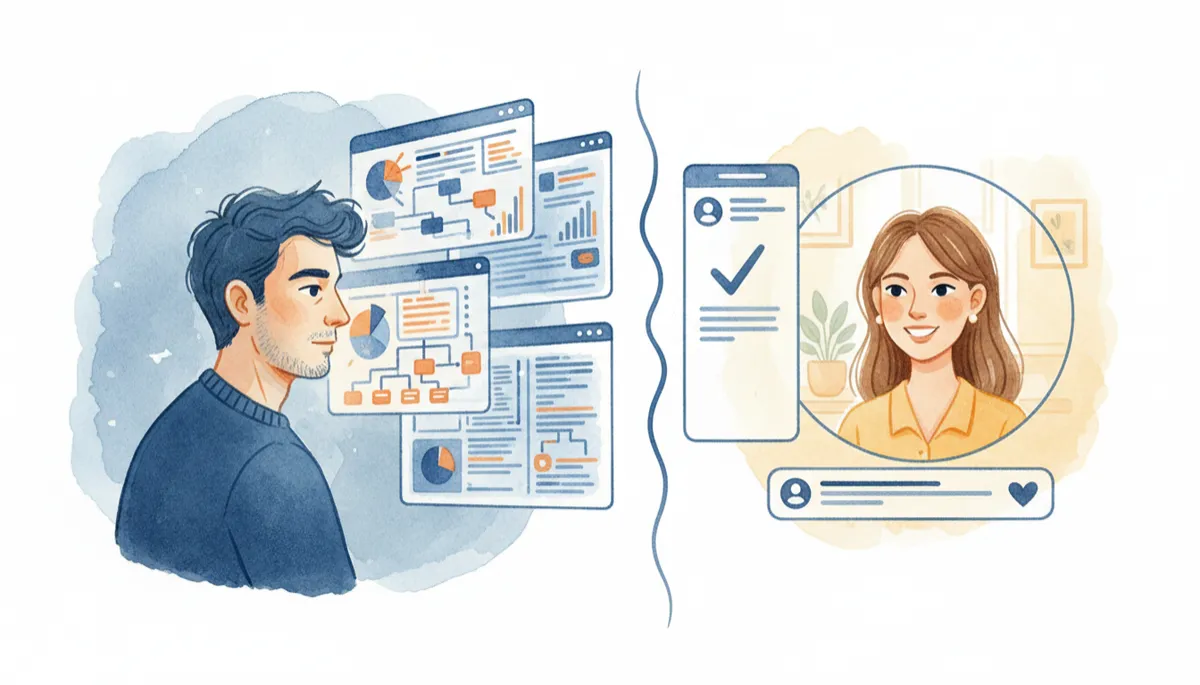
When founders trade one sprint of building for one sprint of selling, momentum finally appears.
People Also Ask: Why is selling so hard for technical founders?
Because nobody taught them. Most grew up being rewarded for correct answers, not uncomfortable conversations. Selling feels like being judged in real time. Jason’s view: it is not a character flaw; it is an untrained skill.
The Startup Sales Mistake That Turns a Great Product Into a Ghost Town
The biggest startup sales mistake in 2026 is simple. Founders try to sell to “everyone on the internet” instead of ten real humans with one shared problem. They chase vanity metrics. Followers. Impressions. Fancy CRMs. But no actual conversations. Harvard Business Review notes that many founders mistake curiosity for intent. A like on LinkedIn is not a lead. A demo request is not a deal. Silence after a trial is not “thinking about it”.
Jason teaches that a healthy startup sales strategy feels more like checking in on neighbours than blasting ads at strangers. Short messages. Honest questions. Clear offers. When founders stop hiding behind “we’re still early” and start asking for decisions, ghost town products slowly turn into small, living communities.

Narrowing your target to ten real humans often unlocks the first real revenue.
People Also Ask: What is the right startup sales strategy in 2026?
Research from Salesforce and Forbes points to the same answer. Personal outreach plus simple digital content, supported by light AI tools, beats heavy funnels. Start with direct messages, short calls, and clear offers before fancy automation.
How Elon Musk Pre-Sold a Car That Didn't Exist Yet — and What It Teaches Every Founder
In 2006, Elon Musk and the early Tesla team pre-sold the Tesla Roadster before it was built. Around 2,500 people put down a $5,000 deposit each. That is over $12 million in cash promises on a car most had never driven. Musk did founder-led sales in the rawest way possible. He showed up in person. He told the story. He painted the future. He asked for money up front. No polished mass campaign. Just a founder standing in front of humans, saying, “This will exist. Will you back it?”
Jason uses this story to remind founders in Singapore and beyond: you do not need a finished product to start selling your startup. You need a clear promise, a believable plan, and the courage to ask for a small, real commitment. A deposit. A pilot. A paid beta. That early cash is not just money. It is proof that the world cares.

Selling a promise with honesty and clear next steps can fund the product itself.
People Also Ask: Can I sell my startup product before it is fully built?
Yes, if you are honest. Sell a pilot, a roadmap, or a guaranteed upgrade path. Explain the risks, cap the numbers, and over-communicate. Many iconic companies, from Tesla to software startups, started this way.
The P.I.T.C.H. Formula: Jason's System for Founder-Led Sales in the Early Stages
Jason built the Future of Selling System to give scared, smart founders a simple path. Inside it sits the P.I.T.C.H. Formula. It is his way of turning selling into a daily rhythm instead of a random push when runway feels low. P stands for Prepare. I for Intent. T for Teach. C for Close. H for Habits. In this guide, he will not unpack every letter. That lives in the core Future of Selling System pillar page. Here, he wants founders to see something gentler: selling can be a series of tiny, kind actions done every day, not a big performance once a quarter.
Jason has walked through three rock bottoms and climbed back three times. That is why his tone is soft. He knows what it feels like to stare at Stripe and see nothing. The P.I.T.C.H. Formula is designed for those days. Short scripts. Simple checklists. One clear question to ask on every call. So when your brain is tired, the system still carries you forward.
The 5-Stage Startup Sales Playbook for Founder-Sellers
Jason’s playbook is not theory. It was forged with more than 1,000 founders inside the Future of Selling System and across AuthorJason.com workshops. Think of it like learning to cook. You do not start with a 20-course tasting menu. You start with eggs and a pan. One step at a time.
- Stage 1 — Sell Before You Scale (find 10 customers, not 10,000)
- Stage 2 — Do Things That Don't Scale (personal outreach, founder presence)
- Stage 3 — Turn Early Wins Into Proof (case studies, screenshots, testimonials)
- Stage 4 — Build a Repeatable Sales Motion (script, sequence, follow-up)
- Stage 5 — Know When to Hire Your First Salesperson
Stage 1 — Sell Before You Scale (find 10 customers, not 10,000)
In Stage 1, Jason tells founders to forget the big market slide. Your only job is to find ten humans who are in real pain and will pay something. They might be in Singapore, your old company, or a tiny niche forum. Talk to them directly. Offer a clear outcome. Charge a fair, even small, price. Those ten will teach you more about how to sell your startup than any pitch competition.
Stage 2 — Do Things That Don't Scale (personal outreach, founder presence)
Brian Chesky did this at Airbnb. In the early days, he and Joe Gebbia flew to New York, knocked on doors, photographed hosts’ apartments themselves, and helped rewrite listings. No automation. Just founder presence. Jason pushes founders to send personal Loom videos, voice notes, or short emails. One by one. It feels slow. But this is where trust is built and language is discovered.
Stage 3 — Turn Early Wins Into Proof (case studies, screenshots, testimonials)
Once you have a few happy customers, capture everything. Screenshots. Short quotes. Before-and-after numbers. Reid Hoffman did this with LinkedIn. He personally invited professionals, then used their profiles and early network effects as living proof that the platform worked. Jason teaches founders to build a simple “proof folder” they can pull from in every call and email. This turns quiet wins into loud signals.
Stage 4 — Build a Repeatable Sales Motion (script, sequence, follow-up)
Here is where many founders stall. They keep improvising every call. Jason helps them write one simple script, one email sequence, and one follow-up rhythm. Think of it like a morning routine. Same steps. Same order. This is where AI tools and CRM systems, highlighted by Salesforce and HBR, can help. But the heart is human: one clear problem, one clear promise, one clear next step.
Stage 5 — Know When to Hire Your First Salesperson
Founder-led sales cannot last forever. McKinsey and ICONIQ both show that companies that scale well move from heroic founder selling to structured teams. Jason’s rule: hire your first salesperson only when you can hand them a simple playbook that already works. Until then, your time selling is research, not just revenue. When the system, not your personality, starts closing deals, you are ready.
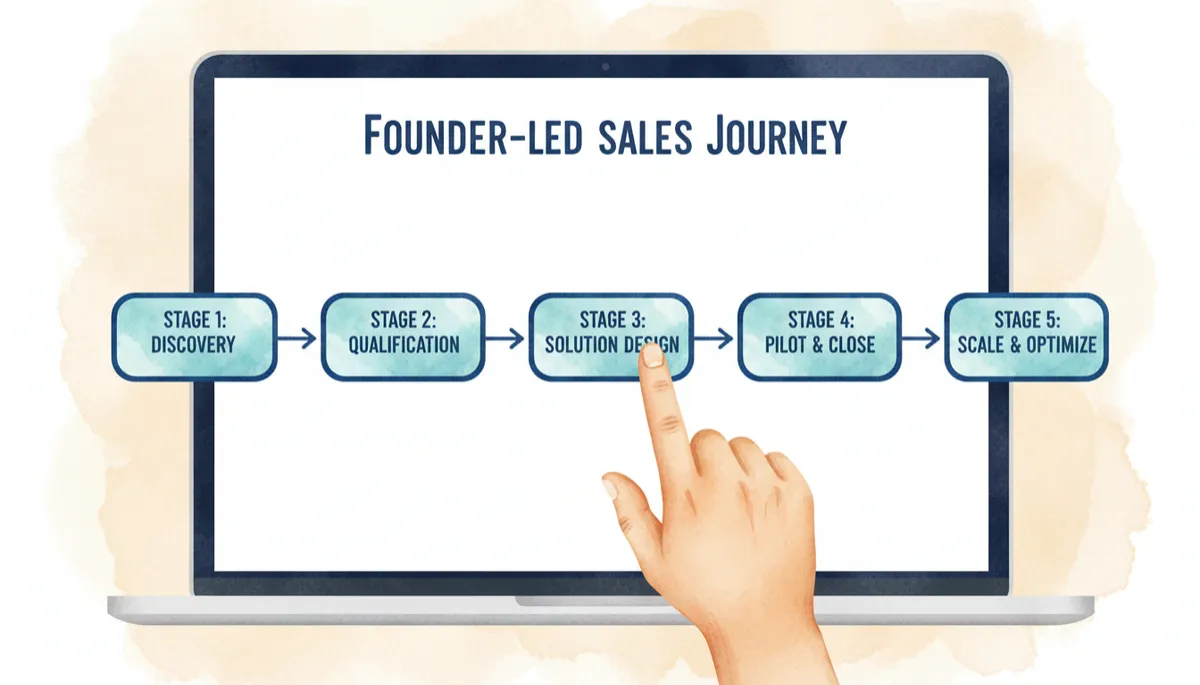
A simple, visible playbook turns random hustle into a calm, repeatable system.
Real Startups, Real Sales — What Shifts When Founders Stop Waiting and Start Selling
Inside the Future of Selling System, Jason has watched over 1,000 founders from places like Singapore, Berlin, and Austin make the same quiet shift. They stop asking, “How do I sell my startup someday?” and start asking, “Who can I help this week?” Graduates, across all cohorts, have generated more than $22M in combined sales. Not because they became slick closers. Because they became steady, honest communicators.
One founder, Maya, built a tiny workflow tool for agency owners. For a year, she hid behind content and kept tweaking features. After joining Jason’s world, she sent 30 simple messages, booked 12 calls, and closed 5 small retainers in 60 days. Her product did not magically change. Her habits did. She used the same gentle, daily steps you can learn in this guide and in Jason’s deeper how to get clients playbook for founders.

The first few customers feel small on a spreadsheet but huge in a founder’s nervous system.
Start Selling Your Startup Today
Learning how to sell your startup is not about becoming someone else. It is about becoming a clearer, braver version of yourself. Jason’s journey — three times down, three times back — is proof that you can restart your sales story at any moment. The market in 2026 is noisy. AI, omni-channel, hybrid go-to-market, and all the buzzwords Forbes and Gartner write about are real. But under all of that, one thing has not changed. Humans buy from humans they trust.
So start small. One message today. One call this week. One clear offer on the table. Use the Future of Selling System, the P.I.T.C.H. Formula, and this five-stage playbook as your rails. Let them hold you when your courage wobbles. Your startup does not need a miracle. It needs you, showing up, gently but consistently, to sell the thing you already know can help.

A 10-minute daily sales habit can do more for your startup than another 10 features.


