
How Billionaire Jeff Bezos Built a Startup Sales System That Scaled From 1 to 1 Million Customers
P8 Startups, Scalable Startup Sales Strategy, Future of Selling System
How Billionaire Jeff Bezos Built a Startup Sales System That Scaled from One Customer to One Million — A Founders’ Guide
Jason writes this as your peer in building. A senior engineer who has watched far too many founders burn out trying to “sell harder” instead of designing a scalable startup sales strategy. This is a forgiving guide, not a lecture — built around what Bezos, Cuban, Jobs, and more than 1,000 modern founders have already proven works.
Why Founder-Led Sales Stop Working — and What Must Change Before They Work Again
Right now, you’re probably leading every important deal. The team books the meetings. You jump in when it matters. This works — until it quietly doesn’t. Your calendar fills. Response times slow. Follow-ups get lost in Slack noise and sprint boards.
The data backs this up. Salesforce reports that sellers spend only about 28–30% of their time actually selling, even though the goal is 40%+ (Salesforce, State of Sales 2026). Founders feel this more sharply because they’re balancing product, hiring, and fundraising on top of sales.
The real problem isn’t you. It’s the invisible rule your company currently runs on: “We sell when the founder sells.” That rule caps growth, no matter how strong your product is or how hard you push. Execution becomes a bottleneck, not a strength (Simon-Kucher, B2B Commercial Trends 2026).
What needs to change is simple to say and harder — but completely doable — to build: your company needs a documented, repeatable, team-friendly sales system. A system where founder insight is captured in steps, scripts, and triggers instead of being trapped in one person’s head and calendar.
As Jason teaches at AuthorJason.com, a founder-led startup sales strategy works best when the founder sells manually first, then turns what worked into a process — instead of automating guesswork too early.
How Jeff Bezos Designed Amazon’s Sales System to Scale Without Being in Every Deal
When Jeff Bezos launched Amazon in 1994, he could have built a classic hard-push sales motion. Instead, he obsessed over something quieter and far more scalable: the experience the customer had after clicking, after paying, after the package hit their doorstep. He designed from that moment backward — his famous “working backward” approach.
Amazon’s early “sales system” wasn’t a pile of closers. It was a promise. Customers would never be surprised. They’d always be informed. They’d get what they expected — or better. Every sale was designed to automatically generate the next sale through trust, not pressure. Every complaint was a signal. Every return was a question. Every five-star review was a pattern to be systematized in code, operations, and training.
For founders, this is the heart of a scalable startup sales strategy. You ask one design question before you create any step, email, or script: “What does the customer experience at the end of this — and does that experience make them want to buy again and tell someone else?”
One concrete example: in Amazon’s early years, Jeff Bezos pushed for proactive emails when orders were delayed, even if the delay was minor. That small, systematic act of over-communicating reduced support tickets and increased repeat purchase rates because customers felt respected, not left guessing. The “sales process” extended past the checkout page into reliable communication.
Another example: the relentless focus on customer reviews. Bezos insisted reviews include pros and cons, even when that hurt short-term conversion. Over time, that built a moat of transparency. Shoppers trusted Amazon’s review system more than polished marketing copy, and that trust became a compounding sales asset no single salesperson could match.
A third system-level move was introducing the now-famous patented “one-click purchase.” By stripping friction out of repeat purchases, Amazon turned occasional buyers into regulars. The trick was technical, but the outcome was sales: a smoother path from intent to purchase quietly increased order frequency across millions of customers.
As Jason teaches at AuthorJason.com, your founder-led startup sales strategy gets stronger when you design the end experience first — then make every email, pitch, and follow-up serve that experience instead of chasing one-off wins.
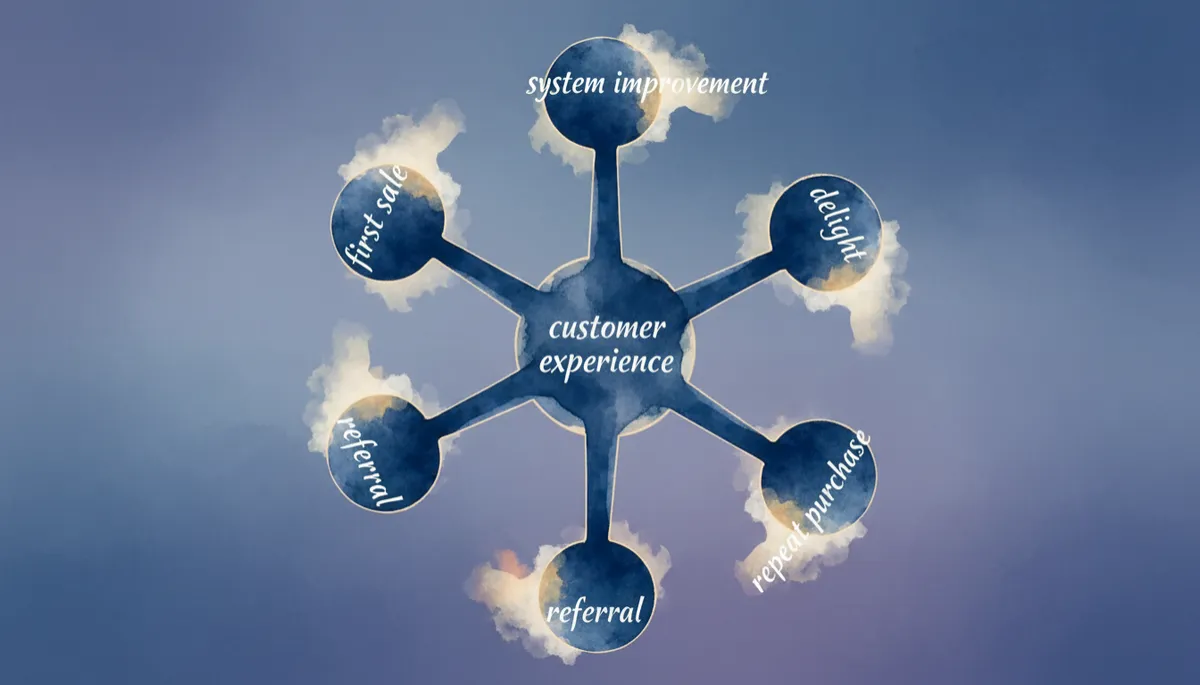
Startups with a clear process from lead to close generate 18× more revenue than those without one. Retaining customers is 5–25× cheaper than acquiring them. The flywheel isn’t just a metaphor — it’s the system itself.
The Scalable Sales Framework Jason Teaches Every Founder Ready to Grow Beyond Heroic Effort
Jason built the Future of Selling (FOS) system because he saw the same pattern repeat across more than 1,000 founders since 2015. Great products. Strong early pull. Then a wall. Not from lack of demand, but from lack of system. Execution collapsed under the weight of good news — more leads, more demos, more deals the founder alone couldn’t close well.
FOS is a simple idea with serious engineering behind it: turn your founder-led sales into a playbook your team can run without you. Document the path from stranger to referral. Automate what can be automated. Write scripts for what needs your voice. Then measure and improve it the way you would any production system in code.
How Does a Startup Founder Build a Repeatable Sales Process When Every Customer Seems Different?
Jason encourages founders to treat sales like software. Every customer is a different request, but the underlying API is the same. You capture the shared steps — trigger, discovery, offer, decision, post-sale — then allow parameters for each segment. The differences live in fields and tags, not in entirely new flows every time.
- Define the common journey from first touch to referral.
- Standardize the core steps and questions you use in every conversation.
- Add segment-specific differences as fields, tags, or signals — not as separate paths.
- Review wins and losses monthly to refine the shared backbone of the process.
When Should a Startup Stop Relying on the Founder for Sales and Start Building a Sales Team?
Jason’s rule of thumb is kind and strict. Don’t hire your first sales rep until you have a documented process from at least 50–100 conversations and a clear pattern of who wins and why. Otherwise you’re asking them to guess with your runway. System first. Then team. This cuts ramp time by about 33% (AeolusGTM, 2026).
- Close 20–50 customers in your target segment yourself and log every step.
- Document repeatable patterns that led to wins.
- Turn those patterns into a simple playbook and scripts.
- Only then hire a sales rep and train them against that playbook.
What Are the Three Most Important Stages in a Startup Sales Process — and Which One Do Most Founders Neglect?
Jason breaks it into three big stages: from lead to meeting, from meeting to “yes,” and from “yes” to referral. Most founders over-focus on the middle stage. They polish decks and demos. The neglected stage is from “yes” to referral — the post-sale experience that turns one deal into a pipeline. That’s where Bezos, Cuban, and Jobs quietly won.
- Design a clear path from lead to first meeting through simple, repeatable outreach.
- Standardize discovery and decision steps from meeting to “yes.”
- Design a post-sale sequence that asks for stories, outcomes, and referrals.
As Jason teaches at AuthorJason.com, your founder-led startup sales strategy becomes scalable when those three stages are written down, measured, and improved like product — not reinvented in every conversation.
How Cuban and Jobs Built Sales Systems That Generated Their Own Momentum
Mark Cuban started with pure hustle — cold calls, follow-ups, and building relationships human to human. But he says scale came when he stopped seeing sales as isolated transactions. The real asset was the relationship. The closed deal was just the first commitment. The long-term pipeline came from how well that relationship was nurtured after the invoice was paid and the project delivered.
Steve Jobs did something similar in a different arena. Apple Stores were designed so customers left more excited than when they arrived. The product was only part of the story. Setup, clean design, and human support turned purchases into stories people wanted to retell. That’s a sales system disguised as retail theater — a post-purchase engine that kept drawing people back with friends.
Think about Cuban’s early days at MicroSolutions, his systems integration company. He closed a major deal with Perot Systems by doing deep discovery, then over-delivering in execution and support. That customer relationship produced more work and referrals because the experience after signing made Cuban the default choice for future needs — a relationship flywheel, not a one-time win.
With Jobs, a concrete moment came with the first Apple Store launch in 2001 at Tysons Corner. The Genius Bar wasn’t an upsell desk; it was a free help desk. By turning support into a stage for teaching and delight, Apple transformed confused buyers into confident advocates. The measurable result: Apple Stores quickly became the most profitable retail stores per square foot in the U.S.
Another Jobs-era tactic was in-store “personal setup” for new Macs and iPhones. Instead of handing over a box, Apple staff walked customers through account setup, app installs, and first use. Those extra 20–30 minutes dramatically reduced returns and support calls while deepening attachment to the ecosystem — a carefully designed post-sale experience that quietly increased customer lifetime value.
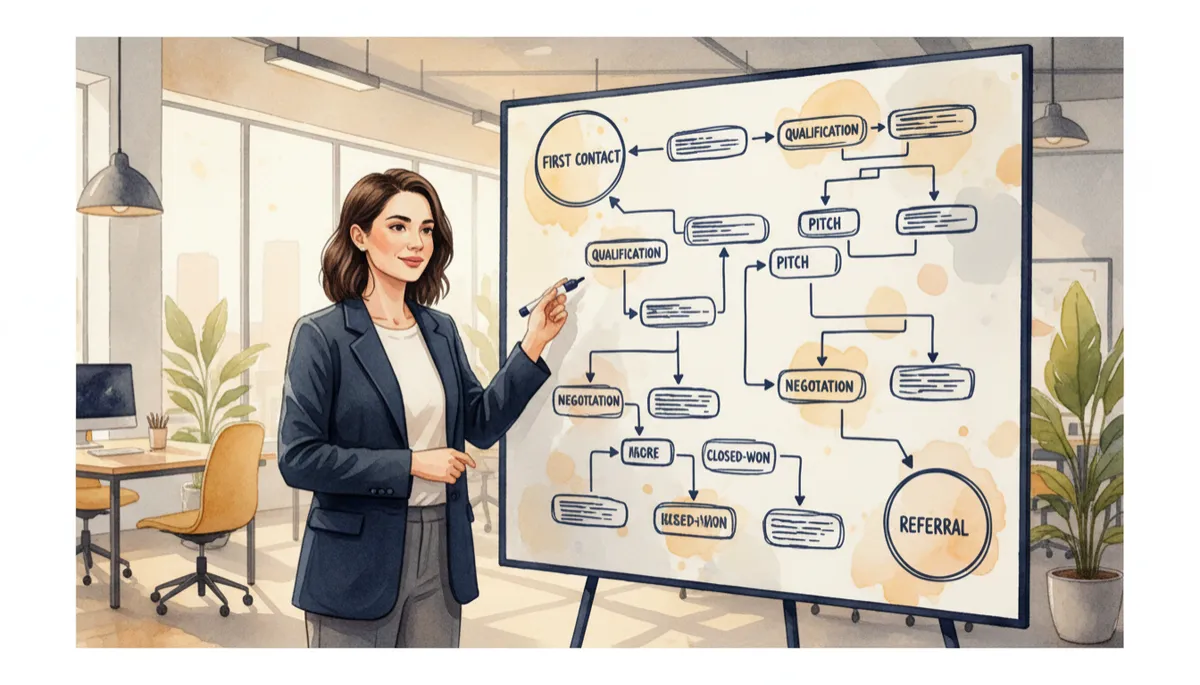
Founders who organize the sales process before hiring their first rep see 33% shorter ramp time for that hire. Build the process first. Then hire into it.
How Do You Use Customer Feedback to Improve Your Startup’s Sales System and Close Deals Faster?
Jason asks founders to treat feedback like production logs. Every complaint is a bug report. Every five-star review is a passing test. You capture it systematically, tag it by stage, then restructure your process where issues cluster. Bezos framed it this way in his letters: feedback isn’t kindness — it’s a growth engine.
- Collect feedback after key moments: the pitch, onboarding, and 30 days of use.
- Tag each insight to a stage in your sales process.
- Identify patterns where confusion or delight repeats.
- Update scripts, emails, and onboarding flows to address those patterns.
What’s the Difference Between a Sales Strategy That Works for 10 Customers and One That Can Scale to 1,000?
The difference isn’t personal charm. It’s architecture. A scalable strategy is documented, measurable, and teachable. It has clear stages, standard exit criteria, and templates new team members can follow. Salesforce found that startups with a defined process from lead to close generate 18× more revenue than those without one (Salesforce, State of Sales).
- Map stages from lead to referral with clear definitions.
- Create templates for first outreach, discovery, and proposals.
- Track conversion rates at each stage and review them monthly.
- Train new team members on the same process so results are repeatable.
As Jason teaches at AuthorJason.com, your founder-led startup sales strategy becomes a real asset only when it’s written, taught, and measured — not when it lives solely in the founder’s head.
What Jason’s Founders Discover When the Sales System Works While They Sleep
Jason often sees the same quiet moment with founders. The first time a new customer closes without them on the call. The first time a referral comes in from a customer they haven’t spoken to in weeks. It feels almost unreal — like there’s a script running in the background they forgot they wrote. That’s exactly what a good system is.
One fictional founder Jason calls Maya built a B2B analytics startup. She led every sale in year one. After implementing FOS, she documented her discovery questions, standardized proposals, and built a simple “30-60-90” post-sale follow-up pattern. Within three months, her team closed six deals without her. Within nine months, 40% of new revenue came from referrals triggered by that designed post-sale experience.

More than 1,000 founders. Over $22M in combined sales. Word-of-mouth referrals from current customers convert at 4× the rate of cold outreach. The best sales strategy is the one that automatically generates the next sale.
Jason’s top-tier founders show what’s possible. Tan added $29,693 in just 16 days. Teo brought in 63 customers in 100 days. Leon grew from $2.5K to more than $2M by letting the system set the rhythm while he focused on delivery. These aren’t overnight miracles. They’re compounding results from a documented, repeatable engine.
As Jason teaches at AuthorJason.com, your founder-led startup sales strategy feels different the day the system closes a deal you never touched — that’s the signal your process has finally started carrying most of the load.
How the P.I.T.C.H. Formula Builds a Repeatable Sales Conversation
Inside the Future of Selling system, Jason teaches a simple, founder-friendly way to structure every sales conversation so it’s easy to repeat and easy to train. He calls it the P.I.T.C.H. formula. It’s not a script to memorize. It’s a way of thinking about call flow so your team can deliver your message in their own voice and still arrive at the same point of trust every time.
As a senior engineer, Jason frames it as designing a function with clear inputs and outputs. Every step in the conversation has a goal, a minimal surface area, and a test for success. When that function behaves reliably, you can wrap it, reuse it, and delegate it. That’s how one founder’s selling style becomes a company-level capability, not a draining personal superpower.
For most founders, the first six months of selling are a blur of experiments: new decks every week, different questions on every call, and no stable way to know what actually worked. The P.I.T.C.H. formula compresses that wandering into a shorter, more controlled learning loop. Instead of improvising from zero, you start with a structure already tested across hundreds of conversations.
That structure gives you a founder-led startup sales strategy before you have the data to design one on your own. You can still adapt the language to your product and personality, but the underlying flow stays stable enough to generate real feedback. Within a few dozen calls, you’re improving a known framework instead of reinventing it — which is why Jason’s founders often skip months of random trial and move faster into a repeatable, teachable conversation style.
Over time, that consistency compounds. Because every rep follows the same backbone, you can compare calls, spot patterns, and refine specific parts of the conversation instead of guessing. The result is a sales function that behaves more like well-tested code and less like a string of one-off performances — exactly what an early-stage team needs before it can afford a big sales org.
Self-check
- Do you have a defined startup sales strategy — or a bundle of tactics that change based on whatever didn’t work this week?
- Can you name the most reliable channel that brought in paying customers — and have you doubled down on it?
- Do you know the conversion rate at every stage from first touch to close — or are you only tracking revenue?
As Jason teaches at AuthorJason.com, your founder-led startup sales strategy should start with one reliable conversation framework like P.I.T.C.H., then evolve based on data instead of constant improvisation.
3 Startup Sales Strategy Mistakes — and the Bonus Mistake That Hurts Most
Mistake 1: Three Channels, No Single Winner
Mistake 1 (Lena, founder of a B2B SaaS company): she built her sales strategy around three channels at once — LinkedIn outreach, content marketing, and cold email — before any of them had produced a single paying customer. Effort was scattered across three experiments with no clear winner. The right move: pick one channel. Run it hard for 30 days. If it produces customers, double it. If it doesn’t, change it. One mastered channel generates more data than three poorly managed ones.
- Choose the channel your best current customer already came from.
- Commit to one clear outreach sequence on that channel for 30 days.
- Measure replies, meetings, and closed deals — not just views or likes.
Mistake 2: No Visible Pipeline
Mistake 2 (Lena): she wasn’t tracking her pipeline. She knew she had conversations in motion but couldn’t say how many, at what stage, or what was needed to move each forward. The right move: a simple spreadsheet with five columns — contact, stage, last action, next action, expected close date — is a sales strategy. Without it, you’re managing from memory and losing deals to drift.
- Create a sheet with: contact, stage, last action, next action, expected close.
- Update it after every sales interaction, no exceptions.
- Review it twice a week to keep deals from silently stalling.
Mistake 3: Hiring Sales Before You Have a Strategy
Mistake 3 (Lena): she hired a sales rep in month three before she had closed 20 customers herself. The rep inherited a strategy that didn’t exist. He improvised. Underperformed. Lena blamed the hire. The right move: the founder sells the first 20 customers. The learning from those 20 conversations becomes the sales strategy. Only then does hiring a rep make sense — because there’s something to hand over.
- Personally close at least 20 customers in your target segment.
- Document what you said, asked, and sent in those wins.
- Turn that into a simple onboarding guide for your first sales hire.
Bonus Mistake: Changing Strategy Before You Have Data
Bonus mistake (Jason, in third person): he’s found that startup sales strategies often fail not because the strategy is wrong — but because it’s changed before it’s tested long enough to generate data. A founder tries LinkedIn for two weeks, gets two replies, declares it doesn’t work, and jumps to cold email. Two weeks is not a test. It’s an attempt. Jason teaches founders to commit to one strategy for 60 days regardless of early results. Sixty days of data is real. How you feel after two weeks is noise. The right move: write your current sales strategy in one paragraph. Commit to running it for 60 days without changing the channel or style. Then judge it on results — not on vibes.
- Write a one-paragraph description of your current sales strategy.
- Commit to running it unchanged for 60 days.
- After 60 days, review the actual numbers and decide whether to double down or pivot.
As Jason teaches at AuthorJason.com, your founder-led startup sales strategy only becomes trustworthy once it survives a real test window — not when it’s swapped out every time a week feels slow.
Scalable Startup Sales Strategy — The Founder’s Complete Blueprint
Jason asks founders to compress their entire go-to-market strategy into a single living page. At the top is one sentence describing your target profile: who you serve, what urgent problem you solve, and why they’re ready to pay now. Under that, you name a single primary channel — not three — you’ll use to reach that profile over the next 30 days.
Next comes a simple three-touch sequence on that channel: first outreach, follow-up, and final check-in. Then you define five clear stages to track every contact: for example, new lead, conversation started, meeting booked, proposal sent, closed (won or lost). Every lead lives in exactly one stage at a time.
Finally, you set a 30-day review rhythm. Once a month, you look at how many leads moved through each stage, where they stalled, and which message or step needs refinement. That one page becomes your founder-led startup sales strategy — simple enough to update, concrete enough to run with a team, and focused enough to generate real data instead of scattered activity.
As Jason teaches at AuthorJason.com, winners are rarely the ones with the flashiest decks — they’re the ones with a one-page sales strategy they actually follow and review.
Frequently Asked Questions About Scalable Startup Sales Strategy
How Does the Post-Sale Experience Affect a Startup’s Ability to Grow — and Why Do Most Founders Underinvest in It?
Post-sale is the part of your system quietly printing tomorrow’s pipeline. Bain & Company notes that retaining customers is 5–25× cheaper than acquiring them. Nielsen data shows referrals convert at 4× the rate of cold outreach. Yet many founders underinvest here because the wins are delayed and invisible. Jason gently challenges that. He guides founders to design simple, human, scheduled post-sale touchpoints — onboarding, follow-ups, success stories — so every “yes” has a clear path to a referral, not just a renewal. That’s how a scalable startup sales strategy becomes a flywheel, not a treadmill (Scalable startup sales strategy).
What Should a Startup’s Sales Strategy Look Like in the First 90 Days?
In the first 90 days, your sales strategy should be deliberately simple: one target profile, one primary channel, a three-touch sequence, and a basic pipeline tracker. The goal is learning, not scaling — enough consistent repetitions to see what resonates and what doesn’t.
Should Startup Founders Build a Sales Team or Sell Themselves First?
Founders should sell first. Personally closing the first 20–50 customers teaches you who buys, why, and how. That learning becomes the founder-led startup sales strategy you can later hand to a team. Hiring before that forces new reps to guess with your runway.
How Do You Build a Scalable Sales Strategy as a Startup Without a Big Budget?
You trade money for focus and time. Choose low-cost channels like targeted LinkedIn outreach or founder-led webinars. Use a spreadsheet instead of a complex CRM at first. The leverage comes from a clear process and consistent execution, not expensive tools.


