
How Billionaire Mark Cuban Built Unstoppable Pitch Confidence — The Founders’ Playbook for Walking into Any Room Ready to Close
Sales Mindset, Pitch Confidence, Startup Founders
How Billionaire Mark Cuban Built Unstoppable Pitch Confidence — The Founders' Playbook for Walking into Any Room Ready to Close
Jason wrote this for the founder who leads every sales call, carries the whole pipeline in their head, and is tired of feeling their confidence wobble right before the big pitch — even though the product is good and the numbers are real.

Why Founders Freeze in the Pitch — Even When They Know Their Product Cold
If you lead a team of five or more, you already know how to build and ship. You can talk product all day with your engineers. You can explain the roadmap in your sleep. Yet a big investor meeting or enterprise demo can still make your chest tighten and your voice go thin for the first few minutes.
That tension is not a sign that you are weak, broken, or “not a natural salesperson.” Performance psychology has shown again and again that nerves spike whenever the stakes feel high and the outcome feels uncertain. Your body is trying to protect you, not sabotage you. But it often picks the worst possible moment to do it.
Founders tend to blame personality. “I’m just not charismatic enough.” In reality, most freezing comes from a gap between what the brain knows and what the body has rehearsed. You know the product. You have not rehearsed the pressure. So when the room gets quiet, your system panics and reaches for safety: blanking, rambling, or over-explaining.
Research on “productive failure” shows something hopeful here. People who allow themselves to make mistakes during rehearsal — and then adjust — build more resilience than those who chase perfection. They train their nervous system to survive small stumbles. That means when real stakes show up, their confidence does not shatter at the first tough question or skeptical eyebrow.
What Mark Cuban Learned About Confidence That Most Founders Skip
Mark Cuban did not start out as the confident shark on television. As a 12-year-old in Pittsburgh, he went door-to-door selling garbage bags so he could buy his own basketball shoes. There was no personal brand. No cameras. Just a kid knocking on doors, hearing “no,” and trying again anyway because he wanted something badly enough to be uncomfortable for it.
That pattern never really changed. He sold bar nights in Dallas. Then software subscriptions to businesses. Eventually he co-founded Broadcast.com and sold it to Yahoo for $5.7 billion in 1999. Along the way, he learned something most founders quietly hope is not true: pitch confidence is not a mood. It is a side effect of obsession-level preparation. He has said many times that the founders who freeze in front of him have practiced their slides, not their substance.
Cuban’s core belief is brutally simple: confidence comes from knowing the material better than anyone else in the room. Know the market. Know the numbers. Know the objections before they are spoken. When you do, you do not need to “act confident.” You are simply standing on ground that feels solid. Confidence arrives on its own because your brain no longer needs to guess what might happen next.

Mark Cuban's pitch philosophy: be the expert. Know more than anyone else in the room. Confidence follows automatically.
The System for Building Pitch Confidence Before You Walk in the Room
Jason sees the same pattern across founders who finally feel calm in high-stakes rooms. They stop treating confidence as a feeling and start treating it as a system. They build it the way they built their product: version by version, test by test, failure by failure, until it feels simple from the outside and hard-earned from the inside.
How do you build confidence when pitching your offer to potential clients or investors?
Start by building knowledge, then build reps. Gather the numbers, stories, and objections until you can explain them to a smart 15-year-old. Then rehearse out loud — not in your head — until the words feel like a conversation instead of a script. Confidence comes from that mix of substance and repetition, not from hype or affirmations alone.
Why do people get nervous or freeze when pitching — and what is actually causing it?
People freeze when their brain senses risk but does not see a clear path. The stakes feel high, the outcome feels uncertain, and they have not rehearsed handling surprises. That gap between pressure and preparation creates overload. Freezing is the body’s way of buying time when it does not know what to do next, not a sign that you are weak or untalented.
What is the fastest way to become more confident at pitching — and what does the research show?
Research on performance in sports, music, and public speaking points to two levers: deliberate practice and exposure. Short, focused rehearsal sessions — where you intentionally tackle tough parts and allow “productive failure” — build skill faster than long, vague run-throughs. Pair that with frequent, low-stakes pitches, and confidence climbs quickly because your brain has seen the pattern many times and knows you can survive it.
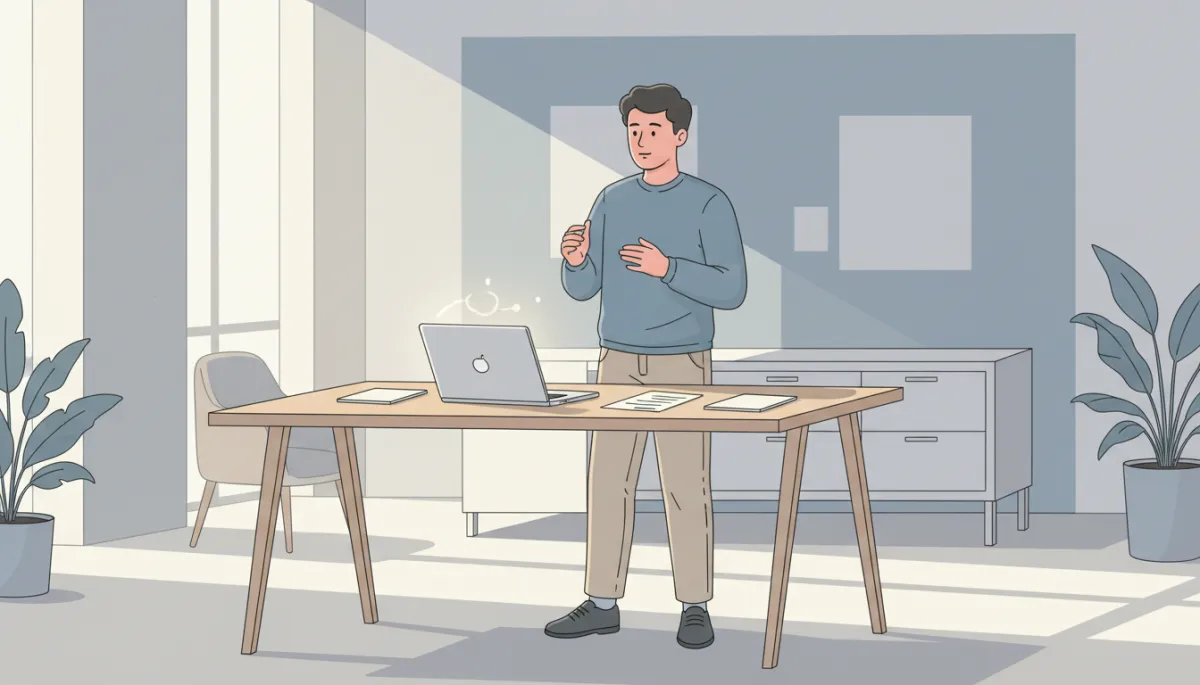
Most natural-sounding presentations require hundreds of hours of preparation. Fluency is mastery, not improvisation.
Two More Founders Who Built It Through Preparation, Not Personality (Branson and Blakely)
Richard Branson looks like he was born charismatic. But his pitch confidence was built the same unglamorous way: volume. He launched Virgin Records by cold-calling from phone boxes. He pitched banks, airlines, and even governments to get Virgin Atlantic off the ground. In interviews, he has said every pitch taught him something, especially the ones that failed. He treated pitching as a skill, not a personality trait. Repetition slowly turned fear into familiarity, and familiarity into confidence.
Sara Blakely’s story runs in parallel. Before Spanx became a global brand, she was so nervous before pitching a Neiman Marcus buyer that she barely slept. What steadied her was not a clever mantra. It was the fact that she had worn the product herself for over a year. She knew exactly how it felt, what it fixed, and how women reacted when they put it on. That lived experience turned into conviction. She was not guessing. She had data in her own life. The buyer could feel that certainty, and the deal followed.
Confidence, across all these stories, is not magic. It is a loop: learn deeply, rehearse honestly, show up repeatedly. Studies from places like Harvard Business Review and Psychology Today keep landing on the same theme. Top performers are not less nervous. They are simply more prepared, more often, in more realistic ways than the average person is willing to be.
How do you stop second-guessing your pitch right before you deliver it?
Decide in advance what “good enough” looks like, then commit to it. Right before a pitch is the worst time to rewrite your story. Instead, use a short, physical routine: breathe, stand tall, review your opening line and your closing ask. Remind yourself that the goal is not perfection. The goal is connection and clarity. You are allowed to be human and still be effective.
How do you handle tough questions during a pitch with confidence — without losing your thread?
Prepare a simple question-handling script. Pause, repeat or reframe the question, answer briefly, then bridge back to your main point. Before the meeting, write down the 10 hardest questions you can imagine and practice answering them out loud. Top-performing founders often say that knowing objections in advance is their single biggest confidence builder. When a tough question comes, it feels like déjà vu instead of an ambush.

Knowing your objections in advance is the single biggest confidence builder before any high-stakes pitch.
What Jason's Founders Say After Their Pitch Stopped Feeling Like a Performance
Jason has walked with founders through three personal rock bottoms and back again, and through over $22M in combined sales. The pattern he sees is comforting. Once a founder has a structure for preparation, the pitch stops feeling like a talent show and starts feeling like another high-value meeting they know how to run. Their team notices first. “You were different in there,” someone says. Less rushed. More grounded. More direct when the questions got sharp.
Inside the Future of Selling System, founders talk about the moment a pitch finally feels like an honest conversation instead of a performance. One founder closed a strategic partner after months of circling because, for the first time, they did not over-explain. Another finally raised the round after shifting from “please like us” energy to “here is how we help you win” energy. Same product. Same team. Different level of preparation and self-trust.
How the P.I.T.C.H. Formula Gives Every Pitch a Structure That Confidence Can Follow
Confidence struggles in chaos. It grows in structure. That is why Jason built the P.I.T.C.H. Formula inside the Future of Selling System — a simple, repeatable way to shape every pitch so your preparation has somewhere to land. You do not need to guess which story to tell first, how to sequence proof, or when to bring in pricing. The structure holds you, so your attention can stay on the humans in front of you instead of on your own anxiety.
Jason goes deeper into the P.I.T.C.H. Formula and how it fits into a stronger sales mindset for founders in his main playbook. For a focused breakdown of the formula itself, you can explore it here: P.I.T.C.H. Formula. For now, it is enough to know this: when your pitch has a clear spine, your confidence does not have to carry the whole weight alone.
Frequently Asked Questions About Building Pitch Confidence
Is pitch confidence born — or is it something you can deliberately build through practice?
Everything in the research — and in the stories of Cuban, Branson, and Blakely — points to this: pitch confidence is built. Yes, some people start with more comfort in the spotlight. But the founders who consistently win big deals are the ones who prepare more deeply, rehearse more honestly, and learn more aggressively from every pitch. Confidence is a trainable outcome, not a genetic lottery ticket.
JSON-LD Structured Data for Article, FAQ, and How-To
*Cuban didn't wait to feel confident. He prepared until confidence had no choice but to show up. That's the only shortcut that has ever worked.*


