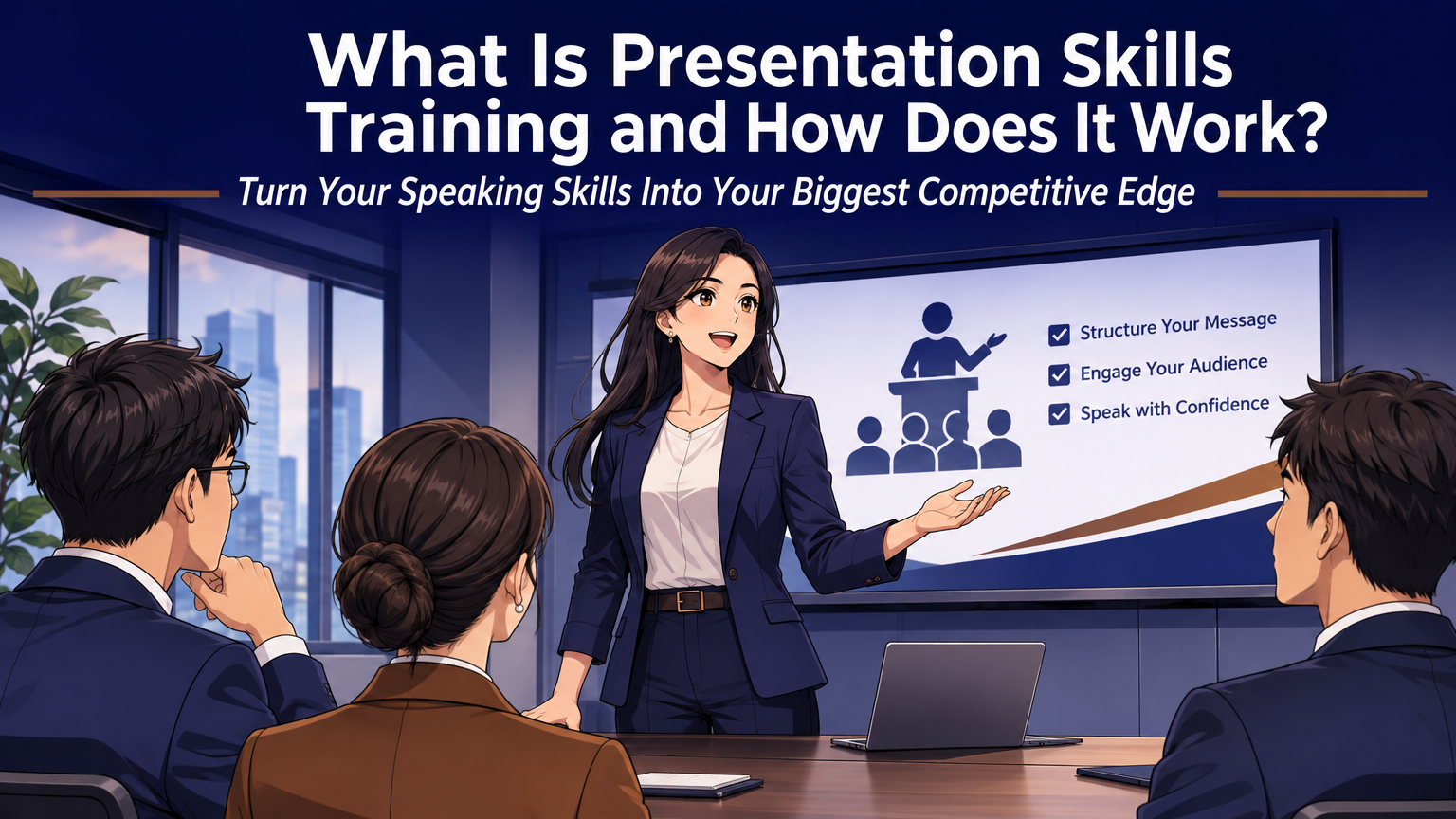
What Is Presentation Skills Training and How Does It Work?
What Is Presentation Skills Training and How Does It Work?
Presentation skills training is a structured learning process that teaches you how to organize your message, deliver it with confidence, and hold a room under pressure. It goes well beyond slide design. The goal is to build the speaking mechanics that determine whether a room listens, trusts you, and acts on what you say.
One founder who trained with Jason Lim turned a $2,500 project pitch into a 7-figure partnership deal — same person, same opportunity, different speaking skills.
Jason Lim has 20+ years of coaching experience across 42 cities globally. His P.I.T.C.H. method is built for founders, executives, and sales teams who close in high-stakes rooms.
Why Do Most Professionals Need Presentation Skills Training?
The need is real and the numbers back it up. According to the Chapman University Survey of American Fears 2025, 33.7% of Americans report being afraid or very afraid of public speaking. Among Gen Z professionals, the gap is even sharper: a Preply Public Speaking Study (2024) found that 63% of Gen Z respondents would avoid public speaking if they did not have to do it.
At the same time, the demand for this skill has never been higher. Communication ranked as the number-one most in-demand skill on LinkedIn for both 2024 and 2025. The NACE Job Outlook 2025 found that more than three-quarters of employers named communication a critical attribute for new hires, with more than two in three specifically seeking strong verbal communication.
The gap between avoidance and employer demand is exactly where deals are lost and careers stall. The speaking skill — not the slide deck, not the product — is the front line of every sales conversation, every pitch, and every closing call.
Think of it like a Gosu driver: elite skill matters more than the best car. The same logic applies to presentations. A flawless deck presented poorly loses to an average deck delivered with authority.
What Does Presentation Skills Training Actually Teach?
Effective presentation skills training targets the mechanics that break down when stakes are high. Here is what a well-designed program covers:
| Skill Area | What It Builds | Why It Matters |
|---|---|---|
| Message Structure | Clear narrative architecture | Listeners follow and remember |
| Vocal Delivery | Pace, pause, projection, tone | Keeps audiences engaged |
| Physical Presence | Posture, eye contact, stillness | Communicates authority before you speak |
| Nerves Management | Practical tools under pressure | Performs when it counts |
| On-Camera Skills | Video call and virtual delivery | Essential for remote sales and pitches |
| Objection Handling | Live pushback and Q&A control | Closes deals, not just opens conversations |
Programs that focus only on slides or presentation design are teaching the wrapper, not the skill. The skill is speaking.
How Does Presentation Skills Training Actually Work?
The most effective training follows a simple but demanding loop: structured practice, specific feedback, repeated reps in real-pressure conditions. This is not about reading tips or watching videos. It is about being put in front of a speaking challenge, getting expert feedback on what broke down, and fixing it before the next rep.
Here is what this looks like in practice:
- Baseline assessment — identify where your delivery breaks down under pressure
- Targeted skill work — isolated drills on structure, delivery, or presence
- Live speaking reps — practice in conditions that mirror real sales calls, pitches, or presentations
- Coached feedback — specific, actionable corrections from an expert observer
- Repeated cycles — improvement compounds through deliberate repetition, not one-off workshops
Who benefits most? Startup sales teams closing deals, executives presenting to boards, founders raising investment rounds, and freelancers who win business through how they communicate — not just what they offer.
Related:
- Explore Jason Lim's Presentation and Speaking Skills Coaching
- How Do You Improve Your Speaking Skills?
- What Should a Presentation Skills Course Actually Teach You?
What Should You Look for When Choosing a Training Program?
Not all programs are equal. Use this checklist:
- Live speaking reps — passive video content does not build physical speaking habit
- Expert feedback — practice without correction reinforces whatever habits you already have
- Applied contexts — sales pitches, investor rounds, on-camera delivery, Q&A
- Accountability structure — regular check-ins and performance benchmarks
- Track record — real-world results from real people in comparable situations
Key takeaways:
- Presentation skills training fixes the speaking problem, not the slide problem
- The gap between speaking anxiety (63% Gen Z, Preply 2024) and employer demand (LinkedIn #1 skill, 2024-2025) is where deals are won or lost
- The best training combines structured reps, expert feedback, and real-pressure conditions
- Format matters less than feedback density — live coaching beats passive content
Weak speaking skills are the root cause — not the follow-up problem, not the objection, not the ghosting.
Founders and sales teams who build presentation skills close better, win more, and get taken seriously in every room. That transformation is what Jason's program is built for.
Sources
- VoxBooster — Public Speaking Statistics 2026 (Chapman University Survey of American Fears 2025; LinkedIn Talent Insights 2024-2025; NACE Job Outlook 2025)
- Preply — Public Speaking Fears Study, 2024 (63% Gen Z avoidance; 59% adults avoidance)
- Jason Lim — Future of Selling Presentation Skills Program (20+ years coaching; 42 cities globally; franchisee result)


