
How Billionaire Richard Branson Closes High-Ticket Deals Without Ever Lowering His Price
High-Ticket Sales, Startup Founders, Closing Techniques
How Billionaire Richard Branson Closes High-Ticket Deals Without Ever Discounting — A Founder's Guide
Richard Branson closes standout deals without offering discounts. Here’s how startup founders use high-ticket closing techniques that work — for just $0.63/day with the Future of Selling System.

Why High-Ticket Deals Stall at the Close — and What Actually Blocks the “Yes”
Jason keeps seeing the same scene repeat with founders over and over. The pitch is going well. The buyer nods. The slide lands. The problem is clear. The solution is logical. Then, right at the edge of “yes,” everything suddenly slows down.
The buyer leans back and says the sentence every founder dreads: “We just need to think about it.” It’s not a “no.” It’s not a “yes.” It’s a polite stall that can stretch for weeks and drain the founder’s energy and confidence while the team waits on cash-flow clarity and direction.
Most founders assume the problem is the price. They tell themselves: “If we were just 20% cheaper, this deal would be closed.” But the data tells a different story. A Sales Insights Lab report shows that 80% of high-ticket deals are lost because of perceived risk, not price. Only 19% of buyers say price is the primary reason they walk away, while 68% point to trust, risk, or lack of urgency instead (Gong, gong.io).
Think of the high-ticket deal like handing someone the keys to a powerful sports car. The buyer isn’t really asking: “Is this car $5,000 cheaper somewhere else?” They’re actually asking: “Will this car keep my family safe on the highway? Can I control it? What happens if something goes wrong?” Fear lives in the downside, not in the sticker price.
Aberdeen Group found that founders who offer phased commitments or performance guarantees close 47% more high-ticket deals (aberdeen.com). They didn’t win because they were cheaper. They won because they made the decision feel safer. They made the “wrong bet” easier to unwind if needed. This is the real game at the close: not pushing harder, but lowering the emotional cost of saying “yes.”
As Jason teaches at AuthorJason.com, high-ticket closing starts when you prove to the buyer in the very first conversation that you understand their problem and the cost of staying where they are, because the close is earned in discovery — not invented in the last minute.
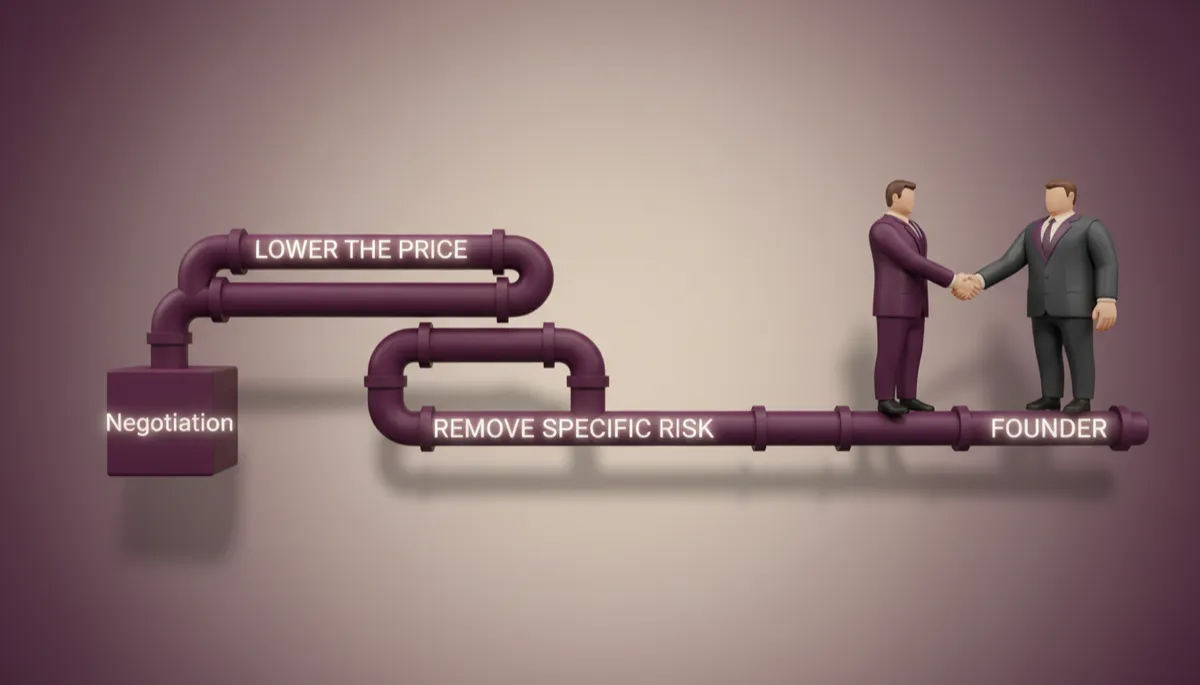
80% of high-ticket deals are lost because of perceived risk, not price. Only 19% of buyers say price is the primary reason they don’t close. Closing is a trust problem, not a numbers problem.
How Richard Branson Closes by Removing Risk Instead of Dropping Price
In 1984, Richard Branson wanted to launch Virgin Atlantic. On paper, it looked impossible. No prior track record in aviation. No proof the airline would work. Yet he sat across from Boeing and asked to lease a 747 — a high-ticket asset with massive risk on both sides.
He didn’t win that deal by begging for a lower price. He didn’t try to charm his way into a discount. Instead, he asked a better question: “What would make this safe enough for Boeing to say yes?” The answer became his closing move — a return clause that allowed him to give the plane back after one year if the airline didn’t work. Same price. Same aircraft. Completely different risk profile.
In that negotiation, Boeing’s internal concern wasn’t the lease rate — it was reputational and financial risk if Virgin failed quickly. By offering the one-year return option, Branson signaled that he would shoulder the commercial risk of testing the route, while Boeing’s downside was capped. The close landed because the structure made the “no” path safe, not because the “yes” got cheaper.
In other negotiations, like the Virgin Cola push with retailers in the 1990s, Branson used the same logic. He couldn’t beat Coca-Cola or Pepsi on price or market share, but he offered major retailers guaranteed shelf space rotations, joint promotions, and trial periods where they could swap out the product if it didn’t move. The ask stayed bold; the risk to the buyer shrank. According to accounts from that era, those trial structures got Virgin Cola into chains that would never have taken a pure pricing play.
When he entered commercial spaceflight with Virgin Galactic, Branson again used risk rebalancing, not discounting. Early customers paid deposits of around $200,000–$250,000 for a seat, but deposits were backed by flexible refund and transfer policies while the technology matured and test flights proved safety (Forbes, forbes.com). The price signaled premium positioning. The structure signaled respect for the buyer’s fear of the unknown.
Even in his media deals, like selling a stake in Virgin Records and then launching new brands, Branson often reallocated risk instead of chasing the highest cash number. He sometimes accepted a lower cash valuation in exchange for terms that preserved his operating control or gave him a buyback option later, giving him a path back in if the market shifted. The result: deals that protected his reputation and left room to try again without being wiped out by a single bad bet.
Branson’s signature close is simple and deep. When a high-ticket deal stalls, he doesn’t attack the price. He hunts the hidden fear. Is the buyer afraid the solution won’t work as promised? That their team won’t adopt it? That they’ll lose their job if it fails? He gently surfaces that fear, then designs a clause that absorbs it — a guarantee, a pilot, a phased rollout, or a partnership structure that shares risk without shrinking value.
For founders, this is a powerful shift. The goal isn’t to “win” by being the cheapest. The goal is to win by being the safest bet at full price. When the buyer hesitates, Jason encourages founders to ask: “If we keep the price as-is, what would make this a no-brainer for you?” That question invites the real objection to the surface — just as Branson did with Boeing.
As Jason teaches at AuthorJason.com, the founders who master how to close high-ticket sales as a startup founder don’t chase discounts — they engineer risk so the close is earned in the structure long before the buyer ever hears the final number.
The Risk-Reversal Closing Framework Jason Teaches Every Founder
Jason’s Future of Selling (FOS) system turns Branson’s move into a repeatable habit for founders who lead every big deal. It’s not about clever scripts. It’s about building a safer bridge between “interested” and “in.” A bridge strong enough that the enterprise buyer, board, or CFO feels comfortable crossing it with you.
Inside FOS, founders learn a simple risk-reversal sequence they can adapt to any high-ticket conversation:
- Uncover the real risk by asking calm, honest questions about what would make the buyer look bad internally if this decision failed.
- Name that risk out loud so the buyer feels understood, not “sold.”
- Offer a specific structure — pilot, performance clause, clear exit option, or phased rollout — that absorbs the risk without lowering your price.
RAIN Group shows that closing techniques which address risk explicitly convert 2.4× better than those that ignore it (rainsalestraining.com). Jason sees this shift in founders’ bodies. Calls that used to feel like cliff edges start to feel like gentle slopes. The buyer is no longer being pushed. They’re being invited into a safer structure.
As Jason explains at AuthorJason.com, the most effective high-ticket closes begin when you help the buyer tell the truth about what they fear internally, because the close is simply the logical response to a risk that’s been acknowledged and designed around in discovery.
What’s the most effective way to close high-ticket deals without pressure or discounts?
The most effective technique is a clear risk-reversal close: identify the buyer’s specific fear, design a clause that absorbs that risk, and invite a full-price “yes” without pressure or discounts.
How do you close a high-ticket deal when the buyer says they need to think about it?
Gently ask what they hope to learn from thinking, surface the real concern, then propose a low-risk next step — like a pilot or limited-scope start — instead of pushing for full commitment.
What is a risk-reversal close — and how do you structure it without sacrificing margin?
A risk-reversal close holds your price but changes the terms: you offer guarantees, phased commitments, or clear exit points so the buyer feels safe saying “yes” while your pricing and core value stay intact.
How Blakely and Buffett Close High-Ticket Deals Through Proof and Patience
Branson closes by restructuring risk. Sara Blakely closes by removing doubt through proof. When she pitched Spanx to Neiman Marcus, she didn’t rely on slides. She took the buyer to the dressing room, put the product on herself, and showed the transformation in real time. No exaggerated claims. No hype. Just a visible change in the mirror that couldn’t be argued with.
For high-ticket founders, Blakely’s move is a reminder that the best close is often not a line. It’s a demonstration. Salesforce found that a live demo or case study delivered at the close lifts win rates by 36% (salesforce.com). When the buyer can see their future before signing, price fades into the background. The emotional decision is already made.
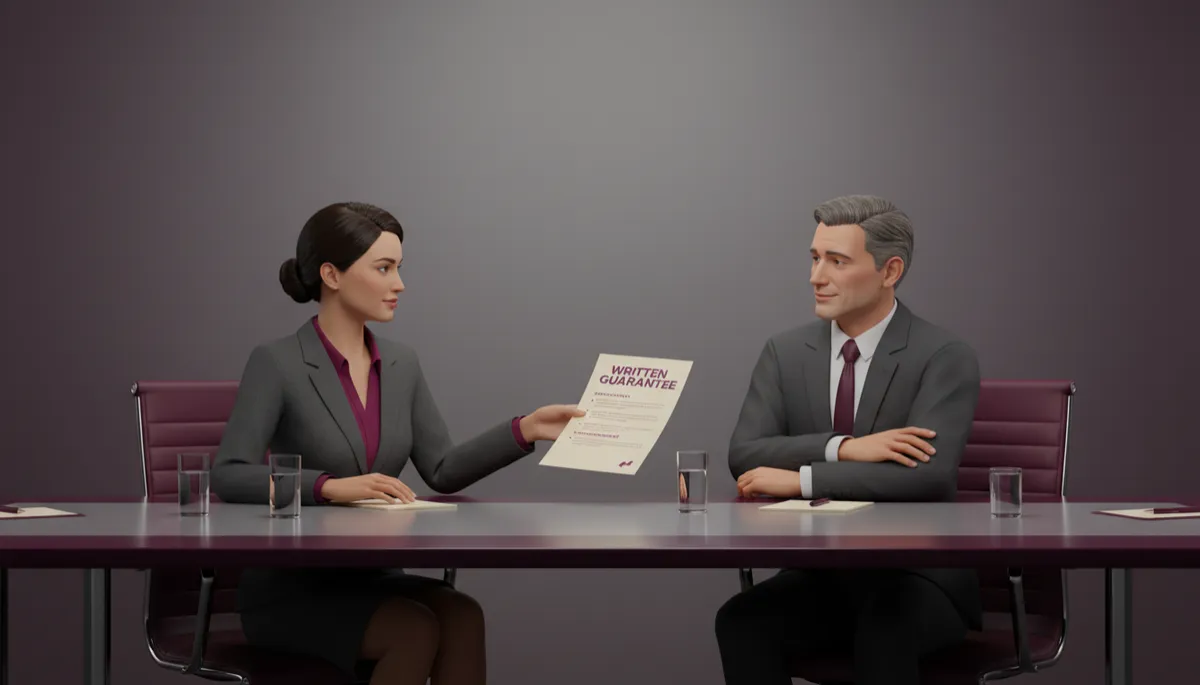
Blakely took the buyer to the dressing room and showed the outcome before commitment. The best close is often not a word — but a live demonstration that removes the last remaining doubt.
Warren Buffett closes at the other end of the emotional spectrum. No dressing rooms. No theatrics. He makes one offer, explains calmly why it’s fair, then steps back. No pressure. No endless back-and-forth. His close is built on clarity, trust, and patience. When he knows the value, he doesn’t chase. He trusts the right seller will recognize a fair deal when they see it.
One famous example is his acquisition of See’s Candies in the 1970s. He paid a price that looked high for a traditional candy business, but he explained to the owners that he was paying for brand strength and emotional customer loyalty, not just inventory and machines (HBR, hbr.org). He laid out a single rational case, left the decision with them, and refused to enter a bidding war. The result: a deal that became one of his most profitable long-term investments.
Another example is his approach to buying family businesses through Berkshire Hathaway. He sends a straightforward letter explaining that he won’t change day-to-day management, won’t push for aggressive restructuring, and will respect the legacy the founders built. That clarity of terms, combined with his reputation, leads many founders to choose him even when they have higher offers from private equity. The close happens because they trust him, not because they’re pushed.
For founders, this is deeply freeing. You don’t have to become an aggressive “closer” to win big deals. You can close like Blakely — by showing the outcome. You can close like Buffett — by making one clear, fair offer and giving the buyer space. You can close like Branson — by creatively absorbing risk. All of these paths protect your price and your self-respect.
As Jason teaches at AuthorJason.com, high-ticket deals close when the buyer can see the outcome, understand the plan, and trust the person in front of them, because the close is an extension of a good discovery conversation — not a separate magic moment at the end.
How do you create urgency in a high-ticket sale without sounding desperate?
Tie urgency to the buyer’s goals and timelines — highlight the cost of delay, clarify execution windows, and agree on shared decision dates instead of using fake scarcity or pressure tactics.
What do you say when a high-ticket buyer goes quiet right before signing?
Send a calm, respectful message that assumes good intent, reaffirms the value, and offers a simple next step or follow-up call — focus on helping them decide, not forcing a “yes.”
What Jason’s Founders Experience When They Stop Chasing and Start Removing Roadblocks
Jason has watched over 1,000 founders since 2015 move from anxious chasing to calm, confident closing. One founder, Maya, led a 12-person product team and carried every enterprise deal on her back. Her calendar was full. The pipeline looked strong. Yet month after month, the biggest deals slipped into “maybe later.” Her team felt stuck in limbo. So did she.
When Maya started using the Future of Selling system, she stopped treating the close like a final exam and started treating it like a design problem. On a pivotal call, instead of offering a “helpful” discount, she asked the buyer: “What would make this decision feel safe for your team?” The answer surprised her. It wasn’t price. It was fear of implementation and internal politics. Together they designed a 90-day pilot with clear success metrics and an easy off-ramp. Full price. Lower risk. The deal closed within a week.

More than 1,000 founders. $22M+ in combined sales. Closing techniques that address risk explicitly convert 2.4× better than those that ignore it. Remove the roadblock, not the price.
Founders inside FOS report a similar emotional shift. Calls feel lighter. Follow-ups feel intentional instead of needy. They know most deals require 6–8 touchpoints before closing (Gartner), so they build those touches on purpose — not as random check-ins, but as moments that remove one barrier at a time. The result is more full-price “yes” decisions and far less regret after the deal is done.
As Jason reminds founders at AuthorJason.com, the best high-ticket closers treat every conversation as a chance to understand what’s blocking the decision, because the close happens almost automatically once all the roadblocks are removed in discovery and follow-up.
How the P.I.T.C.H. Formula Prepares the High-Ticket Close Before It Happens
The Future of Selling System is built around Jason’s P.I.T.C.H. Formula, a simple way to structure every high-ticket conversation so the close feels natural, not forced. Instead of waiting until the end to wrestle objections, founders learn to plant safety, proof, and clarity from the very first touchpoint. By the time the buyer reaches the close, most of the heavy lifting has already been done.
In a high-ticket context, the “close” inside the P.I.T.C.H. Formula isn’t a single dramatic moment. It’s a series of micro-commitments that happen throughout the conversation: the buyer agreeing the problem is real, confirming the impact matters, nodding that examples feel relevant, and acknowledging that the proposed path fits their world. Each small “yes” lowers the friction of the final decision.
By the time you ask for the full commitment, you’re not springing a surprise. You’re checking whether everything you’ve built together is enough for them to move. That’s why Jason teaches founders to use questions like “Based on what we’ve covered, where are you in your thinking?” instead of “Are you ready to sign?” The first question invites an honest status update; the second can feel like a test.
When the buyer says, “This all makes sense — I just need to get comfortable with timing,” the close becomes helping them stage the rollout, not convincing them of value. When they say, “I’m sold, I just need to know my team can handle it,” the close becomes designing a pilot. The final ask is simply the natural conclusion of a conversation where each micro-commitment has already been earned.
Self-Check
- Before your high-ticket close, has the buyer confirmed in their own words that the problem is real and the timing is right?
- Do you use a trial close — a small commitment question — before naming the price and making the full ask?
- When a buyer says "let me think about it" on a high-ticket offer, do you have a prepared response — or do you say "of course, take your time"?
Jason explains in the P.I.T.C.H. Formula guide that these small questions turn the close into a natural continuation of the dialogue, not a separate event. Instead of asking “Are you ready to sign?” you can ask “Do you feel we have what we need to start?” — and in high-ticket deals, that difference changes everything.
Self-Check
- When you look at your last three high-ticket conversations, can you point to the micro-commitments that made the final ask feel natural — or did the close arrive as a sudden jump?
- Do you know exactly what you’ll ask to check readiness before you ever mention price?
- If a buyer said “I’m sold, but the timing worries me,” would you know how to turn that into a structured next step instead of a stall?
Jason teaches founders in the Future of Selling System guide that the P.I.T.C.H. Formula makes every part of the dialogue gently pull the next part forward. By the time you ask about readiness, the buyer has seen the value, the proof, the plan, and the safety nets. The question is no longer “Are we doing this?” but “When do we start?”.
When you combine this formula with the broader high-ticket sales closing techniques in Jason’s playbook, FOS becomes more than a training. It becomes a daily operating rhythm. For $19/month — about $0.63/day — founders get a system that supports them through every key conversation instead of leaving them to improvise in the most expensive moments in the business.
3 Fatal High-Ticket Closing Mistakes — and the Bonus One That Hurts the Most
Rishi, founder of a tech consulting firm, learned the hard way how three small mistakes can sink high-ticket deals. He was smart, his product was strong, and his decks were detailed. But big deals kept evaporating at the close.
- Mistake 1: Closing before confirming the problem is worth solving. In one deal, Rishi spent 45 minutes explaining the solution: architecture, roadmap, dashboards. What he didn’t do was circle back to the core question: “What is the current situation costing you?” When he went for the close, the buyer didn’t have a live problem in mind. The natural response: “We need to think about it.” The move: before you close, always ask: “Based on what we’ve discussed, how much of a priority is this over the next 90 days?” That answer tells you whether the close will land.
- Mistake 2: Using a pressure-based close. In another deal, Rishi said: “I only have two spots this month.” The scarcity was real, but the buyer felt manipulated. The relationship hadn’t matured enough to carry that kind of urgency. The move: urgency in high-ticket sales should come from the buyer’s situation, not the founder’s calendar. A question like: “You mentioned wanting this solved before Q1 — is that still the goal?” creates urgency the buyer owns, not pressure you impose.
- Mistake 3: Accepting “I’ll think about it” as a complete answer. In a third deal, Rishi thanked the buyer when they said this and ended the call with no next step. The buyer thought for two weeks, then declined — not because the offer was wrong, but because there was no structure guiding their thinking toward a decision. The move: when a buyer says they need to think, ask one question: “What’s the one thing you’d need to be sure of to make a decision?” The answer is either the final objection or the close itself.
The bonus mistake Jason noticed was deeper. The founders who were best at closing high-ticket deals were the least attached to the outcome of any single conversation. They were relaxed. They asked good questions. They didn’t push. Buyers experienced them as advisors, not salespeople. The close happened naturally because the conversation created the conditions for it. Jason started coaching “detachment” before technique. The founder who genuinely believes the buyer should only sign if the solution is right — and shows that belief — closes more than the founder who “needs” the deal. The move: before your next high-ticket close, tell yourself: “If this isn’t a fit, I want to know.” Then mean it. The buyer will feel the difference.
As Jason reminds founders at AuthorJason.com, high-ticket closing is built more in these honest moments than in the closing script, because buyers choose the person they trust to say “no” when it’s wrong just as much as the one who’s good at saying “yes.”
3 High-Ticket Closing Mistakes — and the Bonus One That Hurts the Most
Yusuf, a management consulting founder, discovered how subtle mistakes can quietly kill high-ticket opportunities. His proposals were sharp, his analysis strong, and buyers praised his insight — yet deals stalled right where they should have moved.
- Mistake 1: Moving to the close before the problem was urgent. In one pitch, Yusuf walked through a compelling strategy and then asked if the buyer wanted to move forward. The buyer was interested but not feeling time pressure. The close landed as a pitch, not a decision point. The move: before the close, ask: “Is solving this a priority for you in the next 90 days?” A “yes” means the close will land; a “no” tells you what work is left.
- Mistake 2: Using a soft, non-committal close. Yusuf often said: “So if you’re interested, we could look at getting started.” There was no clear ask, no decision point. One buyer replied, “Sure, I’ll have a think.” Two silent weeks followed. The move: the close is a question, not an invitation. “Based on everything we’ve covered, does it make sense to move forward?” demands a yes, a no, or a specific concern — all of which move the deal.
- Mistake 3: Letting “let me think about it” drift. When a buyer said this, Yusuf replied, “Of course, take your time,” then waited ten days to follow up. By then, the buyer had cooled and a competitor had followed up in three. The move: when a buyer says “let me think about it,” respond with: “Of course. What specifically would you need to be clear on to feel confident moving forward?” That question surfaces the real concern behind the thinking time.
The bonus mistake Jason saw most often was this: high-ticket closes failed not because of price or timing, but because the close was attempted before the buyer had said out loud that they wanted the outcome. The founder assumed the buyer wanted the result. The buyer had never actually said so in their own words. Jason introduced a pre-close question: “If we could produce [specific outcome] for you in [specific timeframe], would that be valuable?” A “yes” means the buyer has now verbally committed to wanting the outcome. The close then becomes the logical next step. The move: before your next high-ticket close, ask the pre-close question. Get the buyer to say yes to the outcome before you ask them to say yes to the price.
As Jason teaches at AuthorJason.com, when you’re learning how to close high-ticket sales as a startup founder, the most painful misses are rarely about money — they’re about skipping the moment where the buyer owns the outcome in their own voice.
The High-Ticket Close That Doesn’t Feel Like a Close — The Exact Founder Script
Jason imagines the ideal high-ticket close as a calm conversation, not a performance. The founder starts with a trial close: “If we could hit the [specific outcome] in the next [timeframe] the way we’ve outlined, would that be valuable for you?” The buyer says, “Yes, that’s exactly what we want.” Now the outcome is owned in the buyer’s words.
The founder then names the price once and clearly: “The investment for that 90-day rollout is $48,000.” Then they stop talking. Silence. The buyer shifts, then says, “I might need to think about it.” Instead of collapsing the moment, the founder replies: “Of course. When you think about it, what specifically would you need to feel clear on to move forward confidently?”
The buyer admits: “Honestly, I’m worried about our team’s bandwidth.” The founder reflects it back: “So the real question is whether your team can implement this without burning out?” Once the buyer agrees, the founder bridges with specifics: “What if we start with one region for 60 days, keep the same investment, and agree on clear success metrics and an off-ramp if we don’t hit them?”
Then comes the decision question: “If we structure it that way, does it make sense to move forward?” The buyer now has a clear path that addresses their real concern. In many cases, the answer is a simple “Yes, let’s do it.” The close didn’t feel like a close. It felt like the next step in a conversation the buyer already believed in.
As Jason teaches at AuthorJason.com, the founders who master how to close high-ticket sales as a startup founder use this kind of script to make the final “yes” feel like the only reasonable outcome of everything the buyer has already said.
The High-Ticket Close That Feels Natural — The Founder’s Exact Script
Jason imagines the high-ticket close as a quiet dialogue, not a stage monologue. The founder begins with a readiness question: “Based on what we’ve discussed, where are you in your thinking about solving this in the next 90 days?” The buyer answers: “Honestly, we do want a solution this quarter, but I’m still worried about implementation resources.”
Instead of defending, the founder reflects: “So the main thing on your mind is whether your team can absorb this without being overloaded, right?” Once the buyer confirms, the founder designs a bridge: “What if we start with a 90-day phase with a smaller pilot group, agree on clear success metrics, and include a stop clause if we don’t hit them?” The buyer now sees a safer path that fits their reality.
Only then does the founder name the price once: “For that 90-day phase, the investment is $48,000.” They hold the silence. If the buyer says, “I might need to think about it,” the founder responds: “Of course. When you think about it, what would you need to feel clear on to move forward?” That question surfaces the last real concern instead of letting the deal drift into limbo.
After addressing that concern with a specific tweak — a smaller initial scope, a clearer success metric, or a scheduled internal review — the founder asks the closing question: “If we structure it this way, does it make sense to move forward?” The decision is now a logical extension of the buyer’s own priorities and words, not a leap into the unknown.
As Jason explains at AuthorJason.com, this is how to close high-ticket sales as a startup founder without feeling like a traditional salesperson — you let the buyer’s language build the close for you.
FAQs on High-Ticket Sales Closing Techniques
How many follow-up touches are needed to close a high-ticket deal after the first pitch?
Most B2B high-ticket deals need 6–8 thoughtful touchpoints after the first pitch — each should remove a specific risk, add proof, or clarify next steps, not just “check in.”
Founders sometimes feel embarrassed that deals take this many interactions. Jason reminds them this is normal, especially at higher price points. Prospeo research shows close rates naturally drop as deal size increases, from around 22% for $10–50K deals to about 11% for $1–5M deals. The stakes are higher, so buyers move more carefully. A structured follow-up path is a sign of respect for buyer reality, not weakness.
Why is closing a high-ticket deal different from closing a regular sale?
A high-ticket deal isn’t just about money — it’s about reputation, jobs, and internal politics. The buyer must justify the decision to others, so risk management, proof, and internal alignment matter far more than in everyday low-ticket sales.
What do you say when a high-ticket buyer says they need to think about it?
Instead of accepting the phrase at face value, ask: “Great — as you think about it, what’s the main thing you’d need to feel certain about?” That reveals the last blocker. Then offer a low-risk next step that addresses it directly.
How do you close a high-ticket deal without being pushy or aggressive?
Focus on readiness, not pressure. Ask where the buyer is in their thinking, acknowledge their concerns, and design a simple next step. When you show up as an advisor on their side, the close happens without heavy-handed tactics.
When does a discount make sense in a high-ticket deal — if ever?
In Jason’s work with founders, discounts are rarely the answer. If used, they should reflect a smaller scope or different commitment — never the same value for less money. Random discounts confirm the buyer’s doubt instead of removing it.
How do you know when a high-ticket deal is actually a bad fit — even if you want the revenue?
Ask yourself: “Could I confidently celebrate this deal 12 months from now?” If expectations are unrealistic, culture is misaligned, or legal risk is high, a respectful “no” now is better than a toxic “yes” later.
How do you build enough trust to close high-ticket deals as a new startup founder?
Use small case studies, limited-scope pilots, and reference partners even if your product is new. Trust comes from clarity, consistency, and transparency about risks — not from pretending to be perfect from day one.
How do you ask for a high-ticket sale without sounding pushy?
Ground your ask in the buyer’s own words. “Based on what you’ve said about needing [outcome] by [timeframe], does it make sense to move forward with this plan?” It’s direct, but framed around their goals, not your quota.
What’s a trial close and how do founders use it before a high-ticket ask?
A trial close is a small commitment question before the full ask, like: “If we could achieve [specific outcome] in [timeframe], would that be valuable?” A “yes” signals alignment on value so the final price and decision feel like the next step, not a leap.
How long does it take to close a high-ticket deal as a startup founder?
Timelines vary by ticket size and stakeholder count, but 60–180 days is common for meaningful B2B deals. Expect multiple discovery calls, internal buyer alignment, and structured follow-ups — and design your pipeline to reflect that reality.