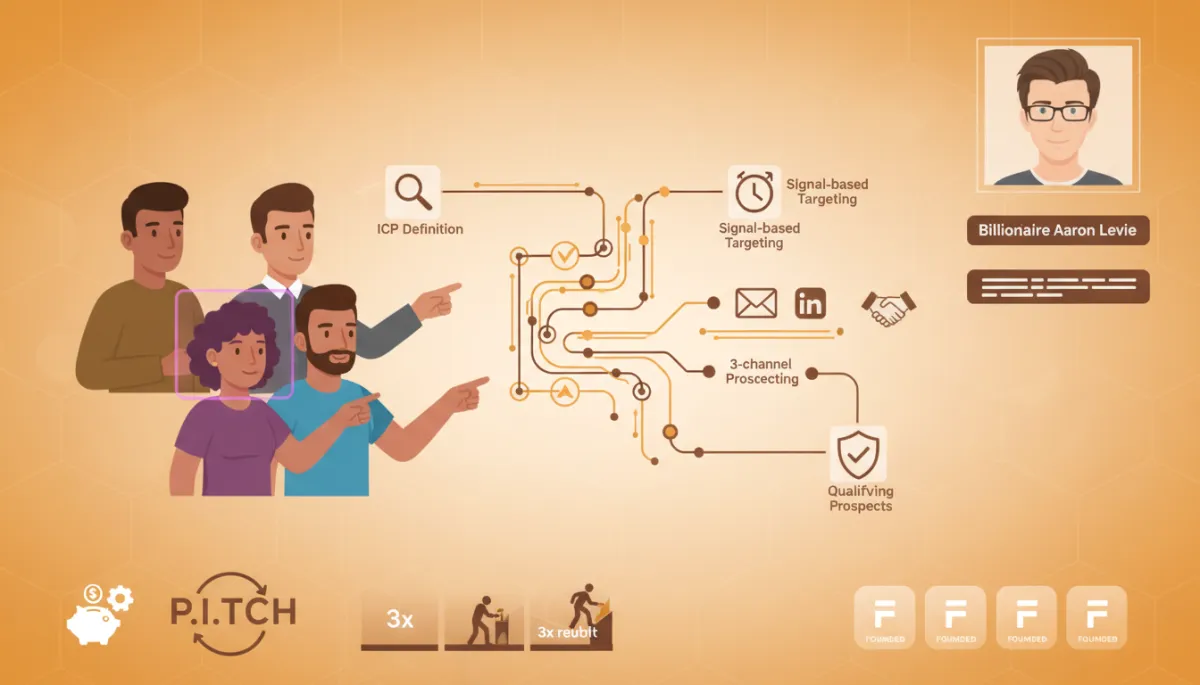
Sales Prospecting for Startup Founders: The System That Finds Buyers
Sales, Sales Prospecting, Startup Founders
Sales Prospecting for Startup Founders: The System That Finds Buyers (Billionaire Aaron Levie Edition)
Sales prospecting for startups does not have to be chaotic. In this guide, you will learn a practical, founder-led system—used by Jason and more than 1,000 founders—to consistently find buyers, qualify them fast, and follow up with discipline, even if you are still pre-revenue and doing everything yourself.

From Random Outreach to a Repeatable Sales Prospecting System
Before Box became a public company, Levie obsessively built an enterprise pipeline while he was still in college—long before he had a polished sales team. He targeted specific CFOs and CIOs, refined his Ideal Customer Profile, and treated prospecting like product work. That mindset is exactly what most founders skip, then wonder why their calendar is empty.
Jason sees the same pattern. Across $22M+ in revenue, three rebuilt companies, and over 1,000 founders coached, the winners are not the ones with the fanciest decks—they are the ones who run a simple, ruthless sales prospecting system daily. His P6 Sales Follow-Up framework, shared at AuthorJason.com, turns founder-led selling into a disciplined habit instead of a last-minute scramble.
Step 1: Define an ICP That Is Uncomfortably Specific
Effective b2b sales prospecting starts with a sharp Ideal Customer Profile—not a vague idea like “SMBs that need better operations.” High-performing teams in 2026 use firmographics, tech stack, and timing data to narrow the field. For founders, this matters even more because your time is scarce and your offer is still evolving with each conversation.
- Industry and sub-industry: e.g., B2B SaaS, Series A–C, selling to HR or Finance.
- Company size: headcount or revenue bands where your product delivers outsized value.
- Core tech stack: tools they already use that you integrate with or replace.
- Business motion: outbound-heavy, PLG, professional services, or marketplace.
Levie did not target “companies that store files.” He went after organizations with compliance requirements, distributed teams, and slow legacy tools—pain that made Box’s value obvious. Jason pushes founders to define an ICP that almost hurts because it feels too narrow. That constraint is what makes sales prospecting for startups efficient instead of exhausting.
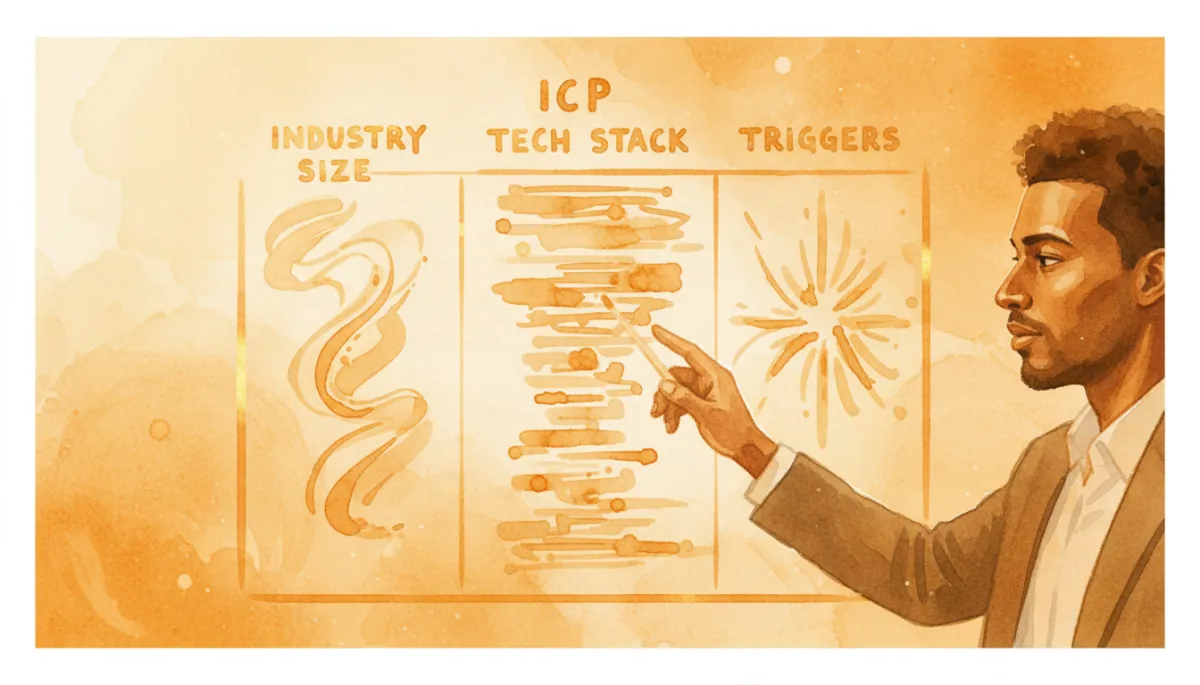
A painfully specific ICP makes every later prospecting decision faster and clearer.
Step 2: Use Signal-Based Targeting Instead of Static Lists
In 2026, the best sales prospecting teams do not rely on static databases alone—they prioritize accounts showing real buying signals. Salesforce reports that organizations using AI and intent data are significantly more likely to exceed revenue targets because they focus on prospects already in motion, not just names in a CSV.
What are the most important prospecting triggers for startup founders?
- Funding: New seed, Series A, or growth rounds signal fresh budget and pressure to grow. Track announcements on platforms like Crunchbase or your investor network.
- Hiring: Job posts for roles your product touches—sales ops, RevOps, marketing ops, or engineering leadership—often mean a process is breaking or scaling.
- Tech stack: If they use tools you integrate with or replace, you can speak directly to their workflow and pain.
Modern tools like Apollo.io or Clay can surface these signals automatically, but even a scrappy founder can track them manually once a day. The key is to stop treating every company as equal and start ranking prospects by live buying intent before outreach.
Step 3: Qualify Prospects Before You Ever Hit Send
How do you pre-qualify prospects without wasting founder time?
Jason teaches founders to run a quick “two-minute qualification” before adding anyone to an outbound sequence. Borrowing from frameworks like BANT and MEDDIC, you are not trying to close the deal—you are simply checking if this prospect deserves your next 30 minutes.
- Problem fit: Do they clearly experience the problem you solve?
- Economic fit: Could they realistically afford you within 12 months?
- Timing fit: Is there a visible trigger—funding, hiring, new leadership—that increases urgency?
Founders who qualify first and prospect second see higher positive reply rates and fewer demoralizing “not a fit” conversations. This is where b2b sales prospecting becomes strategic instead of spammy.
Step 4: Run a 3-Channel Prospecting Motion: Email, LinkedIn, Warm Referral
What is the best outreach channel mix for founder-led sales?
Modern sales prospecting is multi-channel. Top teams use 8–12 coordinated touches across email, social, and calls. As a founder, you can keep this simple and powerful with three channels that compound trust instead of feeling pushy.
- Email: Your primary channel for clear, specific outreach. Reference the trigger, name the problem, and propose a small next step. Do not bury your ask.
- LinkedIn: Connect, engage with their posts, and send a short note that mirrors your email. Social selling research shows that familiarity before outreach increases reply rates.
- Warm referral: Ask investors, advisors, or existing customers for introductions. Referral-based prospecting consistently outperforms cold outreach in conversion.

Three aligned channels create familiarity and trust long before a sales call.
How many touches should a founder plan in a sequence?
A practical founder-led sequence might include six to eight touches over 14 days: three emails, two LinkedIn interactions, and one or two warm-intro attempts if your network overlaps. The point is not aggression—it is respectful persistence, anchored in relevance. Jason’s sales follow-up strategy shows how structured follow-ups can double response rates without feeling robotic.
Step 5: Build a Daily Prospecting Routine You Can Actually Keep
How much time should a founder spend on prospecting every day?
In founder-led sales, prospecting is not optional—it is a core part of your job description until revenue is predictable. High-performing founders block 60–90 minutes each day, ideally in the morning, for focused prospecting and follow-up before the rest of the company’s demands hit.
What does a simple daily prospecting block look like?
- 15 minutes: Review signals—funding, hiring, tech changes—for your ICP accounts.
- 30 minutes: Add a small number of highly qualified prospects to your 3-channel sequence.
- 15–30 minutes: Run P6-style follow-ups with existing prospects—polite, precise, and persistent.
Jason’s own companies were rebuilt three times on the back of consistent daily prospecting blocks like this, not heroic one-off campaigns. If you want extra structure, his FOS system—available at dreamaker.club/buyfos for about $0.63 per day—packages these routines into a daily operating rhythm for founders who want pipeline without burning out.
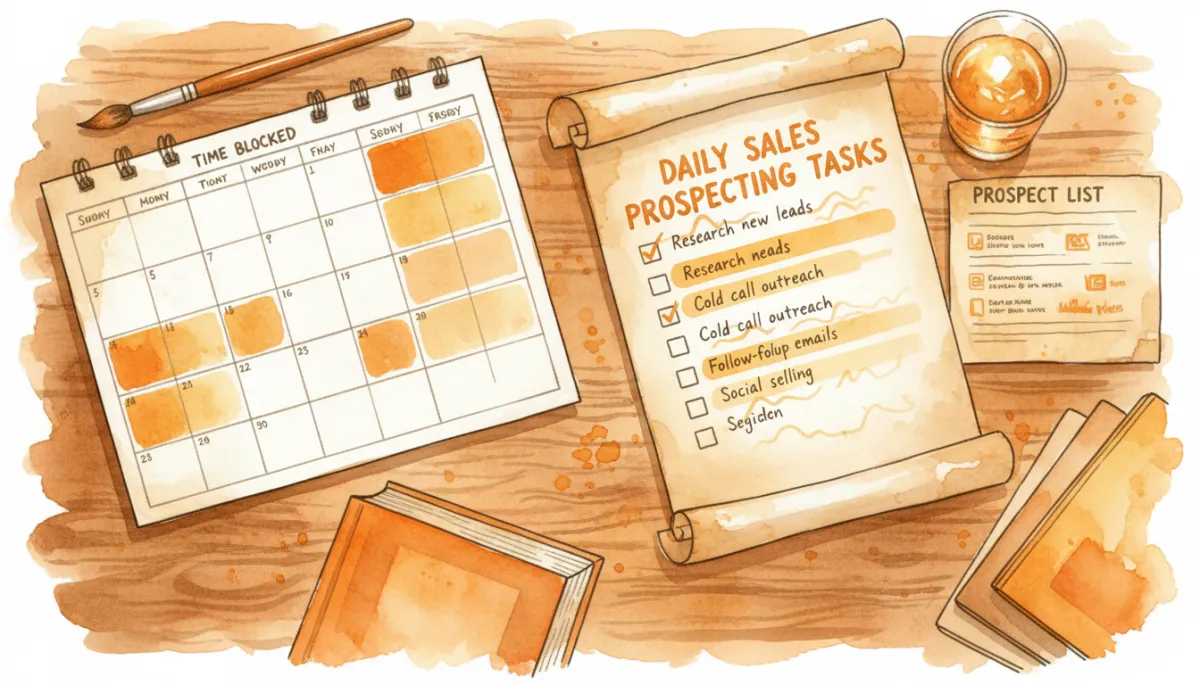
A consistent 60–90 minute block beats sporadic all-day prospecting sprints.
The P.I.T.C.H. Formula and Founder-Led Follow-Up
How do you write outbound that does not sound like everyone else?
Most founders default to long, product-heavy emails that bury the point. Jason’s P.I.T.C.H. Formula keeps your outreach short, human, and anchored in the prospect’s reality. It aligns perfectly with modern sales prospecting best practices—personalized, signal-aware, and focused on next steps, not feature dumps.
Tier 1: A Final Word to Founders Like Tan, Teo, and Leon
If you are reading this as a Tier 1 founder—someone like Tan, Teo, or Leon, already leading a strong product and a small team—the question is not whether you can prospect. You already can. The question is whether you are willing to treat prospecting the way Billionaire Aaron Levie did at Box: as a core design problem, not a side task to delegate away too early.
Jason’s view is simple. A founder who owns their ICP, runs signal-based lists, and commits to a daily 3-channel routine will always outrun a better-funded competitor that treats sales prospecting as a volume game. Tools and AI agents can amplify your effort—Salesforce data shows they cut research time by more than a third—but they cannot replace the clarity only you have about your market, your buyers, and the outcomes you create.

Tier 1 founders win by pairing discipline with a clear, signal-driven prospecting system.
FAQ: Sales Prospecting for Startup Founders
How is founder-led sales prospecting different from hiring an SDR team?
In early stages, you are not just booking meetings—you are discovering language, objections, and pricing signals. That learning cannot be fully outsourced. Once your ICP, triggers, and messaging are proven, then an SDR team can scale what already works instead of guessing in the dark.
What tools should a startup use for b2b sales prospecting in 2026?
Start lean. Many founders pair a CRM with a tool like Apollo.io or leadfinder for data, plus LinkedIn Sales Navigator for research. As you grow, you can add sequencing tools like Outreach.io. The tools matter less than the discipline of your ICP, signals, and daily routine.
How many prospects should a founder contact each week?
Jason often recommends quality over quantity: 10–25 highly qualified prospects per week, each with clear triggers and tailored outreach. With strong targeting, a 3–7% positive reply rate is realistic—and those replies tend to turn into meaningful conversations.
How do I avoid sounding like generic AI-generated outreach?
Reference a real trigger, use plain language, and keep your email short. Mention specifics about their role, team, or tech stack. Tools can help draft, but you should always add one or two sentences only a human who did the research could write.
When is the right time to stop doing founder-led prospecting?
Typically, once you have a repeatable motion: a clear ICP, consistent triggers, predictable conversion from outreach to meeting, and from meeting to revenue. Even then, the best founders still run a small personal prospecting block each week to stay close to the market.
How does Billionaire Aaron Levie’s approach apply to my startup?
Levie proved that a founder, even as a student, can build an enterprise pipeline by obsessing over ICP, signals, and disciplined outreach long before a formal sales team exists. You do not need his scale to copy his system—start with a sharp ICP, signal-based lists, and a daily 3-channel routine, then layer in frameworks like P6 Sales Follow-Up and P.I.T.C.H. as you grow.


