
Best Sales Tools for Startup Founders: The Strategy Guide and Startup Survival Book for Founders Who Are Drowning in Software but Still Can't Close Deals
Sales Tools, Startup Sales Stack, Founder-Led Selling
Best Sales Tools for Startup Founders: The Strategy Guide and Startup Survival Book for Founders Who Are Drowning in Software but Still Can't Close Deals
Jason knows most founders are not lazy or bad at sales. They are just buried under logins, tabs, and tools that promised magic but never touched the real problem: the actual conversation with a human buyer. This guide shows how to build a lean, kind-to-your-brain sales stack around real selling, not around screenshots from tool vendors.

Why Founders With 12 Sales Tools Still Can't Close — and What's Actually Missing
Jason has watched founders in Singapore, the US, and beyond juggle a “dream” sales tech stack. HubSpot, Apollo, Clay, Zapier, Loom, Slack, five Chrome extensions. On paper, it looks like a Formula 1 car. In reality, it sits in the garage while they walk to the meeting on foot.
What is missing is not another feature. It is a simple path from stranger to customer. A path the founder can follow on a tired Tuesday night after twelve hours of chaos. That is why so many tools end up half-installed and forgotten. The workflow never came first. The tools came first.
Why do founders keep buying new tools?
Because tools feel like progress. Buying a CRM feels safer than calling a prospect. Reading a comparison on G2 feels easier than sending a follow-up. Yet Salesforce’s own data has shown that large numbers of reps still miss quota, even with world-class tools, because process and behavior lag behind software (Salesforce).
The Sales Tools Mistake That Drains Budget Without Filling the Pipeline
The biggest mistake Jason sees is this: buying tools to avoid feelings. Founders feel behind, so they buy automation. They feel insecure, so they buy “AI” to write emails. They feel lost, so they buy dashboards. But the pipeline stays thin, and the bank account gets thinner.
Research shows a lean stack works better. One CRM, one outreach tool, one data source often beats a Frankenstein stack of “best-in-class” apps that nobody uses consistently (GrowthStack Advisory). The right sales tools for founders are the ones they still touch six months from now, not the ones with the fanciest homepage.
A lean stack turns scattered effort into a clear, repeatable sales rhythm.
How can founders stop wasting money on tools?
Jason teaches founders to write down one simple workflow first: from list to meeting to proposal to close. Only then do they plug tools into each step. Tools must earn their place by removing friction from a real, written process, not from a dream of “someday scale.”
How Marc Benioff Built the World's Number One Sales Tool From a Rented Apartment
In 1999, Marc Benioff started Salesforce in a rented San Francisco apartment with three employees. Back then, the idea that serious companies would run their sales on “the cloud” sounded like a joke. Enterprise buyers trusted on-premise servers, not a browser tab. Benioff bet his whole future on that browser tab anyway.
He focused on one big promise: “No software.” Not ten features. Not a hundred integrations. Just a clear, simple way for sales teams to manage relationships without wrestling with old-school IT. Over time, that rented-apartment idea grew into the world’s number one CRM, reshaping how sales software startup teams everywhere worked (Forbes).

Salesforce grew from one small apartment into the default system for sales teams.
Jason uses this story to remind founders: tools become great when they solve one painful problem deeply. Benioff did not start with a giant feature matrix. He started with a clear enemy: clunky on-premise software. Your stack should do the same. Pick tools that fight your biggest enemy today: lost leads, missed follow-ups, or ghosted proposals.
The P.I.T.C.H. Formula: Jason's Framework for Choosing Tools That Support the Sale — Not Replace It
Inside the Future of Selling System, Jason uses the P.I.T.C.H. Formula to guide every sales decision. It keeps founders grounded when shiny new tools appear. Instead of asking “What can this software do?” they ask “Where does this fit in my P.I.T.C.H.?”
He walks through it in full on the main P.I.T.C.H. Formula page, but here is the heart: tools must help a founder Prepare, stay aligned with Intent, Teach clearly, Close cleanly, and support daily Habits. If a tool does not strengthen at least one of those, it stays on the shelf.
How does the P.I.T.C.H. Formula change tool choices?
Founders stop chasing “AI everything” and start buying tools that help them show up prepared, follow through on intent, and keep promises. The stack becomes a quiet assistant, not the main character. Jason has seen this tiny mindset shift double close rates without changing the product at all.
The Lean 5-Layer Sales Stack Every Startup Founder Needs in 2026
Jason teaches a five-layer stack inside the Future of Selling System. It is not fancy. It is not meant to impress investors. It is meant to help a busy founder in Singapore or anywhere else remember who to call today, what to send them, and how to track the result. Think of it like a tiny kitchen: one good knife, one pan, one board. Enough to cook real meals, not just look good on Instagram.
- CRM (contact and deal management — the foundation)
- Prospecting and Lead Generation (finding the right people)
- Email Outreach and Sequencing (warm and cold at scale)
- Video Sales and Demo Tools (close async and live)
- Analytics and Pipeline Tracking (know what's working)
Layer 1 — CRM (contact and deal management — the foundation)
For most founders, the best sales tools for startup founders start with a simple CRM. HubSpot’s free tier or Pipedrive’s visual pipeline are often enough. TechRadar and others praise them for being founder-friendly, not just “enterprise-ready” (TechRadar). The job here is basic: who are we talking to, where are they in the journey, and what is the next step?
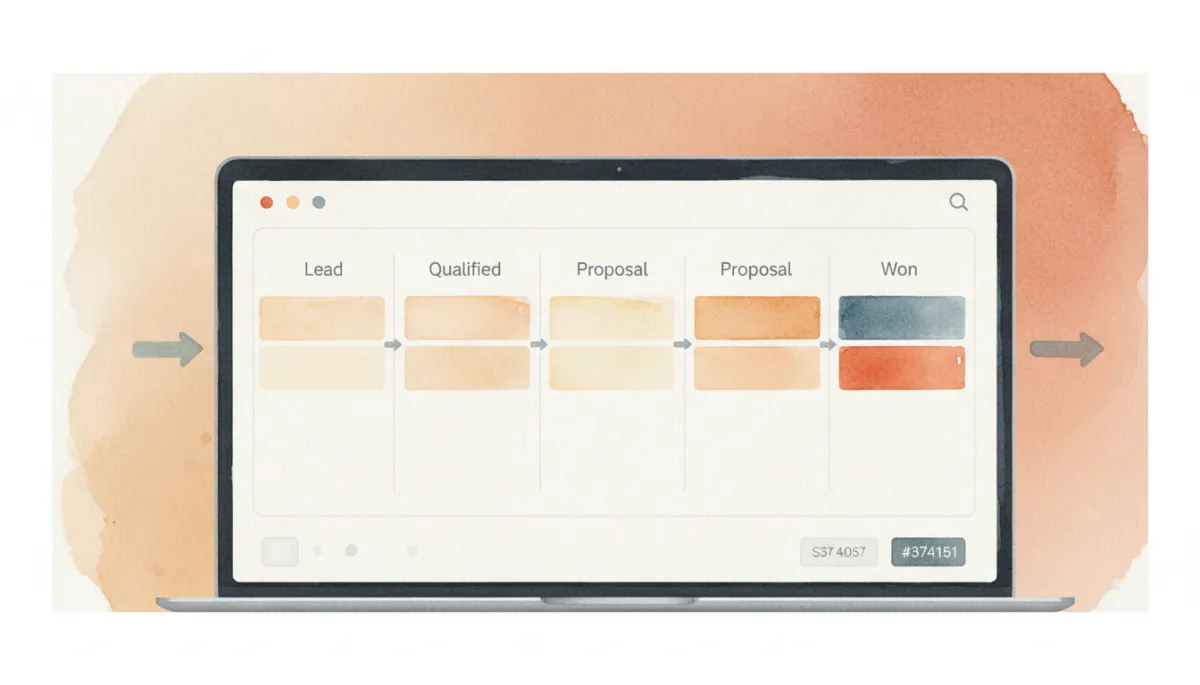
A simple CRM pipeline keeps founders focused on the next honest conversation.
Layer 2 — Prospecting and Lead Generation (finding the right people)
Tools like Apollo.io, LinkedIn Sales Navigator, or Clay help founders find and enrich leads without burning whole weekends on manual research. In 2026, Jason sees most lean stacks using one main data source, not five. The rule: one place to search, one click to push into the CRM, no spreadsheets in between.
Layer 3 — Email Outreach and Sequencing (warm and cold at scale)
Instantly.ai, Lemlist, or Apollo’s built-in sequencer can send smart, spaced-out emails while the founder is building product. The trick is to keep sequences human. Jason teaches founders to write like they talk, then let the software handle timing, tracking, and replies. Automation handles the calendar; the founder still handles the heart.

Sequences keep outreach moving; personal touches keep it human.
Layer 4 — Video Sales and Demo Tools (close async and live)
Eric Yuan’s Zoom became the default room for sales demos worldwide because it was so simple salespeople adopted it before IT did. Loom or similar tools let founders send short, personal walkthroughs that buyers can watch on their own time. In Jason’s world, one clean Zoom link and one async video tool are enough to run a global sales motion from a small co-working desk.
Layer 5 — Analytics and Pipeline Tracking (know what's working)
This is where founders often overbuild. Jason keeps it gentle: basic CRM reports, email open and reply rates, and a simple weekly dashboard are enough at the start. As Forbes and others point out, the real power of modern sales software lies in clear, usable analytics, not in a hundred charts nobody checks (Forbes).

A small set of honest numbers beats a wall of dashboards nobody reads.
Real Founders, Real Results — What Changes When the Right Stack Clicks
Jason has seen what happens when a founder finally aligns tools with a simple system. Meet Maya, a fictional but all-too-real SaaS founder in Singapore. She had nine tools, zero rhythm, and a head full of guilt. After working through Future of Selling System, she cut down to HubSpot, Apollo, Zoom, and Loom. Four tools. One weekly review ritual. Ninety days later, her calendar looked different. So did her bank account. More important, her nervous system finally exhaled.

When the stack clicks, founders stop firefighting and start following a calm rhythm.
Stewart Butterfield’s journey with Slack mirrors this in a bigger way. Slack started as an internal tool for a failed gaming project. It became the backbone of how sales teams across the world talk, share leads, and close deals — often replacing internal email. Product-led growth, not a giant outbound army, pulled Slack into sales teams’ daily lives. The right tool, solving a real pain, spreads quietly until one day it feels like air.
What results can founders expect from a lean stack?
Inside Jason’s world, graduates of the Future of Selling System have generated $22M+ in combined sales. Some hit wins like Tan’s $29,693 in 16 days, Teo’s 63 customers in 100 days, or Leon’s journey from $2.5K to $2M+. But Jason always reminds them: the real win is becoming the kind of founder who shows up, follows through, and forgives themselves when a day goes sideways.
If you want more stories and tactics on how to get clients as a startup founder, Jason shares them openly. No guru halo. Just a human who has fallen hard, stood back up, and turned those scars into a map.
Build Your Lean Sales Stack Today — Starting With One Layer
If you are reading this with twenty tabs open, Jason wants you to hear this: you are not behind. You are just early in your system. Even billionaires like Marc Benioff, Stewart Butterfield, and Eric Yuan started with messy rooms, small teams, and tools that did not yet make sense to the world. They kept going anyway. So can you.
Today, pick one layer. Maybe it is CRM. Maybe it is outreach. Maybe it is finally tracking your pipeline honestly. Choose one tool that feels kind to your brain. Set up one simple workflow. Run it for thirty days. Forgive yourself when you miss a day. Then, when that layer feels steady, add the next. That is how Jason built AuthorJason.com, how he shaped the Future of Selling System, and how founders across Singapore and beyond are turning chaos into calm, one small layer at a time.


