
How Billionaire Sara Blakely Built the Confidence to Charge Premium Prices
High-ticket sales, founder mindset, Sara Blakely
How Billionaire Sara Blakely Built the Confidence to Charge Premium Prices — A Founder’s Guide to the High-Ticket Sales Mindset
Jason wrote this for the founder who is already selling… but still feels that small tremor when it’s time to say the high price out loud. This is about building the high-ticket sales mindset for founders that stays solid in the boardroom, not just on the vision board.

Why Founders Apologise for Their Price Before Anyone Asks — and What It Costs Them
Jason sees the same pattern in boardrooms and Zoom calls. The founder explains the product with excitement… then shrinks by 20% when the topic of price comes up. Shoulders drop. The voice softens. A nervous laugh slips out right before the number hits the table.
The buyer feels that shift immediately. They may not name it. But they feel it in their gut. Gong’s analysis of more than 50,000 sales calls shows that founders who believe in their price with certainty close high-ticket deals at 2.7× the rate of those who show doubt while presenting it [Gong].
Doubt is expensive. HubSpot data shows that founders’ price anxiety is associated with an average deal size that’s 34% lower than what the market can actually bear [HubSpot]. This isn’t just a “missed opportunity.” It’s salaries, runway, and hiring power left on the table because the founder couldn’t hold their number steady in silence for three seconds.
Jason calls this “pre-emptive apologising.” It sounds like: “I know it’s a bit expensive, but…” or “We can be flexible on price if that helps…” before the buyer even raises an eyebrow. Gong found that this exact type of phrase shows up in 28% of lost deals. It’s like throwing your price under the bus… then trying to drag it back out while the buyer watches.
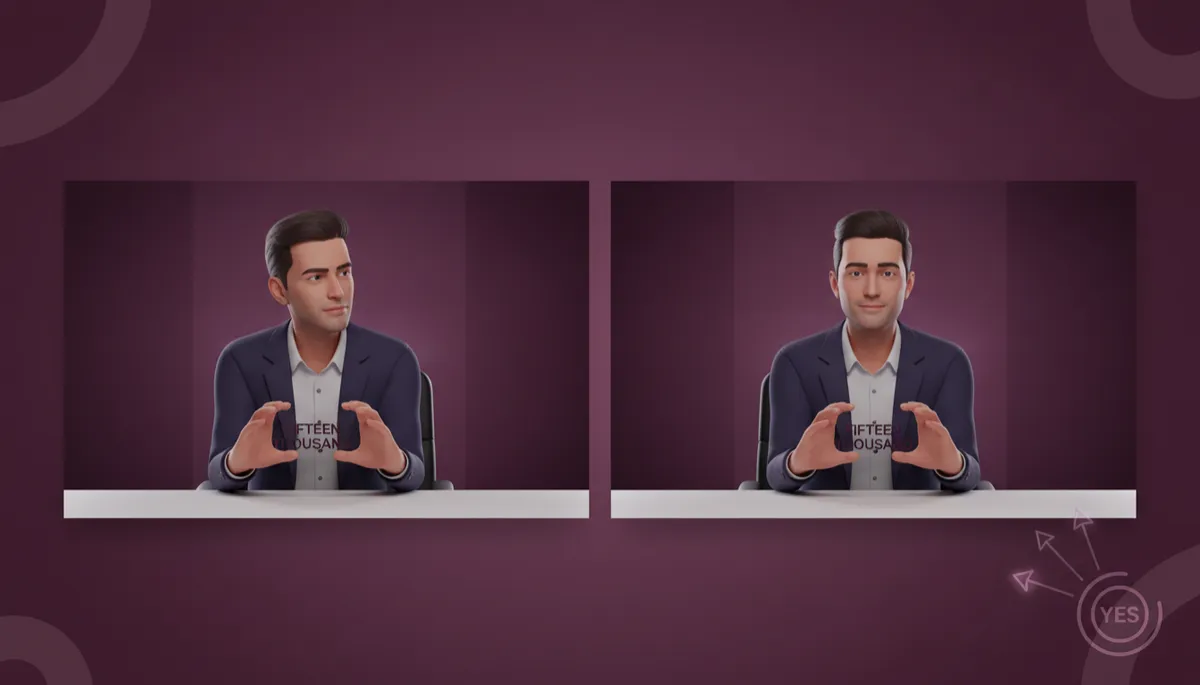
Founders who train on price delivery — saying the number out loud without justification — increase their full-price close rate by 41%. The buyer doesn’t just hear the number. They hear how you feel about it.
In high-ticket deals, buyers aren’t just buying the product. They’re buying the founder’s certainty. When the person who set the price doesn’t fully believe in it, the buyer reads that as a warning label. And once that doubt is out in the open, closing at full price without a discount bandage becomes nearly impossible.
As Jason teaches at AuthorJason.com, the high-ticket sales mindset for founders — and how the founder’s internal belief in their price is the biggest variable in whether the buyer accepts it — is the leverage point that changes the entire trajectory of the company.
How Sara Blakely Walked into Neiman Marcus with Full Price Confidence — Before She Had a Track Record
Sara Blakely didn’t walk into Neiman Marcus with a decade of case studies. She walked in with a prototype, $5,000 in savings, and zero connections in fashion. No fancy deck. No sales team. Just a clear result in her head and the nerve to stand in it.
She literally took the buyer into the dressing room and demonstrated Spanx on herself. No tricks, no theatrics. Just: “Here’s what it looks like when you wear this.” She never led with a discount. She never apologised for the price. She charged what she believed the product was worth — and she was right. The purchase order followed her out of the store.
Blakely has spoken openly about the internal shift that made this possible. She decided to believe in the outcome before asking anyone else to. This is the essence of the high-ticket sales mindset for founders: before you can charge a premium price, you have to believe in the premium outcome — fully and without reservation.
In this context, discounting isn’t a clever tactic. It’s an apology. The buyer can feel when the founder naming the price doesn’t fully believe in it. Blakely’s belief in her price was quiet, warm, and absolute. It didn’t need defending because, inside her, it was never in question.
In her interviews, Blakely talks about a pivotal moment when she refused to sell a large stake in her company early for a tempting cheque, because she could clearly see what Spanx could become. That could have been an “early exit,” but it would have forced her to sacrifice control over pricing and vision. Her choice to turn down easy money in favour of long-term value control was part of the same mindset that kept her steady in that Neiman Marcus dressing room.
When Spanx later launched in stores like Nordstrom, Blakely didn’t compete on price with the cheaper brands on the same rack. She focused on placing the product in sections where women were looking for solutions, not discounts. The way the product was merchandised, the way staff were trained to explain the result, and even the language on the packaging all reinforced that the price was a fair exchange for a new kind of body confidence — not just another piece of fabric.
As Jason teaches at AuthorJason.com, the high-ticket sales mindset for founders starts before you ever enter the room: the founder who has internally settled that the price is an honest expression of the outcome is the founder who can carry it calmly when they meet the buyer.
The High-Ticket Sales Mindset Framework Jason Teaches Every Founder
Jason works with founders who already have customers and a working product. They’re not failing. They’re just stuck at a price that doesn’t match the value they know they deliver. The Future of Selling (FOS) system exists to close that gap — in the founder’s head first, then in the market.
FOS is built around a simple idea: your revenue ceiling is set by your belief ceiling. The system gives founders a repeatable way to build price certainty, practise delivering it, and handle silence without panic. It’s not about turning them into aggressive closers. It’s about helping them appear as confident as their product already is.
How Do You Build the Confidence to Charge Premium Prices When You Don’t Have a Long Track Record?
You borrow certainty from the outcome, not your résumé. Like Sara Blakely, you define in painful detail what your customer’s life looks like after your product works — then you anchor your price to that transformation instead of your years in the game.
- Write a clear description of what changes in your customer’s life when your product fully works.
- Estimate the financial or emotional value of that change instead of thinking in hours of your work.
- Make the price a logical reflection of that transformation, then hold to it in every conversation.
What Is a High-Ticket Sales Mindset — and How Is It Different from Normal Sales Thinking?
Normal sales thinking chases approval and avoids discomfort. The high-ticket mindset accepts tension as part of the process. It sees the price as a fact, not a favour, and treats the conversation as two adults deciding whether the outcome is worth that fact — without apology.
- Acknowledge that tension when talking about money is normal and doesn’t mean your price is wrong.
- Remind yourself you’re offering an outcome, not asking for a favour or charity.
- Treat the decision as an equal conversation about fit and value, not a test of your worth.
How Do You Stop Apologising for Your High Price Before the Buyer Questions It?
Jason has founders write and rehearse one clean price sentence and then go silent. No soothing. No nervous add-ons. You practise saying the number in the mirror, in voice notes, with your team — until your nervous system gets used to hearing it come out of your mouth without shaking.
- Write a single price sentence with no apologies or softening.
- Record yourself saying it until your voice is steady and clear.
- In the meeting, say the sentence as written, then stay silent and let the buyer process.

Blakely decided to believe in the outcome before asking anyone else to. Price confidence isn’t a performance. It’s certainty — the kind that comes from precise knowledge of your outcome’s value.
As Jason teaches at AuthorJason.com, the high-ticket sales mindset for founders is built through deliberate practice: every time you state your price without apology, you rewire your brain to see the number as a normal fact, not a social threat.
How Jobs and Branson Earned the Right to Charge Premium Prices Through Conviction and Delivery
Steve Jobs played the same game on a different field. His conviction in Apple products wasn’t a marketing trick. He genuinely believed they were better. That conviction flowed through keynotes, store design, and every price tag. Great products, he argued, don’t compete on price. They compete on the experience they create.
For founders in high-ticket deals, that translates into a simple rule: if your product truly does something that can’t be replicated for less, the price is a fact — not a negotiating stance. You can discuss payment terms. You can discuss scope. But you don’t debate your own belief in the number.
Richard Branson did this in an industry where everyone else was racing to the bottom. Virgin Atlantic was positioned as a premium experience from the first flight. Not because he thought people would pay more for anything… but because he knew exactly what Virgin offered that other airlines didn’t — from service to atmosphere to the small human touches that made long-haul flights less brutal.
Branson’s mindset is a warning label for founders: you earn the right to charge a premium price by delivering a premium experience, consistently, from the very first touchpoint. Confidence without substance is ego. Confidence with substance is authority. High-ticket buyers spot the difference in under a minute.
When Jobs unveiled the iPhone in 2007 at $499 with a contract, he didn’t apologise for the price in the keynote. Instead, he spent the bulk of the presentation teaching the audience how the phone combined three devices in one: a phone, an iPod, and an internet communicator. The result? The price wasn’t framed as a high number for a phone, but as a deal for one revolutionary device replacing three.
Branson, in turn, launched Virgin’s upper-class seats with concrete details: onboard bars, fully flat beds, and premium lounges. In one well-known story, he personally tested economy on competing airlines, took notes on the pain points, and then designed Virgin to remove them. The higher price wasn’t “just a fun brand tax” — it reflected an upgraded experience across the journey.
As Jason teaches at AuthorJason.com, the high-ticket sales mindset for founders isn’t empty bravado. It’s a commitment to building unmistakable value, then carrying a price that reflects that value without flinching — just as Jobs and Branson did with every major launch.
What Do You Do When You Feel Yourself About to Offer a Discount Before the Buyer Even Asks?
Jason teaches founders to pause, breathe, and ask a value question instead. Something like: “How would you value this if it works exactly as we described?” That shifts the focus back to outcomes and stops you from undercutting your own price just to escape a few seconds of silence.
- Notice the instant urge to fill the silence with a discount or justification.
- Ask a question that brings the buyer back to the value of the outcome, not the hourly cost.
- Listen honestly, then decide calmly whether a scope adjustment is actually necessary.
How Do Founders Who Charge Premium Prices Think About Money Differently from Those Stuck at Low Prices?
High-ticket founders see price as a filter, not a favour. They believe the right buyers invest in outcomes, not hours. Low-price founders secretly feel guilty asking for money, so they over-explain, over-discount, and attract buyers who value cheapness over effectiveness.
- Treat price as a way to select serious clients, not a wall that keeps everyone out.
- Link money to the results you create, not your personal worth.
- Walk away from relationships built on permanent discounts, and focus on partnerships built on outcomes.
As Jason teaches at AuthorJason.com, the high-ticket sales mindset for founders requires separating self-worth from the buyer’s reaction — price is a tool for designing your business model, not a referendum on your value as a human.
What Jason’s Founders Discover When They Finally Charge What They’re Worth
Jason watched a composite founder — let’s call her Maya — go through this shift. Maya ran a B2B product that cut onboarding time in half for mid-market go-to-market teams. Her eight-person team was drowning because she kept signing low-price, high-demand deals “to keep the pipeline moving.”
Inside the Future of Selling system, Maya rebuilt her story around the outcome instead of a feature list. She practised her new price out loud until it stopped feeling like a costume and started feeling like the truth. The first time she held the line, the buyer paused… then nodded… and signed at full price. No discount. No apology. Just, “Okay, that makes sense.” Quiet.
1,000+ founders. Over $22M in combined sales. 68% of buyers say the founder’s confidence in their price affected their decision. Confidence isn’t the result of the close. It’s the cause.
Across more than 1,000 founders, Jason has seen the same pattern. Once the mindset shifts, the numbers follow. Tan generated $29,693 in 16 days. Teo added 63 customers in 100 days. Leon grew from $2.5K to over $2M by finally believing in the price he was charging and holding to it. Different products. Same inner game.
In Stanley Tan’s case, the biggest change wasn’t in the deck or the slides, but in the inner dialogue. Before working with Jason, he prefaced every mention of the price with a soothing line or pre-emptive discount. After reconnecting the price to the concrete outcome he created for clients, he started presenting his number as “the natural exchange” for that result. The day he stopped apologising for the price and started speaking it as a calm fact, the type of buyers who responded changed — and the $29,693 in 16 days was a direct reflection of that shift.
As Jason teaches at AuthorJason.com, the high-ticket sales mindset for founders shows up in the numbers when the founder stops selling the price and starts selling the outcome — then treats money as the way to measure that exchange, not a test of their worth.
How the P.I.T.C.H. Model Builds Price Confidence Before You Ever Say the Number
Inside the Future of Selling system, Jason uses the P.I.T.C.H. model to make sure founders are mentally ready long before they reach the price slide. It’s a simple, structured way to arrange the story, proof, and emotional ground so the number feels inevitable instead of random. You can read more about the P.I.T.C.H. model and how it fits into FOS, but the core idea is this: when the narrative is coherent, the price feels like the next natural line in the script, not a cliff you jump off.
What most founders don’t see is that the P.I.T.C.H. model builds mindset as much as it builds method. The founder who has prepared deeply, entered with a clear structure, taught the buyer honestly, and closed consistently using the same framework creates a library of positive experiences. With each repetition, the price stops feeling like a gamble and becomes the expected result of a proven process.
That means mindset isn’t a prerequisite for using the model; it’s a product of it. At first, the founder may enter calls unsure, leaning on the structure as a crutch. But after ten calls where the P.I.T.C.H. model leads to clearer conversations and better deals, the brain starts associating that sequence with a positive outcome. Suddenly, saying the price at the end of the flow doesn’t feel like a leap into the unknown, but like the final step on a familiar path.
As Jason teaches at AuthorJason.com, the high-ticket sales mindset for founders is built by repeating a sound process: when you trust the framework, it becomes easier to trust the price that comes through it.
Founders practise this flow — especially the moment they say the number and then stay silent — and increase their full-price close rate by 41%, according to Sales Insights Lab. Silence stops being scary. It becomes part of the close.
Self-Check
- When you say your high price out loud, does it feel natural — or does something in you brace for a negative reaction?
- Are you charging what you believe the outcome is worth — or what you think the buyer will accept?
- After a buyer says no, do you question your price — or your process?
As Psychology Today research shows, seller confidence shapes buyer perception of value: when a price is presented with calm certainty, the brain tends to treat it as a fair reference point rather than a threat.
3 High-Ticket Mindset Mistakes — and the Bonus Mistake That Hurts Most
Mistake 1 (Sophia): Pricing from Fear
Before every high-ticket conversation, Sophia — a brand strategy founder — was mentally negotiating with herself. She told herself the buyer would object. She pre-built the objection in her head before the buyer said a word. By the time she revealed the price, she had already decided it was too high. The buyer picked up that energy and agreed.
The move: the price conversation starts in your head. The founder who has accepted the price internally before walking in is the founder who will hold it in the room.
Mistake 2 (Sophia): Measuring Her Self-Worth by the Buyer’s Reaction
A “yes” made her confident. A “no” made her question everything — her offer, her experience, her right to charge what she charged. That emotional whiplash drained her and made her inconsistent.
The move: separate the decision from the person. A buyer who says no isn’t evaluating you. They’re evaluating fit, timing, and budget. Your value doesn’t change because one buyer’s circumstances didn’t align.
Mistake 3 (Sophia): Never Saying Her Price Out Loud Before the Call
The first time she ever said “$35,000” was in the meeting. The number felt foreign in her mouth. She stumbled slightly. The buyer noticed.
The move: practise saying the price. Alone. In the mirror. With a colleague. In role-plays. A price you’ve said ten times in practice is delivered twenty times better in the room.
Bonus Mistake (Jason): Mindset Without Skill — or Skill Without Mindset
Jason found that working on mindset without working on skill produces confident founders who still can’t close. Working on skill without mindset produces technically capable founders who sabotage themselves at the close. The combination is what works.
The founders who deeply understood the structure and did the inner work to own their price were the ones who closed at high rates without discounting. Jason began running sessions that combined both — role-play practice followed by reflection on what happened internally during the price moment. What did you feel? What did you think? What did you want to say but didn’t? The practice reveals the skill gap. The reflection reveals the mindset gap. Both have to be closed.
The move: after your next high-ticket conversation, write down what happened in your head the moment you said the price. Not what you said. What you thought. That thought is the mindset gap you need to work on.
As Jason teaches at AuthorJason.com, the high-ticket sales mindset for founders is built when skill and mindset align: it’s not enough to know what to say; you have to believe it enough to say it without apology.
The Mindset Shift That Changes High-Ticket Sales — The Exact Founder Script
Imagine the same conversation, same buyer, and the same $25,000 price.
Version A (Apologetic Founder):
Founder: “So… um, the investment to work with us would be around $25,000, but of course we can be flexible if that feels a bit high for you.”
The buyer hears the hesitation and responds: “Right, we’d need to be closer to $15,000 to make this work.”
Version B (Centred Founder):
Founder: “The investment to work with us for this scope is $25,000.”
[Calm silence from the founder]
Buyer, after a moment of thinking: “Okay, that’s a bit higher than we’re used to, but given what we’ve discussed about cutting onboarding time in half, I can see the logic.”
The words are almost identical. The difference is the energy: in Version A, the founder tries to protect themselves from rejection by offering an unasked-for discount. In Version B, the founder trusts the buyer enough to let them calculate the value in silence. The result? In Version A, the buyer learns that the price is always negotiable. In Version B, they treat the price as a serious reference point to discuss terms around, not the number itself.
As Jason teaches at AuthorJason.com, the high-ticket sales mindset for founders shows up in these micro-moments: the founder who can say the same sentence with internal steadiness changes the course of the deal without changing a single word.
FAQs About the High-Ticket Sales Mindset for Founders
What’s the Link Between Believing in Your Offer and the Buyer’s Decision to Pay Full Price?
Buyers take emotional cues from you. When you believe in your offer, they feel safe paying full price; when you wobble, they instinctively reach for objections, delays, or discounts.
Why Do Founders Feel Guilty Charging High Prices Even When the Value Is Obvious?
Because they confuse the value of their offer with their personal value. If you see every “no” as a judgement on you, a high price feels like risking your identity, not just making a business decision. Separating self from offer dissolves that guilt.
How Do You Build Confidence in Your High Price on Your Own?
Tie the price to a specific outcome, collect stories and proof of delivering that outcome, and practise presenting the price until it feels neutral, not scary. Confidence comes from evidence and repetition, not motivational quotes alone.
What Mindset Shift Separates Founders Who Discount from Those Who Don’t?
Founders who discount see price as a hurdle to smooth over. Those who don’t see it as a filter and a commitment signal. When you view price as part of protecting the outcome, you stop undercutting it to please everyone.
How Does the P.I.T.C.H. Model Help Founders Who Fear the Price Moment?
It gives them a clear path from problem to outcome to proof, so the price is a logical conclusion, not a surprise. When a founder knows “where they are” in the conversation, the fear of the next price step shrinks.
What Role Does Silence After Naming the Price Play in High-Ticket Sales?
Silence is the moment the buyer calculates value. Founders who break it quickly with discounts interrupt the decision process. Those who tolerate it calmly let the buyer reach an internal “yes” before negotiating any details.
How Do High-Price Founders Handle Rejection Differently?
They treat every “no” as information, not condemnation. They ask: was the issue fit, timing, or how we framed the value? Then they refine the process instead of dropping the price at the first sign of resistance. This preserves both their confidence and their business model.
What’s the First Practical Step for a New Founder to Build a High-Ticket Sales Mindset?
Write one paragraph describing the outcome you create for an ideal client, then name the price that honestly reflects that outcome and practise saying it daily. This simple exercise links price to outcome in your mind before you try to link it in the buyer’s.
If you’re leading a team of five or more and still carrying all the sales yourself, this is the leverage point. Your next level isn’t a new trick. It’s a mental shift. The high-ticket sales mindset for founders isn’t theoretical for Jason. It’s the pattern behind more than $22M in combined sales, 1,000+ founders, and three from-the-bottom comebacks that all returned stronger.
Blakely walked into Neiman Marcus knowing what Spanx was worth — and the buyer felt that certainty before a word was spoken. Jobs charged $499 for the iPhone and didn’t flinch because he knew exactly what the buyer was getting. Branson charged a premium fare from Virgin Atlantic’s first flight because he built an experience that deserved it. For Jason’s founders, the high-ticket sales mindset isn’t a performance. It’s the result of knowing your value so clearly that the price becomes simply the truth.


