
What Shenzhen's Startup Boom Teaches Founders About Pitching to Global Investors
Startups, Shenzhen, Founders, Sales
If you’re building in Shenzhen right now, the headlines are no longer just “interesting news”—they’re a direct roadmap for what investors, customers, and policymakers will reward over the next 12 months. From robotics founders signing pre‑IPO rounds to Gen‑Z operators scaling vending‑machine‑style robots across districts, the city is quietly resetting what “serious” looks like for early‑stage teams.
Shenzhen’s New Wave of Startups:
From billion‑dollar robotics bets to Gen‑Z founders scaling ice‑cream robots, August 2026 is a pivotal moment for Shenzhen’s startup scene—and a wake‑up call for every founder serious about building globally competitive companies. This article breaks down the key funding signals, accelerator programs, policy shifts, and founder stories you can use to sharpen your sales narrative, attract capital, and win customers in Shenzhen and beyond. Along the way, we’ll connect these trends to practical selling systems you can deploy immediately, and point you to deeper dives like our guides on future‑proof B2B sales and pitching enterprise customers.
📌 Shenzhen Startup Snapshot (August 2026):
Massive funding into robotics, wearables, and embodied AI is signaling what serious investors want.
Accelerators and competitions compress years of learning into weeks for high‑velocity founders.
Policy tailwinds like Luohu’s “4×10” plan and Go Global Center back solo founders and scale‑ups.
Real founder stories—from AI ice‑cream robots to semiconductor clusters—prove the model works.
The founders who win in Shenzhen sell as well as they build, with clear sales presentations and follow‑up systems.
Theme What It Signals in Shenzhen What Founders Should Do Robotics & Wearables Billion‑dollar bets on embodied AI and hardware‑plus‑software stacks. Frame your product around specific, high‑value problems and global use cases. Accelerators & Competitions Fast‑track environments that reward speed, clarity, and traction. Treat every pitch as a live sales presentation and refine between sessions. Policy Tailwinds Subsidies and support for solo founders and global‑ready teams. Leverage programs like 4×10 while building a robust sales engine.
Robotics and Wearables: Shenzhen’s New Billion‑Dollar Signal
To understand where Shenzhen is heading, start with where the biggest checks are going. Two funding headlines this summer capture how fast Shenzhen is moving up the value chain. Humanoid robotics startup LimX Dynamics closed nearly US $200 million in a pre‑IPO round, pushing its valuation to around CNY 15 billion (about US $2.2 billion) (Caixin Global) . Around the same time, smart‑glasses maker Even Realities—founded by a former Apple engineer—raised US $150 million in a pre‑Series B round led by Tencent and Meituan, officially joining the unicorn club (TechStartups) .
📊 Pull Quote:“In less than one quarter, Shenzhen‑linked robotics and wearables startups announced over US $350 million in new funding—an unmistakable signal of where global capital believes the next decade of value will be created.”
For founders, these rounds are more than feel‑good headlines. They are proof that:
Investors are doubling down on embodied AI—robots, wearables, and hardware‑plus‑software stacks that solve real‑world problems.
Shenzhen’s “Silicon Valley of hardware” reputation is evolving into a full‑stack innovation hub where deep tech and design‑led products coexist.
Think about what these companies are really selling. LimX isn’t just pitching humanoid robots; it’s packaging a labor‑saving platform for logistics, manufacturing, and public services. Even Realities isn’t just another wearable; it’s a new interface for work and entertainment, with clear use cases in field service, remote collaboration, and consumer AR. Both are anchored in specific, high‑value problems that global customers already feel.
If you are raising capital this year, study how these teams communicate their vision. Their investor decks are almost certainly anchored in a crisp Sales Presentation narrative: a clear problem, a differentiated technical edge, and a believable route to scale across global markets—not just China. For a deeper breakdown of how to structure that narrative slide by slide, you can also explore our internal playbook on high‑conversion founder decks.
📌 Key Takeaway: Even if you’re not building robots or wearables, your pitch should read like theirs—painfully specific problem, sharp technical insight, and a revenue‑backed path to global scale.
Accelerators, Competitions, and a New Generation of Founders
If funding rounds show where the money is flowing, Shenzhen’s calendar of programs shows how fast founders are expected to grow. August 2026 is packed with programs designed to compress years of learning into weeks. The Startup World Cup Shenzhen regional on August 14 offers founders a fast track to a US $1 million investment prize in Silicon Valley. Meanwhile, the InnoX Shenzhen Summer Accelerator Camp (August 1–14), founded by DJI mentor Professor Zexiang Li, is helping early‑stage AI + hardware teams move from idea to working prototype in just 14 days. Add to that the AI Brain–Computer Interface Global Challenge’s Deep Acceleration Program, running through September, and you get a sense of the city’s ambition.
In practical terms, this looks like founders running daily customer interviews, rebuilding their pitch decks between mentor sessions, and shipping demo‑ready versions of their products in under two weeks. A hardware team in InnoX, for example, might arrive with a rough prototype and leave with a working demo, a refined bill of materials, and a tight three‑slide story they can tell in front of global judges. If you want a framework for those conversations, our guide on customer‑driven selling in accelerators breaks down the exact questions to ask in each meeting.
“Acceleration is no longer just about product velocity—it’s about commercial learning velocity. The best Shenzhen teams treat every mentor session as a sales call and every demo as a rehearsal for their next major customer.”
— Adapted from insights shared by Professor Zexiang Li in public accelerator talks
These initiatives aren’t just for students or hobbyists. They are where serious founders test whether their story, product, and go‑to‑market are strong enough to stand in front of global judges and investors. Every pitch you deliver in these rooms is effectively a high‑stakes Sales Presentation —you are selling your vision, your traction, and your ability to execute under pressure.
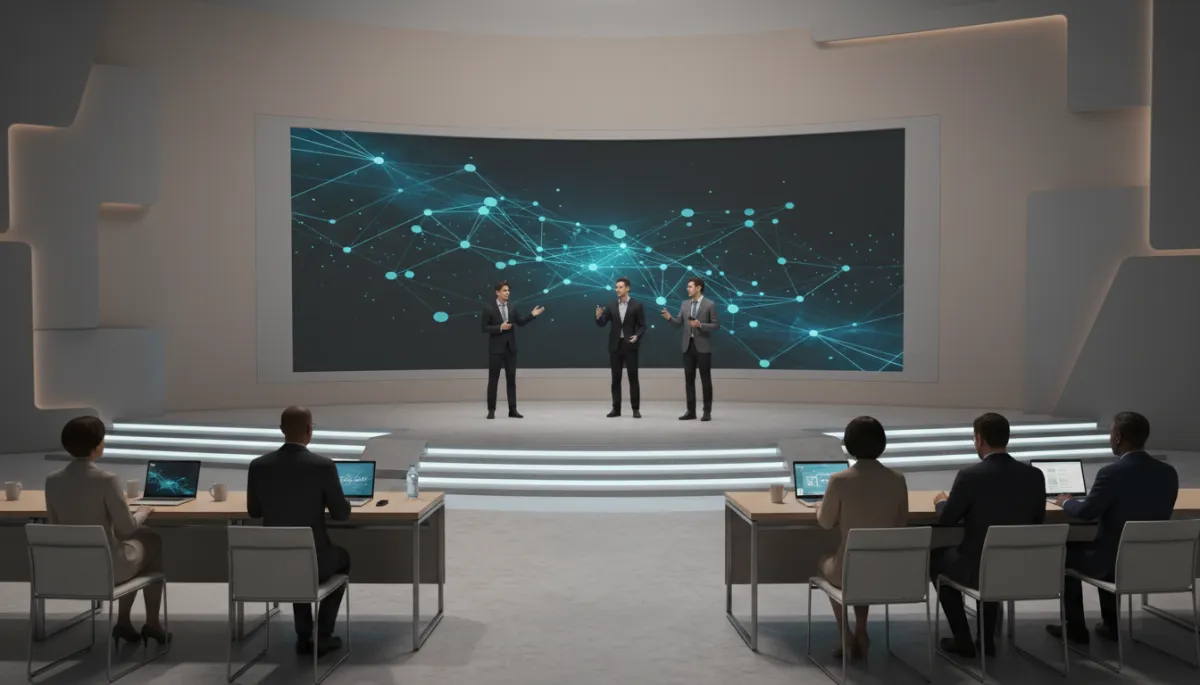
Every pitch in Shenzhen’s competitions doubles as live sales training for founders.
Policy Tailwinds: From Solo Founders to Global Scale‑Ups
While accelerators and competitions sharpen your story in the short term, Shenzhen’s policy moves are quietly reshaping what’s possible over the long term—especially for lean, AI‑driven teams. These structural shifts matter just as much as any single funding round because they determine who can participate in the next wave of growth.
Behind the headlines, Shenzhen’s districts are quietly rewriting the rules of founder support. Luohu’s “4×10” plan for one‑person companies is a bold bet on solo, AI‑powered entrepreneurship, offering computing and data subsidies up to 1 million yuan and equity investment up to 10 million yuan for promising OPCs (China.org.cn) . For bootstrapped founders, that can be the difference between a side project and a real company.
Picture a solo AI engineer building a niche logistics optimization tool. With 4×10 support, they can train models on subsidized compute, run pilots with local partners, and then raise a seed round on the back of real deployment data—instead of burning a year chasing small consulting contracts.
At the same time, the new Shenzhen Go Global Center in Luohu—backed by Microsoft—gives growth‑stage teams a one‑stop platform for overseas expansion, from compliance to logistics (China.org.cn) . With outbound investment rules tightening from July 1, 2026, the founders who win will be those who can navigate regulation while still telling a compelling cross‑border story to customers and investors.
📌 Key Takeaway for Founders: Government support can open the door, but it’s your ability to convert attention into customers—through disciplined selling and relentless Sales Follow up —that determines whether you actually walk through it.
Founder Stories: From Ice‑Cream Robots to Semiconductor Clusters
If policy is the backdrop, individual founders are the proof that Shenzhen’s support system can translate into real revenue and real companies. These stories make the ecosystem tangible—and show how to turn abstract incentives into signed contracts.
One of the most striking founder stories this year is that of 25‑year‑old Lun Wenjing. Her Shenzhen‑based startup runs AI‑powered ice‑cream and coffee kiosks that serve customers in under 30 seconds. Launched in Guangming District in 2023, the company benefited from rent‑free space, incubation, and seed funding. By April 2026, the fifth‑generation kiosks were generating more than 400,000 yuan in monthly revenue (People’s Daily) .
At the other end of the spectrum, Shenzhen’s semiconductor and AI‑chip clusters in areas like Nanshan and Guangming are seeing teams spin out of giants such as Huawei, BYD, and DJI. These founders are stitching together government grants, corporate pilots, and accelerator support to build everything from edge‑AI modules for industrial robots to specialized chips for AR glasses—exactly the kind of stack that connects back to companies like LimX Dynamics and Even Realities.
Founders should pay close attention to what made her traction possible. Yes, the product is novel. But the real engine is disciplined execution: negotiating with parks and venues, iterating on unit economics, and running a tight Sales Follow up loop with every new location owner. In a city where 93 notable startups have collectively raised nearly US $20 billion (Seedtable) , stories like Lun’s show that you don’t need a mega‑round to build a real business—you need paying customers and repeatable processes. For a more detailed breakdown of how to build that kind of engine, see our related post on designing your first scalable sales playbook.
💡 Pro Tip: Whether you’re selling ice‑cream robots or AI chips, map your first 10 customers as a sequence—who you contact, what you present, how you follow up, and what you ask for next. Then treat that as a playbook to refine, not a one‑off hustle.
What This Moment Means for Your Next 12 Months
When you zoom out across funding, accelerators, policy, and founder stories, a single pattern emerges: Shenzhen rewards builders who can sell. Whether you are building robotics, SaaS, or deep tech, Shenzhen’s August news cycle carries a clear message: the bar is rising. Investors now expect founders to show not only cutting‑edge technology, but also a mature commercial engine—structured outreach, a sharp Sales Presentation for every stakeholder, and a disciplined Sales Follow up rhythm that turns “interesting” conversations into signed contracts.
Over the next year, founders who thrive in Shenzhen will be those who treat every demo day, accelerator review, trade‑show booth, and investor meeting as part of one integrated selling system. The ecosystem is giving you unprecedented tools—AI vouchers, OPC subsidies, global expansion centers, and a calendar full of world‑class events. The question is whether you will use this moment to professionalize how you sell, not just what you build. If you’re unsure where to start, our companion piece on building a founder‑led sales engine walks through a 90‑day plan tailored for early‑stage teams.
If you are a founder reading this from a co‑working desk in Nanshan, a lab in Meilin, or a coffee shop near Huaqiangbei, the opportunity is clear: Shenzhen is ready for your next move. Decide now what that move will be—apply to one accelerator, book five customer meetings, rebuild your deck, or systematize your follow‑up—and put it on the calendar this week. Then, commit to reviewing your progress every 30 days, tightening your message, and upgrading your sales process using resources like Future of Selling. The founders who win this cycle won’t just ride the news; they’ll turn today’s momentum into a repeatable, revenue‑driven machine that compounds for years.
💡 Ready to Level Up Your Sales System? If you want a step‑by‑step playbook for building the kind of Sales Presentation, Sales Follow up, and integrated selling engine Shenzhen’s best founders are using, visit Future of Selling and turn today’s momentum into a repeatable revenue machine.
Join the Conversation: Shenzhen Founders’ Corner
How are you navigating Shenzhen’s current wave of robotics funding, AI accelerators, and policy support? Share your experience below—your story might help another founder close their next customer or investor. If you’re looking for more structured guidance before you post, you can also skim our internal case studies on Shenzhen B2B sales cycles and founder‑led outbound.
What’s one sales tactic that has worked for you in Shenzhen this year?
Which accelerator, competition, or policy program has had the biggest impact on your startup?
If you could give one tip to a first‑time founder arriving in Shenzhen, what would it be?
🗣️ Founder Comments (Sample):
“We treated the Startup World Cup as our rehearsal for global sales meetings. The feedback we got there directly shaped the deck that closed our first overseas distributor.” — Hardware founder, Nanshan
“Luohu’s 4×10 plan let me train my logistics model properly instead of patching together free credits. That made all the difference in getting our first paying pilot.” — Solo AI founder, Luohu


