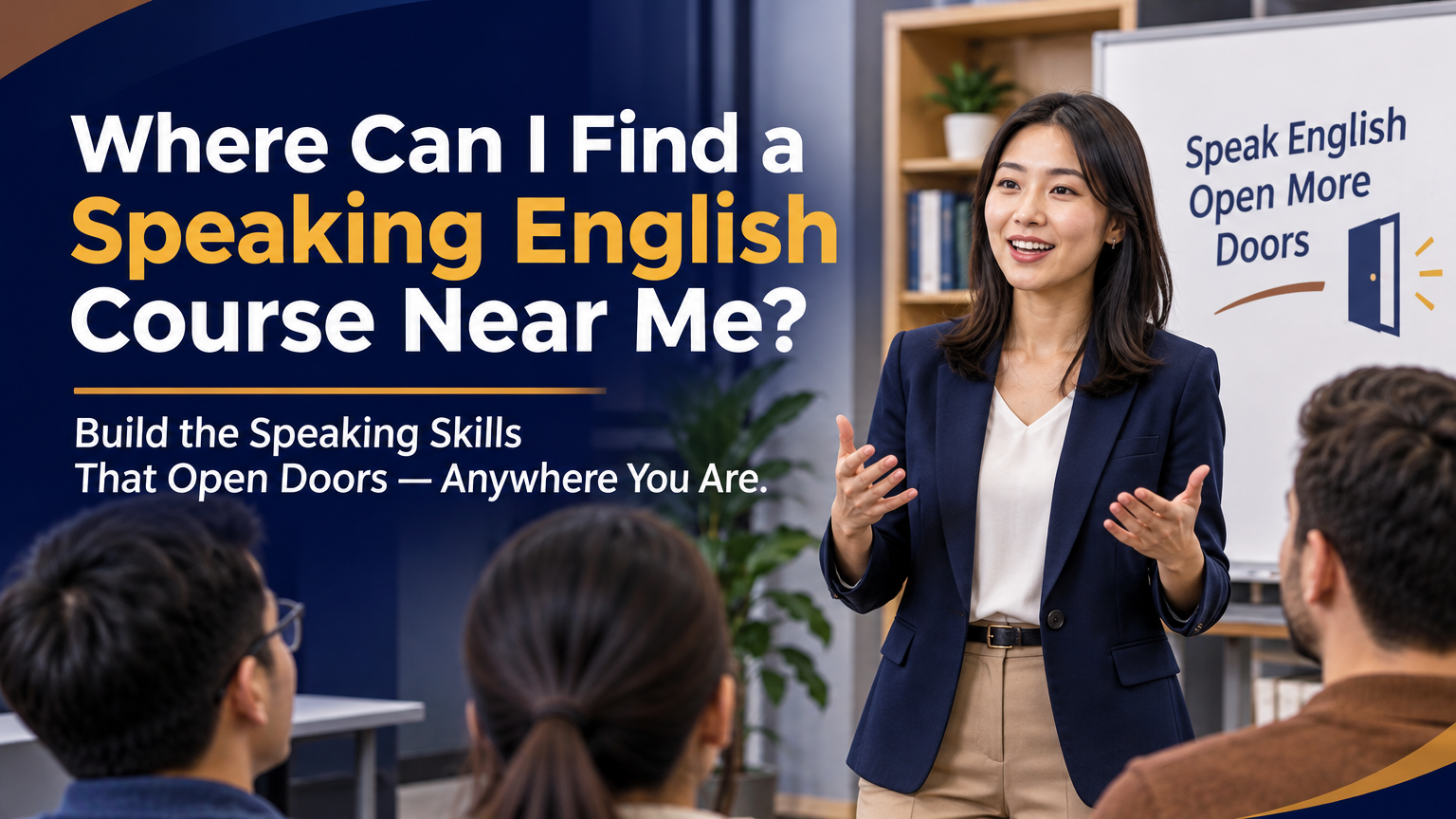
Where Can I Find a Speaking English Course Near Me?
Where Can I Find a Speaking English Course Near Me?
You can find a speaking English course near you at community colleges, language schools, Toastmasters clubs, public libraries, and online platforms with live instructors. The right course pairs structured speaking practice with real feedback. But knowing where to look is only step one — knowing what a course should actually teach you is what determines whether it changes how you communicate.
Speaking English Is a Skill — and Skills Are Built, Not Borrowed
Jason Lim coaches founders, executives, and sales professionals across Asia on the presentation and speaking skills that open doors in deals, meetings, and high-stakes conversations. If your goal is to speak English with the kind of confidence that earns respect and wins rooms, this is where to start.
What Should a Speaking English Course Near You Actually Teach?
Most speaking English courses cover the basics: pronunciation, vocabulary, grammar, and conversational fluency. These matter. But there is a second layer that most courses skip entirely — and it is the layer that determines whether you can hold a room, close a deal, or lead a meeting in English.
That second layer is presentation skill: how you structure an idea, land a point under pressure, and keep an audience with you when you are speaking in a language that is not your first. Communication ranked as the number one in-demand skill on LinkedIn for both 2024 and 2025. According to the NACE Job Outlook 2025, more than three-quarters of employers named communication a critical attribute for new hires, and more than two in three specifically sought verbal communication skills.
The roadblock is not vocabulary. Most professionals who struggle in English-speaking environments have enough words. What they lack is delivery — the ability to speak with structure, pace, and presence. That is what a great speaking English course should build.
Where Can You Actually Look for a Speaking English Course Near You?
Here are the five most accessible options, each suited to different goals and schedules:
| Option | Best For | What to Watch Out For |
|---|---|---|
| Community college or language school | Structured curriculum, certificates | Heavy grammar focus, light on spoken delivery |
| Public library or nonprofit program | Free or low-cost practice sessions | Inconsistent quality, limited feedback |
| Toastmasters | Regular speaking reps, peer feedback | Peer-led, not professionally coached |
| Online live tutoring (1-on-1) | Flexible schedule, tailored practice | Quality varies widely by tutor |
| Professional speaking coach | Business English, presentations, deals | Higher investment, highest impact |
Toastmasters alone has over 265,000 members across more than 13,800 clubs in nearly 150 countries (Toastmasters International, December 2025 fact sheet). It is one of the most accessible free-entry options for regular speaking practice near you, wherever you are.
The key insight from the table: none of these options by itself covers the full picture. The best path is to combine a local or online course for fluency with a coaching environment that builds professional speaking skill — the kind that serves you in pitches, meetings, and on camera.
Why Does Speaking English Skill Matter Beyond Just Being Understood?
Being understood is the floor, not the ceiling. The Preply Public-Speaking Survey 2024 found that 63% of Gen Z respondents would avoid public speaking altogether if they did not have to do it. That avoidance is especially costly for professionals who speak English as a second language — because hesitation reads as uncertainty, and uncertainty kills deals before they start.
Think of it this way: choosing between English courses is like choosing between cars. The car matters, but the driver matters more. Two people can take the exact same speaking English course and walk away with completely different results — because one learned the words, and the other learned how to use them with confidence, structure, and presence. That second skill is what a great speaking coach builds, and it is what turns a speaking English course from a checkbox into a real competitive edge.
Quick takeaways:
- Start with Toastmasters or a local course for regular speaking reps
- Add a professional speaking coach if your goal is business, sales, or leadership communication
- Prioritize courses that require you to speak, not just listen or read
- Seek specific feedback on delivery — pace, structure, presence — not only on grammar
- Treat speaking English as a performance skill, not just a knowledge gap
Related:
• Presentation & Speaking Skills Coaching with Jason Lim
• Where Can I Find Free Public Speaking Classes Near Me?
• What Are the Best Classes to Improve Your Speaking Skills?
The Course Gets You Started. The Skill Gets You the Deal.
Every professional who has built confidence speaking English in meetings, pitches, and on camera started somewhere. The ones who moved fastest got coached on how to deliver — not just how to speak. If that is the edge you are looking for, this is where it begins.
Sources
- VoxBooster, Public Speaking Statistics (2026): 40+ Data Points on Glossophobia, Career Impact, and the Speaking Economy — voxbooster.com/blog/public-speaking-statistics-2026/ (citing LinkedIn Talent Insights 2024 & 2025; NACE Job Outlook 2025; Toastmasters International December 2025 fact sheet)
- Preply Language Learning Team, Speak with Confidence: Tackling the UK’s Public Speaking Phobia (published 26 March 2024, updated 3 April 2025) — preply.com/en/blog/study-of-public-speaking-fears/


