
How Billionaire Steve Jobs Wrote Follow-Up Emails That Nobody Could Ignore
Sales, Follow-up Emails, Startup Founders
How Billionaire Steve Jobs Wrote Follow-Up Emails No One Could Ignore — A Founders’ Guide
Steve Jobs followed up with a single perfect line. Here’s how a startup founder leading a small team can write a follow-up email after no response that actually gets read, replied to, and remembered — for as little as $0.63 a day.
Why Most Follow-Up Emails Don’t Get Read — And the One Shift That Changes Everything
Quick summary: Treat every sales follow-up email for startup founders as a tiny decision tool: one line of context, one new piece of value, and one simple question that makes replying easier than ignoring you.
Think about your last big deal. Great first call. Clear next step. Then silence. The prospect disappears into their calendar, and you’re left staring at a blinking cursor, trying to write a follow-up email after no response that doesn’t sound needy or pushy.
If you’re like most founders Jason works with, your first draft is long. You re-explain the value again. You apologize for “following up.” You paste half your deck into the email. You’re not failing. You’re just tired, busy, and trying to be polite while keeping the deal alive with words alone.
The data is brutal on this approach. Gong’s analysis of more than five million sales emails found that the best follow-ups are under 150 words. HubSpot reports show follow-up emails get open rates above 40% when sent within 24 hours of the meeting. Campaign Monitor shows that adding the first name in the subject line lifts open rates by 26% in their research. Short. Timely. Personal. Not long and apologetic.
The one shift that changes everything is simple. Stop treating the follow-up as a re-pitch. Start treating it as a small, sharp decision tool. One line that makes replying easier than ignoring you. This is what Jobs mastered. And this is what Jason helps founders build into every part of their sales system.
As Jason teaches at AuthorJason.com, a strong sales follow-up email for startup founders starts with clear context, adds one new detail, and ends with a specific question that nudges the buyer to reply instead of quietly deleting your message.
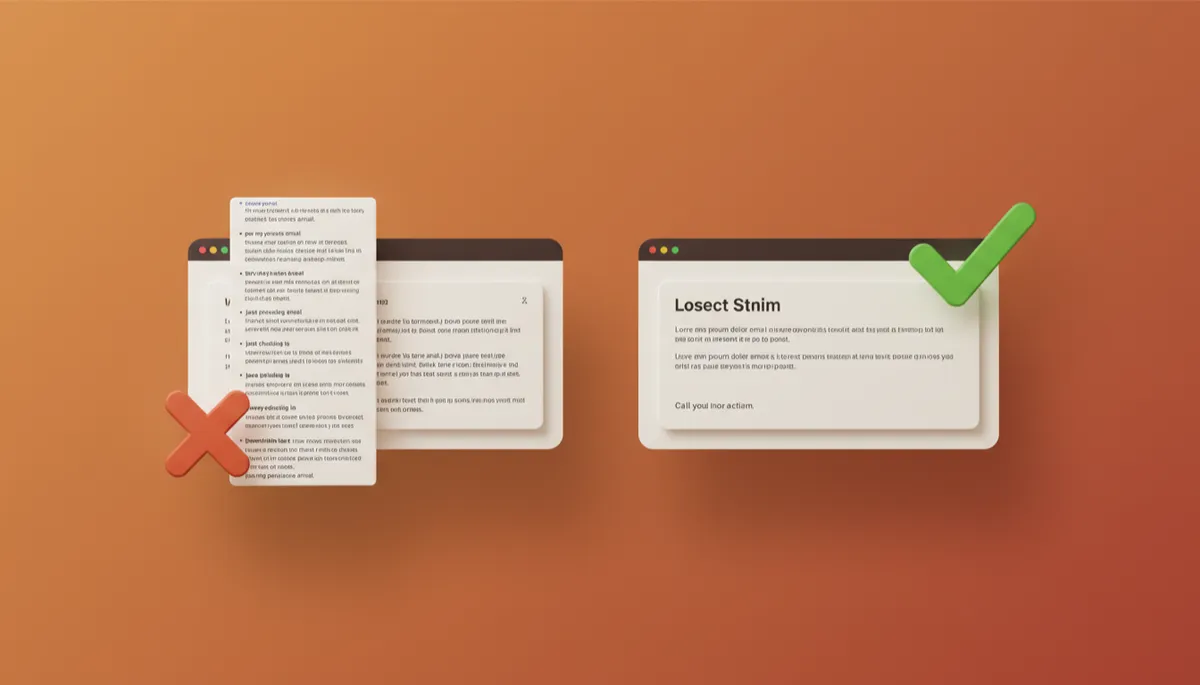
The best follow-up emails are under 150 words and make replying the easiest option.
How Steve Jobs Wrote Follow-Up Emails That Always Got a Response
Quick summary: Jobs used extremely short, precise follow-ups: one line of context, one new angle, and one direct ask with a time attached so the next step was obvious.
Steve Jobs was obsessed with clarity of communication. His emails, as revealed in court documents and biographies, are short, sharp, and impossible to ignore. When he followed up, he didn’t send paragraphs. He sent a single line that moved the conversation forward and made the next step obvious.
When Jobs was working on deals, partnerships, or recruiting senior leaders, his follow-up emails didn’t apologize for following up. He didn’t explain why he was writing again. He simply added something. A new reason to talk. A sharp question. A specific ask with a time attached. Two or three sentences at most: a reminder of the opportunity, something that had changed, and a direct ask for a meeting time that was easy to answer with a single word.
In Walter Isaacson’s biography, one email shows Jobs pressing a music executive on iTunes negotiations with a single precise follow-up: a short reminder of Apple’s distribution power and a question about whether they were ready to move. No deck. No long explanation. Just a clear decision point. In another exchange, preserved in the Apple vs. Samsung trial documents, Jobs replies to a long internal thread with a few tight lines that reframe the discussion and ask one direct question about the launch plan. Same pattern: specific, forward-moving, and easy to answer.
Jobs also became famous for his “Sent from my iPhone” replies to customer emails. Founders study these because even his follow-ups to everyday users were short and decisive: a quick acknowledgment, a clear answer, and sometimes a question that turned a complaint into product insight. The result was loyalty. People felt seen because he responded quickly and precisely, not because the emails were long.
Jobs understood something every founder feels but often forgets under pressure. The human brain responds to specificity, brevity, and confidence. A stumbling follow-up email after no response signals doubt. A short, specific email signals that you know exactly what you want and that the deal is still very much alive. Jason teaches founders to borrow this posture, even on days when they don’t feel confident at all.
As Jason teaches at AuthorJason.com, a Jobs-style follow-up removes the apology, adds one concrete reason to talk now, and closes with a question your buyer can answer with a single word.
New! September 2026
Dear founders,
Do you also find that writing a follow-up email takes far longer than it should — because you’re trying to say something new every time, without sounding desperate, needy, or repetitive?
Many founders feel exactly this. The founders Jason works with felt the same — thoughtful communicators spending thirty minutes on each follow-up email and still not sure if it was right. What they discovered is that the follow-up email has a formula, and knowing it cuts writing time and doubles reply rates.
Here's what I found: Jeffrey Teo got 63 customers in 100 days after he fixed his sales follow-up. The system writes the sequence once and reuses it intelligently.
The Habits step in the Future of Selling System includes the follow-up email framework: what you start with, how you add value in every touch, and when you re-ask. Read the P.I.T.C.H. formula. Visit dreamaker.club/buyfos — $19/month. $0.63/day.
Jason has worked with more than 1,000 founders since 2015. Over $22M in combined sales. Built from zero three times.
The Three Elements Every High-Response Follow-Up Email Contains
Quick summary: High-response follow-up emails share three traits: one line of context, one new piece of value, and one simple question that creates a clear decision.
Jason sees the same pattern in every follow-up that gets replies. It doesn’t matter if the founder is selling B2B SaaS, logistics, or creative services. The structure is the same, like a good story or a good joke. Simple, repeatable, and kind to both sides of the inbox.
One clear line of context. “We spoke last Tuesday about launching your sales team in Q4.” No fluff. No “Hope you’re well.” The brain remembers where the story left off.
One new piece of value. A short insight, tweak to the offer, or small win since you last spoke. This shows momentum. It signals that working with you means progress, not pressure.
One simple question. “Does Tuesday 3 p.m. or Wednesday 10 a.m. work better?” Or “Should we push this to next quarter?” One decision. One reply. No maze for them to walk through.
Wordstream research shows that emails with a single clear call to action get 371% more clicks than those with multiple calls to action in their study. The same applies to replies. One ask, one answer. Your buyers are busy, not cruel. When you make answering easy, many of them will.
As Jason teaches at AuthorJason.com, a sales follow-up email for startup founders works best when it acts like a mini agenda: it reminds buyers where you left off, adds one new reason to care, and ends with a decision they can make in seconds.
What Should a Follow-Up Email Say When a Prospect Hasn’t Replied After 5 Days?
Remind them of your last conversation in one line, add one relevant new detail, then ask one clear question they can answer with a quick reply.
How Short Should a Follow-Up Email Be — And Are Longer Emails Better When You Have More to Say?
Aim for under 150 words, even when you have more to share. Link out to extra detail if needed, but keep the email itself short and focused on a single decision.
What’s the Best Subject Line for a Follow-Up Email After No Response?
Use their first name and one specific topic, like “Ahmed — next step for your Q4 launch?” Keep it under 50 characters so it stays readable on mobile and more likely to be opened.
What’s the Ideal Length for a Sales Follow-Up Email?
Aim for 75–150 words and no more than five sentences. That’s long enough to add value and ask one clear question, and short enough that a busy buyer can read it on their phone without scrolling.
What Subject Line Gets Follow-Up Emails Opened Most Often?
Combine their first name with one clear outcome or project, like “Ahmed — onboarding your new reps” or “Rita — Q4 churn reduction plan.” Keep it under 50 characters so it shows fully on mobile and signals relevance, not pressure.
Should a Follow-Up Email Resend the Original Message or Start Fresh?
Start fresh with one line of context, one new detail, and one question. You can forward or reference the original conversation, but don’t paste the entire pitch again. Make the new email stand on its own and easy to reply to without re-reading everything.

Simple language and one idea per paragraph calm the reader — and your own nerves.
How Branson and Buffett Make Follow-Ups Human, Not Corporate
Quick summary: Branson personalizes his emails with warm details; Buffett strips language of jargon and focuses on one idea. Blend both to make follow-ups feel like a human conversation, not corporate copy.
Richard Branson talks often about direct, personal communication. When he was building Virgin Atlantic and needed urgent replies, his follow-ups were warm and human. He’d mention a story from their last conversation. A joke they shared. A detail about family or travel. The email felt like a friend continuing a conversation, not a system chasing a signature.
In his book “Losing My Virginity,” Branson describes chasing aircraft and airport deals with quick, informal notes that referenced specific moments — like a bumpy first test flight or late-night negotiations that ended in laughter. Those follow-ups worked because they made people feel part of a shared story, not a transaction. The move was simple: remind them of a vivid moment you experienced together, then ask one clear question about the next step.
On the other side, Warren Buffett is the master of plain language. His letters are studied in business schools because they’re readable. No jargon. One idea per paragraph. If Buffett wrote a follow-up email after no response, he wouldn’t say “Per my previous email” or “Circling back.” He’d say: “Here is the one idea that matters,” and “Here is the question I’m still waiting on.”
In his 1960s letters to partners, Buffett often followed up with investors worried about market swings. He did it by restating the core idea in one or two clear sentences, then asking them to focus on a single decision: stay in or get out. The result over decades is visible in Berkshire’s record: calm, aligned partners who knew exactly what they were agreeing to. His follow-ups weren’t for entertainment. They were for clarity.
Jason encourages founders to blend these two styles. Branson’s warmth. Buffett’s clarity. You’re leading a team of five or more. Your words ripple through your company culture. Every follow-up is a chance to show your team that sales can be direct and kind at the same time. No fake urgency. No guilt. Just clear, human, forward motion.
As Jason teaches at AuthorJason.com, the most effective sales follow-up emails for startup founders sound like a smart friend: they reference a shared moment, explain one idea in simple language, and end with a question that respects the buyer’s time and intelligence.
Should a Follow-Up Email Apologize for Following Up?
No. Skip “Sorry to bother you.” Respect their time by being brief and clear, and let your confidence signal that the conversation is still valuable for them.
How Do You Write a Follow-Up Email That Doesn’t Sound Desperate or Needy?
Focus on their outcome, not your quota. Add one new, useful detail, offer a simple choice, and show that you’re as okay with “no” as you are with “yes” so they feel safe replying honestly.

Short, specific follow-ups restore momentum and protect your energy and pipeline.
What Jason’s Founders Actually Write in Follow-Up Emails After No Response
Quick summary: Jason’s founders don’t improvise. They use a repeatable pattern: short subject line, one line of context, one new detail, and one clear question that directs the next step.
Jason has worked with more than 1,000 founders since 2015. Many came with the same story you might be living now. Strong product. Happy customers. A small team depending on them. And a calendar full of sales conversations that never turn into clean, confident follow-ups. They’re not failing. They’re just leaking energy and deals through the cracks of the inbox.
Inside the Future of Selling System, Jason’s founders do something different. They don’t open a blank screen. They open a proven pattern. Their follow-up email after no response usually looks like this:
A subject line under 50 characters with the prospect’s first name and the specific project.
First line: “We spoke on [day] about [the outcome they care about].”
Second line: one new insight, one number, or one adjustment since that call.
Third line: “Which of these two options is better?” or “Should we pause this until [time]?”
One fictional founder Jason worked with, Maya, was leading a 7-person AI startup. Her pipeline was full, but her follow-ups were novels. She felt guilty every time she hit send. After switching to FOS templates, her emails dropped to under 120 words. Her reply rate doubled in six weeks. Same product. Same market. Same Maya. A different follow-up rhythm — kinder to her and her buyers.
As Jason teaches at AuthorJason.com, founders who rely on patterns instead of willpower turn follow-up into a quiet habit: every email feels personal, but the underlying structure quietly does most of the work that gets buyers to respond.
How the P.I.T.C.H. Formula Gives Your Follow-Up Emails a Spine
Quick summary: The P.I.T.C.H. formula turns follow-ups from random reactions into a planned rhythm: pre-written, purposeful emails you send calmly instead of in a panic.
Under these simple emails, there’s structure. Jason calls it the P.I.T.C.H. formula. It’s the backbone of the Future of Selling System. It shapes how you prepare for meetings, how you present, and how you follow up without sounding scripted or robotic.
In the world of follow-up, P.I.T.C.H. means you don’t send an email just to “check in.” Every email has a purpose. It ties back to the problem they want solved, the impact they care about, and the timeline they’re living in. You don’t have to remember all the moving parts. The system remembers for you. You just fill in the blanks with your own voice, your own kindness, your own edge.
In the Habits step of the P.I.T.C.H. formula, follow-up stops being a late-night scramble and becomes a rhythm. Instead of reacting to silence with “Just checking in,” founders map a simple cadence in advance: when to send the first follow-up, what new value each touch will add, and how the questions will grow progressively clearer. The emails are written once, then lightly customized, so you’re never starting from zero on a busy day.
This shift matters. A sales follow-up email for startup founders written in a calm moment is almost always smarter than one written in a panic. The Habits step turns that calm into a system: templates live where your team can find them, triggers are agreed in advance, and every touch has a defined purpose. You’re not guessing whether you should follow up again; you’re just executing the next step in a plan that respects your energy and your buyer’s bandwidth.
Self-check
Does your follow-up open with something new — or a recap of what you already sent?
Is your follow-up five sentences or fewer — or does it require scrolling?
Does your follow-up end with a specific question that has a one-word answer — or an open-ended invitation that forces the buyer to generate their own response?
As Jason teaches at AuthorJason.com, the right follow-up backbone means you never wonder “What do I say now?” — you just choose the next planned touch, customize a few details, and send with confidence instead of anxiety.
Frequently Asked Questions About Follow-Up Emails After No Response
How Many Follow-Up Emails Should You Send Before Letting a Prospect Go?
Jason typically recommends three to five short, high-value follow-ups over two to three weeks, then a clear closing email that leaves the door open for a future conversation without pressure.
How Long Should You Wait Before Sending the First Sales Follow-Up Email?
For most sales follow-up emails for startup founders, 24–48 hours after the call works best. It keeps the conversation fresh without feeling pushy. Salesforce data shows that timely follow-ups significantly improve open and reply rates.
Should You Follow Up by Email, LinkedIn, or Phone If There’s No Response?
Start with the channel where the conversation began — usually email — then add one secondary channel if it’s appropriate. A light note on LinkedIn or a short voicemail that references your email can help, but keep the message consistent and respectful across channels.
How Do You Follow Up Without Feeling Like You’re Annoying the Buyer?
Lead with value, not pressure. Each follow-up should add something new — an insight, a tweak, or a resource — and end with a simple choice, including a “not now” option. When buyers feel you respect their reality, they’re more willing to reply.
What Should You Do If a Warm Prospect Goes Completely Silent After Seeing Your Price?
Send a short, honest email that references their goals, acknowledges that priorities change, and asks a direct question: “Has this dropped in priority, or are you still considering it?” This gives them permission to tell you the truth without embarrassment or guilt.
New! September 2026
Dear founders,
If you’ve ever sent a follow-up that started with “Just checking in” — and knew, even as you typed it, that it wouldn’t work — this is the system that gives you something valuable to say every time.
Many founders feel exactly this. The founders Jason works with felt the same. What they discovered is that the right system — not better writing skills — is what turned their follow-up emails from awkward check-ins into conversations buyers actually replied to.
Stanley Tan got 45 buyers in 3 hours with the Future of Selling System. For founders sending weak follow-ups because they don’t have anything specific to say, this gap is why the pipeline stays stuck. The Future of Selling System gives you something specific every time.
Ian Teo closed 63 clients in 100 days — because the system gave him follow-up emails that added value at every step, so buyers replied instead of deleting. Visit dreamaker.club/buyfos — $19/month. $0.63/day.
Jason has worked with more than 1,000 founders since 2015. Over $22M in combined sales. 3 rock bottoms. 3 comebacks.
Billionaire Steve Jobs pursued partnerships and deals with precision and intent — because the follow-up email that works is not a reminder that you exist; it’s a reason for the buyer to move today.
How the Future of Selling System Turns Follow-Up into a Calm, Repeatable Habit
Quick summary: The Future of Selling System gives you a library of proven follow-up emails so you never write from scratch; you customize and send on a pre-planned schedule.
The Future of Selling System is Jason’s answer for the founder who leads all the sales and quietly wonders: “Is it supposed to feel this heavy?” It’s not a script book. It’s a living library of follow-up emails, call flows, and decision trees built from more than $22M in combined sales across industries and markets. It’s designed for teams, not solo heroes, so your team can learn the same rhythm you use without losing their own voice.
For $19 a month — less than a daily coffee — you get a clear path through the messy middle of sales. You get templates for the follow-up email after no response, for the “We need more time” reply, and for the “Not now” that might later become a “Yes.” More than that, you get permission to be human. To send short, kind, confident emails that honor your work and your buyer’s world.
As Jason teaches at AuthorJason.com, the right system turns follow-up into a backbeat: your calendar, templates, and team all support a steady pace so every promising conversation gets the thoughtful nudge it deserves.
P6 Sales Follow-Up: Your Quiet Edge in the Founders’ Playbook
Quick summary: P6 sales follow-up is the unflashy edge: a simple, consistent follow-up rhythm where one clear line, one new detail, and one gentle question keep deals alive.
In Jason’s broader Founders’ Playbook, P6 sales follow-up is one of the quiet power moves. It sits alongside your overall follow-up email after no response strategy, discovery calls, demos, and renewals. It’s the part most teams neglect because it looks small and unglamorous. Yet this is where deals live or die in the shadows of the inbox.
When you master P6, you stop seeing silence as rejection. You start seeing it as a design problem you already know how to solve. One clear line. One new detail. One gentle question. Jobs proved it. Branson and Buffett show different flavors of the same truth. Jason’s founders live it every week, in real pipelines with real pressure and real salaries to pay.
As Jason teaches at AuthorJason.com, P6 turns follow-up into a quiet advantage: instead of chasing, you guide buyers through a simple series of thoughtful nudges that make replying feel natural and safe.
3 Follow-Up Email Mistakes That Guarantee No Response — And the Extra Mistake That Hurts Most
Quick summary: Ivy’s story shows four reply killers: vague subject lines, re-explaining everything, open endings, and ignoring the buyer’s own words from your last call.
Mistake 1 (Ivy, B2B content founder): Subject line: “Follow-up.” Open rate near zero. The subject line told the buyer exactly what to expect — a request with nothing new in it. Move: your subject line should hint at something specific. “One extra idea on [their stated problem]” beats “Follow-up” by a mile.
Mistake 2 (Ivy): The body was a full paragraph of re-context — re-explaining who she was, what she offered, and why it mattered. The buyer had to re-read the original pitch to understand the follow-up. Too much friction. Move: assume the buyer remembers the first email. The follow-up adds one thing the first message didn’t. One line of context, one new thing, one question.
Mistake 3 (Ivy): She ended with “Let me know if you’d like to connect.” The buyer let her know nothing. Open invitations don’t generate replies. Move: close with a yes/no question or a choice between two options. “Are you still evaluating this — or has timing shifted on your side?” demands an answer. “Let me know if you’d like to connect” doesn’t.
The extra mistake (Jason, in the third person): He worked on follow-up templates with founders for years before noticing that the best-performing follow-ups weren’t the most creative — they were the most specific. A follow-up email that referenced something the buyer said in the last conversation outperformed generic “value” emails by a wide margin. The reference showed the founder had been paying attention. It was the simplest and most effective form of personalization. Jason stopped teaching follow-up frameworks and started teaching one thing: reference something specific from the last interaction. No case study. No new insight. The buyer’s own words, reflected back. Move: the best follow-up email starts with “In our last conversation, you mentioned [the exact thing they said]...” That sentence alone doubles reply rates.
As Jason teaches at AuthorJason.com, founders who avoid these four traps — vague subjects, re-pitching, open endings, and generic value — send follow-ups that feel like a continuation of a real conversation, not a cold knock on a closed door.
The Follow-Up Email That Gets a Reply — Word-for-Word Founder Script
Quick summary: Use a three-touch sequence at days 3, 7, and 14 — each under five sentences, each adding one new detail, each ending with a clear question.
Email 1 — At 3 Days (New Angle)
Subject: Ahmed — one tweak to your Q4 launch
We spoke on Tuesday about shortening ramp time for your new reps. Since then, I mapped how our playbooks could cut onboarding from 6 weeks to 4. Would you be open to a 20-minute review? Does Thursday 3 p.m. or Friday 11 a.m. work better?
Email 2 — At 7 Days (Their Words Reflected)
Subject: Ahmed — “less chaos for new reps”
In our last conversation, you mentioned wanting “less chaos for new reps in their first month.” I pulled two examples from similar teams that did exactly that. Would it help to review those together? Are you still exploring this for Q4, or has timing shifted?
Email 3 — At 14 Days (Closing the Loop)
Subject: Ahmed — should we pause this for now?
I know your week is packed, so I want to keep this simple. If shortening ramp time is still a priority, I’m happy to lock time next week. If it’s dropped down the list, that’s completely okay too. Should we grab a quick call, or pause this until a later quarter?
As Jason teaches at AuthorJason.com, this simple three-email script gives every sales follow-up email for startup founders a clear role: a gentle nudge, a deepening, then a respectful loop-closer if needed.


