
How Billionaire Steve Jobs Made Every Sales Pitch Impossible to Ignore
Sales, Startup Founders, Sales Pitch, Steve Jobs
How Billionaire Steve Jobs Made Every Sales Pitch Impossible to Ignore — A Founders’ Guide
Jason wrote this guide for the founder who is already seeing some wins, yet still leaves sales meetings thinking: “They smiled… but why didn’t they say yes?” This is about how to make your pitch compelling enough that serious buyers lean in, stay with you, and decide faster — without turning into someone you’re not.
Why Most Sales Pitches Are Forgettable — And the One Reason Behind It
Many startup founders don’t give bad pitches. They give forgettable ones. The deck is tidy. The demo works. The numbers are real. And yet the buyer walks away thinking “Interesting,” instead of “We need this now.”
The research backs this up. Seismic, as cited by Forbes, found that 59% of buyers are frustrated by generic pitches, while only 7% of top performers spend most of their time talking about features (Forbes). The problem isn’t effort. It’s focus. The product takes up most of the airtime. The person listening — and the story playing in their head — gets very little.
Salesforce points out that 86% of B2B buyers are more likely to buy when they feel their goals are understood before any pitch begins (Salesforce). That means a compelling pitch is not a monologue. It’s a mirror. The buyer should see themselves, their goals, and their future reflected back in every slide, every story, every number you share.
Jason sees this pattern in almost every founder he mentors. They’re not failing. Revenue is coming in. But the pitch is still heavier than it needs to be. Too much pushing. Not enough pull. The one reason most pitches are forgettable is simple: they describe the product instead of designing an emotional journey for the listener.
As Jason teaches at AuthorJason.com, the right structure for a founder’s sales pitch turns every element into a step in the buyer’s decision — not just another slide about your product.
How Steve Jobs Designed Every Pitch to Be Impossible to Ignore
Steve Jobs wasn’t born with a magic “stage gene.” People who worked with him describe something far more practical — and far more encouraging for you as a founder. He practiced obsessively. He designed every detail of every pitch with the same precision he brought to product design. He left nothing to chance. Not the pauses. Not the transitions. Not even the exact words he used for the numbers.
For Apple keynotes, Jobs would run the pitch for weeks. He’d walk the stage again and again, test every slide, and refine every beat in the story. Team members recall full days of rehearsal where he tuned a single transition until it “felt right.” To him, the sales pitch was not a slide deck. It was a story with an emotional arc: anchor the problem, introduce the villain (the old way), reveal the hero (the solution), show the transformation, then close with a clear invitation to act.
Look at the original iPhone launch in January 2007. Jobs opened with: “This is a day I’ve been looking forward to for two and a half years.” Before he mentioned a single feature, he had created anticipation. He made the audience feel that something special was coming. He delayed talking about the product and built tension. Then came the reveal: “An iPod. A phone. And an Internet communicator.” Three products. One device. He repeated that line three times before the room realized what he was doing. That pause, that delay, that reveal — all were engineered on purpose. This is how you make a pitch compelling: by directing the emotion, not just the content.
Jobs also understood the power of specific numbers. He didn’t say “a lot of iPods.” He said “4 million iPods.” Specific numbers feel real. Vague phrases feel fuzzy. Even your metrics slide can either lull people to sleep or wake them up, depending on how concrete it is. Every element in his pitch served the story. And that’s the part every startup founder can copy, no matter how crowded your week is or how messy your pipeline feels right now.
In 1997, when Jobs returned to Apple and announced the “Think Different” campaign, he barely mentioned products at all. Instead, he told a story about “the crazy ones, the misfits, the rebels,” then positioned Apple as the tool for those who “see things differently.” That story repositioned the entire company and came before its market cap exploded over the next decade.
During the MacBook Air launch in 2008, Jobs walked on stage carrying a manila envelope, then slowly pulled the laptop out. No “spec sheet” could compete with that moment. The move was simple: embody the core promise — extreme thinness and portability — in a single unforgettable scene. Reviewers repeated the envelope story more than any technical document.
When he introduced iTunes and the iTunes Store, he cast piracy and scattered music libraries as “the villain.” The outcome was measurable: within a few years, Apple had sold billions of songs and reshaped how the industry monetized digital music. The pitch structure — problem, villain, hero, transformation — came before the market shift.
As Jason teaches at AuthorJason.com, the sales-pitch structure for startup founders works the same way: every beat exists to move the buyer from curiosity, to clarity, to commitment — not just to “get through the slides.”
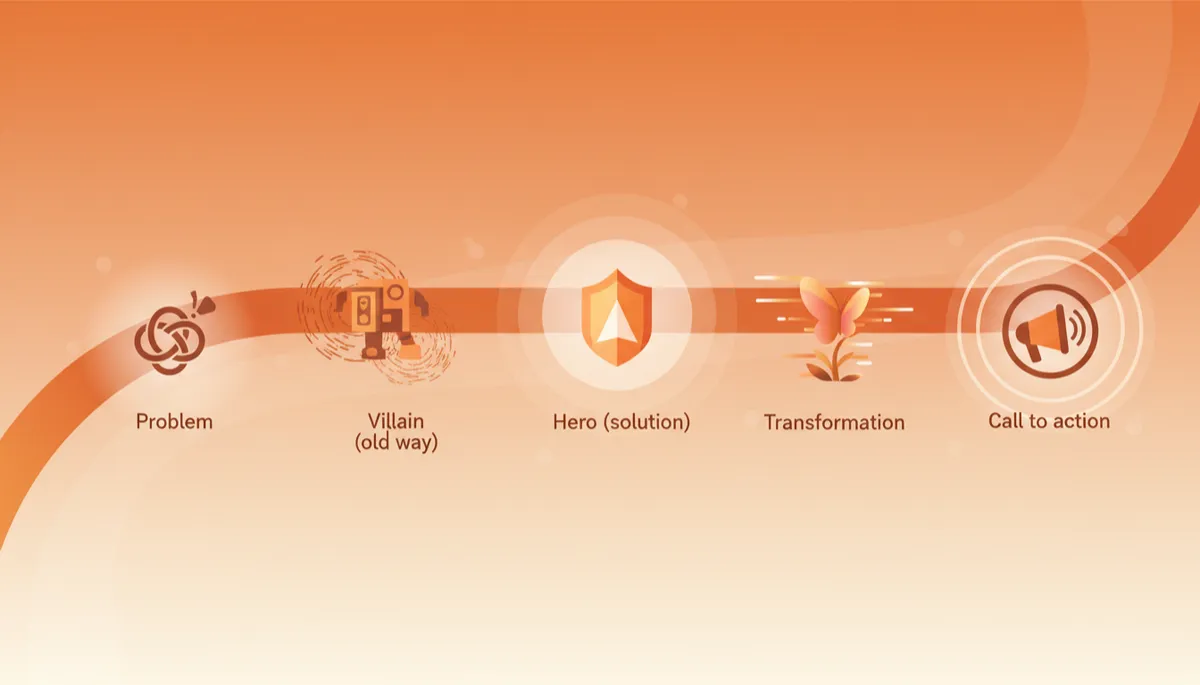
Jobs never started with the product. He started with the problem — and made the audience feel its weight before he showed them the answer.
The Five-Element Framework for a Compelling Pitch Jason Teaches Every Startup Founder
Jason’s work with more than 1,000 founders since 2015 led to a simple pattern. The most compelling pitches — from Jobs’ keynotes to quiet boardroom conversations — share five elements. They may look different on the surface, but underneath, the structure is the same. This structure is what he captured inside the Future of Selling system and the P.I.T.C.H. formula, to design conversations that win real decisions, not just polite interest.
What Makes a Sales Pitch Compelling Instead of Forgettable?
A compelling pitch makes the listener feel seen , feel the problem, and see a clear, believable path to a better future — all in one short, emotionally coherent story. Not louder. More human and more specific.
How Do You Personalize Your Pitch to Each Individual Prospect?
Jason teaches founders that personalization starts by making the entire pitch anchored in the buyer’s goals, language, and present reality. That begins with research, then a short “discovery” at the start of the meeting, and only then do you shape the stories and numbers around what the buyer just told you matters most to them.
Why Does Storytelling Make a Pitch So Much More Effective?
Stories are 22 times more memorable than facts alone, according to Stanford professor Jennifer Aaker. A good sales story connects facts to feelings. It lets the buyer live the problem and the transformation instead of just understanding them. That emotional memory is what brings them back to you when they compare options later.
As Jason teaches at AuthorJason.com, the right sales-pitch structure for startup founders keeps the same backbone while swapping surface stories so that every element serves the buyer’s decision, not the founder’s ego.
How Musk and Oprah Create Emotional Commitment Before Logical Agreement
Elon Musk often presents ideas that seem impossible at first. His genius in pitching lies in how he moves people from “This can’t work” to “We’re going to need this.” He starts by making the current reality unbearable. For example, he talks about the cost of putting payload into orbit being around $10,000 per pound. That makes Mars colonization economically impossible. He leaves the audience in that state of frustration. Then he introduces reusable rockets and a 100x cost reduction. The problem becomes heavy. The solution becomes inevitable. Your buyers need the same emotional sequence, even if your product is “just” a B2B platform, not a rocket.
Oprah Winfrey does something similar from a different angle. She says great speakers make people “feel” something before they “think” something. When she recommends a book, she doesn’t start with the table of contents. She says: “This book changed my life.” That one emotional sentence opens the door. Once the heart is open, she walks the mind through the details. For a founder learning how to make a pitch compelling, this is gold: emotion first, logic second — in that order, consistently, gently, without manipulation.
In his 2013 TED talk on reusable rockets, Musk lingered on footage of failed landings before showing the successful one. The move was deliberate: he made the audience feel the pain and persistence behind the breakthrough so the final success felt inevitable, not lucky — a structure founders can mirror with their customer transformations.
Oprah’s “Favorite Things” episodes follow a similar arc every year. She raises anticipation, shares her personal emotional reaction, then reveals the product. The result: featured products sell out within hours. Emotional commitment comes first; the buying decision almost automatically follows.
As Jason teaches at AuthorJason.com, a startup founder’s sales-pitch structure should mirror this: name the emotional cost of the status quo, then make your solution feel like the only sane next step.
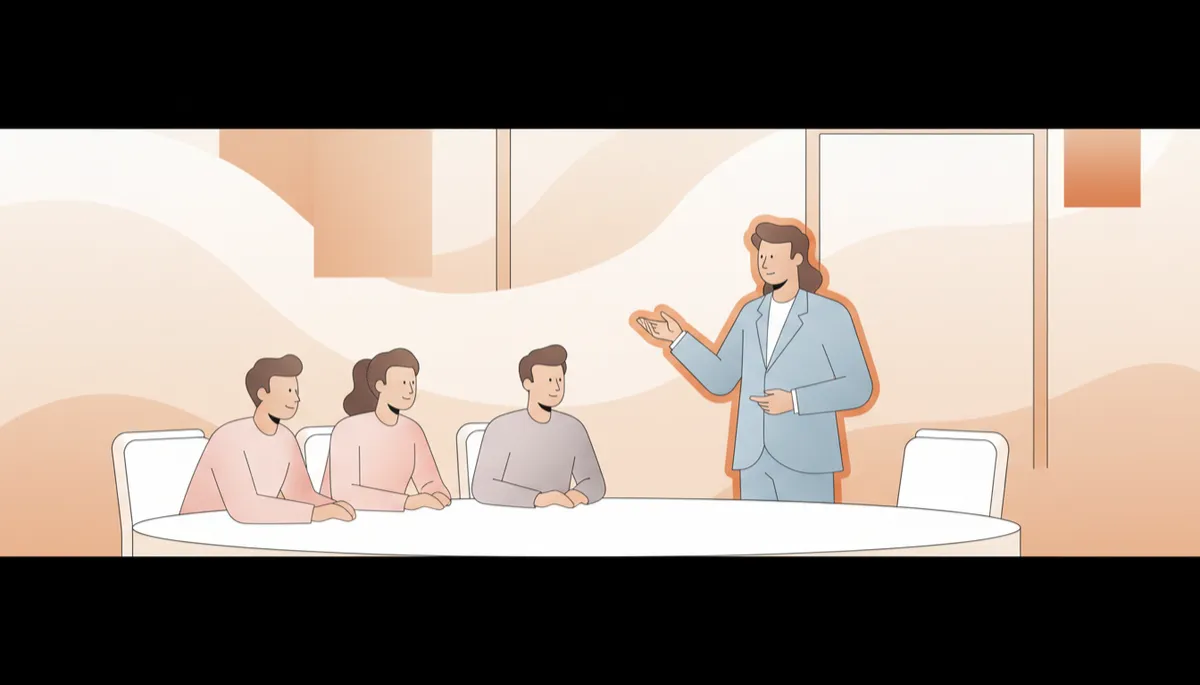
59% of buyers find generic pitches frustrating. A compelling pitch makes the buyer feel “understood” before you mention the solution.
How Do You Open a Sales Pitch in the First 30 Seconds to Grab Attention?
Jason trains founders to open with a short, specific statement about the buyer’s world — a problem they already feel or a goal they already care about — followed by one clear promise about what this conversation could change for them. No long intro. No company history. Straight into their reality and their potential gain.
What Should Every Compelling Sales Pitch End With?
Every compelling pitch ends with a clear, low-friction next step that matches the size of the decision — a specific call to action, a timeline, and an agreed owner. The buyer should leave knowing exactly what happens next, when, and who is responsible, even if the answer is: “Let’s test this with one team for 30 days.”
Remember that 81% of sales reps say buyers research before talking to sales. Your pitch is rarely the first impression. It’s the “decision filter.” When your close is clear and respectful, you make it easier for them to choose you without pressure or confusion.
What Jason’s Founders Experience After Their First Truly Compelling Pitch
Jason often sees a quiet moment after a founder delivers their first truly compelling pitch. The room empties. The adrenaline drops. Then the thought hits: “That was different.” The buyer asked deeper questions. Decision makers talked to each other instead of only to the founder. The meeting ended with a clear “yes” or a respectful, fast “no” — not a vague “We’ll think about it.”
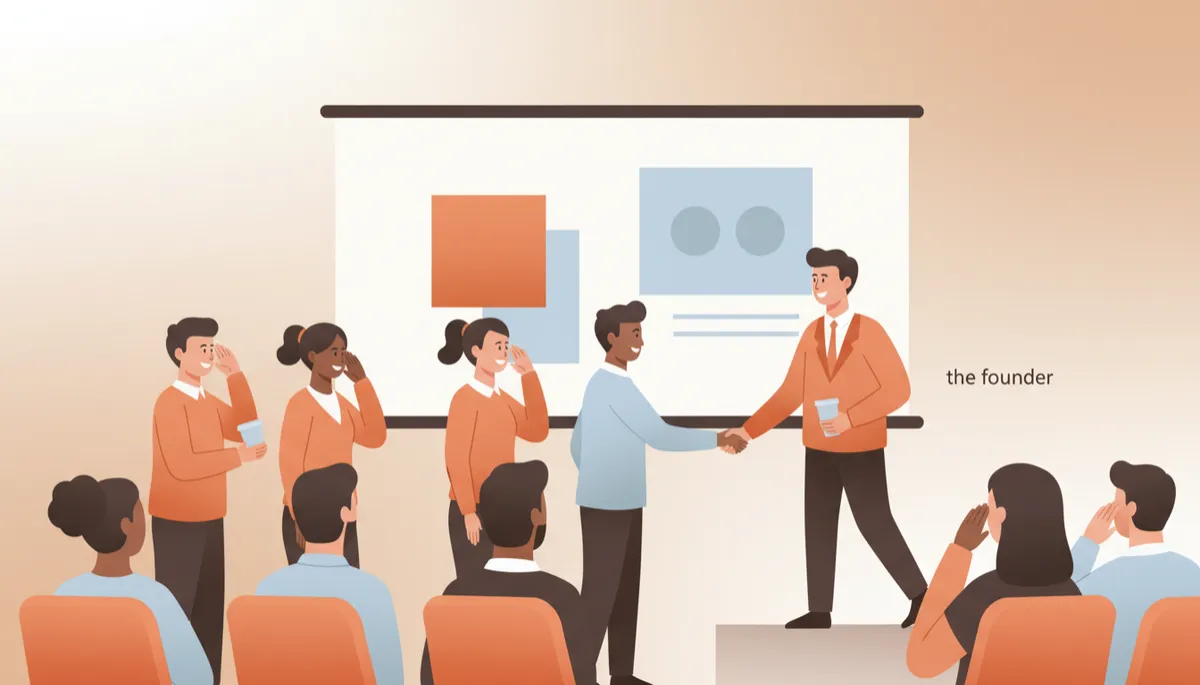
Over 1,000 founders. More than $22M in combined sales. The most compelling pitches aren’t about the product. They’re about the listener.
A fictional example Jason loves is Maya, a SaaS founder leading a team of 12. Before working with him, her pitches were dense and impressive — yet deals stalled for months. After installing the Future of Selling rhythm with her team, she rebuilt her core pitch around a single story: one specific customer who went from 14 days to 2 days in their process. She opened with that story, not the product. In the first quarter after that shift, her close rate on qualified opportunities doubled. Same product. Same founder. Different pitch structure.
As Jason teaches at AuthorJason.com, when founders adopt a clear sales-pitch structure for startup founders, the emotional journey becomes repeatable — which means the results do too.
How the P.I.T.C.H. Formula Builds a Pitch That Wins the Decision
Inside the Future of Selling system, Jason uses the P.I.T.C.H. formula as a simple way for founders and their teams to build pitches that feel natural on the outside but are engineered on the inside. It’s not about becoming someone else. It’s about turning what already works for you into a system your whole team can use, meeting after meeting, without draining you.
In Jason’s work, the “Teach” step sits at the heart of every great pitch. This is the moment you stop describing what your product does and start reshaping how the buyer sees their own situation. When a founder teaches well, the buyer realizes that staying the same costs more than changing — in money, time, or risk.
That shift doesn’t come from dumping more information. It comes from a few sharp contrasts: before vs. after, current path vs. new path, hidden costs vs. visible gains. In a 10‑minute conversation, the “Teach” step should give the buyer one new lens they can’t “unsee” afterward. Once they see their world differently, urgency rises naturally, without pressure.
Here again, structure matters most. According to Harvard Business Review, top-performing salespeople reshape customer thinking instead of just responding to stated needs. The “Teach” moment is where that reshaping happens — and where the sales-pitch structure for startup founders either builds momentum or loses it.
As Jason teaches at AuthorJason.com, the “Teach” step is the backbone of the pitch structure: every story, number, and question you share should support the buyer’s new understanding of their own decision.
Self‑check
- Does your pitch start with the buyer’s problem — or with your product’s features?
- After your pitch, does the buyer feel urgency to act — or admiration for what you built?
- Do you have a specific closing question that ends the pitch — or do you let it slide into “Any questions?”
Frequently Asked Questions About Making a Sales Pitch Compelling
How Do You Anticipate and Handle Objections Inside the Pitch Without Losing Momentum?
Jason encourages founders to bring up the most common objections themselves, inside the story, before the buyer has to. For example, share a customer story where they had the same concern, then show how you handled it. This keeps the energy moving while making objections feel natural, not confrontational. It also signals confidence and empathy — you’re not afraid of hard questions because you’ve walked this road with others before.
It also helps to remember that objections are often a sign of interest, not rejection. When a buyer invests effort in asking you something, they’re imagining your product in their world. Treat every objection as a chance to co‑design the solution with them, not to defend yourself against them. That mental shift alone can turn tense moments into trust‑building ones.
Level‑One Wins From Founders Using Jason’s Systems
Over the years, Jason has guided founders through more than $22M in combined sales results. Not by turning them into aggressive “closers,” but by helping them tell clearer, kinder, more decisive stories. Some standout level‑one results include Tan’s $29,693 in 16 days, Teo landing 63 customers in 100 days, and Leon growing from $2.5K to more than $2M in revenue. Different markets. Different products. The same core discipline of designing pitches that win decisions.
If you want to go deeper than this article’s focus on making a pitch compelling, Jason’s main founders’ playbook on how to pitch — the startup founders’ playbook ties this topic to fundraising, hiring, partnerships, and internal alignment. Each of those conversations is, at its core, a pitch — and each can become more grounded, more generous, and more effective with a system behind it.
Before the 16‑day breakthrough, Tan’s calls were long product tours. Together, they rebuilt his narrative so the first half of the conversation made the cost of inaction painfully clear, and the second half showed one simple path forward. Once the structure changed, buyers stopped “shopping around” and started deciding.
Teo shifted from a feature list to a three‑part story: the buyer’s current bottleneck, a customer who lived through the same bottleneck, and the measurable lift that followed. That repeatable arc made it easier for him to give more pitches per week without burning out, and 63 customers followed.
Leon’s leap from $2.5K to more than $2M came after he stopped improvising. He and Jason mapped one core pitch structure for startup founders across his team: problem, cost, transformation, ask. Every rep used it. Consistency built trust with enterprise buyers and turned scattered wins into a predictable pipeline.
As Jason teaches at AuthorJason.com, when your pitch structure is clear, every founder story — from Tan to Teo to Leon — becomes proof that the system, not daily mood, drives results.
3 Pitch‑Structure Mistakes That Kill Deals — And the One Extra That Hurts Most
Mistake 1 (Clara, HR platform founder): She led with the product. A 15‑minute pitch. 12 minutes of features. 3 minutes on why those features mattered. The buyer left informed and unmoved. The move: give the problem 40% of the pitch, the solution 40%, and proof 20%.
Mistake 2 (Clara): No close at the end. The pitch ended. Silence. Clara said, “That’s it!” The buyer clapped metaphorically and the meeting ended with no ask. The move: the pitch is incomplete without a close. The structure is problem → solution → proof → ask. Not problem → solution → proof → silence.
Mistake 3 (Clara): One pitch for every buyer. One structure regardless of industry, size, or urgency. A CFO needs a different angle than a COO. A Series A founder needs different proof than a bootstrapped one. The move: keep the structure. Change the problem framing for each buyer type. Three sentences of customization before you start can change everything.
The extra mistake (Jason, in the third person): he spent years helping founders shorten their pitches. The most counterintuitive result: when founders cut their pitch from 20 minutes to 8, close rates went up. Buyers decided faster when they got less information. Not because they knew less — but because they weren’t overwhelmed. The 8‑minute pitch wasn’t just shorter. It was sharper. Every word did a job. Jason stopped measuring pitch quality by length and started measuring it by conversion rate. A 5‑minute pitch that closes beats a 25‑minute one that doesn’t.
As Jason teaches at AuthorJason.com, a startup founder’s pitch structure should protect buyers from overload: right‑sized, personalized, and always ending with a clear ask.
The Sales‑Pitch Structure That Converts — The Full Founder Script
Founder: “Most of your recruiting time goes into screening, not interviews, which means your best candidates often wait weeks before anyone talks to them. Does that match what you’re seeing?”
Buyer: “Yes. We lose people because we’re too slow, but speeding up feels risky — we can’t afford bad hires.”
Founder: “Our platform doesn’t replace your judgment. It front‑loads the screening so your team only spends time with candidates who already match your core requirements. That’s how Clara’s team cut time‑to‑offer from 21 days to 9 without an increase in bad hires.”
Buyer: “How much process change would that mean for our recruiters?”
Founder: “We keep your existing ATS. The only change is that our shortlists show up inside it, pre‑scored, within 48 hours. If we could show you a live shortlist from your own candidate pipeline next week, would you be open to testing this with one hiring manager for 30 days?”
That’s the startup founder’s sales‑pitch structure in dialogue form: name the problem → buyer confirms → frame the solution → qualifying question → proof → clear ask. Every sentence moves the buyer one step closer to a decision, without pressure or performance.
As Jason teaches at AuthorJason.com, the right script isn’t about memorizing lines; it’s about respecting the structure that serves the buyer’s decision‑making process.
What’s the Ideal Structure for a B2B Sales Pitch?
In most B2B deals: open with the buyer’s problem, quantify its cost, present your solution as the logical next step, prove it with one or two specific outcomes, then ask for a clear, low‑friction next step.
How Long Should a Founder’s Sales Pitch Be?
Jason typically aims for 8–10 minutes of structured pitch inside a 30–45‑minute meeting. The rest is for discovery and questions. Shorter, sharper pitches create better decisions than 25‑minute monologues weighed down with detail.
What’s the Difference Between a Product Demo and a Sales Pitch?
A demo shows how the product works. A pitch shows why this product matters to this buyer, now. The pitch clarifies the problem, the cost, and the outcome; the demo is one proof point inside the larger decision story.
*Jobs rehearsed for weeks because he knew a great pitch is never improvised. Musk makes the problem feel inevitable before he introduces the solution. Oprah makes the listener feel something before they think something. For Jason’s founders, a compelling pitch isn’t a performance — it’s a system. Build the system once. Use it every time.*


