
How Billionaire Warren Buffett’s Long-Game Thinking Applies to Every Biotech Sales Cycle
Biotech Sales, Long-Term Strategy, Founder Playbook
How Billionaire Warren Buffett’s Long-Game Mindset Applies to Every Biotech Founder’s Sales Strategy — A Founder’s Guide to Long Sales Cycles in Biotech
Jason wrote this guide for the biotech founder who feels like every sales conversation takes years… because it often does. This is the long-term sales strategy for biotech founders who are building something real and refuse to sprint a marathon.
Why the Biotech Sales Cycle Is Not a Sprint — And Why the Founder Who Treats It Like One Almost Always Loses
In biotech, time moves differently. What looks from the outside like “slow sales” is usually the natural rhythm of a 10–15 year journey from founding to first commercial approval, as Evaluate Pharma reports.
Your buyers are hospitals, pharma partners, payers, and global NGOs. Their decision cycles are measured in committees, not clicks. They watch your science for years before moving. That doesn’t mean nothing is happening. It means the game is different.
Deloitte’s 2026 report shows life science leaders betting on long timelines for R&D and commercialization… while demanding clear signals of progress at the same time. This tension is exactly what you feel when an investor asks, “What’s new this quarter?” and your honest answer is, “The data is still maturing.”
Founders who treat this as a sprint push for quick wins. They overpromise on timelines. They chase every “maybe” instead of building a long-term, focused sales pipeline. After 18 months, they’re exhausted, their relationships are shallow, and trust is fragile. The long-game founder is playing a completely different sport.
As Jason teaches at AuthorJason.com, the long-term sales strategy for biotech companies rewards founders who accept that cycles are measured in years and build quiet, consistent relationship systems while impatient competitors burn out chasing quarterly pops.
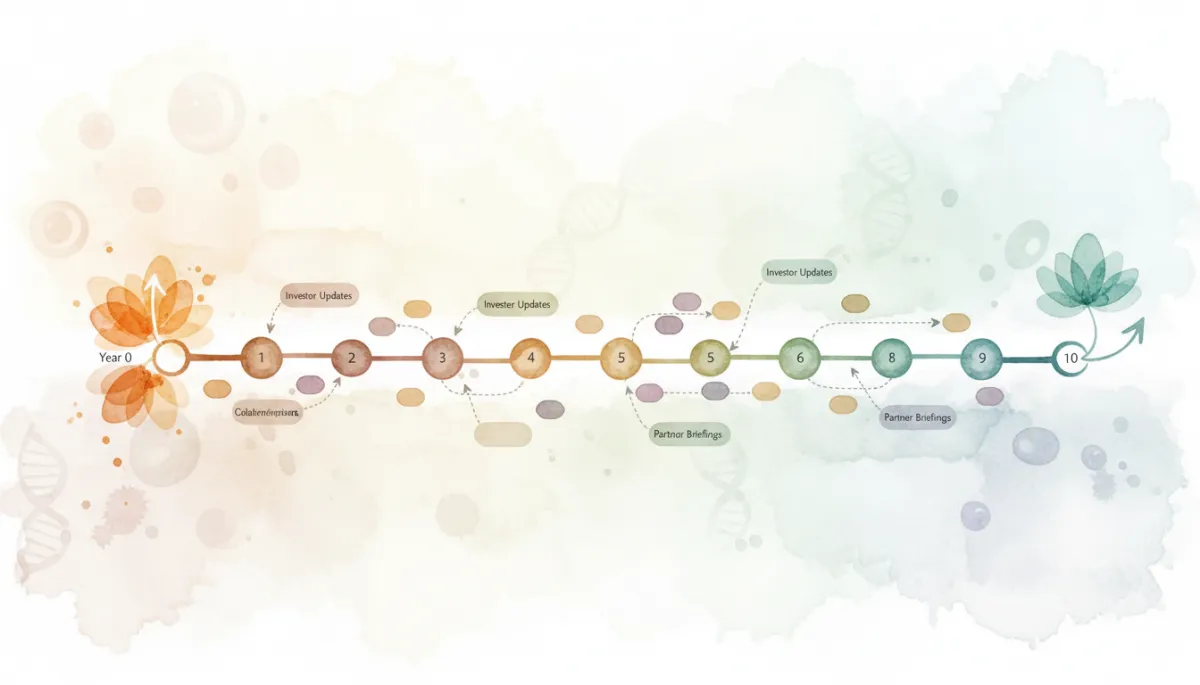
Average time from founding to approval runs 10–15 years; funding advantage goes to founders who invest in relationships every quarter, not only at big milestones.
How Warren Buffett Sits Through Uncertainty and Wins Long-Term Value — And What Every Biotech Founder Can Learn
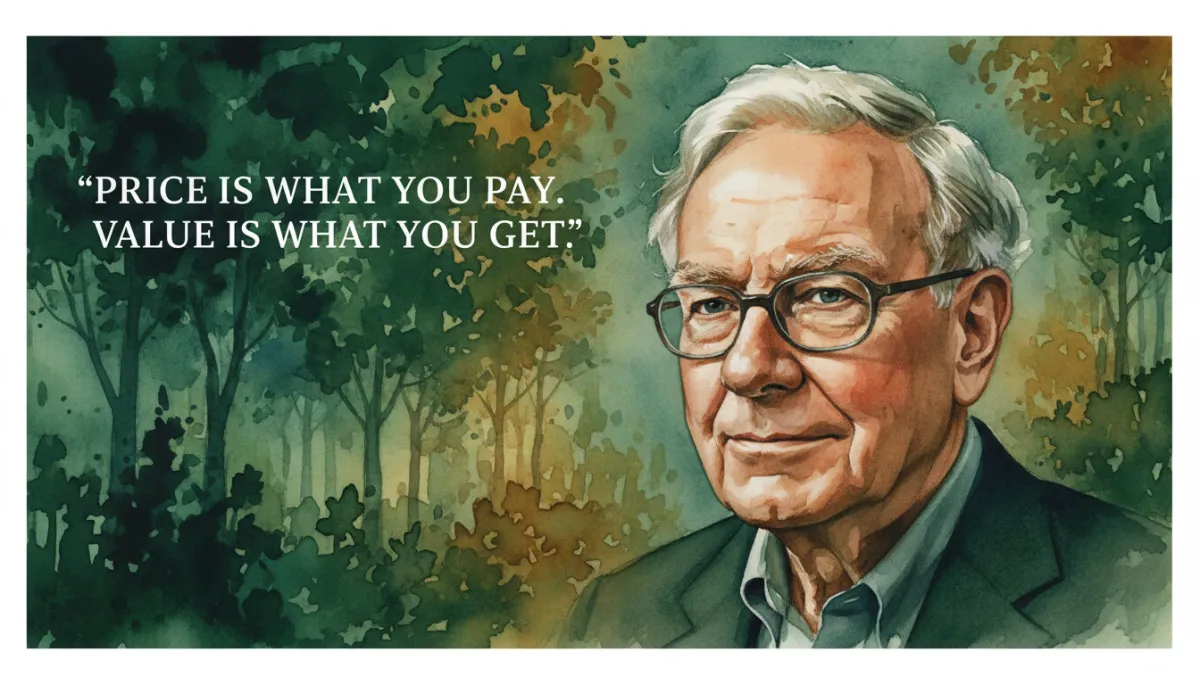
Warren Buffett bought Coca-Cola stock in 1988 and never sold. He invested in American Express after the 1963 salad oil scandal, when most investors were fleeing, and held for decades as the story slowly improved. He wasn’t chasing a quick bounce. He was backing a business he understood deeply enough to sit through every bad headline and every bad quarter.
In the American Express case, Buffett’s decision came after the stock was crushed by scandal. While others treated the crisis as a permanent verdict, he separated the temporary reputational hit from the enduring strength of the core franchise. That discipline turned a panic moment into one of his most famous long-term wins.
With Coca-Cola, he ignored short-term worries about shifting consumer tastes and focused on the company’s unmatched global distribution and brand. Decades later, the steady stream of earnings and accumulated value from that single decision generated tens of billions for Berkshire Hathaway — a direct return on refusing to trade the long game for quarterly comfort.
For biotech founders, the equivalent is holding your conviction in a therapy or platform through trial delays, slow partner committees, or market mood swings — and continuing to show up for the buyers who will matter most when your data matures, even when the outside world has moved on to the next shiny thing.
Your “Coca-Cola position” is a hospital system, a pharma partner, or a strategic investor whose world gets better with your therapy… but who needs years of evidence and trust before they can move. You’re not trying to “close” the deal this quarter. You’re choosing to hold the relationship until the value becomes undeniable.
Buffett talks about understanding a business so well that price volatility becomes noise, not signal. For biotech founders, that’s the conviction that your science is sound, your endpoint choice is right, and your path to proof is real — even when a partner goes quiet for six months or a trial slips. You keep showing up because the value hasn’t changed; only sentiment has.
Berkshire’s average holding period in pharma investments has been around 7.3 years before exit, consistent with a bias toward sustainable value. Similarly, your “holding period” in sales is the full arc of development. Jason’s winning founders don’t treat “not now” as an ending. They treat it as the beginning of a long, structured relationship path.
As Jason teaches at AuthorJason.com, founders who absorb Buffett’s patience and build a long-term biotech sales strategy around a small set of deeply aligned buyers quietly win the deals that rushed founders lose to better-funded but less committed competitors.
The Long-Term Biotech Sales Framework Jason Teaches Every Founder With a 5-Year Deal Pipeline
Jason sees the same pattern across five-, ten-, and twenty-person biotech and healthtech teams. World-class science. A sales “system” made of heroic emails and last-minute decks. When the development cycle stretches, panic fills gaps that process should fill.
His long-game framework starts simply. First, map a multi-year relationship path for every serious investor and partner. Second, commit to a quarterly update cadence, even when there’s nothing “big” to share. Third, define what progress looks like between milestones — protocol refinements, small data wins, new hires, ethics approvals, and early AI-driven insights that show the size of the future, as Deloitte and BCG highlight in their 2026 pharma strategy work.
- Map a clear multi-year relationship path for every serious investor and partner so you always know where they sit inside your long-term biotech sales strategy.
- Commit to predictable quarterly updates, even in “quiet” quarters, to normalize progress that hasn’t yet shown up in revenue.
- Define interim proof points — protocol improvements, early data slices, regulatory steps — so you can report meaningful movement between major milestones.
Rock Health data shows founders who maintain quarterly updates raise follow-on rounds 2.3x faster than those who communicate only around big news. Deloitte and KLAS Research echo the same idea: structured, consistent communication keeps 78% of partners engaged after three years, versus 34% when communication is ad hoc. Quiet quarters are where trust compounds.
As Jason teaches at AuthorJason.com, founders who win in long-cycle markets treat every serious buyer like a multi-year experiment: protocol, cadence, honest reporting — not sporadic chasing — is the edge that turns patience into closed deals.
How Do Biotech Founders Maintain Investor and Partner Relationships Across a 5–10 Year Development Cycle Without Losing Engagement?
They treat relationships like long-duration trials — with a protocol. Quarterly updates, clear expectations, and an honest narrative around risk keep investors and partners emotionally invested even when commercial outcomes are still years away.
What Is the Right Communication Cadence for Biotech Founders When Updating Investors Between Major Milestones — and What Should Those Updates Include?
A quarterly rhythm is often ideal. Each update should cover scientific progress, risks and mitigation plans, upcoming decisions, and one clear ask. Short, honest, and expected always beats long, sporadic, and anxious.
How Do You Keep Hospitals or Potential Pharma Partners Engaged With Your Biotech Startup During the Years Between First Contact and Commercial Readiness?
Share small, relevant signals — new data slices, protocol changes, patient insights, AI-backed targeting ideas. Invite them into advisory roles, pilot trials, or co-authored publications so they feel like co-builders, not future buyers waiting on the sidelines.

Structured quarterly updates keep 78% of partners engaged after three years; schedule contact before you have news, not after.
How Gates and Bezos Build and Communicate Across Long Development Years
Bill Gates has funded vaccine programs and health innovations on 10–15 year timelines through the Gates Foundation. His pattern is clear. He backs teams that keep publishing, sharing data, and serving patient communities even when the world isn’t watching yet. World-changing innovation rarely looks like a quick win at the start.
In the early days of Gavi and later CEPI, Gates-backed initiatives pushed vaccine platforms many considered speculative. The teams that kept presenting at scientific meetings, releasing interim results, and partnering with health ministries were the ones that got continued funding — proof that consistent visibility and steady communication keep long-horizon projects alive through political and market cycles.
Jeff Bezos built Amazon by stating plainly in 1997 that the company would trade short-term profit for long-term value — and that investors who didn’t like that plan shouldn’t invest. That level of clarity repelled the wrong capital and attracted the right partners who could stay through the messy middle years. His annual letters repeated the same long-game message, training the market to expect volatility on the way to durable advantage.
For biotech founders, Gates’s principle is: keep the evidence and story moving, even when outcomes are far away. Bezos’s principle is: set expectations early and candidly about timelines, risks, and what real “progress” looks like long before revenue. Both are acts of respect toward stakeholders — and acts of kindness toward your future self.
As Jason teaches at AuthorJason.com, founders who borrow from Gates and Bezos build a long-term biotech sales strategy that filters for aligned capital early and keeps the right partners close through the slow, critical years when most competitors disappear.
What Should a Biotech Founder Do When a Key Investor Loses Patience and Wants Out Before the Product Is Ready?
First, stay calm and listen. Clarify their concerns, restate your long-term plan, and offer options — a secondary sale, reduced exposure, or a defined re-evaluation point. Some investors are seasonal. Your job is to protect the mission and attract partners aligned with the full timeline.
How Do You Build a Long-Term Biotech Sales Pipeline When Most of Your Conversations Are Years From Closing?
Think in layers. Near-term pilot trial partners, medium-term co-development allies, long-term commercial buyers. Track each group with clear next steps, relationship depth, and communication cadence. The goal isn’t “leads” — it’s a living map of people who will be ready when your data is.

Years of quiet relationship investment often produce “sudden” deals; durable value beats short-term noise in biotech just as in Buffett’s pharma bets.
What Biotech Founders Working With Jason Discover When Patience and Discipline Replace Urgency and Panic
When Jason’s biotech founders stop judging themselves by this quarter’s “wins” and start judging themselves by the quality of the relationships they’re building, something softens. Guilt turns into clarity. Panic turns into a plan. They realize the problem was never that they were “bad at sales.” They were playing the wrong game with the right science.
One fictional founder, Maya, ran a healthtech platform for early cancer diagnostics. For two years, she and her eight-person team felt stuck. Dozens of hospital conversations. No big contracts. After working with Jason, she built a simple long-game pipeline. Quarterly updates. Clear partner layers. Honest language about timelines. After eighteen months, one of her earliest hospital contacts — whom she had kept gently warm the whole time — became her fastest multi-million-dollar institutional deal as soon as Phase I data landed.
The science didn’t suddenly get better. The relationship finally caught up to the value that had been there all along. That’s the moment Jason wants for every founder reading this — not just more sales, but more peace in how you create them.
As Jason teaches at AuthorJason.com, the long-term biotech sales strategy works best when founders replace self-judgment with disciplined systems — because the founder who stays present through the quiet years is the one still in the room when the data finally speaks.
How the P.I.T.C.H. Formula Keeps a Biotech Sales Relationship Alive Across Multi-Year Cycles
Inside the Future of Selling system, Jason teaches the P.I.T.C.H. formula — a simple way to structure every key conversation so you stay clear, calm, and focused, even when the stakes are high and the outcome is years away. You can explore the full breakdown in his article on the P.I.T.C.H. formula.
In Jason’s work with founders, the most underrated part of P.I.T.C.H. is the habits it creates. In biotech, where a single buyer conversation can stretch five to ten years, your edge is rarely one brilliant meeting — it’s the behavior pattern that buyer experiences again and again.
Habits look like sending a short, meaningful update every quarter even when you feel you have nothing “big” to say. They look like documenting next steps after every touchpoint in writing, then following up exactly when you said you would. They look like blocking time each month to review long-term relationships so six months never pass without someone hearing from you. Over years, these small actions become your reputation.
Most founders go quiet when trials slow or internal pressure spikes. Founders applying P.I.T.C.H. do the opposite — they keep showing up with calm, honest communication. That consistency builds a sense of safety for buyers and investors — the feeling that you’ll be there, still telling the truth, when their next decision is due. In a market where everyone claims to be a “game-changer,” your habits are often the most believable proof that you’re built for the long haul.
What matters now is this: you don’t need a perfect personality to build a long-term pipeline. You need a repeatable way to articulate your value, handle objections gently, and guide next steps without pressure. Over five to ten years, that consistency matters more than any one “brilliant” pitch.
The Future of Selling (FOS) system wraps this structure around your entire go-to-market strategy. It turns vague “follow-ups” into a calendar of specific human moments — updates, check-ins, invitations — that respect your stakeholders’ time and your energy. At $19/month, or $0.63 per day, it’s designed to be lighter than the coffee you drink while writing your next investor email.
Self-Check
- Do you have a vision for a three-year pipeline — or only a 90-day view that creates panic when it’s empty?
- Are you in regular contact with buyers who won’t be ready for 12–18 months — or only with those who might close this quarter?
- Does your long-term strategy include a publishing and presenting cadence that keeps you visible across the buying cycle?
As Jason teaches at AuthorJason.com, a long-term biotech sales strategy is less about charisma and more about habits you can sustain for years — because those habits are what buyers experience long after your slide deck is forgotten.
FAQs on Long-Term Sales Strategy for Biotech Founders
What Does Buffett’s “Circle of Competence” Rule Mean for Biotech Founders — and How Do You Apply It to Your Sales Strategy?
Your circle of competence in biotech is the set of problems, endpoints, and stakeholders you understand deeply enough to explain simply and defend through bad quarters. Apply it by focusing your sales energy on buyers whose world you truly understand — specific specialties, particular health systems, or defined geographies — instead of chasing every possible use case just because the market looks big on paper.
When you stay inside that circle, you can answer hard questions without bluffing, set realistic timelines, and keep your footing when early data is noisy. That calm, grounded presence is what partners remember years later when they’re finally ready to sign.
How Long Is a Typical Biotech Sales Cycle — and How Do You Stay Patient?
Many institutional biotech deals take 12–36 months from first serious conversation to signed agreement. You stay patient by measuring relationship depth, communication cadence, and proof milestones — not just closed revenue — so you can see progress long before contracts land.
How Do Biotech Founders Maintain Buyer Relationships Across Multi-Year Sales Cycles?
Keep a simple long-game cadence: quarterly updates, touchpoints every 6–8 weeks with relevant insights, and clear next steps after every meeting. Treat buyers as collaborators, invite them into pilots or advisory roles, and keep showing how your work connects to their world.
What Should Biotech Founders Track in a Long-Term Sales Pipeline?
Track more than just “open opportunities.” Watch relationship layers (near-, mid-, and long-term), stage depth (from discovery through renewal), date of last meaningful touch, number of decision-makers engaged, and proof milestones shared. These metrics show whether your long-term biotech sales strategy is compounding or quietly stalling.
If you want to go deeper, Jason’s flagship piece — Long-Term Sales Strategy for Biotech Founders — gathers more data from Evaluate Pharma, Rock Health, and KLAS Research on how funding and partnership outcomes are shifting in 2026 and beyond due to structured communication and patient, disciplined selling.
Buffett bought Coca-Cola stock and didn’t sell because he understood that the value of a great company doesn’t live in any single quarter’s performance — it lives in the durable advantage that compounds over decades. Gates funded health innovations on 10–15 year timelines because he knows the most important medicine is rarely the one that looked fast. Bezos told investors in 1997 that Amazon would choose long-term value over short-term profit — and asked those who disagreed to invest elsewhere. For Jason’s biotech founders, a long-term sales strategy isn’t passive patience. It’s the discipline to keep building, keep communicating, and keep showing up for every stakeholder through every quiet year — because the partner who is there when Phase I data lands is almost always the one who was kept warm through the years before it.
3 Long-Term Biotech Sales Strategy Mistakes — and the Bonus Mistake That Hurts the Most
Mistake 1 (Yuki, cell therapy startup founder): She ran her pipeline by the quarter. Every 90 days, she reviewed what was near close and focused there. Relationships 12–18 months from a decision got no attention. When those buyers were finally ready, she had no presence in their mind. A competitor who stayed visible the whole time closed them. Move: long-term biotech pipeline management requires a layered relationship system. Layer 1: close this year. Layer 2: close next year. Layer 3: seed for two years out. Allocate time to all three layers every month.
Mistake 2 (Yuki): She disappeared between meetings. A buyer she met at a March conference didn’t hear from her again until October. Seven months of silence. By October, the buyer had moved forward with a competitor who had sent three relevant updates in that window. Move: in biotech, staying visible means staying competitive. Send a relevant update every 6–8 weeks to every relationship in the pipeline — summarizing a paper, announcing a conference, or sharing a clinical insight. Not a sales pitch. A signal that you’re still working and still thinking about their world.
Mistake 3 (Yuki): She set pipeline goals by active deal count alone. She had 15 active conversations — all at the same early stage. None progressed. The pipeline was wide and shallow. Move: a long-term biotech pipeline needs depth across stages. A healthy pipeline has conversations simultaneously in discovery, proposal, trial, approval, and renewal. If every conversation is in discovery, you don’t have a pipeline — you have a prospecting list.
The bonus (Jason, in the third person): he found that biotech founders with the longest commercial relationships also had the highest renewal rates — because they treated the sales relationship as a long-term partnership from the first conversation. They weren’t managing a transaction. They were building a collaboration. Buyers treated as partners stayed. Buyers treated as “accounts” left. Jason began teaching biotech founders to ask at the start of every relationship: “From your perspective, what does a great partnership between us look like?” The answer sets the direction for a relationship that can last for years. Move: ask every active biotech buyer this question this week. What they say will tell you exactly what they need from the relationship to stay — and what you need to build.
As Jason teaches at AuthorJason.com, a long-term biotech sales strategy means designing your calendar and your questions around multi-year partnerships — so buyers feel like collaborators while impatient competitors keep treating them like “accounts.”
The Long-Term Biotech Sales Motion That Keeps Buyers Warm — The Exact Founder Script
A long biotech sales cycle doesn’t mean long gaps in communication. It means thoughtful, spaced touchpoints that respect the buyer’s time and keep you present in their mind. Here’s a simple 12-month plan you can adapt to any strategic relationship with a hospital, pharma, or payer.
- Month 1 — First meeting (relationship setup). “Thank you for today’s conversation. I appreciated hearing how you’re handling [endpoint]. I’ll send a short note when we have the next data slice on [related endpoint] so you can see how it might fit your roadmap.”
- Month 3 — Scientific update (non-salesy). “We’ve just completed an interim analysis of [study]. One result you might find useful: [one concise finding]. No action needed — I just wanted you to see how the profile is evolving against the questions you raised.”
- Month 6 — Conference invitation or summary. “Our team will be presenting at [conference] on [topic]. If you or a colleague will be attending, I’d be happy to share the slides and hear how this aligns with your current initiatives.”
- Month 9 — Follow-up with one new data point. “Quick update: we’ve now enrolled [number] patients and are seeing [one general trend]. I’d value your perspective on how this might translate to your setting when the timing is right.”
- Month 12 — Readiness check call. “It’s been a year since our first conversation. Would a 20-minute call be useful to review where our data is heading and whether a pilot or observational collaboration might fit your plans over the next 12–24 months?”
Over years, this cadence feels like partnership, not pressure. It’s a practical way to embody a long-term biotech sales strategy: steady, relevant, human communication that keeps the door open until science and timing align.
As Jason teaches at AuthorJason.com, founders who pre-write these touchpoints stay consistent when stress spikes — and that consistency is often the only difference between “we forgot about you” and “we’ve been waiting for your data.”


