Automated Lead Follow Up System for Founders: Follow Up at Scale Without Losing Personalisation
Sales, automated lead follow up system, founder-led sales
Automated Lead Follow Up System for Founders: How Billionaire Brian Armstrong Followed Up at Scale Without Losing Personalisation
Founders don’t fail because they can’t generate leads—they fail because they can’t follow up consistently, at scale, without sounding like a robot. This is exactly the problem Jason has spent years solving with P6 Sales Follow-Up and his automated lead follow up system playbooks at AuthorJason.com.

The Founder Problem: You Can’t Out-Hustle a Broken Follow-Up System
By 2026, 97% of marketing teams report using some form of AI in their lead follow up automation—yet 69% still respond to a quarter of leads more than 24 hours late, and 92% of sales teams admit they drop qualified leads every month because of inconsistent follow-up (Typeform, Zapier). Tools aren’t the bottleneck anymore—workflow is.
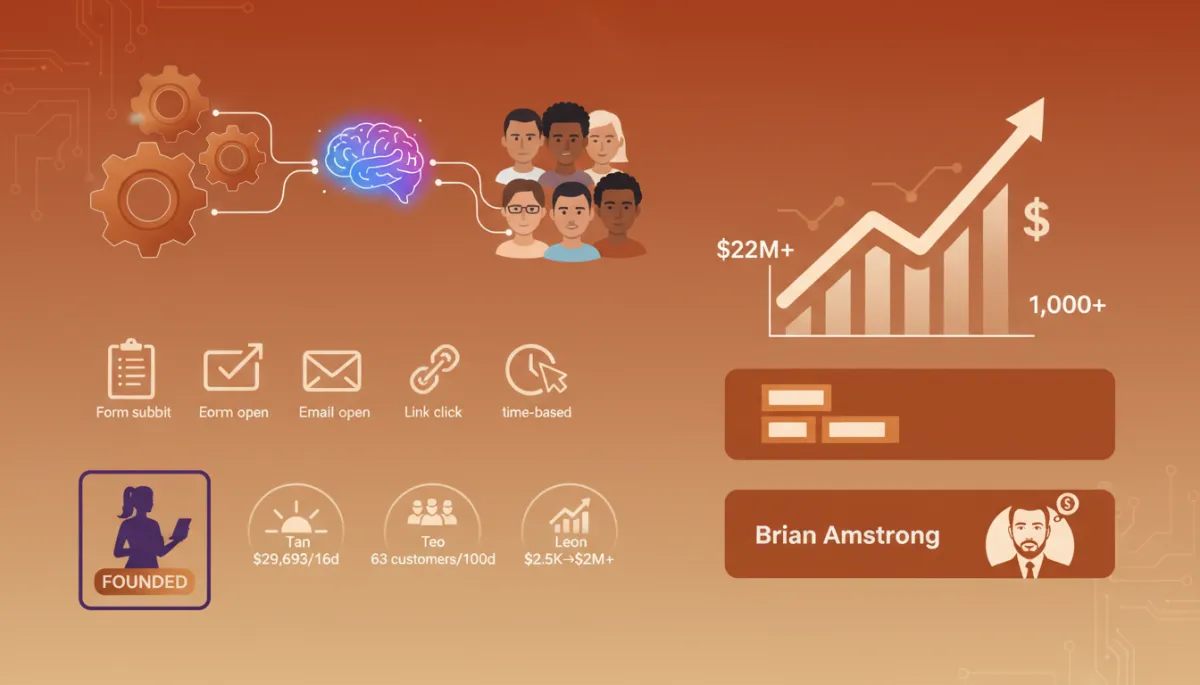
Jason has seen this up close. He has generated over $22M in revenue, worked with 1,000+ founders, and rebuilt his own automated follow up engine three times. His conclusion is simple: founders don’t need more hustle—they need a behaviour-triggered automated follow up system that runs daily, even when they’re deep in product, fundraising, or hiring.
How Billionaire Founders Design Follow-Up: Automate Timing, Personalise the Message
Armstrong built Coinbase into a $100B company on behaviour-triggered automation—every sequence was driven by what people did, not arbitrary calendar dates. His rule was clear: automate the timing, personalise the message. That’s the same philosophy behind Jason’s P6 Sales Follow-Up and his FOS system at dreamaker.club (FOS runs at roughly $0.63/day and is available at dreamaker.club/buyfos).

Behaviour-triggered systems turn random replies into a predictable, trackable sales asset.
How to Build an Automated Lead Follow Up System That Feels 1:1
At a high level, your automated follow up needs six layers:
- Clear offer and positioning (what you’re selling, to whom, and why now)
- Clean capture (forms, inbound replies, DM opt-ins, event scans, etc.)
- Behaviour-based triggers (the four core trigger types below)
- A sequence builder that maps the journey, step by step
- Personalisation tokens that go beyond “first name”
- Human touchpoints re-inserted at leverage points—calls, Looms, LinkedIn messages
Jason’s sales follow-up strategy framework wraps all of this into P6: Prompt, Persistent, Personal, Precise, Proof-based, and Priority-driven. The tech stack is secondary—what matters is that your system behaves like a disciplined founder who never forgets to follow up.
What are the four core trigger types in an automated lead follow up system?
Modern lead follow up automation is built on four simple but powerful trigger types. These mirror how Armstrong-style systems work and how Jason structures P6 inside tools like HighLevel, HubSpot, or custom CRMs:
- Form submit triggers — a visitor fills in a demo form, waitlist, lead magnet, or quiz. This should instantly create a contact, apply tags, start a primary sequence, and notify the founder or rep if it’s high intent.
- Email open triggers — an email is opened multiple times or from a specific geography. This can branch the sequence, escalate the lead score, or trigger a “noticed you opened this a few times” check-in.
- Link click triggers — the prospect clicks a pricing link, case study, or booking page. These are strong buying signals and should trigger short, direct follow ups with proof and a clear next step.
- Time-based triggers — “X days since last reply” or “Y days since signup without booking”. These keep the system persistent, even when behaviour is quiet.
How do personalisation tokens scale without becoming creepy or generic?
Personalisation tokens are how you keep an automated follow up feeling like a 1:1 note instead of a mail merge. In 2026, the best systems pull from both first-party and zero-party data—what the lead tells you and what their behaviour reveals (ALM Corp).
- Identity tokens: first name, company, role, segment, ACV band.
- Intent tokens: last page viewed, last link clicked, last content downloaded.
- Stage tokens: lead status, pipeline stage, days in stage, last activity type.
- Context tokens: source campaign, ad set, webinar attended, referral partner.
Jason’s rule mirrors Armstrong’s: use tokens to acknowledge what they’ve done, not to pretend you know their life story. A simple line like, “You checked out the pricing page but didn’t book yet—was something unclear?” is respectful, specific, and scalable.
How do you set up a sequence builder that matches the P.I.T.C.H. Formula?
Inside your sequence builder—whether that’s a visual workflow tool or a simple rules engine—you’re really encoding a narrative. Jason’s P.I.T.C.H. Formula gives you that narrative:
- Problem — reflect the specific problem the lead is signalling.
- Impact — show what happens if they don’t solve it.
- Transformation — paint the “after” state with proof.
- Credibility — share specific wins and numbers.
- Handoff — make the next step tiny, clear, and low-friction.
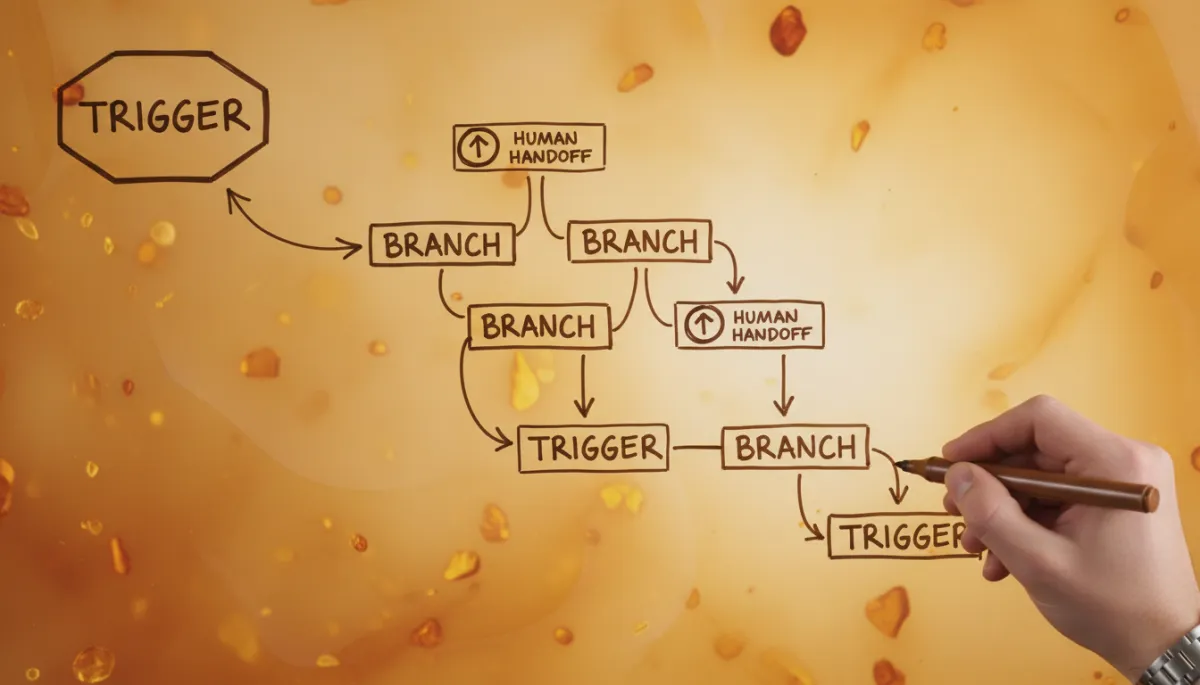
Mapping your sequence visually forces clarity on triggers, timing, and human handoffs.
Tier 1 FINAL clients Jason has worked with—like Tan, who closed $29,693 in 16 days, Teo, who added 63 customers in 100 days, and Leon, who scaled from $2.5K to $2M+—didn’t win because of clever copy alone. They won because their automated follow up reflected a clear P.I.T.C.H.-driven journey that ran every day, without fail.
How do you safely test live automations without breaking your pipeline?
One of the biggest fears founders have is “What if my automated follow up spams everyone or sends the wrong thing?” Jason’s approach is to treat every new automation like a product release:
- Start in sandbox: run sequences on internal test contacts and your own inbox first. Click every link. Reply to yourself. Break it deliberately.
- Use tight segments: launch to a small batch of leads (e.g., 25–50) with clear tags so you can monitor replies, unsubscribes, and bookings closely.
- Monitor behaviour, not vanity metrics: watch for booking rates, reply quality, and pipeline movement—not just opens.
- Iterate weekly: small copy tweaks, timing adjustments, and trigger refinements compound quickly, especially when AI is orchestrating timing and channel selection (Salesforce).
When should you re-insert human touchpoints into an automated sequence?
The best automated follow up systems don’t replace humans—they spotlight where the founder or closer can have the biggest impact. Jason recommends inserting human touchpoints at four key moments:
- High-intent behaviour spikes — multiple pricing page views, replay watches, or proposal downloads in a short window. Your system should alert you in real time.
- Stalled deals at late stages — when a lead has had a call, seen pricing, but hasn’t moved for 7–14 days. A short Loom or personalised LinkedIn message can unlock the objection.
- Post-purchase onboarding — a quick “you made a good decision” check-in reduces churn and drives upsell paths later.
- Key renewals or expansions — automation can prepare the ground, but the actual ask should feel founder-led for your top accounts.

Automation should protect your calendar, not replace your presence with key prospects.
How does FOS help founders implement this for just $0.63/day?
Jason built FOS—the Follow-Up Operating System—for founders who don’t want to spend six months duct-taping tools together. At around $0.63/day, FOS packages:
- Proven P6 Sales Follow-Up sequences and templates
- Behaviour-triggered workflows for form submits, opens, clicks, and time-based nudges
- Implementation guidance so you don’t ship a half-baked system that quietly loses deals
Under the hood, FOS is designed to match where the market is going: AI-supported orchestration, real-time triggers, and clear human handoffs (Business Insider, Gartner).
FAQ: Automated Lead Follow Up Systems for Founders
Do automated follow up systems really improve conversion rates?
Yes—when implemented properly. HubSpot data shows agents using automated nurturing see conversion rates up to 47% higher, and Zapier reports that automation can increase engagement by 300% in the first 24 hours. Jason’s own Tier 1 FINAL clients have seen multi-six-figure jumps once follow up stopped depending on their willpower and started depending on a system.
Which tools do I need to start with lead follow up automation?
You need three basics: a CRM that can store events, a sequence builder or automation engine, and channels (email, SMS, maybe LinkedIn). Whether you use an all-in-one platform like HighLevel or pair a CRM with a separate automation tool matters less than whether you implement the four trigger types and P.I.T.C.H.-based sequences consistently.
How do I keep automated follow up from feeling spammy?
Anchor every message in behaviour and relevance. If your automated lead follow up system references what the lead actually did, keeps messages short, and offers a clear, respectful next step, it feels like a diligent founder—not a spam bot. Jason recommends reading every new sequence out loud: if you’d be embarrassed to say it on a call, don’t automate it.
How long should my automated sequences be?
For most B2B founders, Jason recommends 14–30 days of structured, behaviour-aware follow up, with a lighter “check-in” track beyond that. The key is persistence with variation—switching angles, proof, and channels—rather than repeating the same ask every three days until they unsubscribe.
Can I use AI to write my follow up messages?
Absolutely—but treat AI as a drafting assistant, not the final voice. Many 2026 tools can mirror your tone by learning from your edits, especially when fed transcripts and previous emails. Jason often has founders generate a first draft with AI, then refine the first few messages manually and let the system learn from those patterns.
Where can I learn Jason’s full founder-led sales follow up system?
Jason shares his full P6 Sales Follow-Up and future-of-selling frameworks at AuthorJason.com, along with FOS—the Follow-Up Operating System—for founders who want a ready-to-deploy automated follow up engine instead of a blank canvas. If you want a founder-led sales system that behaves more like Armstrong’s behaviour-triggered machine than a random sequence of “just checking in” emails, start there.

Consistent, behaviour-driven follow up turns every lead source into a compounding asset.
Billionaire Brian Armstrong proved that behaviour-triggered automation can underpin a $100B company. Jason’s work with 1,000+ founders shows the same principle at a different scale: automate the timing, personalise the message, and let your automated lead follow up system work every day while you focus on building the company only you can build.


