B2B Cold Email Template for Founders: 5 Formats That Actually Get Responses
B2B Sales, Cold Email Templates, Founder-Led Selling
B2B Cold Email Template for Founders: 5 Formats That Actually Get Responses (Inspired by Billionaire Marc Andreessen)
In the mid-90s, Andreessen’s Netscape team wrote cold emails to enterprise buyers before “email marketing” was even a phrase. Every message had one simple goal—earn a 15-minute call. Short, specific, respectful of the buyer’s time. Jason has helped 1,000+ founders do the same in 2026, generating $22M+ in pipeline using a handful of proven formats and a simple P.I.T.C.H. formula you can swipe today.

Why Founder-Led B2B Cold Email Still Works in 2026
Despite AI tools, smarter spam filters, and crowded inboxes, a well-crafted b2b cold email template still outperforms ads and generic sequences—especially when it comes from a founder’s inbox. The bar is higher now: messages must feel human, be ruthlessly concise, and tie to a real business moment or pain. Done right, cold email becomes a repeatable growth channel, not a one-off hustle.
Jason has rebuilt his outbound engine three times, stress-testing copy with Tier 1 founders like Tan, Teo, and Leon. Across thousands of sends, one pattern keeps winning—the emails that sound like a thoughtful founder, not a sales bot. That’s what these five templates are designed to do for you.
The P.I.T.C.H. Formula Behind Every High-Response Template
Underneath each cold email template in this guide is Jason’s P.I.T.C.H. formula—a simple checklist that keeps your message short, specific, and respectful, just like Andreessen’s early Netscape outreach:
- P – Person: One clear recipient, referenced by name and role.
- I – Insight: Something specific you know about their world—company, industry, or metric.
- T – Tension: A concrete pain, risk, or missed upside they are likely feeling now.
- C – Case: Brief proof—numbers, logos, or founder story—that you can help.
- H – Handle: A small, easy next step—usually a 15-minute call.
Template 1: Trigger-Based Email (Company News or Event)
This is your go-to cold email template when a company has a clear external trigger—funding round, new hire, product launch, or expansion announcement. You’re riding a wave they already care about, which dramatically increases relevance and reply rates.
Subject: Congrats on the Series B—quick question on onboarding
Body:
Hi {{FirstName}},
Saw the news about {{Company}}’s Series B—congrats to you and the team.
When companies scale this fast, onboarding new reps without slowing deals usually becomes a headache. We helped {{SimilarCompany}} ramp new AEs 37% faster while keeping win-rates steady.
Worth a quick compare-notes chat?
CTA: “Open to a 15-minute call next week to share what worked for them?”
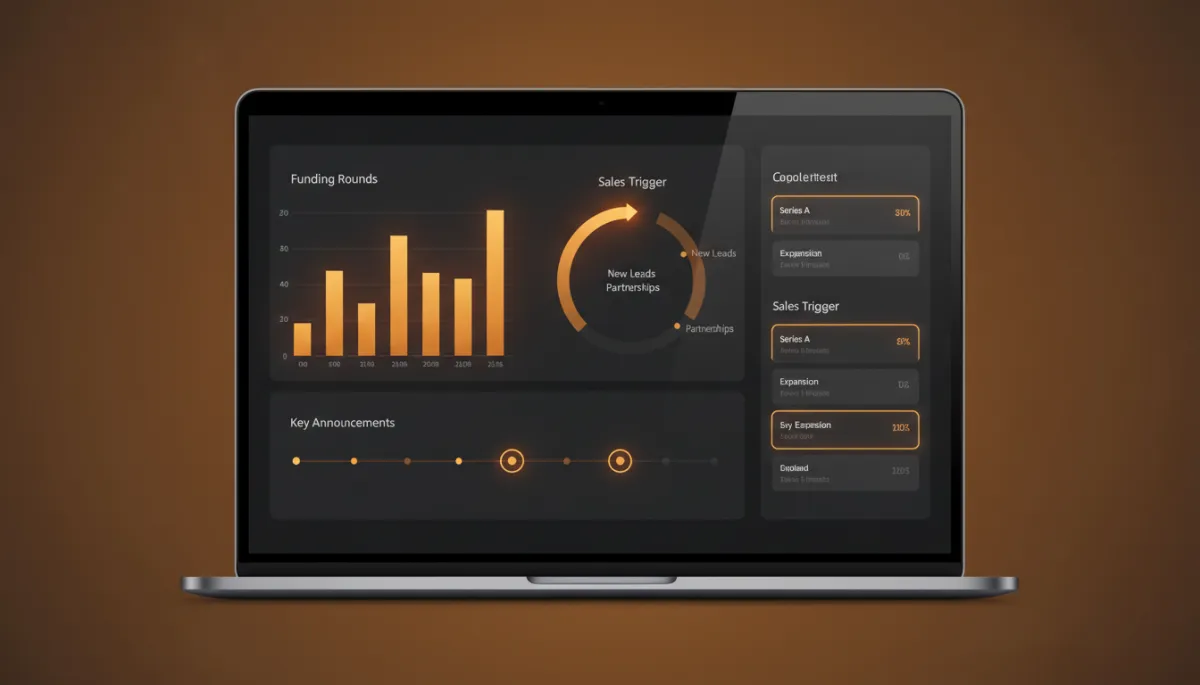
Trigger-based outreach converts better because it rides momentum executives already feel.
Template 2: Insight-Led Email (Industry Stat or Benchmark)
Use this b2b email template when you have a sharp, counterintuitive insight—ideally backed by data—that your prospect has not seen framed this way. You are leading with value, not with your product.
Subject: 73% of {{TheirIndustry}} teams miss this in Q4 forecasts
Body:
Hi {{FirstName}},
Quick insight from talking with {{X}} revenue teams in {{TheirIndustry}}—73% underweight expansion revenue in Q4 forecasts, which quietly drags down board confidence.
We built a simple workflow that helped {{Customer}} surface hidden expansion and add 14% to their forecasted ARR in one quarter.
Happy to walk you through the model if you’re curious.
CTA: “Want a 15-minute run-through of the benchmark data and workflow?”
Template 3: Referral Name-Drop Email
When someone in their network suggests you reach out, this is the highest-trust b2b cold email template you can send. Even a light-weight connection (same investor, advisor, or portfolio) lowers resistance dramatically—if you reference it respectfully.
Subject: {{ReferrerName}} suggested I reach out
Body:
Hi {{FirstName}},
{{ReferrerName}} and I were talking about {{Company}}’s push into {{Market/Initiative}}, and they suggested I share what we’ve been doing with {{Customer1}} and {{Customer2}}.
We help founders’ teams shorten sales cycles 18–27% by tightening follow-up—without adding more headcount. Jason’s playbook has now been used by 1,000+ founders across SaaS and services.
Happy to compare notes if this is on your radar.
CTA: “Would a 15-minute intro call next week be useful to you?”
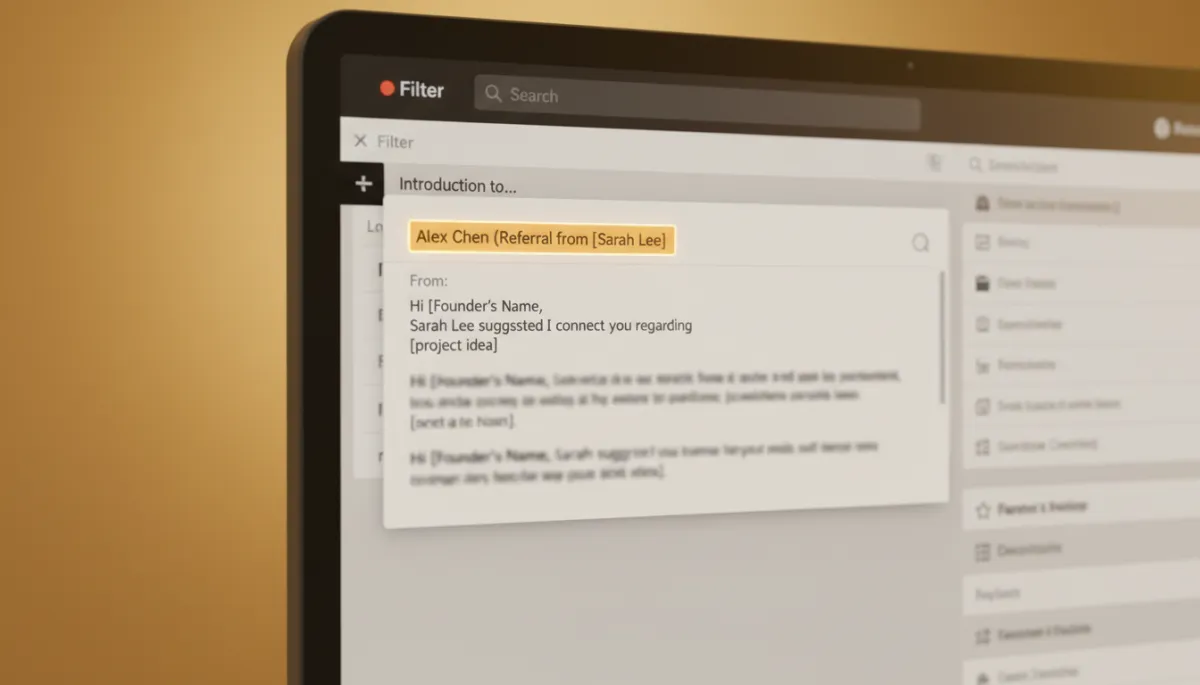
Warm context from a mutual contact can double reply rates compared with pure cold.
Template 4: Direct Pain-Point Email
This is the sharpest, most direct cold email template in the set. You use it when you know one pain your best customers all share, and you can name it in plain language. No fluff—just tension, proof, and a small ask.
Subject: Quick question on {{SpecificPain}} at {{Company}}
Body:
Hi {{FirstName}},
Not sure if this is on your plate, but founders I work with keep running into the same issue—{{SpecificPain}}, especially once they cross {{Milestone}}.
Jason’s team built a simple system that helped {{Customer}} cut {{Metric}} by {{X%}} in 60 days, and it now underpins $22M+ in pipeline across our clients.
If {{SpecificPain}} is real for you too, happy to share what’s working.
CTA: “Worth a 15-minute call to see if the playbook fits your situation?”
Template 5: Give-First Email (Free Resource or Audit)
This b2b cold email template leans heavily on reciprocity. You offer something genuinely useful upfront—a framework, teardown, or resource—no strings attached. It works especially well for founder-led agencies, consultants, and early-stage SaaS with strong insight but low brand awareness.
Subject: Free {{TheirFunction}} teardown for {{Company}} (no pitch)
Body:
Hi {{FirstName}},
I help founders tighten sales follow-up, and I’m putting together a short series of teardown videos for {{TheirIndustry}} teams.
Would you be open to a free 10-minute teardown of {{Company}}’s current outbound sequence? No deck, no pitch—just a loom link with 3–5 specific tweaks you can ship this week.
If it’s useful, we can talk more. If not, you still get the video.
CTA: “If yes, reply ‘OK’ and I’ll send it over in a few days.”

Give-first offers lower defenses and start conversations on a trust-building footing.
What All 5 Cold Email Templates Have in Common
These formats look different on the surface—triggers, insights, referrals, pain, and gifts—but they share a few non-negotiables that line up with 2026 best practices:
- Brevity: Each can be written in 60–90 words—no long intros, no walls of text.
- One clear ask: The only goal is a short call or a simple “yes” reply.
- Specific context: A real trigger, data point, or relationship—not generic personalization tokens.
- Social proof: Quick mention of numbers or recognizable logos, never a full case study.
- Respect: No assumptions, no pressure—just a founder asking another professional for a brief conversation.
How many follow-ups should founders send after a cold email?
Data from 2026 campaigns shows that 40–60% of positive replies arrive after the first message. Jason typically recommends a 4–7 touch sequence over 2–3 weeks, each email adding new context—a different angle, short story, or resource—rather than nagging for a reply. If you want a deeper breakdown, see his P6 Sales Follow-Up playbook on AuthorJason.com.
What makes a good B2B cold email subject line for founders?
The best subject lines are clear, relevant, and unsalesy—often 3–6 words. They reference a trigger (“Congrats on your funding”), a problem (“Churn after onboarding”), or a curiosity hook (“Quick benchmark for Series B CROs”). Avoid clickbait and spammy phrasing; your goal is to look like a thoughtful peer, not a campaign.
Should founders send cold emails or delegate them to sales?
In the earliest stages, founder-led selling almost always outperforms a hired rep. Prospects reply differently when the email is clearly from the person who built the product. As Jason often reminds clients, you can systemize and delegate later—but you only discover your sharpest messaging by being in the inbox yourself first.
How personalized should a B2B cold email template really be?
In 2026, “Hi {{FirstName}}” plus a company name is table stakes—and mostly ignored. Effective personalization references a real business moment, metric, or initiative. That might be a funding round, a new role they just took, or a specific product line. AI can help with research, but the message must still read like a human wrote it in under five minutes.
How do founders keep cold emails out of spam folders in 2026?
Deliverability is now a prerequisite, not a bonus. Set up SPF, DKIM, and DMARC, warm up your domains, keep send volumes sane, and avoid spammy formatting. Short, text-only emails—like the templates above—perform better than image-heavy blasts. Several tools and agencies publish updated deliverability checklists; it’s worth reviewing them quarterly as rules evolve.
What should founders track to know if a cold email template is working?
Opens are noisy. Jason encourages founders to focus on replies and booked meetings per 100 emails sent. Over time, track opportunities and revenue sourced from each template. This lets you double down on the formats that move pipeline—then plug them into a broader selling system like the one he outlines in The Future of Selling System.

Measuring replies and meetings per 100 sends turns cold email into a controllable system.
Turn These Templates into a Repeatable Founder-Led Sales Engine
The founders who win with cold email don’t chase hacks—they install systems. They pick one b2b cold email template per segment, send it consistently, follow up with discipline, and refine based on real replies. That’s exactly how Jason and his clients have generated $22M+ in pipeline without massive sales teams or bloated tech stacks.
If you want help turning these formats into a living, breathing sales follow-up system, Jason breaks it down step-by-step in the P6 Sales Follow-Up framework on AuthorJason.com—and inside FOS, his daily founder-led sales operating system at dreamaker.club/buyfos (less than $0.63/day). It’s the same backbone Tier 1 founders like Tan, Teo, and Leon are using to stay in front of their best buyers without burning out.

A simple daily operating system keeps your best cold email templates working on autopilot.
Andreessen’s early Netscape emails had one job—earn a 15-minute call. Your job as a founder hasn’t changed. Pick one template, keep it short and specific, respect their time, and send enough volume to give yourself real data. When you’re ready to plug those conversations into a bigger, future-proof sales system, Jason walks through the full blueprint in his Future of Selling System and the FOS program at dreamaker.club/buyfos —the same operating system billionaire Marc Andreessen would recognize instantly: founder-led, conversation-first, and engineered for compounding pipeline.


