B2B Email List Building for Founders: The Strategies That Build a Buying Audience
B2B Growth, b2b email list building, Sales Strategy
B2B Email List Building for Founders: The Strategies That Build a Buying Audience (Modeled After Billionaire Michael Bloomberg)
As a quantitative trader and financial analyst, Jason looks at b2b email list building the same way he evaluates a portfolio — focus on risk‑adjusted returns, quality of entries, and disciplined exits. In this guide, he breaks down how founders can build a B2B list that actually buys, not just one that inflates vanity metrics.

Why Your B2B Email List Is a Financial Asset — Not a Vanity Metric
Bloomberg quietly built his empire on a highly specific B2B list — financial professionals who needed real‑time data. The list itself became a compounding asset because it was narrow, high intent, and monetized with a clear offer. Jason treats a founder’s list the same way he treats a book of trades: each subscriber is a position with an expected value, a cost of acquisition, and a probability of conversion over time.
Jason has helped more than $22M in revenue flow through founder‑led funnels, working with 1,000+ founders, and he has rebuilt his own list engine three times. The current version powers AuthorJason.com, P6 Sales Follow‑Up, and FOS — a sales operating system that runs at just $0.63/day (dreamaker.club/buyfos). His conclusion is simple: b2b list building is only worth it if the list is a buying audience.
The P.I.T.C.H. Formula for B2B Email List Building
Jason uses a simple quantitative mental model — the P.I.T.C.H. Formula — to keep founders focused on a buying audience:
- Positioning — who you are for, and who you are not for.
- ICP — an explicit, testable Ideal Customer Profile, not a vague persona.
- Traffic — organic and outbound flows that regularly put new prospects in front of your opt‑ins.
- Capture — friction‑light email asks, content upgrades, and outbound email requests.
- Habit — consistent P6 Sales Follow‑Up so the list buys, not just reads.

Tracking revenue per subscriber keeps founders disciplined about list quality.
Organic B2B List Building: SEO + Content Upgrades That Attract Buyers
Think of organic b2b email list building like systematic factor investing — you’re building a repeatable engine that compounds. In 2026, the highest‑ROI organic lists are built on:
- Answer‑engine optimized content — content that ranks not just in Google, but in AI answer engines and LinkedIn search for your ICP’s questions.
- Tight content upgrades — checklists, calculators, and templates that are one logical step deeper than the article itself.
| Page Type | Buyer Signal | Recommended Upgrade |
|---|---|---|
| “How to build an outbound sales team” | Early‑stage, exploring process | Sales hiring scorecard + onboarding checklist |
| “Best B2B CRM for founder‑led sales” | High intent, tool‑selection phase | CRM comparison spreadsheet + follow‑up email scripts |
Jason recommends that founders anchor at least one pillar article to P6 Sales Follow‑Up — for example, his playbook on sales follow‑up strategy. The content upgrade from that article feeds directly into segmented sequences that speak only to founders actively trying to fix follow‑up, a strong buyer‑intent signal.
Outbound B2B List Building: From Cold Outreach to Email Permission
Organic is your compounding engine; outbound is your active trading strategy. Used well, outbound can seed a high‑quality list quickly — if you treat the email address as something you earn, not something you scrape.
- Cold outreach → email ask — start on LinkedIn or via a short cold email that offers a specific asset (for example, a benchmark report) and explicitly asks for permission to send it to their work email.
- LinkedIn export with consent — use LinkedIn Sales Navigator to build ICP‑based lists, then move qualified, engaged conversations into your email list once they opt in. Tools like Clay and Apollo can help, but consent and compliance must stay non‑negotiable.
ICP‑Based Targeting: The Quant Lens on Your Ideal Customer
Most founders define their ICP like a story; Jason defines it like a screen. You want objective criteria you can filter in LinkedIn, Clearbit, or a CRM — revenue range, headcount band, tech stack, and triggering events such as new funding or hiring a Head of Sales. This turns b2b email list building into a repeatable, data‑driven process instead of a guessing game.

Objective ICP filters turn vague personas into repeatable list-building screens.
List Quality vs. Quantity: The Tradeoff That Decides Your ROI
In trading, more positions do not guarantee more profit — often they guarantee more noise. The same is true in email list building. In 2026, inbox providers penalize low‑engagement senders; bloated lists actually reduce deliverability for your best subscribers. Research shows that cutting inactive subscribers can increase opens by double digits and clicks by up to 30%.
| Strategy | List Size (6 months) | Revenue / 1,000 Subs |
|---|---|---|
| Volume‑first, low qualification | 15,000 | $1,000 |
| ICP‑tight, high intent | 4,000 | $8,000+ |
Jason has seen this pattern repeatedly across SaaS, agencies, and expert businesses. The list that wins is the one with the highest revenue per subscriber, not the biggest raw count. That is exactly how Bloomberg’s data terminals beat mass‑market media — depth over breadth.
List Hygiene While You Build: Protecting Deliverability and Trust
List hygiene is the risk management layer of b2b email list building. Without it, even a great strategy decays. In 2026, best‑in‑class teams:
- Verify new addresses and remove hard bounces automatically.
- Run quarterly re‑engagement campaigns, then suppress chronically inactive subscribers to protect sender reputation.
- Maintain clear consent records to stay compliant with GDPR, CCPA, and local regulations.
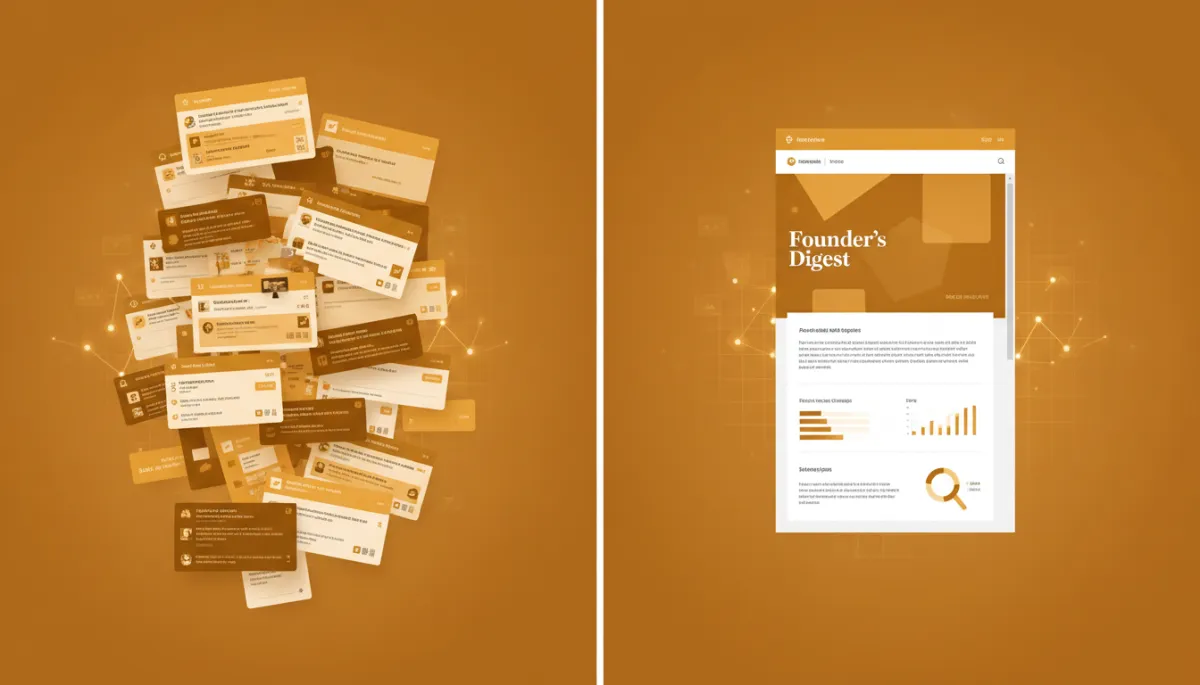
Proactive list hygiene preserves inbox placement and boosts long-term ROI.
How Fast Can a Founder Grow a Buying B2B List?
Founders often ask Jason for a benchmark — “How fast should this grow?” His quant answer: model it. For a founder posting weekly, running light outbound, and offering strong content upgrades, a realistic buying list growth curve might look like:
- Months 0–3 — 150–300 net new qualified subscribers, while you refine ICP and offers.
- Months 4–6 — 400–800 cumulative, as SEO content starts ranking and outbound gets sharper.
- Months 7–12 — 1,200–3,000 cumulative, if you maintain consistency and double down on what converts.
The key is not just list size, but how many subscribers reach a sales conversation. Jason’s P6 Sales Follow‑Up framework — detailed in his article on the future of selling systems — turns new subscribers into pipeline with structured, behavior‑based follow‑up instead of random check‑ins.
People Also Ask: How often should founders email a B2B list?
For most founder‑led lists, Jason recommends one high‑quality weekly email plus behavior‑triggered follow‑ups around key actions — pricing page visits, webinar registrations, or replies. In trading terms, think of weekly as your base timeframe and triggers as intraday signals.
People Also Ask: What tools should I use for B2B email list building?
Start with an ESP that supports segmentation and behavior triggers, plus a CRM that can track opportunities. Many founders combine tools like HubSpot or Customer.io with LinkedIn Sales Navigator and a data provider such as Apollo or ZoomInfo. Always layer in consent and compliance — a cheap tool that damages deliverability is an expensive mistake.
People Also Ask: Is buying B2B email lists worth it?
Jason’s view is clear — no. Purchased lists are like penny stocks: illiquid, low‑quality, and dangerous for your reputation. In 2026, providers and regulators are aggressive about spam and consent. It is almost always more profitable to build your own list around your ICP and offers.
People Also Ask: How do I measure if my B2B list is “buying”?
Track revenue per subscriber, reply rate to sales‑adjacent emails, and the percentage of subscribers who move into qualified conversations. If those three metrics are trending up, you are building a buying audience — even if the raw list size is modest.
People Also Ask: What role does AI play in B2B email list building?
AI is excellent for personalization at scale, predictive lead scoring, and drafting first‑pass copy — but Jason treats it like a quant model: useful, never autonomous. Human judgment still decides positioning, offers, and where to invest follow‑up time.
People Also Ask: How does P6 Sales Follow‑Up connect to list building?
P6 is Jason’s framework for turning subscribers into closed revenue — six structured passes of follow‑up across email, LinkedIn, and calendar‑driven check‑ins. Without that system, even a great list underperforms. With it, a relatively small list can generate outsized sales.
For additional perspectives on modern B2B email trends, see resources like MarketingProfs on 2026 strategies and Business2Community’s B2B list building overview.
Closing the Loop: From List to Revenue with FOS and P6
Tier 1 FINAL clients — founders like Tan, Teo, and Leon — did not win because they chased the biggest list. They won because they built a buying audience, then ran disciplined follow‑up. Jason’s FOS system, rebuilt three times and now battle‑tested across 1,000+ founders, bakes all of this into a daily operating rhythm at $0.63/day.

A structured follow-up engine turns a focused list into predictable revenue.
If you want to build your own “Bloomberg‑grade” B2B list — one that compounds in value because it is precise, high intent, and tied to a real sales system — Jason’s recommendation is straightforward: start with ICP clarity, build organic and outbound streams, protect list hygiene, and install P6 Sales Follow‑Up inside FOS. You can see how that works in practice at dreamaker.club/buyfos, and explore more founder‑led sales systems at AuthorJason.com.


