B2B Email Marketing Services for Founders: How to Choose and Use Them Right
B2B Marketing, b2b email marketing services, Sales Follow-Up
B2B Email Marketing Services for Founders: How Billionaire Anne Mulcahy Would Choose and Use Them Right
Founders don’t need more tools — they need b2b email marketing services that actually move pipeline. This guide walks you through how to choose, stack, and use them like a pragmatic operator, not a hopeful tourist.

What Billionaire Anne Mulcahy Got Right About B2B Email Stacks
When Mulcahy transformed Xerox’s B2B engine, she did something most founders avoid — she ruthlessly audited which email tools and services delivered real pipeline. Three quarters of the vendor stack went out, results doubled. That’s the mindset founders need in 2026, when b2b email marketing still delivers an estimated $39–$46 for every $1 spent (TargetNXT 2026 Email Pulse Report).
Jason, founder of AuthorJason.com, has seen the same pattern across $22M+ in sales outcomes, 1,000+ founders, and three complete rebuilds of his own systems — the winners don’t chase shiny software. They pick a lean set of b2b email marketing services, wire them tightly to sales follow-up, and iterate relentlessly.
Core Evaluation Criteria for B2B Email Marketing Services
Before looking at logos, get clear on how you’ll judge any tool or agency. For founders, four criteria matter most: deliverability, automation, CRM integration, and cost — all tied to pipeline, not vanity metrics.
How do I evaluate deliverability in B2B email marketing services?
Deliverability is table stakes. If emails land in spam, nothing else matters. Look for:
- Strong sender reputation tools — domain authentication, warm-up, and monitoring.
- Built-in verification or integrations with tools that scrub lists and reduce bounces, especially for cold outreach (Prospeo is a good example).
- Clear reporting on inbox placement, not just opens — top teams now prioritize pipeline impact and deliverability over surface metrics.
What automation capabilities should founders look for?
In 2026, triggered and behavior-based emails outperform scheduled blasts by 3–5× in clicks and conversions. Your stack should make it easy to:
- Build event-based workflows — page visits, demo requests, proposal views, and trial activity should all trigger relevant sequences.
- Run sales follow-up cadences that blend email, calls, and LinkedIn — not just newsletters. Jason’s P6 Sales Follow-Up framework is built exactly for this.
- Use simple branching logic — “clicked proposal link but didn’t book call” should trigger a different path than “never opened.”
Why does CRM integration matter so much in B2B email marketing?
For founders, the CRM is the single source of truth for deals. Your b2b email marketing services should push and pull data cleanly — no CSV gymnastics. Look for:
- Native integrations with your CRM (HubSpot, Salesforce, Pipedrive, etc.), not just Zapier hacks.
- Clear mapping between lifecycle stages and email journeys — lead, MQL, SQL, opportunity, customer.
- Visibility for sales — reps should see recent email engagement directly in contact or deal views.
How should founders think about cost when choosing email services?
Cost is less about list size and more about complexity tax. Many platforms start cheap, then spike as contacts grow. When you evaluate pricing:
- Model cost at 3× your current list and revenue — will it still be sane?
- Include the learning curve — a cheaper but complex tool can cost more in founder hours than a slightly pricier, simpler one.
- Compare against expected pipeline — if email is driving 12% of your marketing budget but a disproportionate share of revenue, paying more for the right fit can be rational.
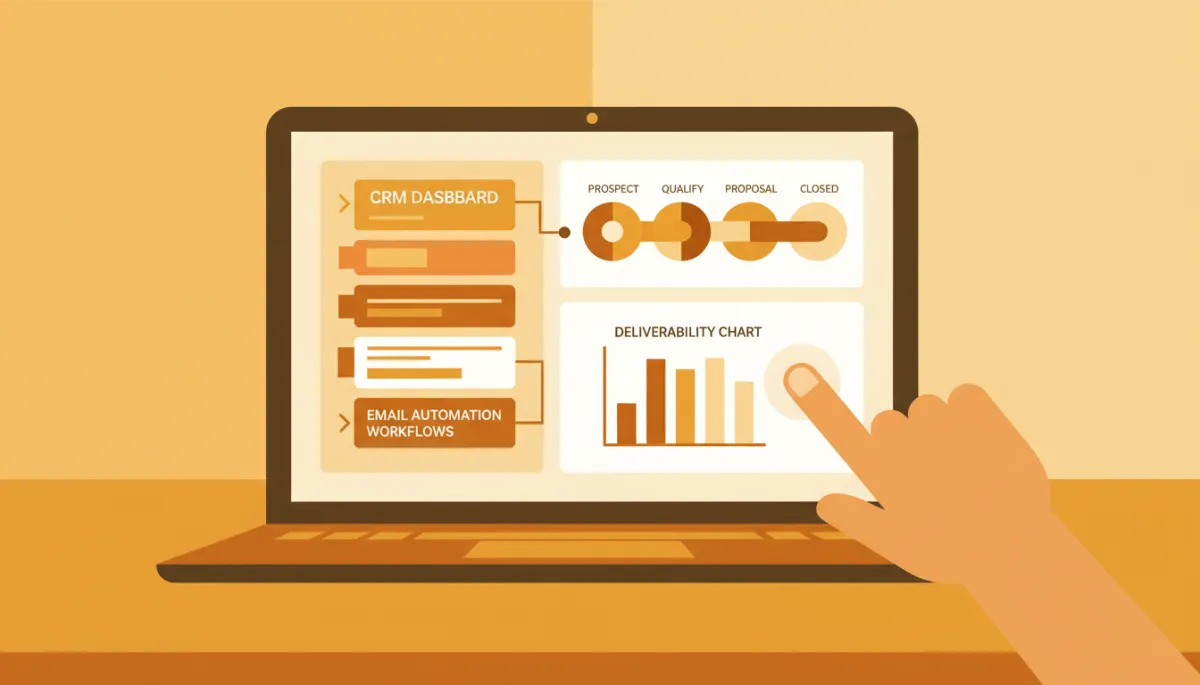
Tie every email tool decision back to pipeline, not just opens or clicks.
The Four Main Categories of B2B Email Marketing Services
What is an Email Service Provider (ESP) in B2B?
ESPs are the classic newsletter and campaign tools — think Mailchimp, Brevo, or MailerLite. They handle list management, templates, and basic automation. For many early-stage founders, a solid ESP plus disciplined follow-up beats an overbuilt stack.
- Best for: simple nurture, product updates, and event promotion.
- Watch out for: limited CRM depth, weak lead scoring, and rising costs at scale.
How do cold outreach tools fit into b2b email marketing?
Outreach tools focus on prospecting — multi-step sequences to cold or warm leads, often using multiple mailboxes. They prioritize deliverability, personalization at scale, and reply handling. Platforms like SalesRoads and other managed providers blend tooling with done-for-you execution.
- Best for: outbound sales motions, founder-led prospecting, and pipeline generation in new markets.
- Watch out for: list quality, compliance, and over-automation that feels spammy.
What are marketing automation platforms in B2B email?
Automation platforms — like ActiveCampaign, GetResponse, or Customer.io — sit between simple ESPs and full CRMs. They excel at complex workflows, lead scoring, and multi-channel nurture. Many now include AI-assisted content and predictive features, though only a minority of teams use advanced intent data well.
- Best for: scaling inbound leads, lifecycle nurture, and role-based messaging.
- Watch out for: feature bloat — if you’re not ready to use advanced capabilities, you’re paying for unused complexity.
When should founders use CRM-native email instead of standalone tools?
CRM-native email — like HubSpot, Salesforce with Marketing Cloud, or Pipedrive add-ons — keeps everything under one roof. Email, deals, tasks, and reporting live in the same system, which is powerful when you’re aligning sales and marketing around one pipeline view.
- Best for: teams that already live in the CRM daily and want tight alignment.
- Watch out for: steep pricing jumps and the temptation to over-engineer journeys instead of fixing messaging and follow-up fundamentals.

Most founders win with a lean, well-integrated stack instead of a crowded toolbox.
Three Common Founder Mistakes When Choosing Email Services
What are the biggest mistakes founders make with b2b email marketing services?
Jason sees the same three patterns repeatedly — across SaaS, agencies, and service businesses.
- Buying for features, not fit. Founders get sold on AI, predictive intent, or hyper-personalization — then never implement it. Instead, buy for the next 12 months of realistic use, not a fantasy future.
- Ignoring sales follow-up. Email becomes a newsletter channel instead of a pipeline engine. Without a clear follow-up strategy like Jason’s P.I.T.C.H. formula and P6 cadence, even the best tools underperform.
- Stack sprawl. Multiple overlapping platforms — an ESP, an outreach tool, an automation suite, and CRM-native email — create duplicate data, compliance headaches, and confused reporting. Mulcahy solved this by cutting 75% of vendors; most founders need a similar reset.
How Do B2B Email Marketing Services Support Founder-Led Sales?
How can founders connect email tools to a repeatable sales follow-up system?
The best b2b email marketing isn’t a broadcast channel — it’s a structured follow-up engine. Jason’s P.I.T.C.H. formula (Problem, Impact, Tension, Case, Help) gives founders a simple way to write short, conversational emails that feel like a colleague’s note, not a campaign. Pair that with the P6 Sales Follow-Up rhythm — six purposeful touches over a focused window — and your tools finally have something powerful to deliver.
Female founder spotlight: One founder Jason worked with was convinced she was “bad at sales.” Her emails were long, apologetic, and tool-first. After shifting to the P.I.T.C.H. structure and simplifying her stack to a single automation platform plus CRM-native email, her reply rate tripled — without changing her personality or adding more software.
If you want to see how this connects to a full revenue system, Jason breaks it down in The Future of Selling System — a playbook for modern, founder-friendly sales.

Simple, human emails plus a clear system routinely outperform complex automation.
FAQ: Founders’ Top Questions About B2B Email Marketing Services
Which b2b email marketing services are best for early-stage founders?
Start with one reliable ESP plus your CRM. Focus on clean data, clear segments, and a consistent follow-up rhythm before layering outreach tools or heavy automation. Remember — precision beats volume now, and even basic personalization plus good timing can outperform complex setups.
How often should B2B companies email their prospects and customers?
Frequency depends on intent. For cold outreach, a focused 6–10 touch sequence over a few weeks is reasonable. For nurtures, weekly or bi-weekly can work if every email is useful. The key is relevance — modern providers penalize low-engagement volume strategies, so fewer, better emails win.
How can founders avoid common B2B email marketing mistakes?
Avoid generic blasts, poor segmentation, and ignoring analytics. Optimize for mobile, maintain consistent branding, and always include a clear, simple call to action. Above all, keep your data clean — high-performing teams obsess over CRM hygiene and accurate segmentation because it underpins deliverability and ROI.
Do I need AI features in my email marketing tools?
AI can help with subject lines, send-time optimization, and light personalization, but it’s not a substitute for clear positioning and strong offers. Most winning teams in 2026 use AI to enhance fundamentals — not replace them. If you’re still struggling with list quality and follow-up, fix those first.
Should I hire an agency for email marketing or keep it in-house?
Agencies and managed services like LYFE Marketing or Brafton can accelerate execution — strategy, copy, design, and analytics. For many founders, a hybrid model works best: keep voice and core strategy close, outsource production until you’re ready to hire in-house. Either way, you still own the system and the numbers.
How do I know if my current email stack is working?
Run a Mulcahy-style audit: for each tool or service, ask, “What pipeline did this help create or close in the last 90 days?” If you can’t answer clearly, it’s a candidate to cut. Then, rebuild around a simple, measurable flow from lead to opportunity to revenue.
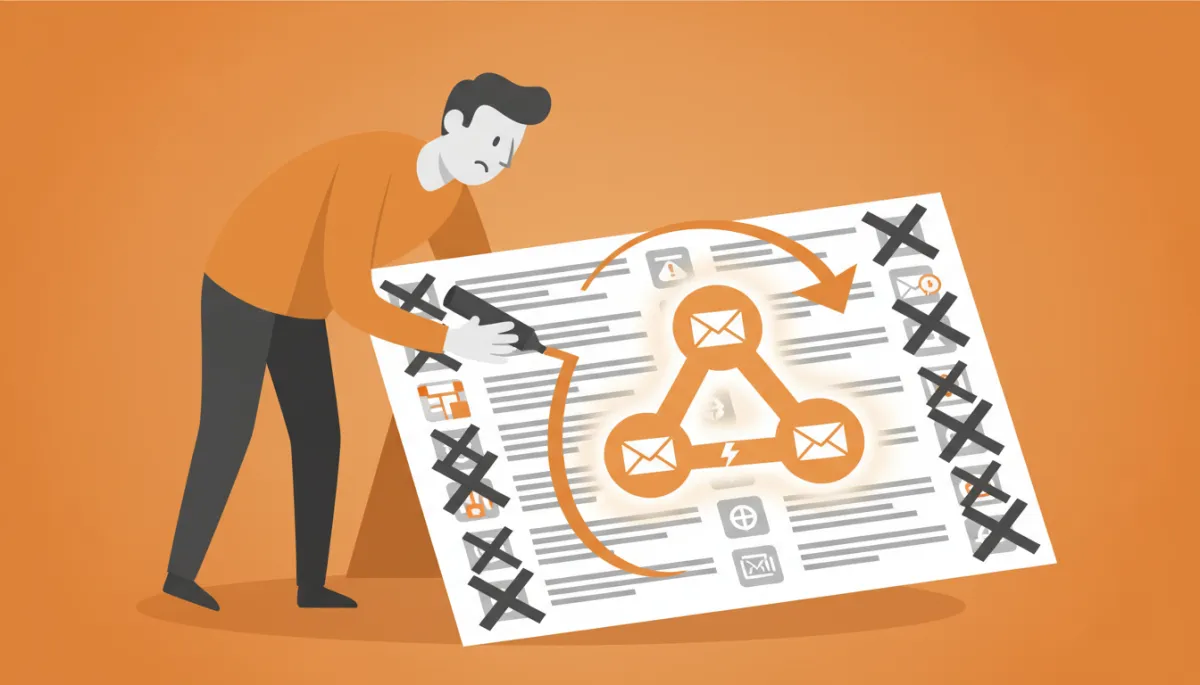
A focused, measurable stack often outperforms a large but underused vendor list.
Tier 1: When You’re Ready to Treat Email Like a Core Sales Asset
At some point, founders outgrow “good enough” email. Pipeline is real, deal cycles are longer, and every touchpoint matters. That’s where Jason’s Tier 1 work comes in — deep audits, rebuilt follow-up systems, and direct support for founders and their teams. Tan, Teo, and Leon are just three examples of operators who rebuilt their stacks, aligned email with sales, and saw compounding gains instead of incremental bumps.
If you’re not ready for Tier 1 yet, but want a proven starting point, Jason packaged the essentials into FOS — a focused operating system for founder-led sales and follow-up. At just $0.63/day, you get the P.I.T.C.H. formula, P6 Sales Follow-Up, and practical templates that work with almost any b2b email marketing stack you already have. You can get it at dreamaker.club/buyfos.
Billionaire Anne Mulcahy proved that cutting tools and focusing on what drives pipeline can transform a B2B giant. Jason’s work with founders shows the same holds true at your scale. Start with a lean, integrated set of b2b email marketing services, wire them to a clear follow-up system, and let every send earn its place in your sales process.


