Cold Email Sequence for Startup Founders: The 7-Touch Cadence That Opens Doors
Sales Follow-Up, cold email sequence, Startup Founders
Cold Email Sequence for Startup Founders: The 7-Touch Cadence That Opens Doors (Inspired by Billionaire Marc Benioff)
Startup founders rarely lose deals because their product is bad — they lose them because their follow-up is weak. In this guide, you’ll see how Jason’s 7-touch cold email sequence, inspired by the Salesforce playbook, helps founders book meetings with investors, enterprise buyers, and strategic partners without burning their lists or sounding desperate.

Why most founders’ cold email follow-up fails
Jason has seen the same pattern with 1,000+ founders — a burst of energy on the first outreach, then an awkward, inconsistent cold email follow up sequence that fizzles out after one or two touches. Meanwhile, the founders who win big treat follow-up like a system, not a mood. That’s how Jason has helped generate over $22M+ in pipeline and rebuild his own outbound engine three times as markets shifted.
Benioff’s teams at Salesforce pioneered the idea that a cold email sequence should feel like a thoughtful mini-campaign — every touch with a new angle, new value, and a clear reason to reply. Jason’s 7-touch cadence takes that principle and compresses it into a founder-friendly playbook you can run in under an hour a week.
The 7-touch cold email sequence: overview and intent
- Touch 1 — Cold intro: Short, personalized opener with a low-friction ask.
- Touch 2 — Value resource: Share a relevant asset that helps them, even if they never buy.
- Touch 3 — Social proof: Results from similar companies, ideally in their niche or stage.
- Touch 4 — Different angle: New use case, stakeholder, or pain point — not a repeat of Touch 1–3.
- Touch 5 — Direct ask: Clear, respectful request for a decision or short call.
- Touch 6 — Breakup: Permission-based close-the-loop message that often triggers replies.
- Touch 7 — Long-term re-engage: A future-focused check-in that keeps the door open without nagging.
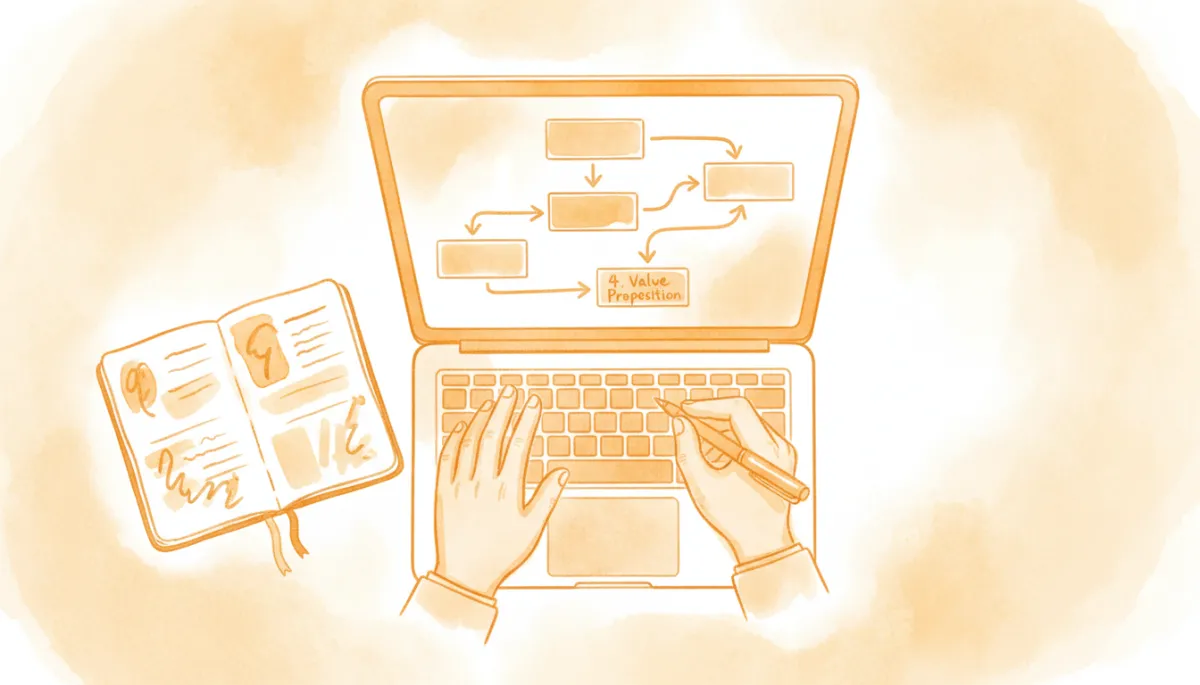
Mapping each touch and intent prevents repetitive, “just checking in” follow-ups.
The P.I.T.C.H. Formula behind every touch
Jason’s P.I.T.C.H. Formula keeps each email in your email sequence focused and human:
- P — Person: Start with something specific about them, not you.
- I — Insight: Share a short observation about their situation or market.
- T — Tension: Name the cost of doing nothing — time, churn, missed revenue.
- C — Case: Brief example, metric, or story that proves you can help.
- H — Handle: A low-friction next step — “worth a quick 10-minute call?” rather than a big ask.
Recommended timing between touches in your cold email sequence
In 2026, top performers typically run 4–5 touches over 2–3 weeks — but founders selling higher-ticket solutions often benefit from stretching to 7 touches over about 30 days. A practical cadence that balances persistence and respect:
- Touch 1: Day 0 — initial cold intro.
- Touch 2: Day 3–4 — value resource follow-up, same thread.
- Touch 3: Day 7–8 — social proof, concise case study, same thread.
- Touch 4: Day 12–13 — different angle, often a new problem or stakeholder.
- Touch 5: Day 16–18 — direct ask, clear yes/no decision.
- Touch 6: Day 21–24 — breakup email, permission-based close.
- Touch 7: ~Day 45–60 — long-term re-engage, often with a new insight or product evolution.
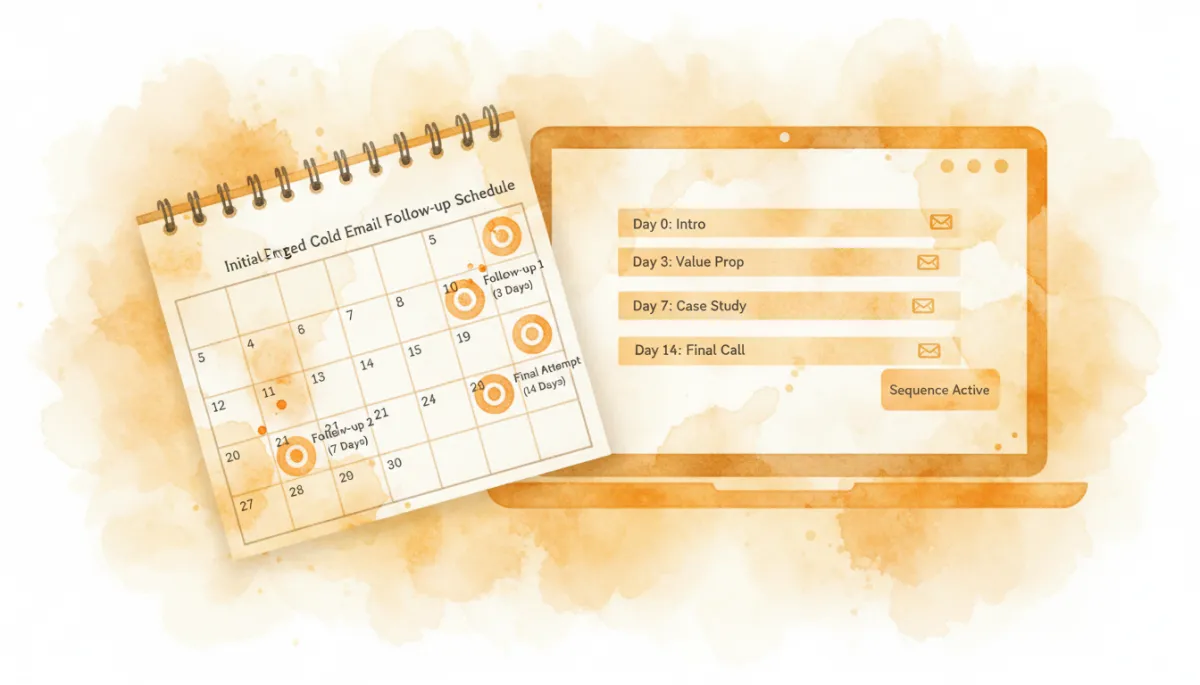
Spacing touches over weeks respects busy buyers while keeping you top of mind.
Automation setup: how founders can run this in under an hour a week
The best cold email follow up sequence is useless if you can’t consistently send it. That’s where automation comes in. Modern tools like Instantly, Smartlead, and Apollo.io let you:
- Authenticate and warm up secondary domains with SPF, DKIM, and DMARC, protecting your primary brand domain from deliverability issues.
- Cap daily sends at 30–50 emails per inbox, then scale by adding more inboxes rather than blasting from one.
- Use personalization variables and light AI assistance to keep copy conversational, not robotic.
Jason typically recommends founders start with one tool that integrates with their CRM, then build a simple P6 Sales Follow-Up workflow — prospects move through the 7-touch cadence automatically, and any reply instantly pauses the sequence. For a deeper breakdown of this system, see his playbook at AuthorJason.com.
What to do at Touch 7 when there’s still no reply
Touch 7 is not about squeezing one last reply — it’s about protecting the relationship long term. Think like Benioff here: you’re playing a multi-year game, not a single quarter. At this stage:
- Acknowledge their silence respectfully — assume they’re busy, not rude.
- Share one last, high-value insight or resource you’d want if you were in their role.
- Clearly state you’ll step back, but you’re available if priorities change.
Operationally, Jason moves non-responders into a long-term nurture list — quarterly updates, product milestones, or a short “what changed in your world?” email. Many of the 1,000+ founders he’s coached have seen deals close 6–12 months later from prospects who ignored the first 7 touches but stayed on the radar.

A respectful final touch preserves the relationship and opens future opportunities.
6 common questions about cold email sequences (PAA-style)
How many emails should be in a cold email sequence?
For most B2B founders, 5–7 emails is the sweet spot. Fewer than four leaves meetings on the table; more than seven can feel like harassment unless there’s clear, new value each time. Jason’s 7-touch cadence works because each touch has a distinct purpose, not just a louder version of “bumping this to the top of your inbox.”
How often should you follow up on a cold email?
Every 3–7 days is a healthy rhythm for busy executives. Early touches can be slightly closer together; later touches should be spaced out. The key is predictability — you want to show you’re dependable, not frantic. Deliverability research in 2026 supports this spacing as a balance between visibility and complaint risk.
What should I say in a follow-up email after no response?
Avoid guilt-tripping or vague “just circling back” lines. Use P.I.T.C.H.: reference them, add one new insight, briefly restate the tension, give a micro-case, then offer a simple handle like, “Open to a quick 10-minute chat next week?” Each follow-up in your email sequence should feel like a new reason to reply, not a reminder that they ignored you.
Do cold email sequences still work in 2026?
Yes — when they’re targeted, authenticated, and genuinely helpful. Inbox providers have raised the bar, but founders who use warmed domains, tight lists, and short, specific messages are still seeing 5–15% reply rates. Jason’s clients who follow this 7-touch structure consistently outperform generic outbound campaigns that spray thousands of identical messages.
Which tools are best for automating a cold email follow up sequence?
For founders, Instantly and Smartlead are strong choices for deliverability and scale, while Apollo.io and Snov.io combine prospecting and sequencing in one platform. Enterprise teams often lean on Salesloft or Outreach. Pick one that supports multiple inboxes, warm-up, reply-based stop rules, and easy personalization. For a broader view of where sales systems are heading, Jason breaks it down at AuthorJason.com.
How do I personalize at scale without spending hours per prospect?
Jason teaches founders to use “one-minute personalization” — a single sentence pulled from a trigger like recent funding, a hiring spree, or a public roadmap. Combine that with a strong, reusable core template built on P.I.T.C.H. Tools like ColdOutreach or Lemlist can help generate first drafts, but you should still apply founder judgment so your cold email sequence sounds like you, not a bot.
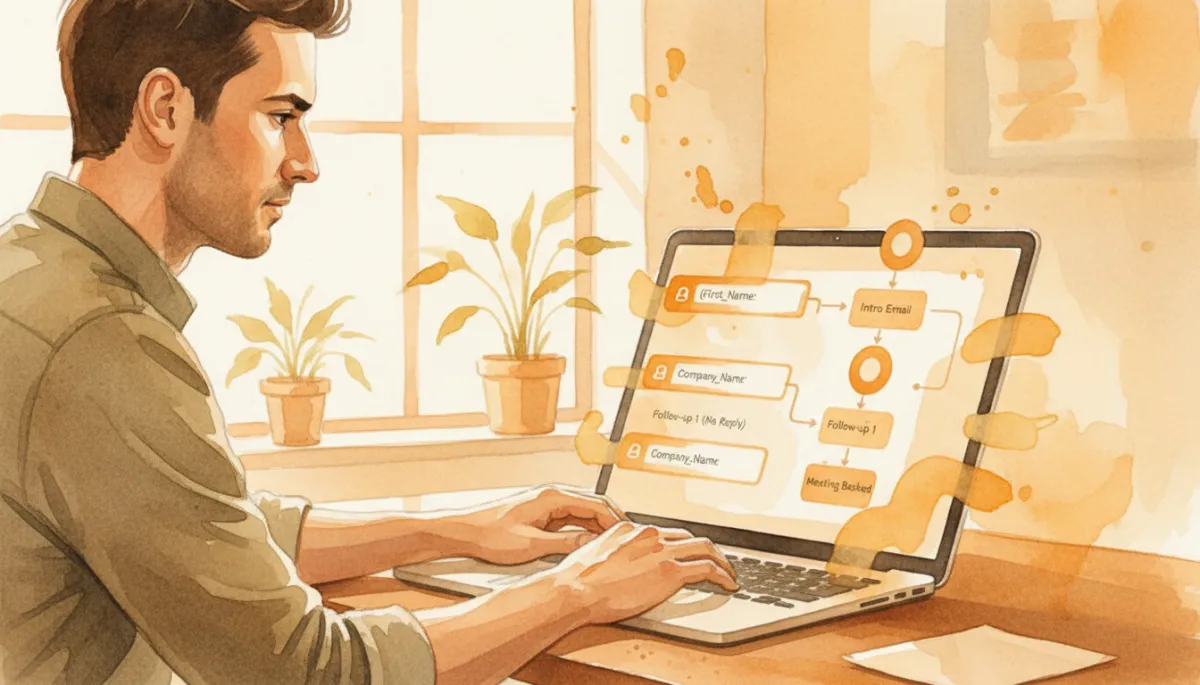
Light personalization plus a strong template beats fully custom or fully generic outreach.
Final thoughts: build a founder-proof follow-up system
The founders who quietly win markets aren’t always the loudest on social — they’re the ones whose follow-up is relentless, respectful, and systemized. Jason’s 7-touch cold email sequence gives you that structure: clear timing, distinct value at every touch, and automation that keeps going even when you’re buried in product and hiring fires. It’s the opposite of one-and-done outreach; it’s a selling system you can rely on.
If you want to go deeper, Jason’s P6 Sales Follow-Up framework, Tier 1 breakdowns (Tan, Teo, Leon), and long-form playbooks live at AuthorJason.com. And if you’re serious about building a daily outbound habit that compounds — for less than the cost of coffee — his FOS system (just $0.63/day at dreamaker.club/buyfos) is designed to help founders install a Benioff-grade follow-up engine that runs even when you’re not in the inbox.


